
What’s ahead for North Carolina’s community colleges this year? Leadership transition, Propel NC, and more

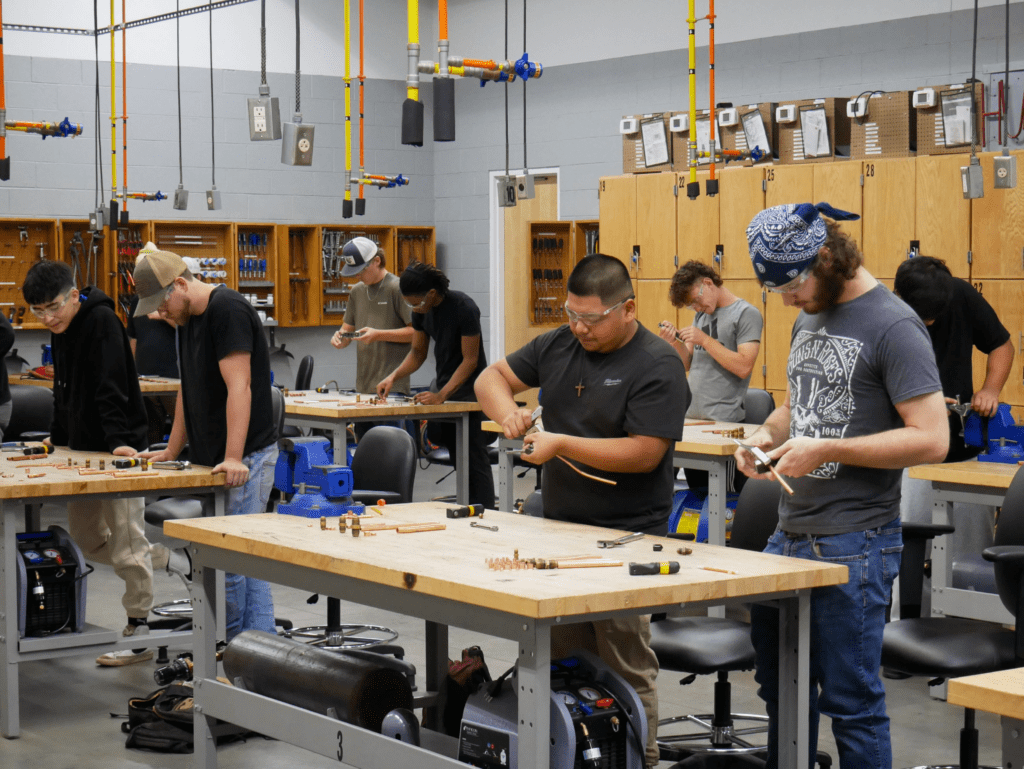
This month, hundreds of thousands of students in North Carolina will enroll in courses across the state’s 58 community colleges to pursue associate degrees, diplomas, credentials, and other short-term certifications.
The N.C. Community College System (NCCCS) is vital to advancing many priorities that have bipartisan support — including meeting the state’s 2030 attainment goal, increasing apprenticeships, filling high-wage, high-demand jobs, and maintaining the state’s often-cited ranking as No. 1 for workforce development.
And the new state budget, passed in July, reflects the system’s importance through historic investments, including funding for Propel NC, an overhaul of the system’s business model that prioritizes funding for programs in high-demand, high-wage sectors.
These investments come at a pivotal moment for the system, which is also navigating a leadership transition, a major technology transformation, the development of a new strategic plan, the implementation of Workforce Pell, continued efforts to expand work-based learning, and other major areas of uncertainty and change.
As a new academic year begins, here is a closer look at the key issues impacting the state’s community colleges.
 Sign up for Awake58, our newsletter on all things community college.
A decade of leadership transition continues
More than a year has passed since Jeff Cox announced his retirement as system president, effective June 30, 2026. Bill Carver, former president of Nash Community College, has served as interim president since July 1 — a role he has held twice before.
In the last 10 years — since 2015 when then-President Scott Ralls resigned after a seven-year tenure running from May 2008 through August 2015 — seven leaders have held the position of interim president, acting president, or president of the NCCCS.
The search for the next system president began in the fall 2025, and on July 23, the State Board of Community Colleges announced the selection of Monty Sullivan, the former head of Louisiana’s community college system, to serve as the next system president and CEO.
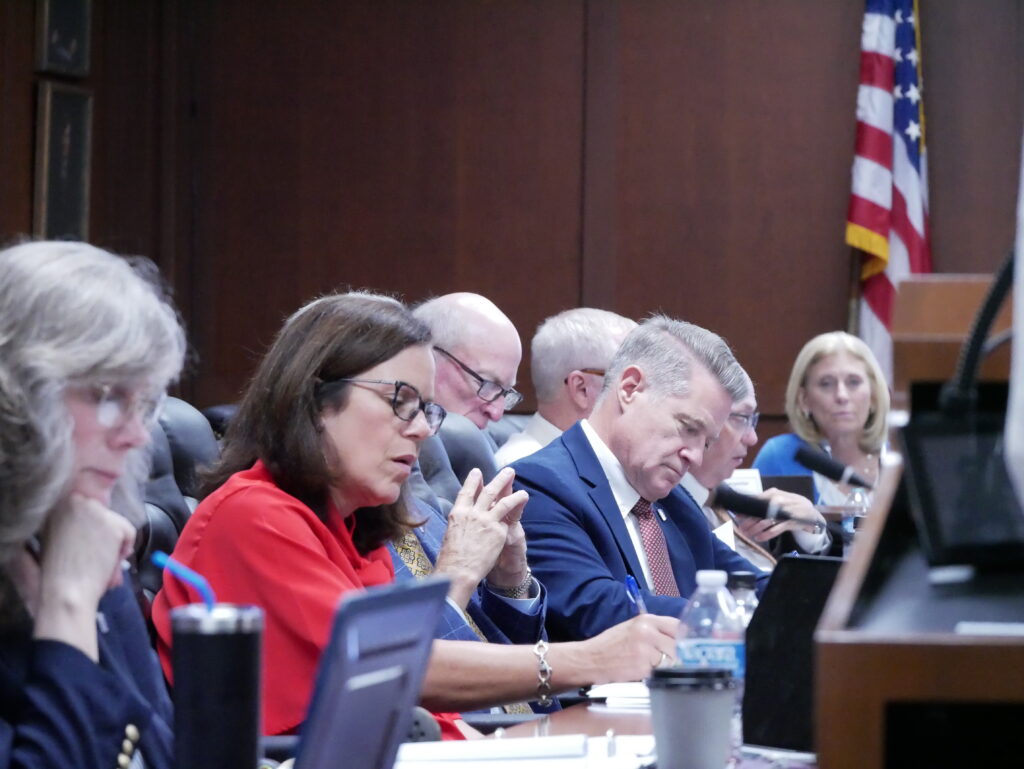
During the State Board’s August meeting, Sullivan’s contract was approved. He is scheduled to start as interim president on Aug. 24 while the General Assembly considers his nomination.
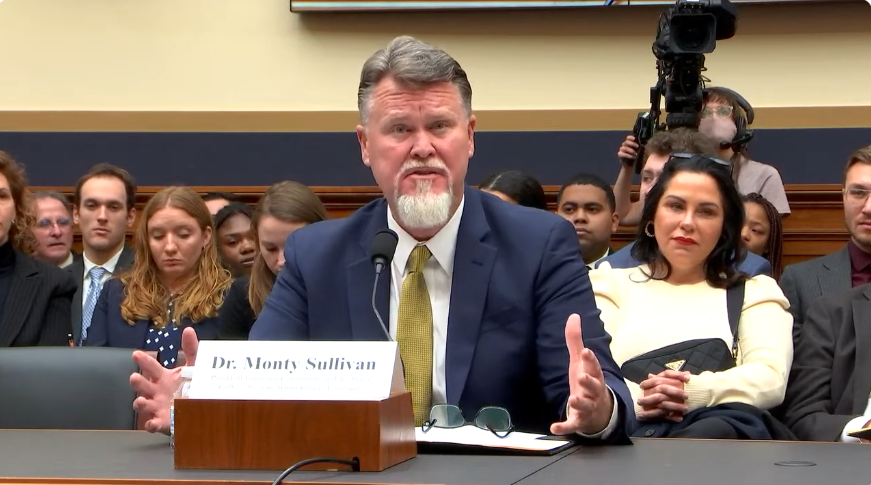
“This is not a traditional presidency,” Board Chair Tom Looney said during the April Board meeting. “We must continue to hold a high bar as we go through the process, and we must bring forward a leader who can meet this moment. This decision will shape the future of the system, and it will also impact North Carolina for many years to come.”
New this year, the Board’s selection of a system president is now subject to confirmation by the General Assembly, within 30 legislative days. If confirmation does not take place by then, statute says “it shall be deemed that the General Assembly has denied confirmation. A person denied confirmation shall not serve as President or interim-President.”
Based on the legislature’s adjournment resolution’s scheduled sessions — and days the General Assembly met the week of July 27 — the legislature’s deadline to confirm Sullivan in 30 legislative days is likely to take place in the Nov. 30-Dec. 18 voting session. Stay tuned.
Read more on the presidential search

Shifting to a labor market-driven funding model
Following nearly three years of sustained advocacy efforts, the General Assembly invested for the first time in Propel NC, the system’s labor market-driven funding model that prioritizes funding for programs aligned with high-wage, high-demand sectors. The implementation of Propel NC will profoundly change how state dollars flow to community colleges, aiming to increase the number of students completing credentials in high-demand fields and potentially serving as a nationwide model.
The system’s previous funding model was created in 2010 and last updated in 2013. Under that model, the system allocated resources to the colleges in proportion to the number of full-time equivalent (FTE) students they enrolled in each of their programs. Certain courses received more state dollars than others based on a four-tier funding model.
During the State Board’s August meeting, a new system budget was passed, implementing Propel NC for the first time. Propel NC still relies on FTE, but rather than funding curriculum and continued education workforce (CE) courses differently, all instructional funding now falls into one of four workforce sectors, with certain healthcare, engineering and advanced manufacturing, and trades and transportation programs falling in the highest-funded tier.
While more changes are still to come in the system’s budget to fully reflect the realities of Propel NC — State Board members emphasized that the budget is “transitional” — roughly $57.5 million in new instructional funding will now flow to community colleges.
This document, the last page of the system’s budget, shows the exact FTE funding colleges will now receive under Propel NC compared to the previous funding formula. On average, colleges are now receiving 5.71% more in FTE funding, with individual colleges’ increases ranging from 2.93% at Central Piedmont Community College to 13.67% at Pamlico Community College.
The system is actively working with college presidents to determine how Propel NC funds will be used and how to measure its return on investment.
For more on specific investments in Propel NC, read EdNC’s state budget recap.
Technology transformation efforts continue amid delays
Since 2023, the system has been in phase four of its five-phase modernization plan. That includes upgrading core services at the system office and transitioning colleges to a new Enterprise Resource Planning (ERP) system to replace Colleague, which has been in use since 2008.
State Board members and system leaders have consistently emphasized the importance of accomplishing these technology transformations, which aim to streamline processes, increase efficiency, and improve students’ experiences. However, the system has continued to face delays in an already lengthy implementation process.
The new ERP, Ellucian’s Banner, is a digital all-in-one administrative platform to help students, faculty, and staff access information ranging from course registration to financial aid. Banner is currently being piloted at five community colleges while the system works to scale it to the remaining 53.
In January, Ellucian presented an update on Banner to the State Board, demonstrating the platform’s functionality. But during the Board’s meeting in August, Transformation Committee Chair Scott Ottman discussed nuances that would cause “a bit of configuration work and frankly drive up the cost of our implementation,” largely centered on differences in Human Resources policies such as pay cycles. There is no public timeline for when Banner will be fully deployed.
“I’m going to look for help from the broader team to really think about how we transform specifically HR, which will absolutely help us with that (Banner) deployment, not only dollar-wise, but the speed of which we’re able to deploy the solution across 58,” Ottman said.
Other system office technologies undergoing upgrades include the combined course library, the college budgeting and accounting system, the customized training program, and the data warehouse — but most of those applications are not fully deployed yet.
As a new academic year begins, the system’s focus on transformation is likely to remain front and center.
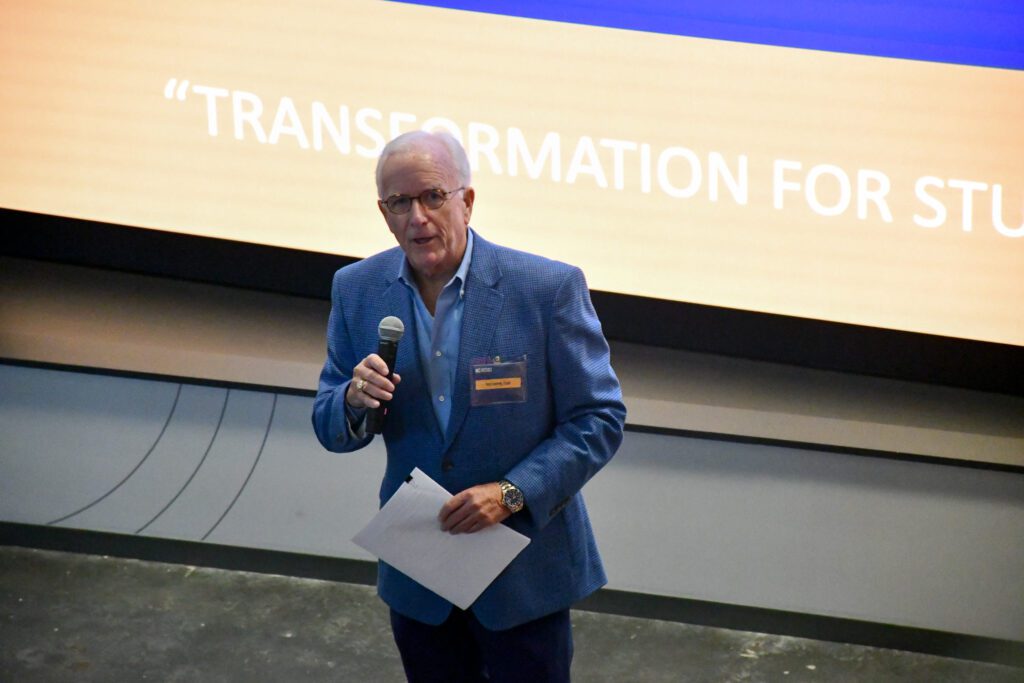
“This is the most important project — we’ve got to get it right, our Board is committed to that, the staff in this building are committed to that,” Looney said at the Board’s January meeting.
Developing a new strategic plan
In February, the State Board approved a new system office mission statement and goals for the system’s 2026-29 strategic plan, following a lengthy stakeholder engagement process.
Since then, the strategic planning process has been paused amid the transition to a new system president. Once a new system president is in place, stage 2 and stage 3 of the strategic planning process will take place, including developing key performance indicators and tactics for each goal.
Tactics will “delineate what is owned by the System Office, what is owned by colleges, or what is co-owned. They will be refreshed every 12–18 months of the plan to remain flexible to evolving circumstances,” according to a State Board document.
The three approved goals for the next strategic plan are:
- Build the best workforce in the world.
- Align our employers, students, and colleges to future-ready our state’s economy.
- Transform our system to empower our colleges and students for continuous success.
Workforce Pell Grants will soon be available to NC students
In late June, North Carolina became one of the first states to open Workforce Pell Grant applications, kicking off the new federal program that provides financial aid for certain short-term workforce training programs that meet rigorous standards.
Workforce Pell is more than a change to financial aid — it’s a “structural change that could reshape program design, employer partnerships, enrollment strategy, and how institutions serve students.”
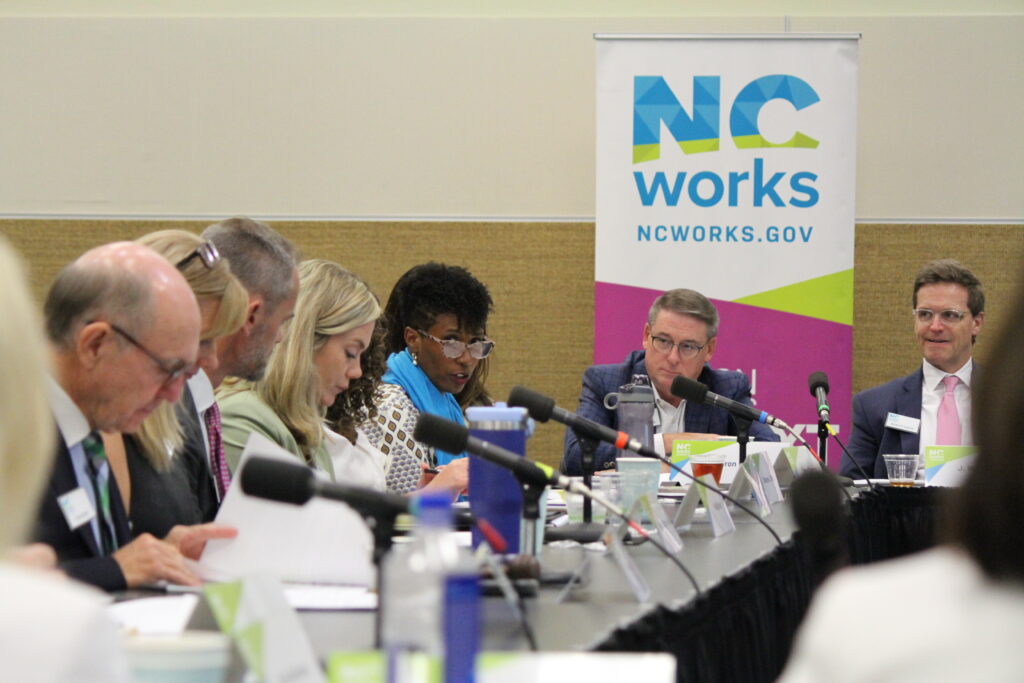
The grants are funded and regulated at the federal level, but the initial determination about program eligibility is left to governors. On Aug. 12, the NCWorks Commission — designated by Gov. Josh Stein as the lead agency for implementation — approved the state’s first set of Workforce Pell Grant programs, which now must be approved by the U.S. Department of Education.
The 43 approved programs come from 16 of the state’s 58 community colleges, with more programs expected to be approved in September. The programs represent a variety of fields, with healthcare and public safety being most common.
The U.S. Department of Education has 120 days to approve the now state-approved programs once they submit federal applications. Once programs are approved federally, students will be able to use Workforce Pell Grants — accessed through the Free Application for Federal Student Aid (FAFSA) — to enroll in approved programs. Nationwide, roughly 187,000 students annually are expected to receive the grants, with average awards of roughly $2,200.
North Carolina took a broad approach to Workforce Pell program eligibility, publishing a list of 364 eligible occupations that span health care, the skilled trades, engineering, and more. However, the federal eligibility requirements programs must meet — including 70% completion and 70% job placement rates — intentionally limit the scope of the grants.
In February, Andrea Desantis, assistant secretary for workforce solutions at the N.C. Department of Commerce, said Workforce Pell was expected to get off to a slow start.
“This is not intended to approve every program, but to really be about intentional design at the state and local level,” Desantis said.
Still, North Carolina’s 43 approved programs are the “largest state-approval batch reported by any state so far,” according to this Workforce Pell tracker. By contrast, Pennsylvania has approved only two of 40 program submissions so far.
The number of Workforce Pell Grant programs in North Carolina is expected to grow throughout the academic year as the NCWorks Commission approves programs on a rolling quarterly basis. As programs get approved, EdNC will be reporting on how colleges are communicating the opportunity to students and what early impacts the program is having.
Efforts to expand work-based learning
To strengthen local talent pipelines and prepare students for the future of work, many community colleges are investing in strengthening and scaling work-based learning efforts in partnership with K-12 school districts, local employers, workforce development boards, and more. Work-based learning takes many forms, including job shadowing, internships, and registered apprenticeships.
Apprenticeships are often seen as a gold standard in work-based learning, as apprentices received both paid, on-the-job training and classroom instruction, culminating in an industry-recognized credential. In North Carolina, Gov. Josh Stein’s Council on Workforce and Apprenticeships has set a goal of doubling apprenticeships in the next four years, and many efforts are underway to scale them, including replications of the successful Surry-Yadkin Works model at community colleges across the state.
However, scaling apprenticeships is a resource-intensive endeavor, including the administrative burden to register programs, the costs of paying and training apprentices, and the coordination required with other workforce ecosystem stakeholders. At a recent convening of community colleges advancing innovative work-based learning practices, common challenges surfaced around sustainable funding and staffing, engaging employers at scale, and tracking data and outcomes.

But recent investments are designed to bolster apprenticeship growth in North Carolina — the state budget allocated $3.17 million in recurring funding for ApprenticeshipNC, the state apprenticeship agency designated by the U.S. Department of Labor (DOL) to register and oversee apprenticeship programs.
Historically, ApprenticeshipNC was largely funded through federal grants, many of which expired this year. Now, with a total state appropriation of $4.4 million, ApprenticeshipNC “can strategically leverage future DOL grant investments to increase employer engagement and statewide expansion,” according to a press release.
In a report about apprenticeships presented to the State Board of Community Colleges in August, ApprenticeshipNC details initiatives enabled by this state investment, including efforts to establish employer incentives for certain industries, create a dedicated position to support community colleges, develop state occupational frameworks, and offer a no-cost software solution to reduce administrative burdens.
The state budget also directs ApprenticeshipNC to study the feasibility of state incentives for employers and sponsors to increase apprenticeships and to develop a plan for expedited pathways for apprenticeship candidates to enter the teaching profession.
“The state’s new recurring investment in Registered Apprenticeship creates an important opportunity to strengthen the infrastructure employers and apprentices need, reduce barriers to participation, and move from individual success stories toward a durable statewide system,” said Chris Harrington, state director of ApprenticeshipNC, in the release.
Read more on work-based learning



Navigating an accelerating pace of change as ‘uncertainty reigns’
In October, the American Association of Community Colleges (AACC) released a report titled Resilient by Design, commissioned to investigate the external influences impacting community colleges. In an opening letter, DeRionne Pollard, president and CEO of the AACC, writes:
Our colleges are being called to navigate seismic demographic shifts, economic realignments, political divides, and the accelerating influence of technology. In these challenges lies an extraordinary opportunity: to reimagine how community colleges serve students and society, and to lead transformation across the higher education landscape.
The report goes on to find that community colleges are navigating a moment where “uncertainty reigns” — including uncertainty driven by upheaval of federal education oversight and program management, state actions, and claims about higher education’s value and role in society.
On Aug. 3, U.S. Secretary of Education Linda McMahon issued a national call to action urging colleges and universities to “reaffirm higher education’s foundational commitments to academic excellence, pathbreaking research, and national service,” according to a press release. McMahon called on every postsecondary institution, including community colleges, to publish a public statement outlining “its commitment to implementing reforms that will help restore public trust in higher education” by the end of 2026.
A joint response from the AACC and the American Association of State Colleges and Universities, published on Aug. 12, notes that the colleges and universities they represent “are already deeply engaged in the principles and practices identified in Secretary McMahon’s letter.”
“We are open access, have affordable tuition and fees, sustain tight connections to business needs and are deeply trusted in our communities. Economic mobility for our graduates is a top priority,” Pollard said in response to McMahon’s call to action.
For North Carolina’s community colleges, key areas of uncertainty and change include shifts in federal funding, faculty and staff recruitment and retention, and preparing students for the future of work.
Shifts in federal funding
In a July update to the State Board, seven federal grants that the system either directly receives or receives through a pass-through agency were flagged as high or elevated risk, meaning the loss of those funding streams would create serious impact on the system.
The two largest of those at-risk grants are Perkins V ($16.2 million), which invests in career and technical education (CTE), and the Adult Education and Family Literacy Act (AEFLA) grant program ($20.2 million), which supports adult basic education and is authorized as Title II of the Workforce Innovation and Opportunity Act (WIOA).
The Trump administration’s fiscal year 2027 budget proposal cuts more than $800 million in funding for community colleges, including eliminating the $715 million AEFLA and making community colleges ineligible for grants under Perkins V.
“There continues to be uncertainty at the federal level related to these grants being funded at the same level as previous years,” reads the July grants update.
Other proposed cuts in Trump administration’s budget include eliminating the Child Care Access Means Parents in School (CCAMPIS) grant, eliminating Federal TRIO programs and GEAR UP, and eliminating the Strengthening Community Colleges Training Grants (SCCTG).
As Congress continues to work on fiscal year 2027 appropriations, the cuts proposed by the Trump administration pose serious risks to the future of community college funding.
Faculty and staff recruitment and retention
At both individual colleges and at the system office, student enrollment and the number of initiatives are increasing without corresponding increases in employees, creating capacity strain. According to data shared during a July presentation to the State Board, colleges spend an average of 88% of their budget on personnel salary and benefits — yet North Carolina’s salaries still fall below national and southern state averages.
Student enrollment grew 12% between 2019-2025, but staffing levels have not kept pace with that growth, resulting in higher student FTE-to-staff ratios across all employee categories.
“Meeting the state’s workforce needs depends on attracting and retaining highly-qualified faculty and staff,” the presentation reads.
Preparing students for the future of work
Artificial intelligence (AI) and other technologies are rapidly changing the labor market, as employers constrict hiring in some fields, expand hiring in others, and seek different kinds of skills from the workforce.
A recent report from the Harvard Project on Workforce finds that the AI-driven transformation of work has made community colleges’ traditional approach to labor market alignment “increasingly insufficient,” adding that “colleges need an approach that allows them to detect change and adapt programs and partnerships and reallocate resources quickly.”
While many community colleges initially responded to AI by creating dedicated programs to study the technology, its widespread adoption necessitates a broader response. The report from the AACC finds: “The potential impacts of AI on community colleges are so great that they call into question the ability of traditional college organizational structures to cope effectively with the introduction of this rapidly expanding technology into the full array of institutional functions.”
In North Carolina, a partnership between the NCCCS and Jobs for the Future (JFF) created the AI.iNC (Artificial Intelligence in North Carolina) initiative, which convened teams from 50 of the state’s community colleges to develop best practices for AI integration. Earlier this year, the initiative released an AI Guidance Handbook for NC Community Colleges that aims to assist leaders in ethically and effectively integrating AI in educational practices, student services, and administrative operations.
In a JFF blog post, leaders of the initiative write:
The future of work will not be defined solely by GenAI or automation. It will be defined by how effectively institutions build intentional pathways that connect job seekers to relevant, employer-validated, stackable credentials, cultivate human capability, and design systems that translate that capability into lasting economic opportunity.