
How to provide more innovative work-based learning opportunities for students? These community colleges are leading the way

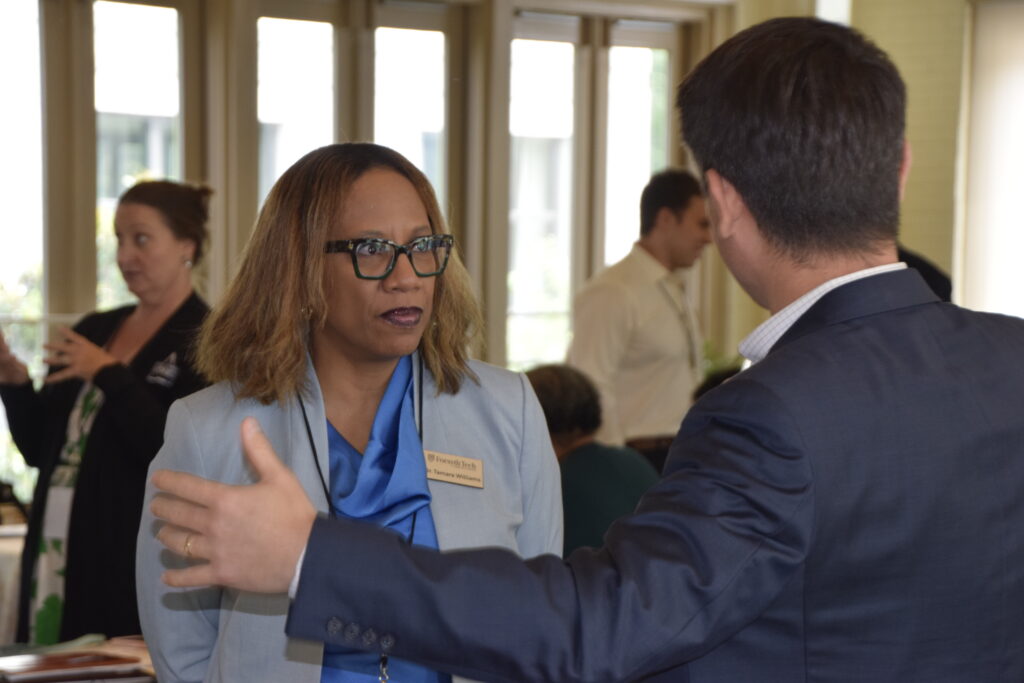
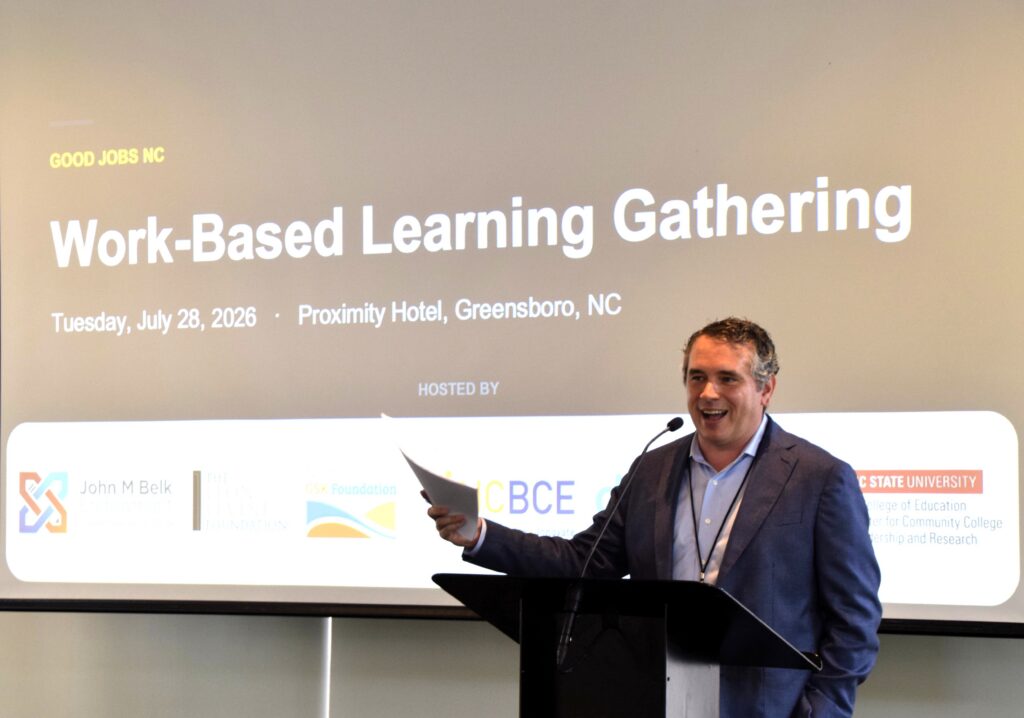
This week, leaders from 10 North Carolina community colleges convened to talk about work-based learning (WBL), including apprenticeships.
Nation Hahn, managing director with the John M. Belk Endowment, said the opportunity to collaborate was designed to 1) connect community colleges so they learn from one another; 2) surface challenges, especially those around capacity; 3) identify early wins, shared resources, and leverage points to address challenges; and 4) invite community colleges to co-design the opportunity to continue to partner on these initiatives.
“I don’t think there is a community college in the room we haven’t learned from this year,” said Tara Brossa, the executive director of RISE Caldwell-Watauga.

Why WBL is important to North Carolina
In March 2025, Gov. Josh Stein established the Council on Workforce and Apprenticeships, bringing together state officials, education leaders, employers, and other stakeholders to consider ways to enhance North Carolina’s workforce. The council has released two reports.
The first report, released in June 2025, set the state’s workforce development goals, including a goal of doubling apprenticeships in four years. The second report, released in December 2025, identified strategies to advance the state’s workforce development progress.
In February 2026, Stein announced that he is directing his discretionary funding allotted through the federal Workforce Innovation and Opportunity Act (WIOA) toward NC Career Launch, which connects students to high-demand jobs through registered pre-apprenticeships in high school.
 Sign up for Awake58, our newsletter on all things community college.
Following the governor’s announcement, seven of these community colleges gathered to begin thinking about how a community of practice and partnerships could foster this work.
According to a survey ahead of the convening, all seven of the community colleges were at least piloting WBL, had K-12 partnerships in place, and had registered apprenticeship programs. Six of the seven had dedicated staff, one of seven had a data tracking system, and one of seven had secured sustainable funding beyond grants.
The takeaways from that first convening included:
- Dedicated staffing is key to making these initiatives work;
- Governance structure often differentiates scaling an initiative from piloting an initiative; and
- There is emerging consensus healthcare is the sector that should be prioritized for the next wave of investments.
‘Work-based learning works’
“Work-based learning, career-connected learning as a currency for a young person feels more important than ever,” said Russ Altenburg, education program director for The Leon Levine Foundation.
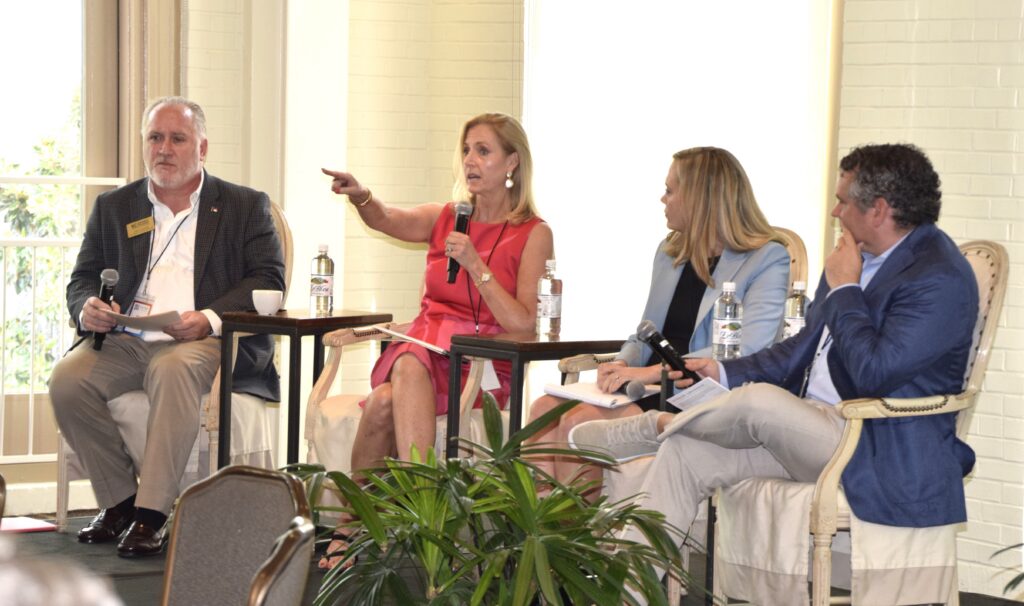
At this convening, the community colleges focused their discussions around four challenges:
- Staffing and funding — how to secure funding for WBL staffing beyond grants;
- Employer engagement at scale — how community colleges, philanthropy, and government can reduce barriers to employer participation, including start-up costs;
- Data and outcomes — identifying a dataset these initiatives can rely on and contribute to, how to evaluate which initiatives work, and how to make sure these experiences lead to family-sustaining living wages; and
- Healthcare as an anchor sector — possibly creating a healthcare-specific playbook for replication.
Following these discussions, Kindl Detar, senior policy advisor to Gov. Josh Stein; John Loyack, vice president of economic development for the North Carolina Community College System (NCCCS); and Caroline Sullivan, executive director of the North Carolina Business Committee for Education, discussed how the challenges identified by community college leaders also present opportunities, including how to build support for the full continuum of WBL.
“This is an important role for community colleges,” said Loyack. “They’re the ones who, no matter what community we are talking about, are the ones who will be there to develop talent, to develop training programs.”
“Work-based learning works,” continued Loyack. Employers are looking for incentives, he said, and community colleges need support to sustain WBL programs. He believes with an investment of $10-12 million annually every community college could have dedicated staff to support WBL.
Possible ways the innovators could continue to work together were brainstormed including model memoranda of understanding, shared data infrastructure, identifying “better practices,” coordinating advocacy for changes in policy and funding, sharing an evaluation framework, and creating an employer onboarding toolkit, among many other options.
Moving forward, the leadership of community colleges to innovate WBL opportunities for students won’t be happening in silos.
Read more
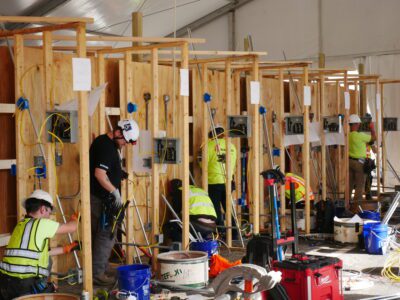
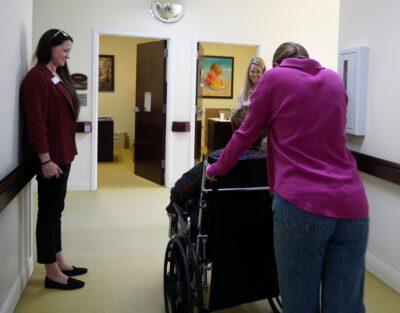
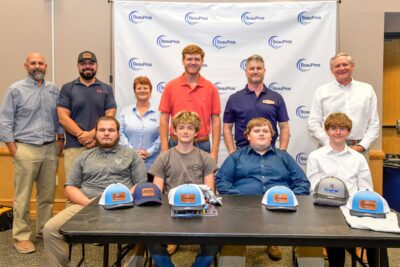
Meet the innovators
ABM Works
Asheville-Buncombe Technical Institute is building Asheville-Buncombe-Madison (ABM) Works, which encourages high schools in their service area to design a “grow your own” approach to meeting local workforce needs while creating a unified approach to collaborating with local employers increasing the region’s economic stability.
RISE Caldwell-Watauga
Caldwell Community College & Technical Institute is part of RISE Caldwell-Watauga, a regional workforce development initiative connecting high school and community college students with paid internships, pre-apprenticeships, and registered apprenticeships in high-demand industries while helping local employers build a skilled local talent pipeline.
Carteret Works
Carteret Works is Carteret Community College’s employer-driven registered apprenticeship initiative connecting students, workers, and local employers through paid on-the-job training, related classroom instruction, and nationally recognized U.S. Department of Labor credentials. This helps employers build a skilled workforce while participants earn while they learn.
Maintenance Technician Apprenticeship
Central Carolina Community College partnered with Pfizer to co-develop the Maintenance Technician Apprenticeship, combining paid on-the-job training with classroom instruction. This is a scalable workforce pathway addressing a high-demand role that could be expanded to multiple partners in the region.
Scaling Experiential Learning
Scaling Experiential Learning ensures every learner at Forsyth Technical Community College engages in meaningful experiential learning, including capstones, service learning, volunteer experiences, employer-sponsored projects, and WBL.
Isothermal Works
Isothermal Works is a strategic workforce initiative led by Isothermal Community College in partnership with regional employers to strengthen the talent pipeline in Rutherford and Polk counties. Designed to align education with real industry needs, the program connects students with hands-on training, dual enrollment coursework, pre-apprenticeships, and registered apprenticeships in high-demand sectors including healthcare, manufacturing and trades, information technology, education, and public safety.
Rockingham Community College
Rockingham Community College is expanding its long-standing work-based learning efforts to include the World of Work, Pathways to Employment, RCC-Sponsored Internships and Apprenticeships, RockATOP Youth Apprenticeship Consortium, and Level Up Rockingham. These options include adult apprenticeships, college-sponsored registered apprenticeships, credit-bearing internships, and enhanced career exploration and pathway opportunities for high school students.
Southeastern Community College
At Southeastern Community College, College4Kids is a summer program where students can explore careers and job shadow while learning more about specific job sectors like manufacturing or healthcare. This summer, 73 students are taking college courses while they are in high school.
“It’s significant because these students are able to engage in pre-apprenticeships before they graduate from high school,” said Dr. Chris English, president of the college.
Surry-Yadkin Works
Surry-Yadkin Works connects workplaces to the classroom to prepare students for careers in the real world. This multi-faceted, WBL program includes pre-apprenticeships, apprenticeships, job shadowing, business/education engagement, and more.
Good Jobs in Motion
Wilkes Community College’s Good Jobs in Motion expands access to high-demand career pathways by combining mobile immersive learning experiences with WBL opportunities.
Editor’s note: The John M. Belk Endowment supports the work of EdNC.