
Apprenticeships are on the rise in North Carolina. Will that growth continue?

Editor’s note: This article is part of a series on apprenticeships for National Apprenticeship Week. See all of EdNC’s coverage of apprenticeships here. Note that all references to apprenticeship in this series refer to Registered Apprenticeships formally recognized by the U.S. Department of Labor.
Apprenticeships — the earn-and-learn model that dates back to at least the middle ages — are having a big moment.
Often heralded as the gold standard in work-based learning, registered apprenticeships combine paid, on-the-job training with classroom instruction, culminating in an industry-recognized credential. Apprenticeships can increase earnings for workers, provide a positive return on investment for employers, and help fill critical workforce shortages.
Support for expanding apprenticeships is growing at both the state and federal levels and across party lines. In 2025, President Donald Trump set a goal to add 1 million new active apprentices nationwide — as of January, the country was roughly one-third of the way to meeting that goal.
In North Carolina, Gov. Josh Stein’s Council on Workforce and Apprenticeships set a goal of doubling the number of registered apprentices as part of a larger set of strategies for improving workforce development. Between 2024 and 2025, the number of active apprentices in the state increased by 5%, up to roughly 10,300.

To further support this goal, Stein announced in February that he is directing the state’s discretionary funds under the Workforce Innovation and Opportunity Act (WIOA) to scale pre-apprenticeships in high-demand sectors, reflecting North Carolina’s “big bet” on youth apprenticeships. He also signed an executive order in 2025 to ensure at least 6% of WIOA Title I funds are dedicated to pre-apprenticeships and apprenticeships.
But amid this momentum, a funding cliff looms. Without support from the General Assembly this legislative session, ApprenticeshipNC — the state apprenticeship agency designated by the U.S. Department of Labor (DOL) to register and oversee apprenticeship programs — stands to lose 18 staff positions and all marketing and communications capacity. That’s due to DOL grants set to expire in June.
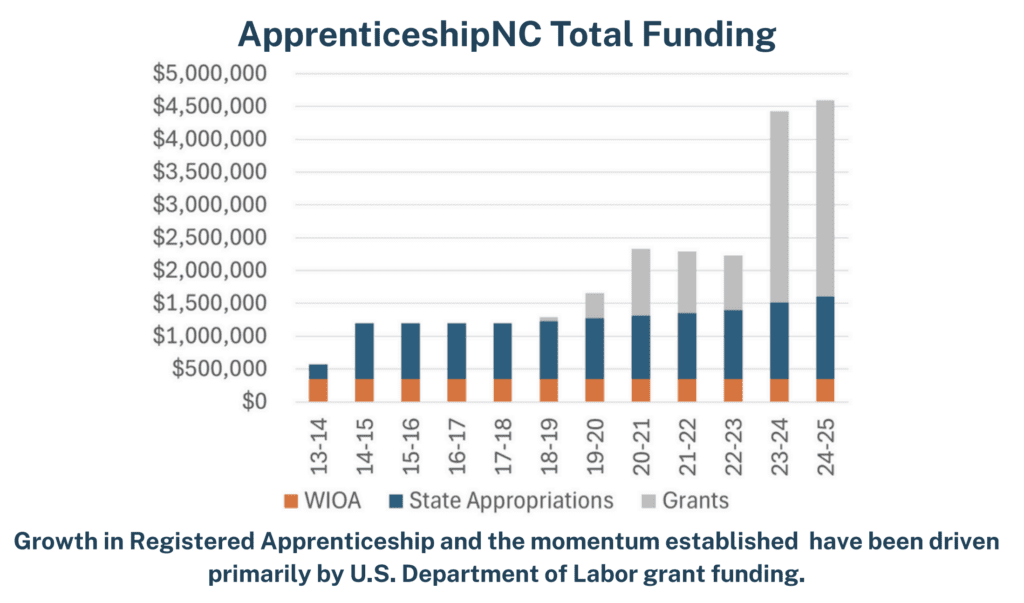
Although the Trump administration has maintained a budget of $285 million for federal apprenticeship grants, it overhauled how those grants are provided, primarily through the launch of a new pay-for-performance grant program. That shift impacts states like North Carolina that have traditionally depended on DOL grants to fund staff positions. Both the N.C. Community College System (NCCCS), which houses ApprenticeshipNC, and myFutureNC have requested a $3.1 million recurring appropriation to maintain staffing at ApprenticeshipNC, but if that funding will come remains to be seen.
In the meantime, ApprenticeshipNC has lost seven of its roughly 30 staff members through regular attrition, six of which were part of the 18 grant-funded positions, and has not backfilled those roles, straining capacity to register apprenticeships and support employers.
“Many of our representatives in the General Assembly support registered apprenticeship. Certainly, the governor supports registered apprenticeship,” said Chris Harrington, director of ApprenticeshipNC. “Well, it’s time for them to truly support it with funding to sustain the basic organization.”
Without this funding, Harrington said, the state’s momentum on apprenticeships will reverse, and the number of apprentices will decline — a trajectory modeled in ApprenticeshipNC’s most recent annual report.
Separately, the state’s one-time allocation in 2022 of $12 million to expand apprenticeships was quickly over-subscribed, and all funds have already been allocated. That leaves North Carolina without funding for employers to help offset the costs of registered apprenticeship programs — a tool increasingly used by other states.
As the state works toward its goal of doubling apprenticeships, this piece explores the key barriers to scaling them and the strategies that are unfolding to meet those challenges. For a primer on apprenticeships, see the appendix.
Read more on apprenticeships


Barriers to scaling apprenticeships
Although the number of apprentices in North Carolina and nationwide is growing, apprentices make up just 0.3% of the working-age population in the U.S., and numerous barriers to starting and scaling the programs remain.
As governments, nonprofits, and philanthropy increasingly invest in scaling apprenticeships, here are some of the key barriers those efforts face.
Administrative burdens of starting an apprenticeship program
Inherently, apprenticeships are jobs, requiring employers to commit to hiring apprentices, paying wages, and providing on-the-job training. To start an apprenticeship program, an employer must first be interested and willing to invest time in developing a program.
The apprenticeship system in the United States registers new programs one-by-one, allowing employers to develop customized programs to meet their needs. A recent analysis from Brookings finds that, though this bespoke system intends to meet individual employer needs, it “puts the design burden on employers (or their intermediary partners), assumes they know how to design apprenticeships well, and makes participation difficult for small employers who lack time or capabilities.”
When ApprenticeshipNC begins conversations with an employer, one of the first barriers they encounter, according to Harrington, is that many employers struggle to project human capital needs multiple years in advance. Since apprenticeships typically last three to four years, it can be challenging for employers to determine which occupations they will need in the future.
Once an occupation is identified, the employer has to determine what specific skills and competencies the apprentice will need to learn through on-the-job training and related classroom instruction. Particularly for employers without existing structured training programs, Harrington said it can be a lengthy process to determine what apprentices need to learn. The employer then has to determine what entity will provide the necessary related instruction.
All of this, and more, amounts to an often slow, time-intensive process to develop new apprenticeship programs — creating significant start-up costs for employers.
“It’s decision fatigue, it’s overload — and all of those things feel very bureaucratic,” said Harrington.
Although there are increasing efforts by intermediaries, community colleges, and other organizations to take on these administrative burdens, the majority of apprenticeship programs in North Carolina are sponsored by individual employers. And for small and mid-sized companies that may not have a human resources department, the burden of registering and maintaining an apprenticeship program in compliance with federal regulations can be too big a barrier to overcome.
In March, the DOL issued new guidance on registered apprenticeships designed to “improve flexibility and reduce burdens for program sponsors, promote clarity and consistency in the registration process across states, elevate quality standards, and increase transparency surrounding the structure of the National Apprenticeship system.”
Costs of paying and training apprentices
Once an apprenticeship program is registered, the primary cost employers take on is paying apprentices’ wages, which are required to increase progressively throughout the program. Other employer costs may include paying for related instruction, the time that mentors spend with apprentices, and the cost of supplies.
Although research has consistently found that employers receive a return on their investment in apprentices, these returns are often only realized in the long-run, and there is often a wide variation in the return on investment for individual employers. The front-loaded nature of these costs can make convincing employers to take on apprentices challenging.
Estimates of the cost per apprentice vary based on employer size, the number of apprentices, and experience with apprenticeship programs. In an evaluation of 45 recipients of a DOL apprenticeship grant, the average cost per apprentice was just over $5,000 — but larger grantees spent roughly $3,900 per apprentice, while smaller grantees spent roughly $8,800 per apprentice. The more apprentices a grantee registered, the lower the cost was for each apprentice.
Helping employers offset these costs has been the focus of many federal, state, and philanthropic funding efforts. In North Carolina, a tuition waiver allows high school students that complete pre-apprenticeships and begin registered apprenticeships to attend community college for free, removing the cost of related instruction.
However, many other states have more robust incentives for employers, including full tuition waivers for all apprentices and tax credits or grants to offset start-up costs. The one-time, $12 million allocation by the General Assembly to offset employer costs in 2022 was quickly over-subscribed by roughly double its amount, Harrington said, but it proved helpful in moving employers from considering apprenticeships to actually starting one.
“States that have good, stable, sustainable incentives are doing much better than those states that have minimal support,” Harrington said.
Coordination between workforce ecosystem stakeholders
As efforts increase to scale pre-apprenticeships and build more robust pathways into apprenticeships, a high degree of coordination is needed between K-12 school systems, community colleges, local employers, workforce boards, and community-based organizations.
Without shared goals, priorities, and governance among these stakeholders, the level of coordination and partnership needed to scale apprenticeships can be difficult to achieve. For example, an employer may have locations across the service areas of multiple community colleges and K-12 school districts, making it difficult to know who to engage with. Separately, career counselors within school systems may not be equipped with information on apprenticeship opportunities, limiting efforts to expand pre-apprenticeships.
A report on expanding apprenticeships from nonprofit Jobs for the Future identifies a need for stronger collaboration between these stakeholders.
“The fragmented nature of the U.S. education and workforce training systems limits the ability of school districts and postsecondary institutions to integrate apprenticeship opportunities into existing educational pathways,” reads the report.
 Sign up for Awake58, our newsletter on all things community college.
Strategies for scaling apprenticeships
As North Carolina works toward its goal of doubling the number of apprentices, here are key strategies that may move the needle.
Replicating the success of Surry-Yadkin Works
When the topic of apprenticeships comes up in North Carolina, one program is almost always mentioned: Surry-Yadkin Works.
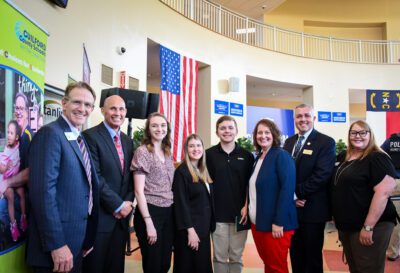
The regional apprenticeship program brings together four K-12 school districts, Surry Community College, and employers across two counties and provides a streamlined approach for apprenticeships by connecting students with pre-apprenticeship opportunities, essential wraparound support, and a clear pathway to success after high school.
Serving as the group sponsor for apprenticeship programs, Surry-Yadkin Works has dedicated staff who coordinate and support a variety of work-based learning opportunities across the region. The program’s executive board is composed of the four school system superintendents and the community college president, facilitating shared decision making.
“One of the things we know works for long-term sustainability is locally integrated ecosystems,” said Harrington.
While apprenticeship consortia offer one approach to creating those ecosystems, they operate as volunteer programs and can lose momentum if key participants transition from their jobs. Through funding from local county commissioners, Surry Yadkin-Works has a sustainable funding source to support dedicated staff that coordinate apprenticeships — a key differentiating factor, Harrington said.
“Surry-Yadkin works is better than anything in the county, writ large,” said Caroline Sullivan, executive director of the North Carolina Business Committee for Education (NCBCE). “They have created something that can be adjusted for other communities, too.”
Given the success of the model, other communities across the state are increasingly working to replicate it. In 2023, the Belk Center for Community College Leadership and Research released a playbook on Surry-Yadkin Works to share lessons learned.
The model has also captured the interest of funders, with recent investments in replication efforts from the Golden LEAF Foundation, Dogwood Health Trust, The Leon Levine Foundation, the John M. Belk Endowment, and the North Carolina GSK Foundation.
Recent efforts that have been publicly announced include:
- Asheville-Buncombe-Madison Works
- Cape Fear Community College’s Apprenticeship Accelerator
- Carteret Works
- Isothermal Works
- RISE Caldwell-Watauga
Melissa Chappell, executive director of the North Carolina GSK Foundation, said her interest in the model was piqued in the aftermath of Hurricane Helene, when she spent time in western North Carolina and saw the crucial role of community colleges in ongoing recovery efforts.
The foundation decided to invest in Asheville-Buncome-Madison Works and Isothermal Works, aligned with interest in addressing health care workforce shortages and supporting rural workforce development.
“There’s a critical mass of institutions implementing the Surry-Yadkin Works model that we can learn from, and funders are bringing different lenses and relationships to the table,” Chappell said. “I’m hoping we can learn more and evaluate these replications in different parts of the state.”
Read more on Surry-Yadkin Works
Investing in youth apprentices
Another strategy for growing apprenticeships is starting early. Pre-apprenticeships, also called youth apprenticeships, usually begin during a student’s junior or senior year of high school, preparing them for registered apprenticeship and supporting long-term career advancement.
In North Carolina, pre-apprentieships are available in hundreds of occupations, and 1,700 new pre-apprentices enrolled in 2024-25.
And even if pre-apprentices do not decide to enter a registered apprenticeship program upon graduation, they still receive a postsecondary credential and have participated in work-based learning experiences, which can guide them to the next step on their college or career pathway.
“We believe all things should start in high school,” said Sullivan. “Pre-apprenticeships are another way to go to college. … In every (pre-apprentice) program we support, there’s a pathway to an associate degree, and a pathway to a bachelor’s degree — it’s just a different way of getting postsecondary education.”
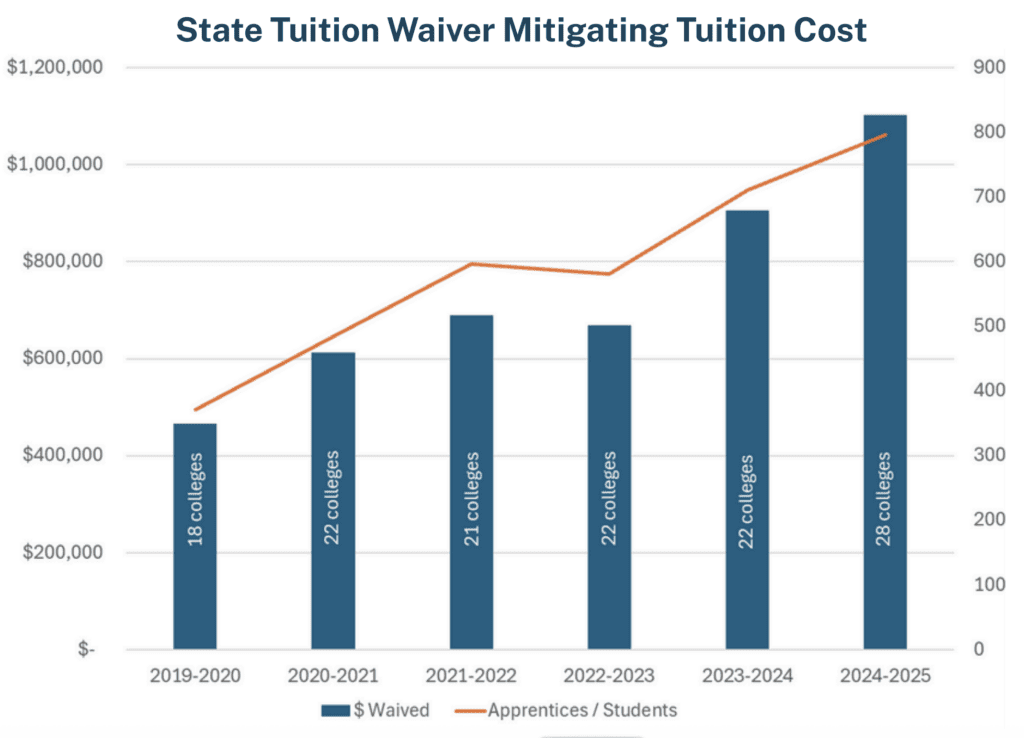
A cornerstone of the state’s support for pre-apprentices, and its only permanent apprenticeship incentive, is the youth apprentice tuition waiver. Passed in 2016 by the General Assembly, students who complete a pre-apprenticeship and enroll in a registered apprenticeship within four months of graduation can take community college courses for free, paying no tuition or fees at the community college where they receive related classroom instruction.
By ensuring neither students nor employers have to shoulder the costs of related classroom instruction, the waiver helps make apprenticeship programs more affordable and allows students to earn associate degrees for free.
To further support pre-apprenticeships, Stein directed the state’s discretionary WIOA funds to support NC Career Launch, an initiative led by the Office of the Governor and the NCBCE that helps businesses develop pre-apprenticeship programs in sectors like child care, health care, advanced manufacturing, and the skilled trades.
Originally funded by a DOL grant in 2024, NC Career Launch offers a variety of support to students, employers, and school systems, including up to $1,500 for student supports such as transportation, uniforms, books and fees, background checks, and more.
The program also provides a $500 stipend for students once they complete their pre-apprenticeship and a $500 stipend for mentors who support pre-apprentices.
To continue scaling pre-apprenticeships, Sullivan believes a systems approach is needed to align as many stakeholders as possible and make pre-apprenticeship an easier pathway for students to choose.
“We have the best levers in North Carolina to be able to do this — with dual enrollment, early college, the youth apprenticeship waiver,” said Sullivan. “It’s just going to be critical in the future to think about, what are some different ways that employers, and schools, and community colleges can work together?”

Increasing use of community colleges as group sponsors
In a February testimony for the U.S. House Committee on Small Business, Zach Boren from Apprenticeships for America said North Carolina has “cracked the code for scaling apprenticeships through a group employer model.”
Group sponsors take on the administrative responsibilities of managing registered apprentices for multiple employers. As of January, nearly half of the North Carolina employers offering registered apprenticeship programs did so through group sponsors, and 41 of the state’s 102 group sponsors were community colleges. In addition to serving as sponsors, community colleges often provide the related classroom instruction for apprentices.
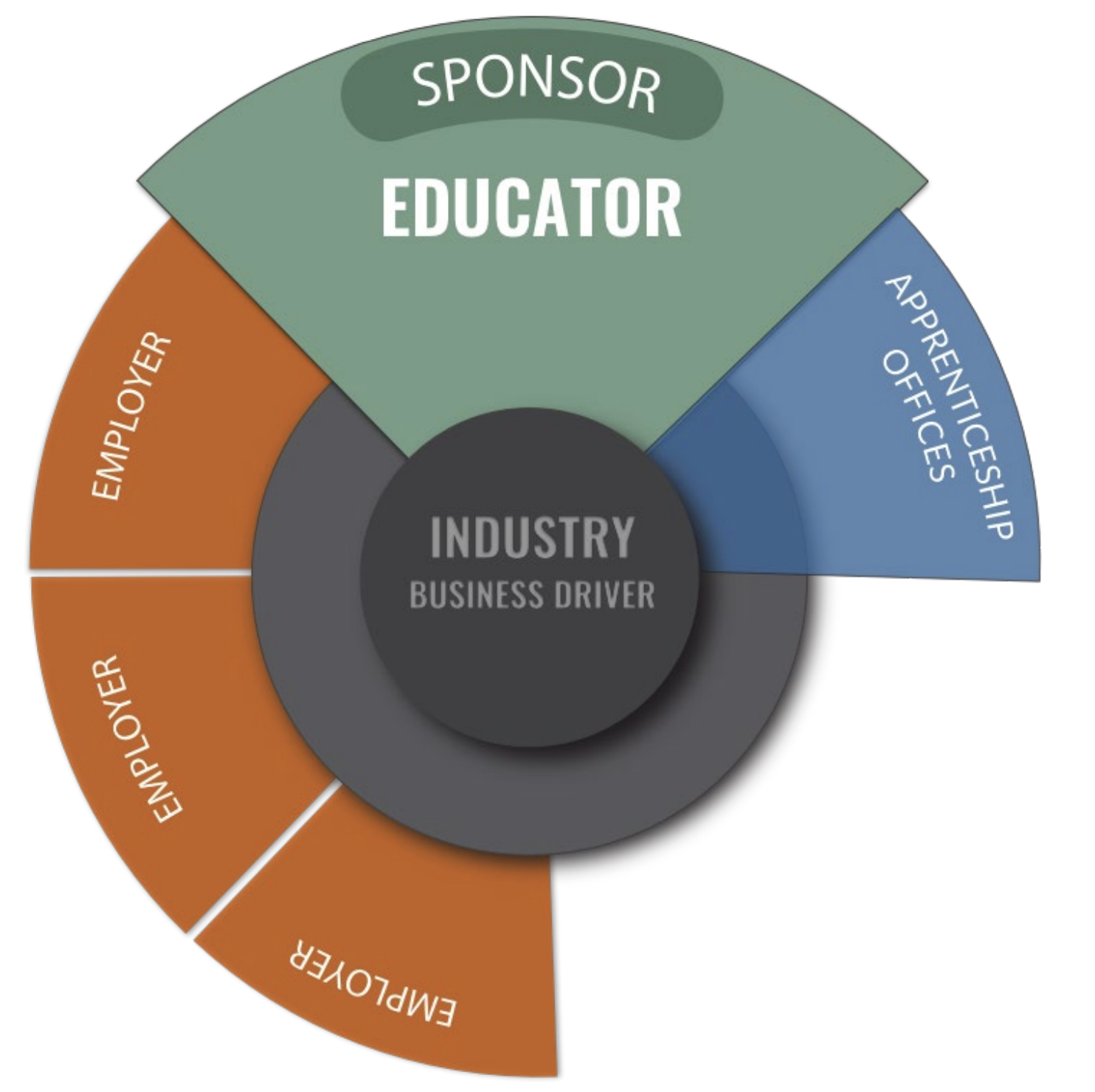
A memo from the American Association of Community Colleges (AACC) and Jobs for the Future (JFF) notes that community colleges, workforce boards, and other intermediary organizations are increasingly serving as sponsors for registered apprenticeships, doing the “heavy lifting” of setting up the program.
This approach lowers the barrier to entry for employers, as the group sponsor takes on designing program standards, enrolling participants, and ensuring the program remains compliant. Employers participating in group sponsor programs still hire and track apprentice’s progress, but they face a lower regulatory and administrative burden than they would if they sponsored their own apprenticeship program.
However, community colleges do not receive state funding to support apprenticeship programs. Although ApprenticeshipNC is housed within the N.C. Community College System, its primary function is to register programs and ensure they remain compliant with federal regulations.
Instead, colleges often rely on philanthropic grants or local funds to support apprenticeship efforts, creating sustainability challenges. Without sufficient funding, colleges often cannot afford to hire dedicated work-based learning or apprenticeship coordinators, instead adding these responsibilities to existing staff roles.
In addition to helping employers, group sponsors lower the administrative load on ApprenticeshipNC by decreasing the total number of programs they have to support and monitor.
“If you’re got 100 single employer programs, that’s 100 programs, even if they only have one apprentice,” said Harrington. “My view is it (group sponsors) makes it easier for the employers to join, because they’re joining something that’s established, but it also makes it easier for the state agency to provide that technical assistance and the oversight.”
Expanding apprenticeships in ‘non-traditional’ fields to meet workforce shortages
According to Apprenticeships for America, apprentices in the building and construction trades make up roughly two-thirds of all apprentices nationwide. But some states, including North Carolina, are experiencing rapid growth in “non-traditional” apprenticeships outside those fields.
In 2023, North Carolina had a majority of new apprentices starting in occupations outside of construction — a trend that is particularly important as the state works to address critical workforce shortages.
For example, North Carolina faces a shortage of qualified K-12 teachers and early childhood educators, and apprenticeships are working to fill the gap. Recently, the state has seen rapid growth in early childhood educator apprentices, and BestNC has proposed piloting a statewide grant program to support teacher apprenticeships, building off lessons learned from school districts that have launched their own programs.
“We’ve got a growing crisis, particularly in rural North Carolina. The state’s doubled its percentage of lateral entry and emergency licensed teachers over the past eight years,” said John Loyack, vice president of economic development at the NCCCS. “So this is something I know that’s got the General Assembly’s attention, and another area that I think we’re going to see a lot of (apprenticeship) growth in.”
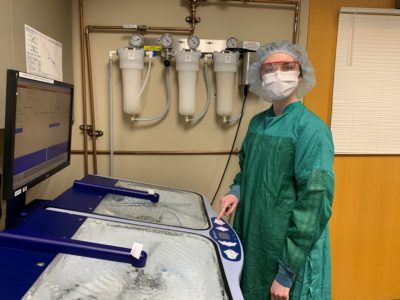
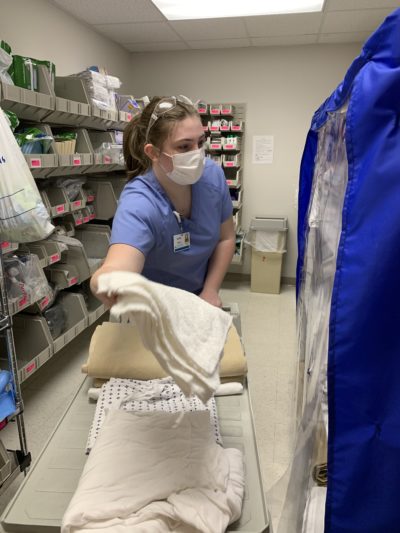
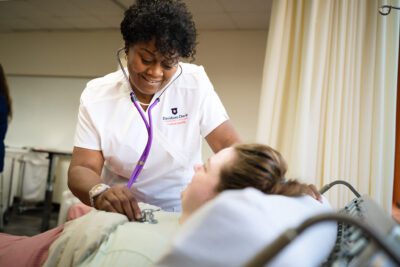
Despite progress in strengthening the state’s health talent pipelines, nursing shortages persist, and North Carolina faces a projected shortage of more than 25,000 registered nurses in 2038. In 2020, Davidson-Davie Community College launched the state’s first registered nursing apprenticeship program, and many other colleges have followed suit. Now, leaders from the college, myFutureNC, NCBCE, and NC Area Health Education Centers are working to scale nursing apprenticeships statewide through a Nursing Apprenticeship Council.
“Apprenticeship is the one thing that I’ve seen that has allowed us to gain some form of traction against those issues,” said Loyack of workforce shortages. “It’s not to say that we still don’t have a shortage of health care workers in North Carolina, but we’re at least making progress.”
Read more on ‘non-traditional’ apprenticeships

Implementing strategies identified by the Governor’s Council on Workforce and Apprenticeships
Created in March 2025, the Governor’s Council on Workforce and Apprenticeships was charged with developing goals and strategies to strengthen North Carolina’s workforce development efforts.
After establishing an initial goal of doubling the number of apprentices in the state, the council released a detailed set of strategies in December. If and how these strategies play out will affect the state’s capacity to scale apprenticeships.
Strategies related to apprenticeships that are already underway, according to the report, include:
- Identify barriers to expanding apprenticeships and recommend incentives for pre-apprenticeships and apprenticeships;
- Embed credentials and degrees into apprenticeships and pre-apprenticeships when possible;
- Review state agency policies and procedures to reduce regulatory burdens for employers and update policies and procedures to foster an aligned multisector ecosystem that supports ApprenticeshipNC and partners;
- Extend the existing youth apprenticeship tuition waiver to all apprentices.
Additional strategies to scale apprenticeships that have not yet started include:
- Develop an employer-centered model for shared training and education of talent, to create a unified, statewide, tiered employer engagement system;
- Secure stable and sustainable funding to organizations that will expand apprenticeships;
- Create the Apprenticeship County Match Fund that provides matching funding to counties that support registered apprenticeships by paying the related instruction at community colleges;
- Implement a tax credit for companies on the wages spent on apprenticeship salaries;
- Launch ApprenticeshipNC Partnership with UNC that creates new opportunities for ApprenticeshipNC to place apprentices within the UNC System.
Learning from other apprenticeship models
Despite recent growth, apprenticeships in the United States are still far less common than they are in other countries.
One contributing factor is the fragmented and disconnected structure of registered apprenticeship in the United States, compared to countries where apprenticeships are formally integrated into education and workforce systems, such as Switzerland — often considered the gold standard.
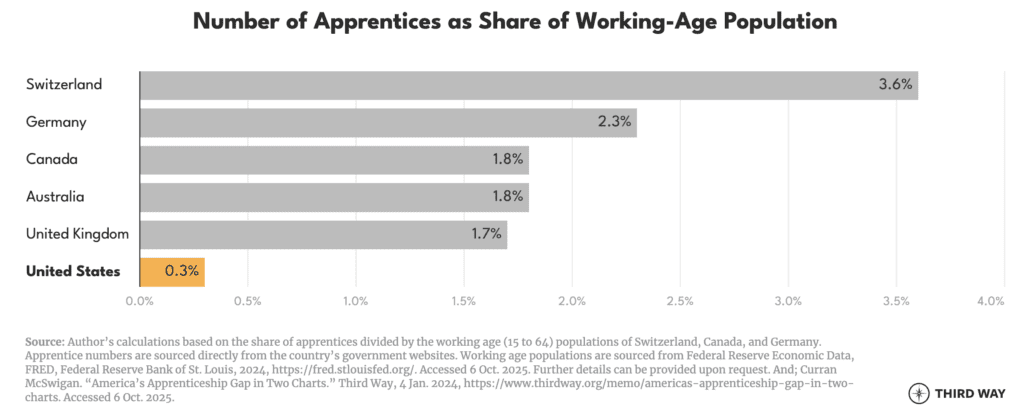
As states work to scale apprenticeships, leaders often prioritize looking to other countries to understand different apprenticeship models.
For example, Indiana recently overhauled its apprenticeship system to mirror the Swiss model. Funded by the Richard M. Fairbanks Foundation, the Indiana Career Apprenticeship Pathway (INCAP) differentiates itself from other apprenticeship programs by:
- Using Industry Talent Associations (ITAs), collaborative groups that engage employers from a specific sector, unite their input, and help them design relevant apprenticeship programs. Six ITAs are now active.
- Partnering educators with employers to develop related instructional training
- Offering two apprenticeship credentials — one for high school students, and one for adult students — and creating a pathway for students to continue their training.
- Requiring at least 50% of high school apprentices’ time to be spent with the employer.
- Creating dual recognition by colleges and employers, ensuring high school apprentices that receive their credential can advance to a higher-level apprenticeship or move to a traditional college path.
In November 2025, a delegation from North Carolina — including EdNC, the John M. Belk Endowment, Isothermal Community College, Blue Ridge Community College, Sen. Brad Overcash, and the Governor’s Office — joined America Achieves and leaders from other states in Singapore. During the trip, leaders identified best practices in workforce development that will inform the rebuilding of western North Carolina in the wake of Hurricane Helene.
Separately, in August, the nonprofit Craft Education — in collaboration with The Innovation Project, Chiefs for Change, and the Council of Great City Schools — are convening education leaders, including those from North Carolina, in the United Kingdom to discuss apprenticeships. Topics include building sustainable talent pipelines, career and technical education (CTE) pathways, and braided funding approaches.
Appendix: A primer on apprenticeships
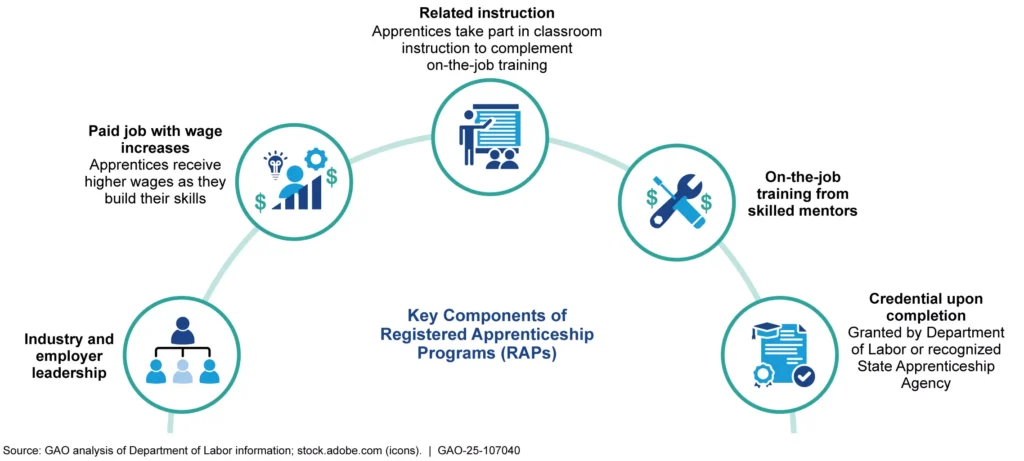
Registered apprenticeship programs are overseen by the U.S. Department of Labor’s Office of Apprenticeship, and registered in North Carolina by ApprenticeshipNC, the DOL-recognized state apprenticeship agency.
Key stakeholders in apprenticeship programs
- Sponsor: Responsible for the administration and operation of the apprenticeship program; can be a business, workforce intermediary, community college, workforce board, or community-based organization. Sponsors take on the legal responsibility of ensuring the program is operated in compliance with federal regulations.
- Employer: Provides on-the-job training and a progressive wage scale for apprentices, with an initial hourly wage at or above minimum wage. Sometimes, the employer is also the sponsor (see below).
- Related instruction provider: Provides in-person and/or online courses that teach the technical knowledge needed for the job. These providers may include community colleges, the employer, industry associations, or a third-party.
Models for sponsoring apprenticeships
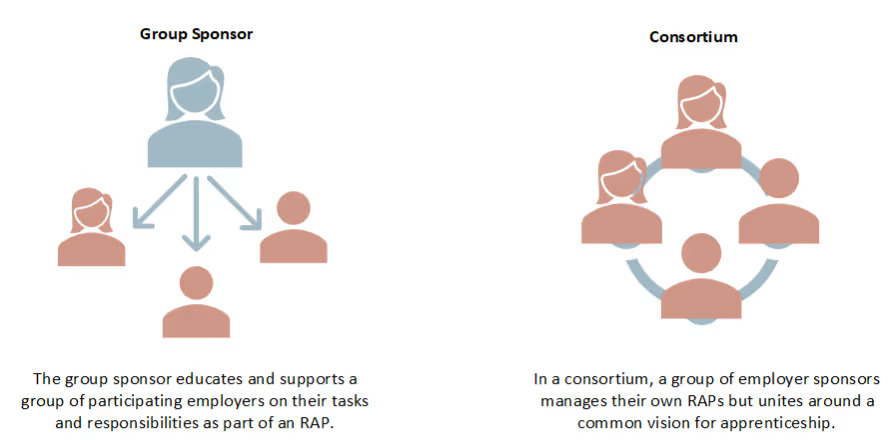
- Employer sponsors: A single employer managing its own registered apprenticeship program. As of January, North Carolina had 1,752 employer sponsors.
- A consortium is an association of multiple employer sponsors that collaborate to support and promote each other’s apprenticeships. This provides unified marketing, recruitment, and other benefits, but employers retain independent apprenticeship programs.
- Group sponsors: An organization, such as a community college or trade association, that manages a registered apprenticeship program for multiple participating employers. Participating employers still hire and track apprentice’s progress, but the group sponsor takes on designing program standards, enrolling participants, and ensuring the program remains compliant. As of January, North Carolina had 102 group sponsors, 41 of which were community colleges and 17 of which were unions. Collectively, those group sponsors serve 1,575 participating employers.
Editor’s note: Dogwood Health Trust and the John M. Belk Endowment support the work of EdNC.