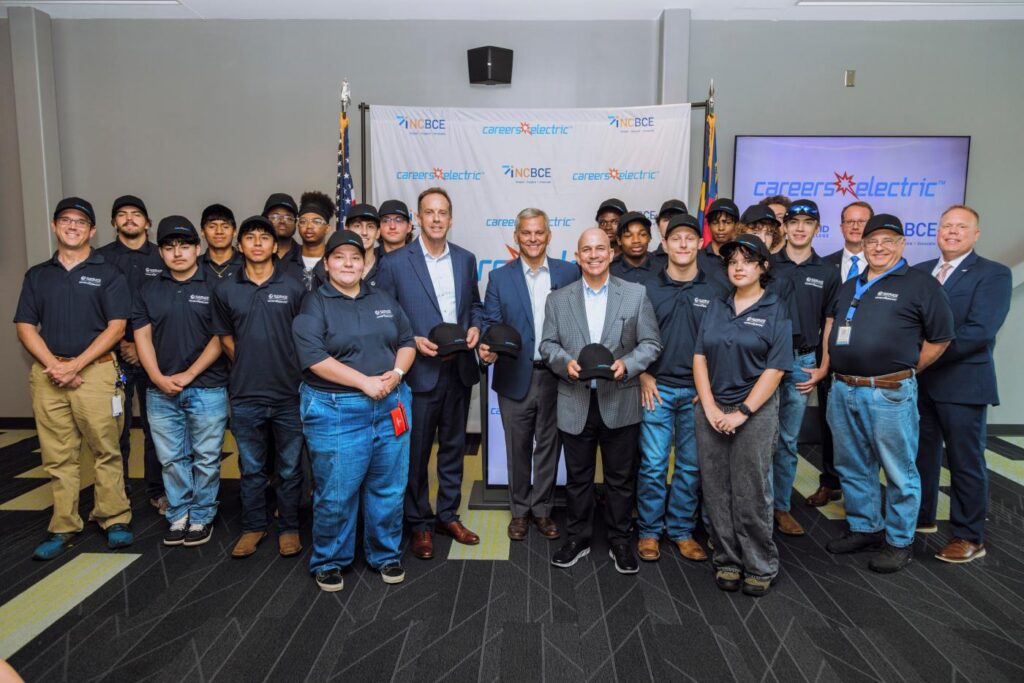
Careers Electric Summer Academies create new pathway for NC high school students entering electrical trade

Twelve North Carolina community colleges are hosting Careers Electric™ Summer Academies, a program designed to give high school students a comprehensive and accessible introduction to electrical careers. Each academy is a partnership between a community college and one or more local school district, allowing 220 high school students to participate.
Last week, a group of key actors in the development and implementation of Careers Electric toured both Forsyth Technical Community College and Rockingham Community College, where the summer academies are in full swing. The group heard from students, instructors, and administrators.
“Visiting the community colleges today was so heartwarming,” Careers Electric Program Director Jess Englert said after the tour had concluded. “It really grounded us in why this work is important because it opens doors for students who are hungry for opportunity.”


An initial contribution of $9.5 million from the Siemens Foundation in February 2026 helped launch the program. Another company, ABB, recently joined their efforts, supporting the program with a $1 million investment and becoming a co-chair alongside the Siemens Foundation.
Careers Electric aims to expand access to high-skilled electrical training, and the summer academies introduce a pathway for high school students to explore a trade.
Through these summer academies, high school students from a competitive pool of applicants have the chance to become registered apprentices, earn industry-recognized credentials and college-credit, and gain important career development skills as well as hands-on experience.
‘Answering the call’
The market for electricians is expanding quickly in the United States. Research from the U.S. Bureau of Labor Statistics projects that roughly 81,000 electrician jobs will be added between 2024 and 2034 to the economy. These jobs are in demand, and in order to fill them, people need access to the training required to perform them.
To open the tour, school leaders at Forsyth Tech described the critical issue that expanded funding for apprenticeship education solves in North Carolina.
“As you walk through, I’d like you to notice something. These aren’t just hypothetical jobs,” said Forsyth Tech Provost and Chief Academic Officer Tamara Williams. “North Carolina needs thousands of more skilled electrical workers in the years ahead, and the people you’ll meet this morning are answering that call.”

In order to answer the call, though, students need several tools for success. The summer academy allows them to earn their level one license, which summer academy student Cameron Lopez described as a “good head start to get where I want to be.”
On top of the licensure that the program affords students, it also gets them access to career readiness resources. Summer academy student Ashton Stevens explained that those resources, as well as the “hands-on learning,” were critical to finding work in the electrical field.
“The career service team coming in, helping us with resumes and setting up for interviews, really helps get to the point where you can get a job,” said Stevens.
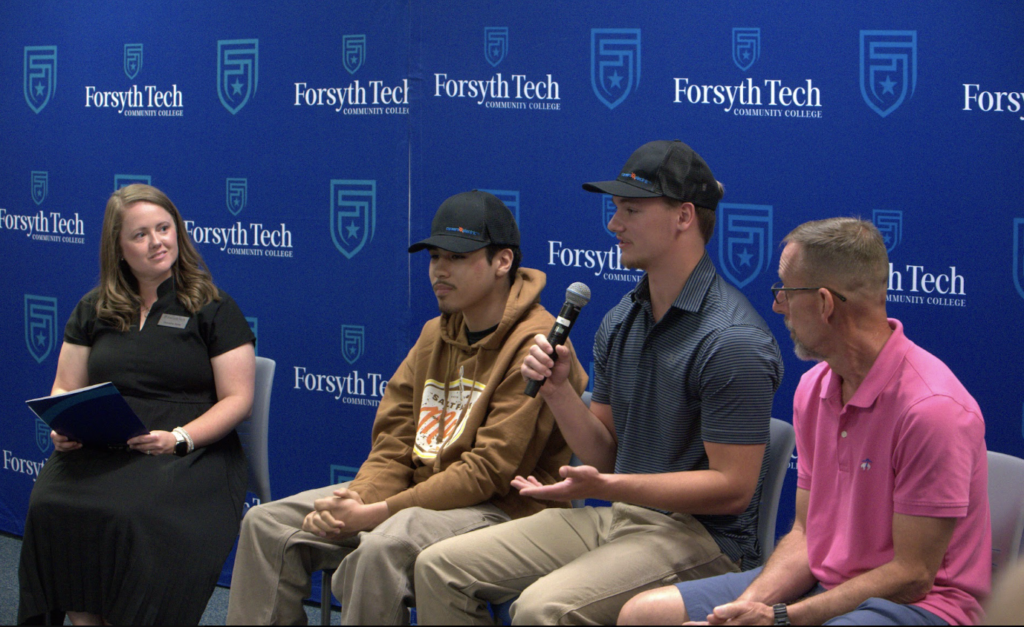
Kristie VanAuken, a consultant with the North Carolina Business Committee for Education (NCBCE), explained that the grant that funds the Careers Electric summer academies was designed to provide individualized, flexible help to the participating students through a student success adviser.
“This particular grant included $450 per student to hire what we created as a student success adviser, and their entire role is student success,” said VanAuken. “If they (students) are encountering some kind of hardship or a barrier, … we’re going to try to identify that early so that we can help a student process to completion.”
 Sign up for Awake58, our newsletter on all things community college.
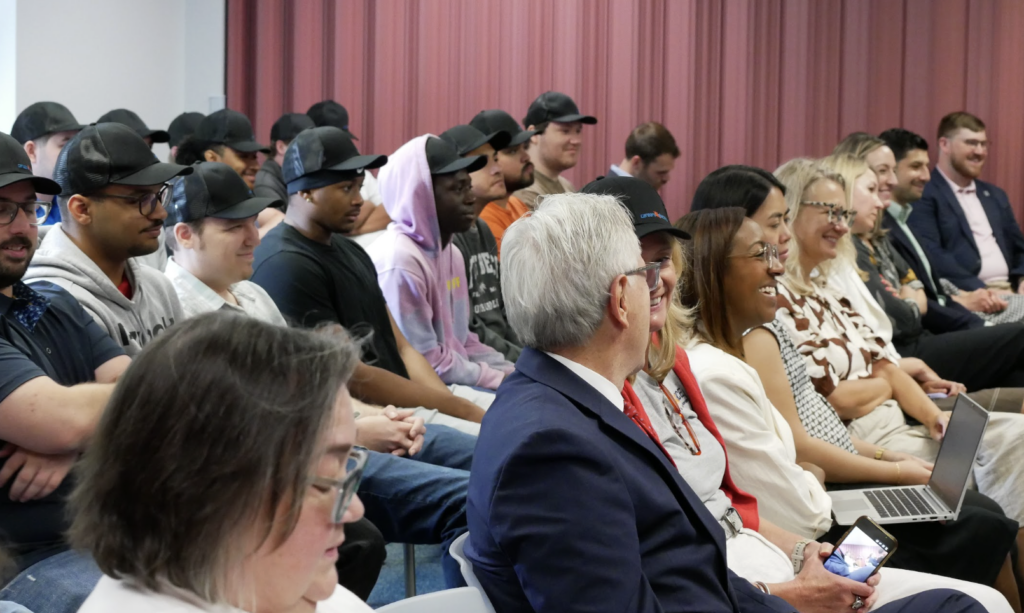
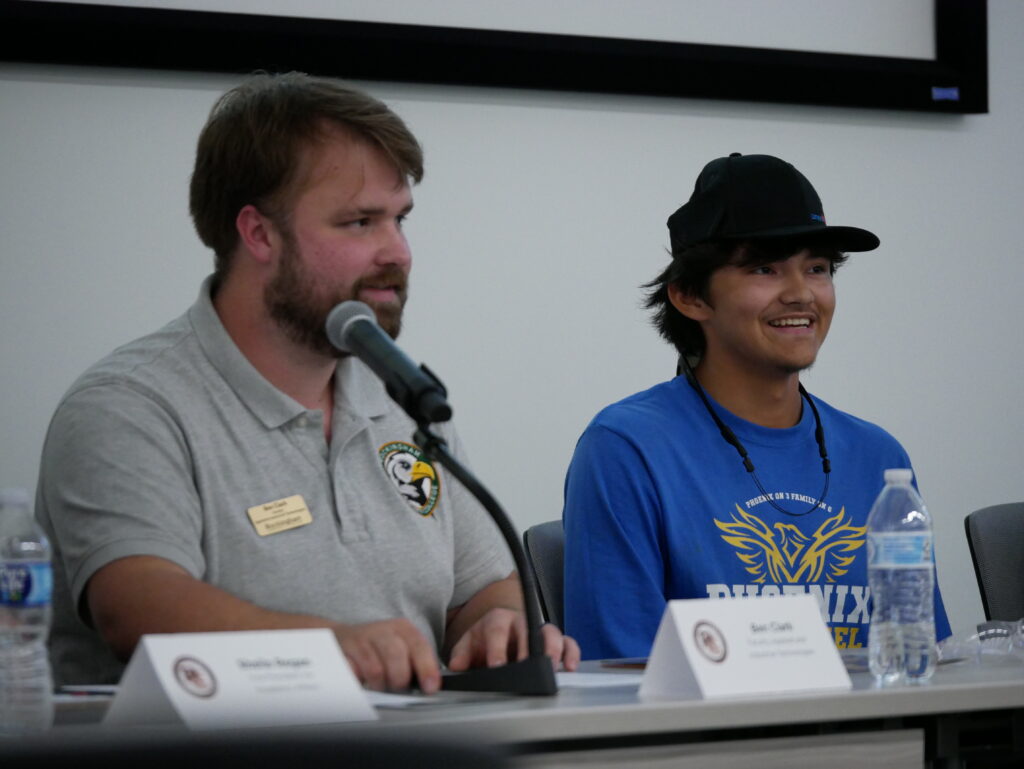
VanAuken said that the program is on track to have very high completion levels, with both instructors and students showing high commitment levels as well. The students who spoke on the panel said that they had enjoyed the program thoroughly, saying they were glad they took advantage of the opportunity and that they would strongly recommend it.
“This program has been way past my expectations. Everything about this has been great. The material that we learn here wasn’t what I was expecting,” said Rockingham summer academy student Jacob Pachecho. “I was expecting just to learn how to wire things up, hot, neutral ground, and all of that. But we dive so much deeper into the information and really learn why we have so many safety protocols and how important electrical is. So I would definitely recommend this program.”
Learning by doing
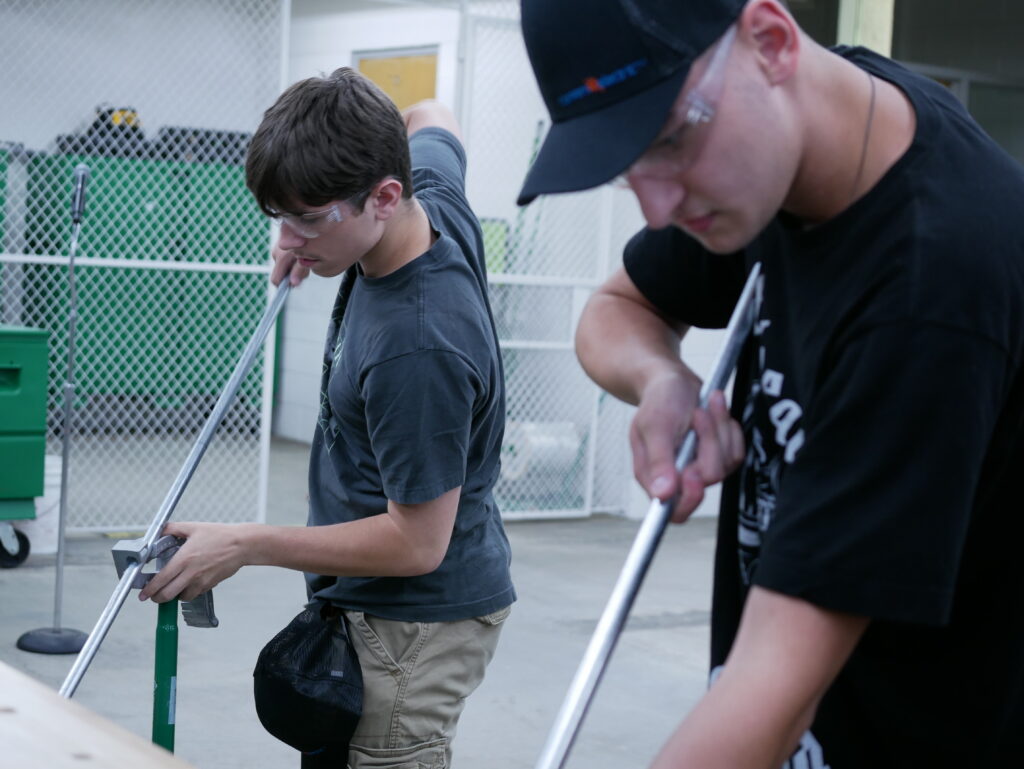
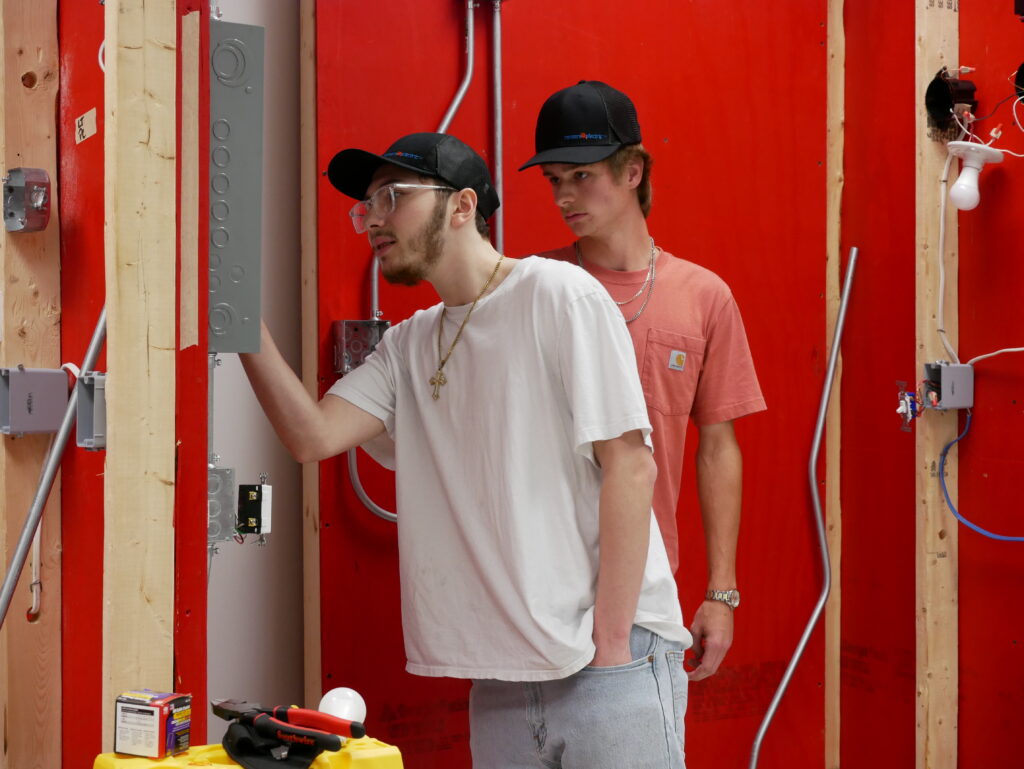
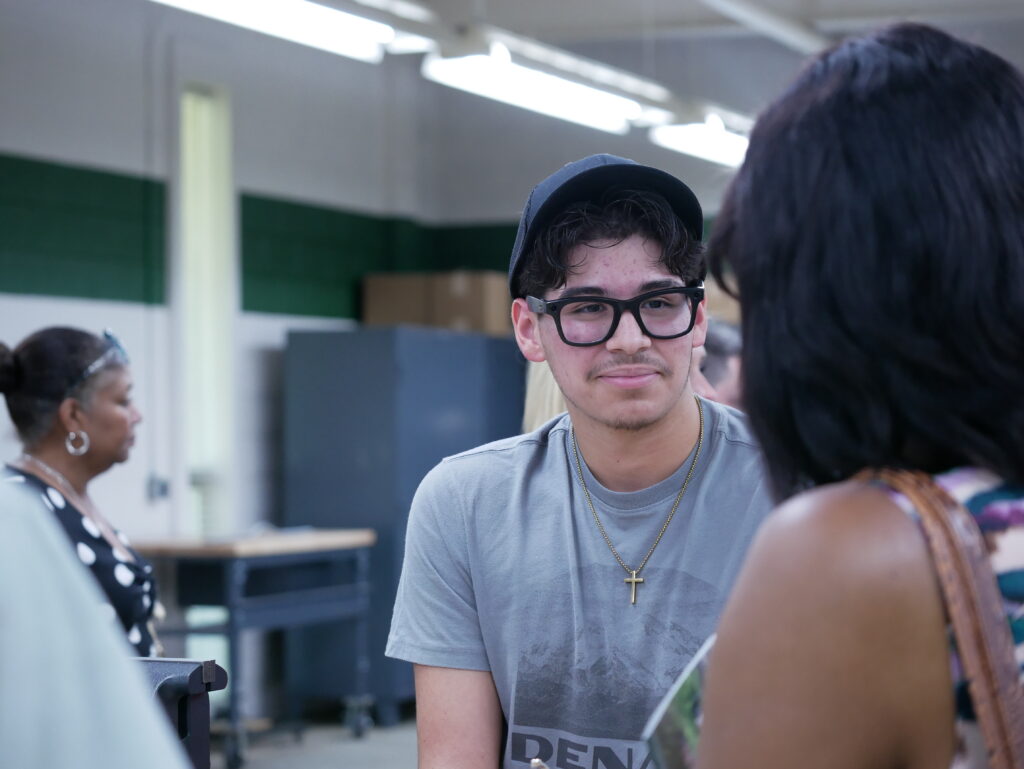
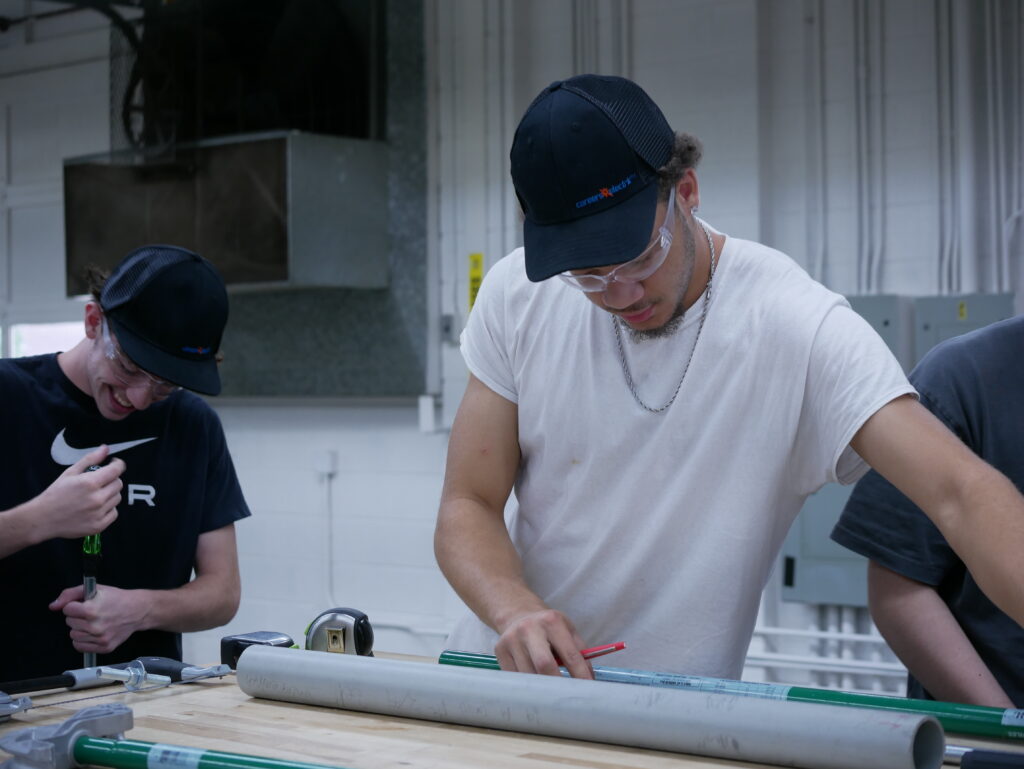
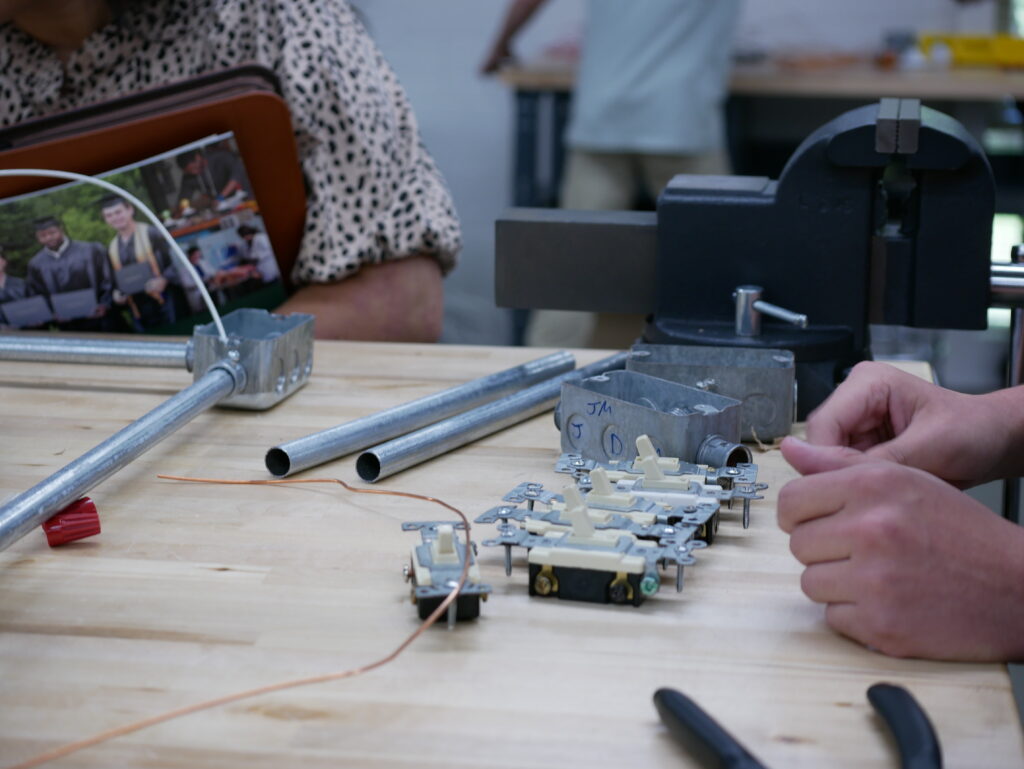
Forsyth and Rockingham students gave the group a tour of their labs, performing several demonstrations of the skills they’d gained in electrical work during the academy. From wiring to conduit bending to safety principles, the summer academy has helped these students learn the basics of electrical work.
Academy students spend time in the lab every day. Rockingham instructor Ben Clark explained that the goal is for students to spend roughly 30% of their time in lecture and 70% in the lab. If everyone is on the same page during lecture, students can even spend up to 80% of their time in the lab, working with the materials and solving problems in real time.
“You’re going to learn it by doing it, not watching someone else do it,” said Clark.
Lopez said he has a few favorite things about the summer academy. “I love the work, but I would say the connections that I made here, too,” said Lopez, “I just made friends.”
Those connections happen a lot of the time because of the work in the lab, enabling the students to interact with each other, help each other, and learn together.
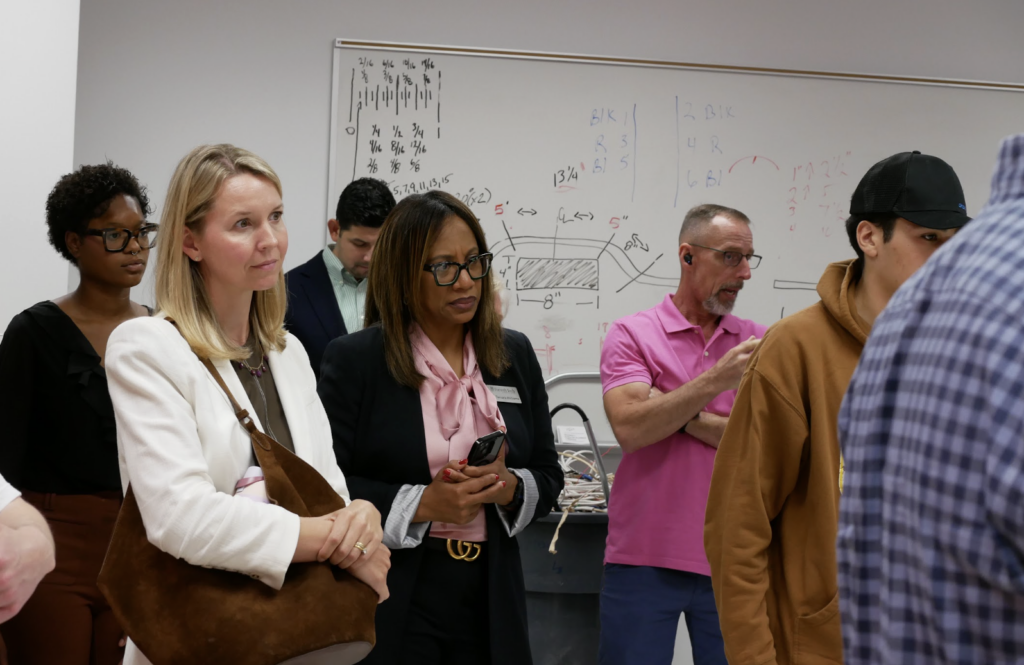
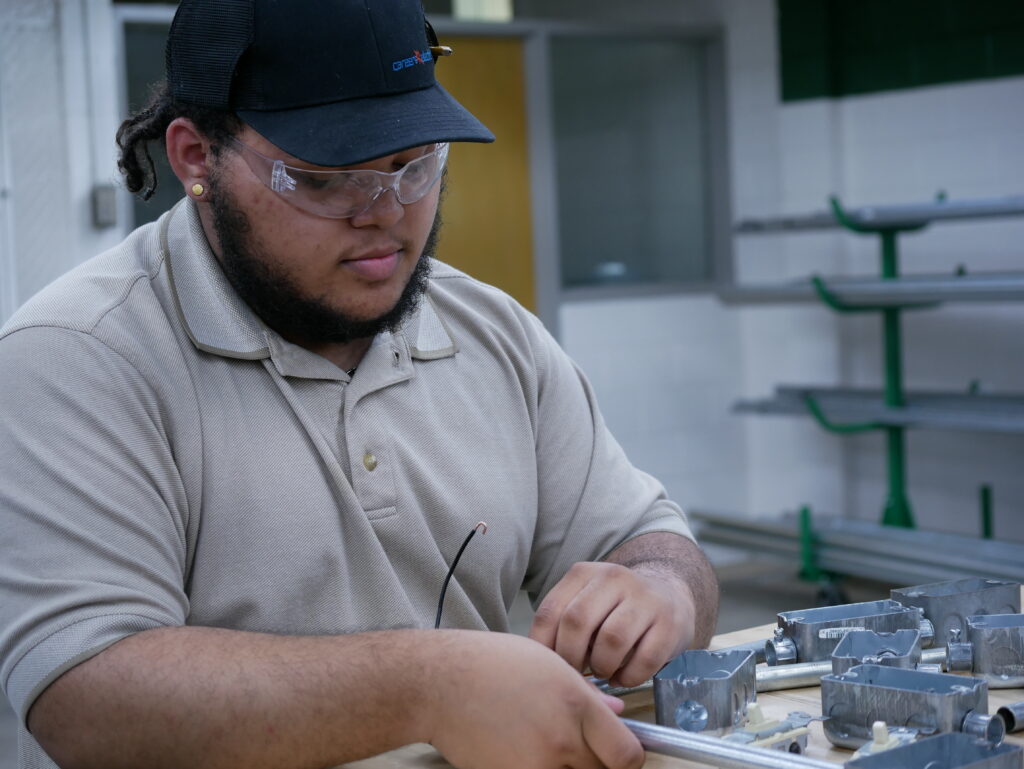
Forsyth Tech instructor Shawn Collins explained that his favorite part of teaching this program is showing his students how the more technical things they learn in their textbooks connect to what they’re learning to physically do in the lab.
“It all comes full circle,” said Collins.
Students found out about the program from their schools, from flyers, and from their friends and family. Anyone can apply, but according to Clark, young people are intimidated by the idea of doing an apprenticeship.
“I want to see everybody involved in this,” said Clark. “I wish the intimidation factor wasn’t there, and I wish people were more open to try this before they consider other things.”
Engaging industry partners, expanding access
The summer academies are free to all participants, even providing them with a $2,000 completion stipend. Rockingham County School Superintendent Dr. Charles Perkins highlighted the importance of keeping the barrier to entry low for these students, but he said that there are real costs that come with running these programs.
“All of that is tuition free, no cost to the students,” Perkins said. “Now there’s cost, right? And it’s up to us to figure out ways to create grants and work on partnerships. … When we grow these numbers, that’s great, but we’ve got to have resources to pay for textbooks and the codes for those things.”
Englert echoed the need for additional partnerships and funding to support the growth of these programs.
“In order to get to the scale of meeting the workforce demand in North Carolina that we need, we need more partners in this form,” said Englert. “Now, we’re really hopeful that we can see more employers step up and provide the funding that we know these community colleges and high schools need to solve the bottlenecks in the training system.”
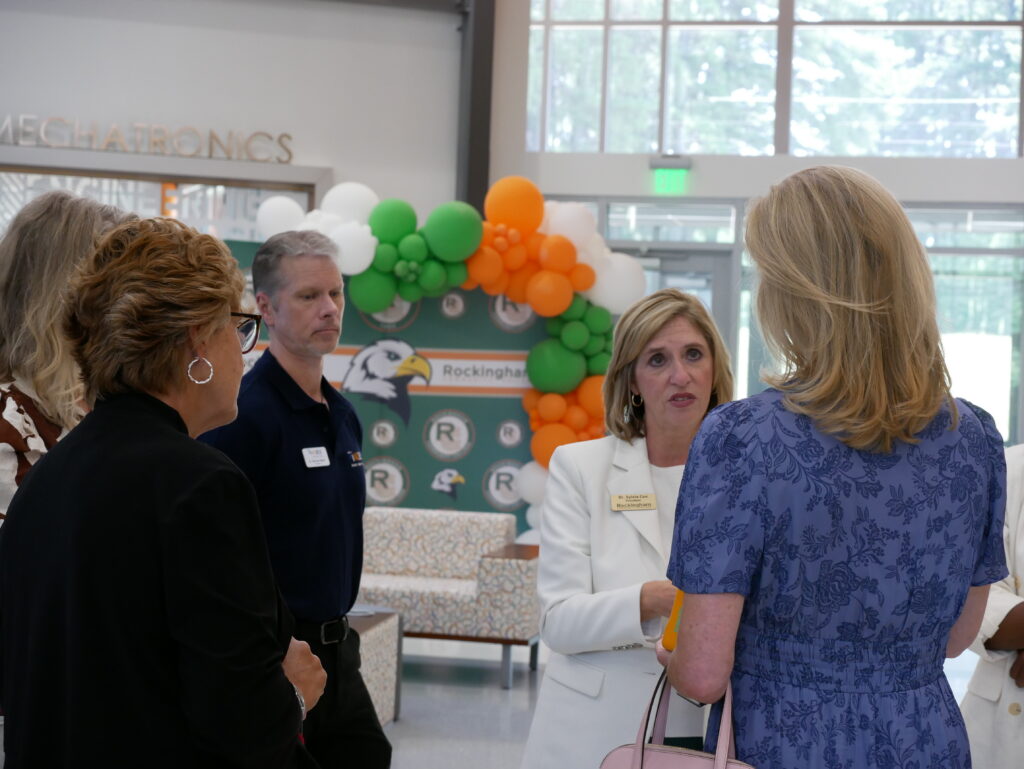
The students, instructors, and administrators on the Rockingham panel were also joined by two employer partners who spoke of the benefit that pre-apprenticeship and apprenticeship programs present to their industry.
“Starr Electric is a new relationship for the program as well, and my biggest hope is that we can help it thrive and grow and advance and all those kinds of things and give these kids an opportunity,” said Mike Cravens, a project manager at Starr Electric.
Cravens became introduced to the programming at Rockingham through a tour he took, where he had the opportunity to witness the instruction in the labs and the passion of the instructors and students.

At the end of the tour at Rockingham, Carolina Sullivan, the executive director of NCBCE, said to the business leaders: “Please take advantage of really talented people in your own backyard, and give them chances.”
Five of the 16 industry partners for Forsyth Tech have committed to doing speed interviews with the students, allowing them a chance at the openings they have at their companies.

CEO of Siemens Foundation David Etzwiler said the work being done in these programs was a realization of the American dream, “that if you work hard and set goals, you should be able to provide for yourself and your family and your community.”
“We believe in a better future for all of you, for all of us,” said Etzwiler. “And we know that you are committed to working hard and doing your best.”
Scaling Careers Electric
Throughout the day-long tour, members of the Careers Electric Bus Tour expressed that they were impressed with the work happening in the summer academies.
“Seeing these kids actually doing the work of electrical careers was so inspirational,” said Englert. “I think our goal has to be to scale these programs across the state and country.”
The goal of Careers Electric is to serve 25,000 North Carolinians in the next 10 years. These summer academies are an early part of that goal.
Read more about Careers Electric

Students have expressed significant interest in these programs. According to VanAuken, more than 600 students applied for the slightly more than 200 slots in the Careers Electric Summery Academies across the state.
There is momentum in the funding for Careers Electric to eventually support that level of interest, especially with ABB becoming cochair of the initiative just recently. Additionally, the NC Chamber Foundation was just selected to receive $295,000 from the U.S. Chamber of Commerce Foundation to “support statewide efforts to align K-12 career pathways with employer demand in the electrical sector,” which will go directly to the Careers Electric initiative.
“North Carolina’s continued economic growth is strengthened by clearer connections between classrooms and careers,” NC Chamber Foundation President Meredith Archie said in a press release. “This grant will help expand career exploration and workforce pathways in electrical careers so more students can access high-demand opportunities while employers build the skilled talent base needed to succeed.”
Gov. Josh Stein has continuously supported the Careers Electric programs and its expansion across the state. On Monday, Stein toured Cleveland Community College in Shelby, where the summer academy is serving several students in the area.
“Apprenticeships unlock doors of opportunity for young people, help employers develop homegrown talent, and support our state’s workforce needs,” Stein said in a press release. “Careers Electric Summer Academies are preparing the next generation of electrical professionals, creating opportunities for students, and supporting the long-term growth of our economy. No state will outwork North Carolina when it comes to developing our workforce.”