
State Board of Community Colleges sets start date for Monty Sullivan, discusses Propel NC implementation, and more
Last month, the State Board of Community Colleges announced the selection of Dr. Monty Sullivan as president of the North Carolina Community College System (NCCCS). The Board has been undergoing a nationwide search for the next system president since October 2025, and Sullivan’s nomination now goes to the General Assembly for confirmation.
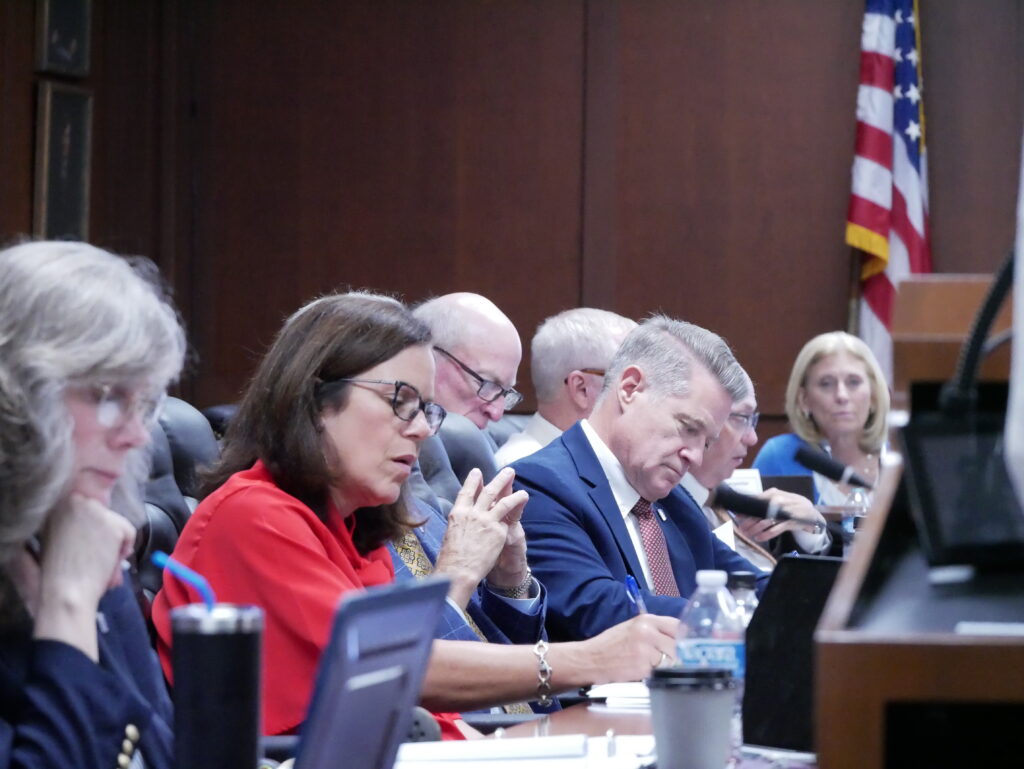
“The search is over,” said Board Chair Tom Looney at the Board’s August meeting last week, where the appointment and contract of Sullivan as interim president of the NCCCS was approved. He is scheduled to start in this role on Aug. 24.
Sullivan previously served as the head of Louisiana’s community college system, and you can read EdNC’s profile of him here.
J.B. Buxton, president of Durham Technical Community College and chair of the North Carolina Association of Community College Presidents (NCACCP) said the association met Sullivan at their summer meeting and has put together a liaison group of college presidents to aid Sullivan as he comes into this new role.
“I think we feel like we’ve got an outstanding leader with great experience — experience in the very issues that Propel creates opportunities for, experience working with legislatures, experience working across the aisle, and I would say that we believe deeply that his success is our success,” said Buxton.
Also at last week’s Board meeting, Propel NC was officially implemented for the very first time as a part of the system’s budget, following the passage of a new state budget in July. The Board’s finance committee presented the new system budget in detail, and multiple Board members emphasized that this budget is “transitional” due to the scope involved in implementing Propel.
“We plan to make a pretty significant revision to how our budget package is going to look moving forward,” said Dr. Phillip Price, chief financial officer of NCCCS. “Now that we’ve got Propel in place, now that we know where things stand, it gives us an opportunity to take a good, hard look at how we present the information, how we make and modify that going forward.”
Propel NC, first unveiled by the Board in January 2024, is a complete overhaul of the system’s funding model that prioritizes funding for high-wage, high-demand sectors. The system’s funding model had not previously been updated since 2013. Propel NC accounted for the bulk of the system’s legislative request for three years in a row, with the Board asking for $93 million in recurring funding to fully fund the new model.
The state legislature funded Propel NC through a $57.5 million allocation in the 2026 state budget, which is the largest allocation included in any state budget proposal for Propel NC. Last week, the Board said they will continue requesting full funding for Propel NC in future budgets.
The system budget explained that instructional funding for community colleges is now based on the “innovative Propel NC model,” which introduces parity funding between workforce continuing education (CE) and curriculum programs. Instructional funding is broken down into four categories of workforce sectors, which the document says will “incentivize short-term workforce programs.”
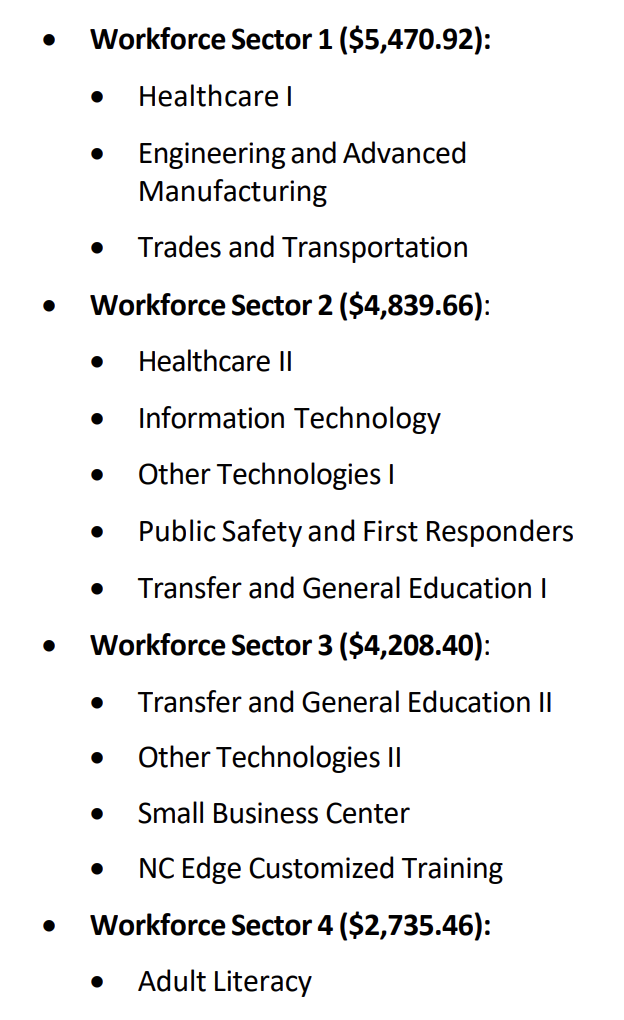
There have been several changes to how funding is described and understood through the model, explained by Finance Committee Chair Lisa Estep.
“We don’t have curriculum and (continuing education) anymore: It’s now called instructional funding. Basic skills is now referred to as adult literacy,” said Estep. “But, you will still see references to curriculum and (continuing education) still in this document because not everything has changed yet, but those changes are coming.”
The system has discussed with local college presidents what would be required for reporting their planned use of Propel NC funds at each of their schools, ensuring that there are “projected goals” and “targets being set.” Estep emphasized the importance of ensuring accountability as the funds are dispersed to colleges so that the General Assembly, the Board, and the system can know that Propel NC is being implemented well.
NCCCS Vice President of Government and External Relations Alex Fagg said the system has been working closely with presidents to develop a two-pronged approach to analyzing the rollout of Propel NC. The first prong aims to understand what each college’s initial needs and plans are with regard to the funding they receive, and the second prong identifies how the money was actually spent, what the return on investment (ROI) was, and what the anticipated ROI is going forward.
This reporting is planned to take place this fall so that when the long session of the General Assembly begins in January 2027, the system is able to present information and data to legislators. Fagg said the system also plans to track Propel NC’s progress at the end of this fiscal year in July 2027.
“Some of this is going to have a little bit longer ramp up because, as we start building the programs, the students don’t automatically show up,” said Buxton. “So we get not just ROI now, but expected ROI over time.”
Read more about Propel NC

“This is the transformational piece, right?” said Estep regarding new Propel-funded programs and opportunities. “This is what gets you excited — that you see the possibilities.”
Buxton also explained that the NCACCP has established three working groups — one on Propel NC success, another on new degree approaches, and a third on small college support and system capacity.
Estep also discussed Board and system responsibility for the outcomes of implementing Propel NC.
“The Board owns this. The system owns this. We asked for it,” she said. “We need to understand what we’re asking for, and we need to make sure that it’s correct… We’ve got to make sure that we get this right.”
You can see the changes to funding for each of the state’s 58 community colleges here, which is included on the last page of the system budget document. As Propel NC is implemented across the state, EdNC will continue covering how it changes, succeeds, and grows.
 Sign up for Awake58, our newsletter on all things community college.
Workforce updates, including new investments from the state budget
The NCCCS recently issued a survey to the 58 community college presidents to understand their engagement with Registered Apprenticeships and to identify support needs. In North Carolina, ApprenticeshipNC is the state apprenticeship agency designated by the U.S. Department of Labor (DOL) to register and oversee apprenticeship programs.
The survey received 52 usable responses, with surveyed presidents asking for usable statewide infrastructure from ApprenticeshipNC, while also noting that apprenticeships are “strategically relevant” and in-demand by employers across the state.
The survey was removed from last week’s agenda, and Board member Sarah West explained that it was moved to give staff more time to analyze results, run a second survey focused on how the ApprenticeshipNC team is doing, and create an action plan to address findings. You can see a summary of survey results here.
NC Workforce Credentials list
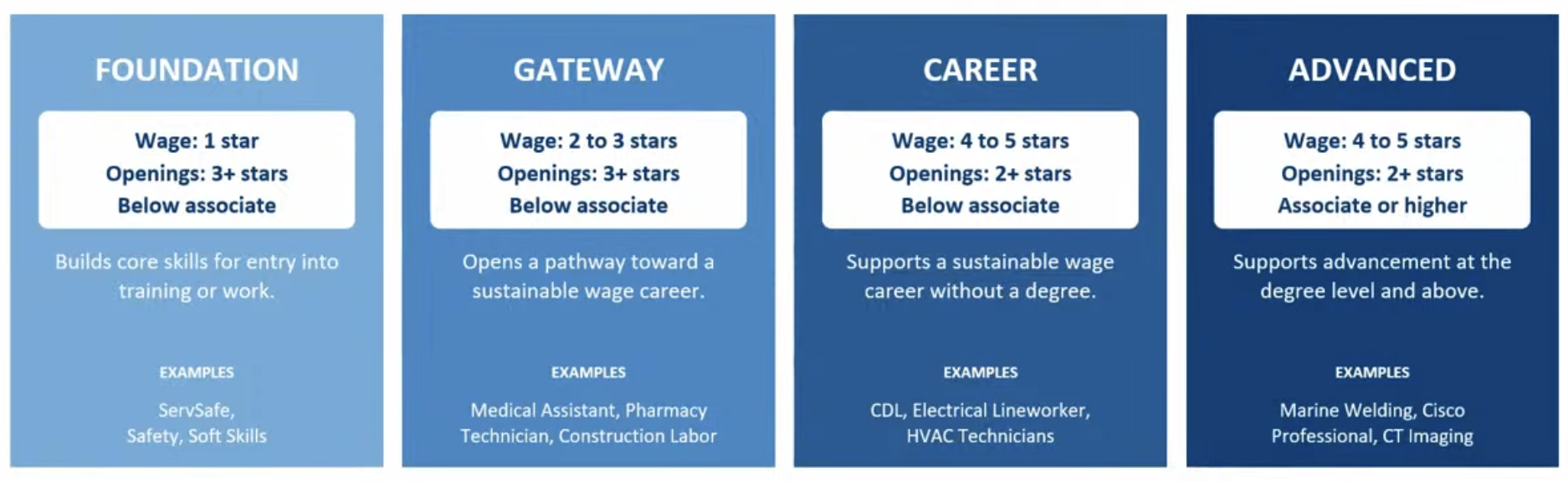
President of myFutureNC Cecilia Holden presented on the establishment of the NC Workforce Credential List, which is “aligned with and supports the Propel NC business model,” according to the report. The list identifies which non-degree credentials have labor market value, based on Star Jobs data from the N.C. Department of Commerce.
“We have 1.72 million North Carolinians currently holding a non-degree credential or a college degree. We are on track. We’re moving forward. We cannot do this but for our community colleges,” said Holden, referencing progress toward the state’s 2030 attainment goal of having 2 million residents between the ages of 25 and 44 with a high-quality credential or postsecondary degree.
Holden also emphasized that students need to know the value of a credential before they enroll in a program so that they can have confidence in their employability after they earned that credential.
Through the work of the NC Workforce Credentials Advisory Council, a unified list of employer-validated, non-degree credentials was created. This list sorts credentials into four different categories: foundation, gateway, career, and advanced. All of the credentials are also differentiated based on if they are deemed “important to the functioning of the economy” or not.
State budget investments
In the new state budget, $2.25 million in nonrecurring funding was allocated to the NCCCS to contract with third-party groups for the Workforce Diploma Program, which is designed to help adults ages 21 and older to “obtain a high school diploma and develop employability and career and technical skills,” according to the request.
Currently, there are 50 adult high school programs operating at community colleges, and the system plans to use this allocation to target the remaining eight colleges without an existing program and develop innovative strategies to aid these individuals with degree attainment and workforce preparedness. The Board approved NCCCS’s request to hire a full-time employee to administer the Workforce Diploma Program.
The state budget also included funding for the system to “support the expansion of work-based learning opportunities for individuals with intellectual and developmental disabilities (IDD).” In 2022, the system launched the Access to Achievement initiative, which serves students with IDD. After operating as a pilot, the program then expanded to 15 colleges in 2024. The new funding from the General Assembly is meant to expand these efforts to 10 additional colleges.
The state budget also included a $640,000 recurring allocation to create two positions “dedicated to statewide business and industry engagement and workforce development activities” to support career pathways for students with IDD. The Board approved authorization of that funding last week.
The state budget also included new funding for the Short-Term Workforce Development Grant Program, approved by the Board last week. The program provides up to $750 per course for in-state students “who enroll in noncredit, short-term workforce training programs” that will result in an industry-recognized credential “in fields with employer demand and competitive wages.”
Industries that qualify for the pathway program include construction, health sciences, information technology, electrical line workers, manufacturing programs, and “other programs that meet workforce needs” while also providing the student with a family-sustaining wage.
Disaster response toolkit
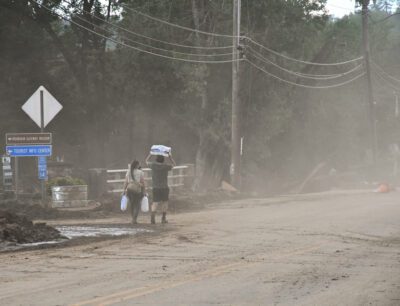
Over the last four months, more than 120 leaders from two-thirds of the system’s colleges have participated in surveys, interviews, and discussions about their experiences with disaster response, particularly following Hurricane Helene.
Last week, the Accountability and Audit Committee presented an initial report on the disaster preparedness toolkit that was created using these insights, which described the collective experiences of interviewees as the “greatest resources for strengthening disaster preparedness.”
“Our system, and particularly our colleges, are often the center for recovery for those communities that are hard hit,” said Dr. Kim Gold, executive vice president of the NCCCS.
The interviews were used to develop a disaster preparedness toolkit that can be used in the future to help shape the response of community colleges to any disaster that they may face, even those outside of natural disasters. The toolkit identifies six core commitments in preparing for future disasters:
- Practicing preparedness
- Prioritizing relationships
- Readying resources
- Staying connected
- Centering people
- Shaping recovery
The report explained that these commitments were repeatedly seen in colleges’ experiences with navigating past emergencies. These commitments can act as a framework for community college leadership to “reflect on their preparedness,” the report says, understanding where they stand with regard to their “practices, relationships, and mindsets” that would affect their response in a future disaster. Each commitment will be accompanied by a set of guiding questions to aid in colleges’ reflection and preparation.
Furthermore, the toolkit will also feature several checklists that are “organized around key college functions and the different phases of a disaster” — from before a disaster strikes, to when a crisis is near, to the initial response, and finally throughout the process of recovery. These action items are meant to include concrete steps based on the real-life experiences of those interviewed.
“Part of what is really important about this is, it’s being prepared — not waiting until a disaster strikes. It’s, ‘How can we be prepared on blue sky days? What can we do in advance to be ready?’” said Gold.
The toolkit is currently being previewed, with a public launch scheduled for September. There will be a session at the system conference in October where colleges can learn how to use these resources. The system hopes that the toolkit will “contribute to a broader state and national conversation about disaster preparedness.”
Explore EdNC’s Hurricane Helene Playbook

‘Building careers, building neighborhoods’ at Pitt Community College
On Thursday, Pitt Community College (PCC) gave a presentation to the Board on a program that pairs workforce education with affordable housing. Since 1988, residential home construction has been a part of the college’s curriculum.
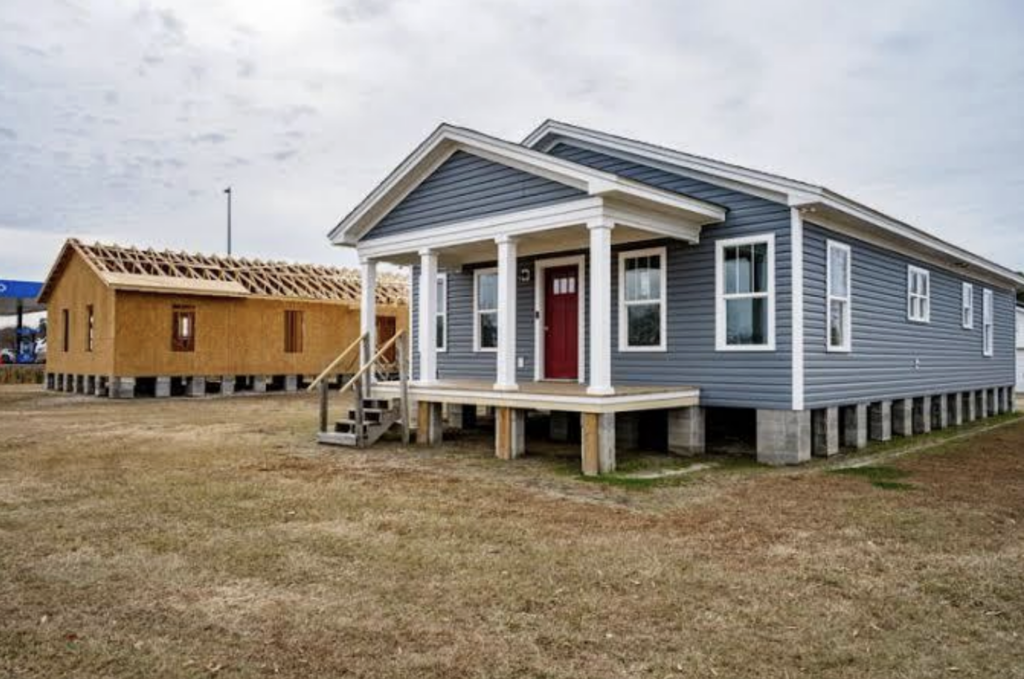
Now, through a partnership with the city of Greenville, Pitt students may build affordable housing on campus as part of their coursework. Once the homes are built, they are relocated to lots owned by the city, allowing qualifying families to purchase them as a part of the city’s affordable housing strategy.
Over the next 10 years, the program hopes to build 50 homes. The program also engages local high school students through multiple summer academies, expanding the workforce pipeline.
“This is not just one program affected, this is a lot of programs affected,” said Dean of Construction and Industrial Technology Dr. Keith Kinlaw. “These are real homes that have been built by real students.”
The program allows students to gain “authentic, credit-bearing learning experiences” as they work through the entire process of building a home and meeting the same inspection requirements of a private contractor, according to the report.
To make this program a success, it did not just take the college and the city, but “everybody,” according to PCC President Dr. Maria Pharr. The effort includes eight different entities, bringing together local industry, philanthropic organizations, utilities, healthcare, and other state partners.
The report explained that, through this program, the college has developed a “scalable model” they hope to share with other colleges in North Carolina who might be interested in implementing a similar initiative. “We don’t want to keep this to ourselves,” said Pharr.
“The most important thing that (other schools) are going to have to have, though, is the relationships,” said Pharr. “You have to have the vision, and you have to have the ability to bring things together — whether they’re the programs within your own college or whether they’re the groups that all have a piece in making this work.”
Employee bonuses, college audits, and more
The Board approved the state budget’s allocation of $22.4 million for community college employee bonuses. These one-time bonuses will be awarded to employees based on their salary — a $1,750 bonus for employees earning $65,000 or less, or a $1,000 for employees earning more than $65,000. Bonuses will be payable as close to Oct. 15, 2026 as is possible.
Audits
The NCCCS presented the results of their risk assessment and internal audit plan, which indicated three areas as “very high-risk”:
- The ERP system, especially with regard to its installation, issues during development, reduced services, and the loss of faith in the system
- Cybersecurity
- Record retention, which is due to the large volume of paper records maintained by NCCCS that are not duplicated anywhere or digitized
The audit deemed several other areas to be “high risk”:
- Risk management
- Grant management
- SOPs
- Various Human Resource risk areas
- Propel NC, including its implementation and the achievement of its desired outcomes
- Contract management
Chair of the Audit Committee Geoffrey Lang said the committee has concerns about resources, but they are waiting for the new system president to come on board to discuss where additional resources may be needed for audits. Currently, there is only one auditor, and Lang highlighted that as a major constraint.
Additionally, five colleges had findings in their financial audits: Caldwell Community College and Technical Institute, Central Piedmont Community College, Durham Technical Community College, Gaston College, and Southwestern Community College.
The Board also heard an update on the accreditation status of schools within NCCCS, with the Southern Association of Colleges and Schools Commission on Colleges (SACSCOC) reaffirming the accreditation of Asheville-Buncombe Technical Community College, Isothermal Community College, Rowan-Cabarrus Community College, Wayne Community College, and Wilkes Community College.
Edgecombe Community College is still on a warning with SACSCOC due to not demonstrating compliance with Standard 8.2.a, which deals with educational programs and student outcomes. However, Edgecombe has successfully complied with previous noncompliance in three other standards since January 2026.
Programs
A 2023 law allowed Tri-County Community College to operate an in-state tuition pilot program, Success Without Borders, for residents of four neighboring Georgia counties. The program launched in October 2023, and it has seen an increase in participating students in the last three years. The program is set to expire at the end of 2026-27 school year, and the college is requesting that the pilot move to standard operation at the end of this school year.
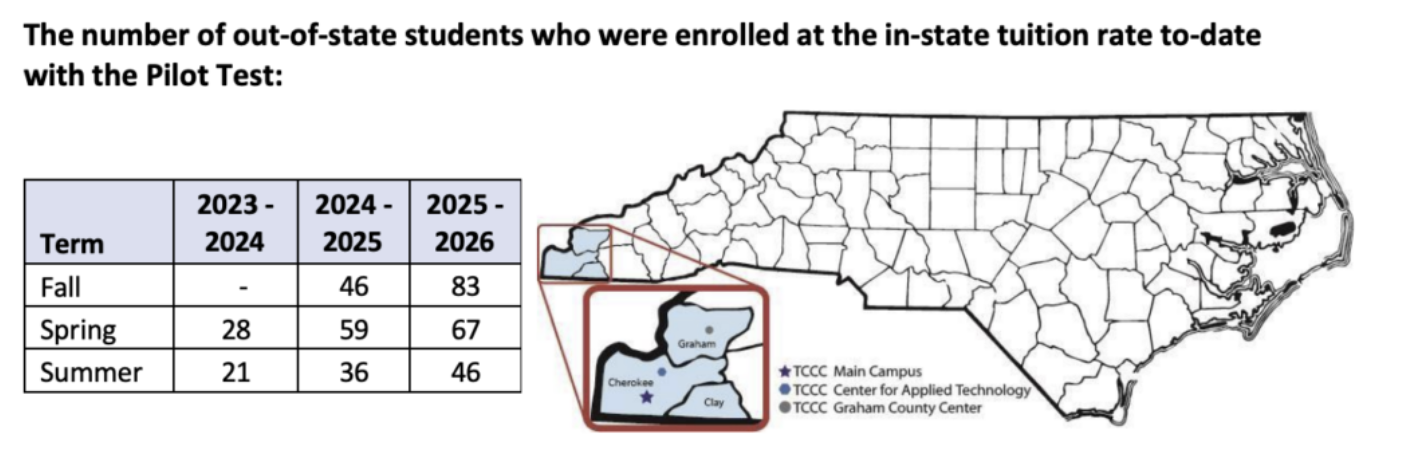
Dr. Brian Merritt, NCCCS senior vice president and chief academic officer, also noted that the system is considering requesting in-state tuition reciprocity at other border community colleges.
The Board also approved the investment of $55,000 from reserve funds to the NC Student Success Center to launch a statewide Change Leadership Academy for Student Success for mid-level community college leaders. The academy aims to instruct these leaders in “proven methods” to evaluate and improve their school’s functionality and student success, hoping to host roughly 30 leaders as a part of the program.
The Board also approved $40,000 to extend the Student Leadership Development Program by one academic year. The program allows students to participate in a year-long leadership program, LeaderShape, which includes a residential leadership institute.
In addition to the approval of the interim system president contract, there were also two other personnel changes announced. Mark Merritt has rejoined the State Board, filling the role of Chaz Beasley, and Dr. Bill Starling, president at Sampson Community College, will be retiring in spring 2027.
The State Board of Community Colleges will next meet on Sept. 17-18. The State Board’s three-day retreat, typically held in September, has been moved to Jan. 20-22, 2027.