
Dr. Monty Sullivan provides first report to State Board as interim president, discusses the reach of NC community colleges
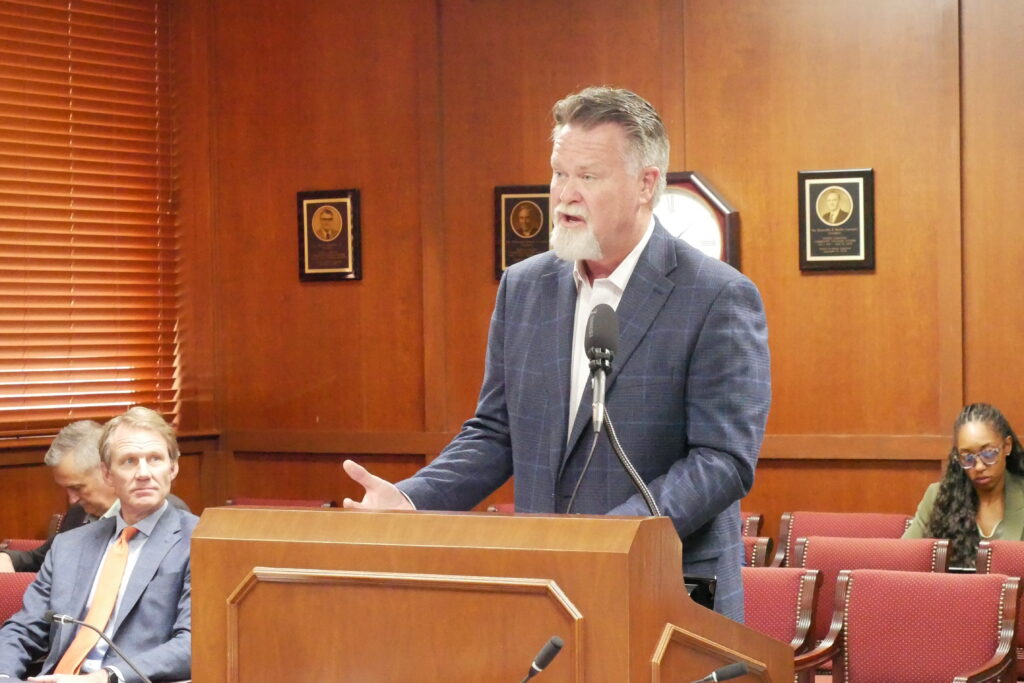
Last week, Dr. Monty Sullivan — interim president of the N.C. Community College System (NCCCS) since Aug. 24 — gave his first president’s report to the State Board of Community Colleges in the role.
During his remarks, Sullivan emphasized the importance of data, transparency, and stability. He thanked the Board and the system for how they’ve welcomed him into the role so far, and he noted his excitement to officially get to work once his nomination is considered by the General Assembly.
“It is an honor and a privilege to stand before you this morning as your interim president,” said Sullivan. “Now, having said that, I am excited to get that interim tag removed — the sooner the better. We have work to do.”
Sullivan said that there was “nowhere else on the planet” that he wanted to be more than North Carolina, emphasizing how the work of community colleges takes place across the state, not just in the system office in Raleigh. Sullivan said that the work the Board and the system does through the 58 colleges can “fundamentally change” North Carolina, but that the system needs “the stability of a Board office” to support its good work.
EdNC’s coverage of the leadership transition
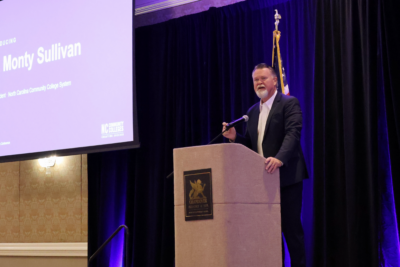
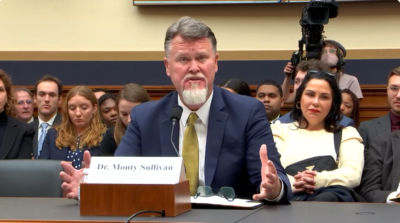
Outlining the work ahead, Sullivan described the data he said concerns him the most. Sullivan noted that, last year, 58% of working-age North Carolinians were employed or looking for employment, which was down from 67% in 2000.
In that same 25-year period, Sullivan said the number of jobs in North Carolina grew. With 5 million jobs in the state, he asked, “Who’s gonna fill them?” He said the state currently has too few people to fill those jobs, specifically noting vacancies in the healthcare labor force.
The NCCCS serves more than 600,000 students each year. In a state of roughly 11 million people, Sullivan said, “That’s reach. That’s enough to matter.”
However, Sullivan said workforce shortages have real consequences on the state economy, contributing to rising costs. He encouraged the Board to redouble their efforts to make the 58 community colleges a “fleet of institutions” aimed at solving North Carolina’s problems — especially with workforce development.
As an example of the impact the system can have, Sullivan described how the North Carolina Department of Health and Human Services partnered with the NCCCS to help address the mental health crisis in North Carolina, and how students turn to the NCCCS when they realize their passion and need credentials.
“The work we have to do is not just central to these colleges, but it’s central to the people of North Carolina,” said Sullivan. “I’m convinced of something: More people educated and skilled, more people working — that’s good for North Carolina.”
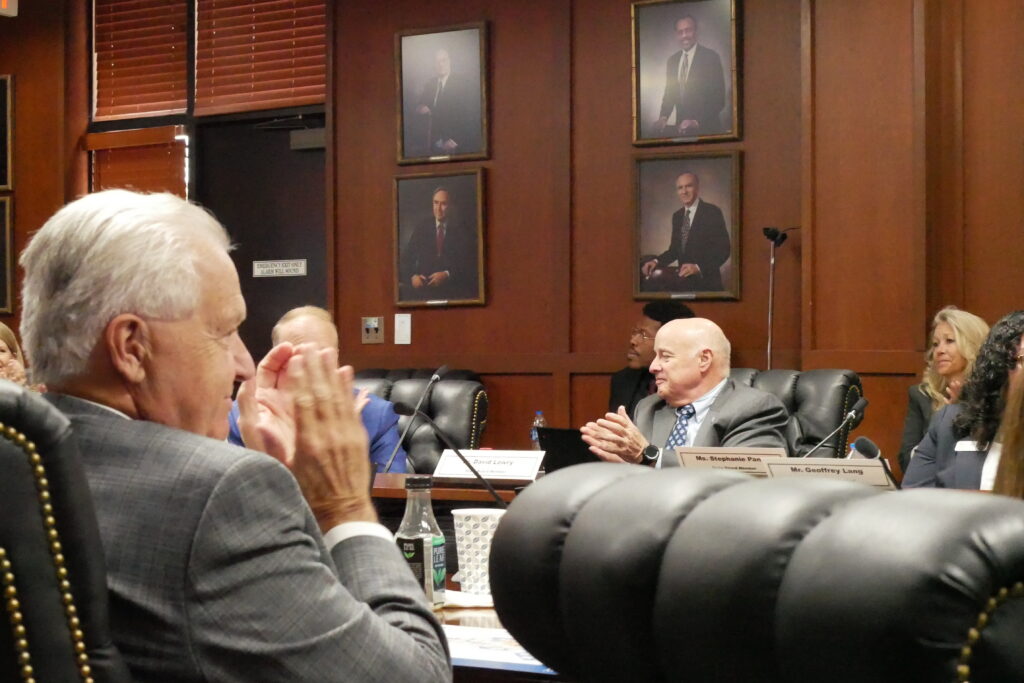
The search for the next system president began in the fall 2025, and on July 23, the State Board of Community Colleges announced the selection of Sullivan, the former head of Louisiana’s community college system, to serve as the next system president and CEO.
During the State Board’s August meeting, Sullivan’s contract was approved. He officially started in his role as interim president on Aug. 24, and the system is now awaiting the General Assembly’s consideration of Sullivan’s nomination.
For the first time, the Board’s selection of a system president is subject to confirmation by the General Assembly, within 30 legislative days. If confirmation does not take place by then, statute says “it shall be deemed that the General Assembly has denied confirmation. A person denied confirmation shall not serve as President or interim-President.”
Based on the legislature’s adjournment resolution’s scheduled sessions — and days the General Assembly met the week of July 27 — the legislature’s deadline to confirm Sullivan in 30 legislative days is likely to take place in the Nov. 30-Dec. 18 voting session. For the rest of the calendar year, the legislature is scheduled to meet on the following dates: Sept. 28-30; Oct. 26-28; Nov. 16-19; and Nov. 30-Dec. 18. Votes are not expected to be taken until after the election, according to reporting from WUNC, starting on Nov. 16.
Sullivan said during the Board’s executive committee that they are hopeful the confirmation process will play out around Thanksgiving, but he emphasized that the time frame is “out of (their) control.”
“I can’t wait to get started. I need your help — we’ve got work to do in November. We’ve got to get across that finish line,” said Sullivan. “Once that interim title is removed, I’m excited to get started with this group of presidents, with you as Board members, with communities across the state to fundamentally change the future of North Carolina.”
Executive committee becomes standing, with new responsibility for presidential oversight
During the Board’s September meeting last week, most committees reviewed and approved their charters as part of an annual process. Notably, both the executive and transformation committees — previously special committees — are now standing.
The executive committee was first created as a special committee in February 2026 for the duration of the system’s leadership transition and transformation, but will now be a permanent fixture of the Board. Additionally, the executive committee now has responsibility for system president performance and evaluation, a responsibility previously shared by the personnel, finance, and policy and governance committees.
At the executive committee meeting on Sept. 2, NCCCS Vice President of Government and External Relations Alex Fagg provided an update on plans for Sullivan to participate in regional convenings across the state. According to the meeting minutes, Fagg explained that the regional convenings “will take a multi-pronged approach, including travel throughout North Carolina to increase visibility and strengthen relationships.”
Sullivan will meet with community college representatives, college board chairs, industry partners, and more. Planning for these regional convenings, which will be hosted on community college campuses, is already underway, and an effort is being made to distribute the travel to colleges across the state’s distinct regions.
 Sign up for Awake58, our newsletter on all things community college.
Updated timeline for next strategic plan
The strategic planning committee reviewed a new timeline for the system’s 2026-29 strategic plan, which will advance three strategic goals approved in February 2026:
- Build the best workforce in the world: Position North Carolina as the premier state for talent development by expanding workforce readiness, increasing educational access and attainment, and supporting lifelong learning and career advancement.
- Align employers, students, and colleges to build a future-ready economy: Strengthen collaboration among colleges, employers, state agencies, K-12 partners, universities, regional organizations, and students to create seamless pathways to credentials, degrees, and workforce-relevant skills.
- Transform the system to empower colleges and students for continuous success: Advance systemwide coordination and modernize policies, tools, and infrastructure to strengthen the ability of all 58 colleges to deliver exceptional outcomes.
According to previous reporting by EdNC, the strategic planning process had been paused amid the transition to a new system president. Now that Sullivan is in place, stage 2 and stage 3 of the strategic planning process will take place, including developing key performance indicators and tactics for each goal.
Sullivan asked the Board to consider what these three goals really mean, specifically focusing on the first goal of building the best workforce in the world. He encouraged them to make sure the entire system has a common aspirational goal.
Between September 2026 and January 2027, the system will hold 12 regional meetings to gather perspectives from colleges and other stakeholders to inform the implementation of the new plan. Key themes from these meetings will be shared during the Board’s January 2027 Strategic Plan Summit, scheduled for Jan. 20-22.
Sullivan said it’s important to have a public plan so that every person in North Carolina can understand what the system is trying to achieve.
“As you see the development of, yes a strategic plan, but more importantly, a public agenda, so that every person across this state understands what we’re trying to accomplish and can be a part of accomplishing it,” said Sullivan during his president’s report last Friday. “That’s how we change the future of North Carolina. That’s how we change the future of our people.”
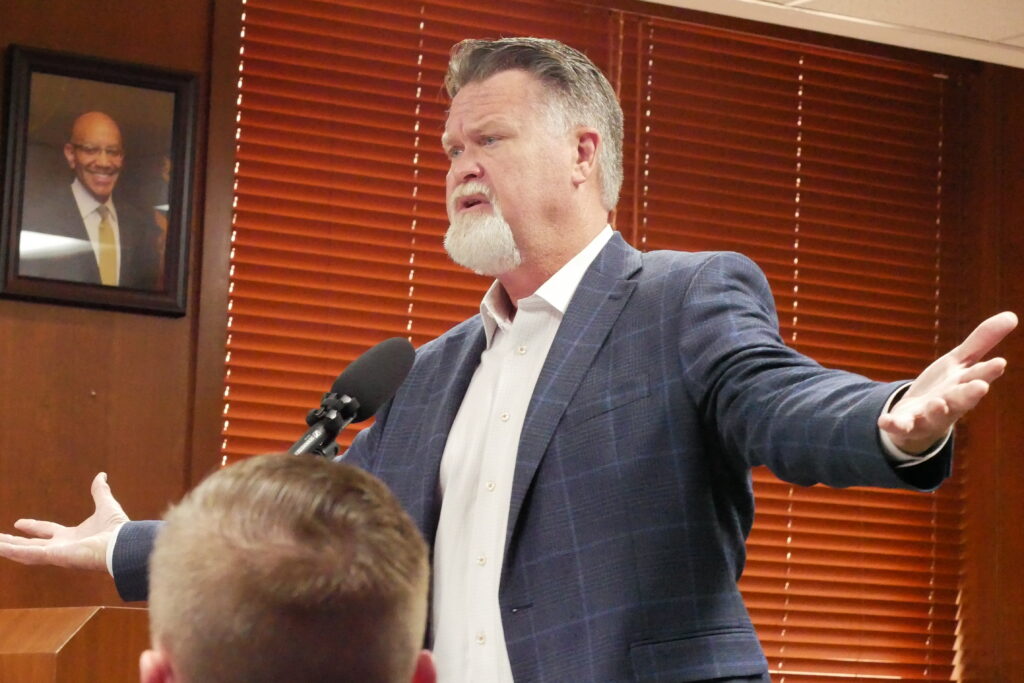
He also said this strategic plan is not his or the colleges’ — it’s the Board’s. He encouraged Board members to take ownership of their vision for the system and prioritize alignment across all 58 colleges.
“This is what the Board wants to see accomplished, and everything we do going forward following approval of that plan ought to align,” said Sullivan. “This is that opportunity for us to all be on the same page and headed in the same direction.”
Key performance indicators and recommended performance targets will be developed from December 2026 to January 2027, and will also be shared at the January 2027 Strategic Plan Summit for approval. Feedback will be gathered in advance from North Carolina Association of Community College Presidents and North Carolina Association of Community College Trustees.
The Board expects to approve the new strategic plan in February, with implementation then running from February 2027 to June 2029. According to the strategic planning committee’s updated charter, all future strategic plans will run on a three-year timeline, rather than ranging from three to five years as in previous years.
The strategic planning committee also reviewed a final report on outcomes from the 2022-2026 strategic plan, including data on progress related to that plan’s five goals:
- Recruiting and retaining faculty and staff
- Strengthening enrollment
- Supporting student success
- Advancing economic and workforce development
- Improving system funding and effectiveness
Read more
System office creates new role dedicated to childcare access and innovation
The Board approved the creation of a full-time, three-year time limited position at the system office dedicated to expanding access to affordable, high-quality childcare for community college student parents. The role will encompass statewide coordination, grant administration, technical assistance, data collection, partnership development, and more.
The position is funded through two, three-year philanthropic awards totaling $500,666.67 to the N.C. Community Colleges System Foundation from the Child Trust Foundation and a private foundation based in North Carolina. The name of the private foundation has remained confidential at the NCCCS Foundation’s request.
“Access to affordable, high-quality childcare is really the difference between if the student parent can stay enrolled and complete a credential or have to stop out because of circumstances outside of the classroom,” said Dr. Brian Merritt, senior vice president and chief academic officer for the NCCCS.
Merritt said he attended a meeting with EdNC, the N.C. Department of Commerce, the Governor’s Office, and others earlier this summer that discussed research EdNC conducted on childcare access across the system.
“The main thing that they heard across our colleges, across our system, across state agencies, was we do not have a point person here at the system that is the voice of childcare access and innovation,” said Merritt.
Merritt noted that the role could support community colleges in applying for grants like the federal Child Care Access Means Parents in School (CCAMPIS) grant, which he said only “three out of our 58 colleges have.” He described the grant as a “bear to apply for,” but believed that colleges would find accessing it much easier if there was support for them at the system level. The role could also support colleges to coordinate partnerships with local agencies to stand up childcare centers on campuses.
Here is all of EdNC’s research on community colleges and child care.
More on childcare at NC community colleges


Transfer to UNC Systems increases as efforts under the revised Comprehensive Articulation Agreement continue
The programs committee reviewed a report to the General Assembly’s Joint Legislative Education Oversight Committee on ongoing efforts to implement and fulfill the Comprehensive Articulation Agreement (CAA), which was first signed in 2014 and then significantly revised in October 2025. Those revisions went into effect in spring 2026.
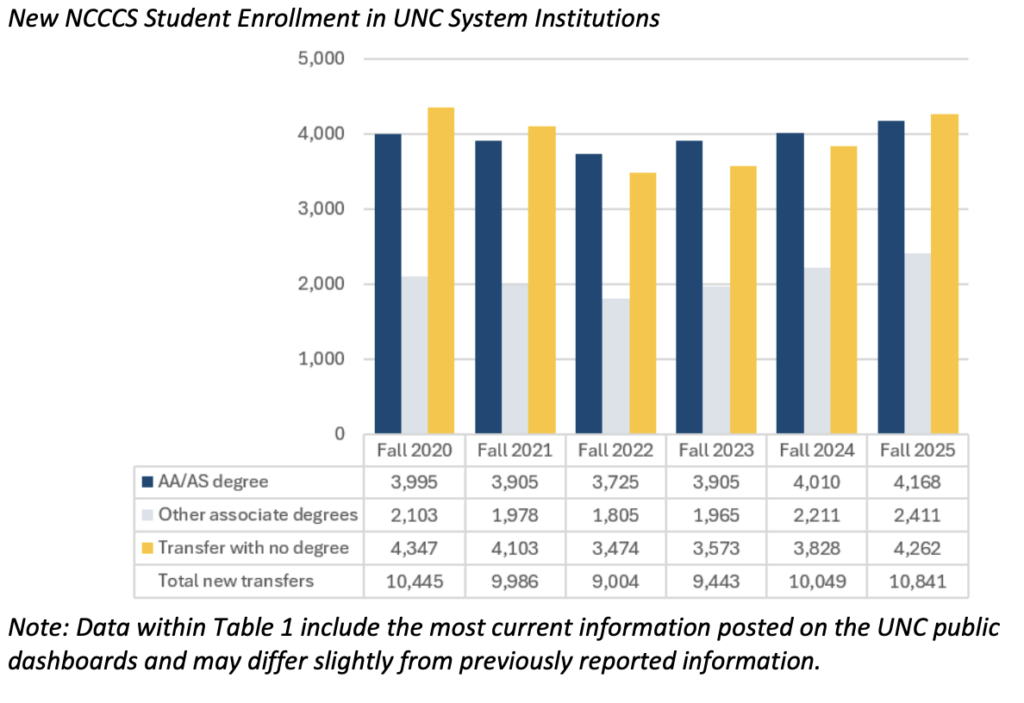
The total number of transfers from the NCCCS to the UNC System increased from fall 2024 to fall 2025, with 6,579 students transferring with an associate degree and 4,262 transferring with some credit but no degree. See the graph below for more information about transfer trends over time.
The report found that NCCCS transfer students who complete their associate degree and transfer as juniors have a higher GPA after their first year than non-transfer UNC system students (3.15 and 3.11, respectively). However, that distinction is not true for students who transfer prior to receiving their associate degree, who have slightly lower GPAs than their non-transfer counterparts.
According to the report, the CAA Transfer Advisory Committee recommends the following to improve support for transfer:
- Technological or operational solutions that create greater continuity, clarity, accessibility, and transparency for advising and the processing of transfer students.
- A website or mobile app that allows students to see how credit earned at one institution would be counted at another.
- Additional training for community colleges and university employees on the benefits and guarantees of the articulation agreement.
- Continuing collaborations with other key partners in the work of transfer success.
Jennifer Maldonado-Castro, a current student who transferred from Carteret Community College to UNC-Chapel Hill, discussed the impact the Carolina Student Transfer Excellence Program (C-STEP) had on her educational experience and success. She said she is grateful for the opportunities she’d been afforded, while also describing how transferring class credits sometimes created confusion.
“A tool showing how credits applied to a degree would have definitely saved me some time in figuring this out,” said Maldonado-Castro. “So I would like to encourage the committee to support an easy-to-use online tool where students can upload their unofficial transcripts and see how different credits apply to different requirements at different universities.”
More on transfer



Other items
Updates on transformation and data
During the executive committee meeting, Scott Ottman, chair of the transformation committee, said the system is “close to the goal line” on completing the four system applications that are undergoing transformation — the combined course library, the college budgeting and accounting system, the customized training program, and the data warehouse.
At the system’s conference on Oct. 14, Ellucian, the company developing a new Enterprise Resource Planning (ERP) system for the NCCCS, will provide a demonstration of Banner, the ERP that is replacing Colleague.
Related to the system’s ongoing transformation efforts, Sullivan said that Patrick Fleming, longtime chief information officer (CIO) for the NCCCS, is retiring. The system will soon begin a search for a new CIO and a vice president of strategic initiatives, the latter of which is being redesigned to focus on transformation efforts.
Ottman also shared updates on a day-long meeting recently held with staff from the Data Quality Campaign, a national nonprofit policy and advocacy organization, and other system office staff.
“We don’t have a data strategy,” said Ottman. “We clearly know we have to have data to make business decisions, critical decisions. So we spent a ton of time on data strategy, data governance.”
Kate Akers, vice president of policy implementation and best practices for the Data Quality Campaign, expressed excitement about the progress the NCCCS is making on data and said she will also be at the Board’s summit in January.
“It’s infectious, the excitement, the real plans that are coming into place, the vision that you all have for the system, and then of course thinking about the data and the infrastructure that’s really needed to get there,” said Akers.
State Board adopts policy on diversity, equity, and inclusion (DEI)
Finally, the Board approved new policies implementing the state-required elimination of DEI in higher education. These items were published for 30-day public comment and received no comments; they will be effective as of Oct. 1.
“I want to point out to the Board that, at the top of each of these policies, it indicates ‘policy for’ or ‘on’ diversity, equity, and inclusion,” said Sullivan. “I want to be really clear to everyone that this is prohibition, very clearly. … This is simply the implementation of what the General Assembly passed in the last session.”
Colleges will have to certify annually in writing that they meet these requirements, and their first affirmation had to include actions taken to achieve compliance as well as information on initial implementation related to reductions in force or spending, changes to job titles or position descriptions, and how savings from these changes were directed.
Certifications for 2026 have already been submitted, and the system office will summarize certifications and present them to the State Board for approval before submitting a required report to the General Assembly by Jan. 15, 2027.
Financial aid initiative
The finance committee allocated $25,000 for the Financial Aid First Look Taskforce, an initiative designed to help colleges provide financial aid award information earlier in the enrollment cycle. The initiative aims to enable community colleges to notify prospective and continuing students of their financial aid eligibility by March, aligning more closely with the timelines used by UNC System and North Carolina Independent Colleges and Universities institutions.
Credit for Prior Learning
The programs committee heard an update on the system’s statewide Credit for Prior Learning (CPL) efforts, with particular attention to the inaugural Credit for Prior Learning Awareness Week, which takes place Sept. 21-25, 2026.
CPL is a system of awarding college credit to students for knowledge that they have already acquired and proven themselves competent in. In North Carolina, the State Board of Community Colleges defines CPL as “curriculum credit awarded for college-level learning obtained through prior learning experiences other than curriculum coursework.” As a part of the week of awareness, the system is hosting several free trainings and events to help schools, industry partners, and the public connect with and understand CPL. Explore the week’s offerings here.
“All this work that’s been done over the past decade, all this work that’s (being done) now in collaboration with colleges, and really this awareness week is for us to not hide the fact that we’ve got work to do,” said Merritt.
NC Career Coach updates
The programs committee reviewed an annual report to the General Assembly on the NC Career Coach program, which places community college career coaches in high schools to assist students with determining career goals and identifying educational pathways enabling students to achieve these goals. In fiscal year 2025-26, 94 career coaches across 49 community colleges served 70 local education agencies. In total, more than 32,000 students were served.
The report identified barriers, including funding match requirements — particularly for rural and small colleges in Tier 2 counties — as well as turnover and workload, data access, and limited system support.
The report recommends that the program expand coaches to reach all 115 school districts, which would require 45 new coaches. The report also suggests mitigating rural funding challenges through state or public-private support, as well as strengthening data access and deploying a retention strategy.
The finance committee also approved $463,000 for six colleges to receive NC Career Coaches, taking the place of federal GEAR UP funds that some colleges have lost.
New behavioral health workforce credential pathway
Through funding from the North Carolina Rural Health Transformation Program (RHTP), the North Carolina Department of Health and Human Services Division of Mental Health, Developmental Disabilities and Substance Use Services is partnering with NCCCS to address behavioral health workforce shortages by developing a standardized, competency-based Qualified Professional (QP) workforce pathway.
The Board approved the Memorandum of Agreement allowing this partnership. The total contract amount is $700,000, with reimbursement tied to completion of project deliverables and reporting requirements.
NCCCS will serve as the statewide lead coordinating entity to support workforce development, improve access to care, and strengthen talent pipelines, particularly in rural and underserved communities. At least five colleges will participate, and there will be support for up to 75 participants in apprenticeship pathways and/or Workforce Pell-supported programs.
The State Board of Community Colleges will next meet on Oct. 15-16.