
North Carolina lawmakers ban DEI in public schools, community colleges, and universities

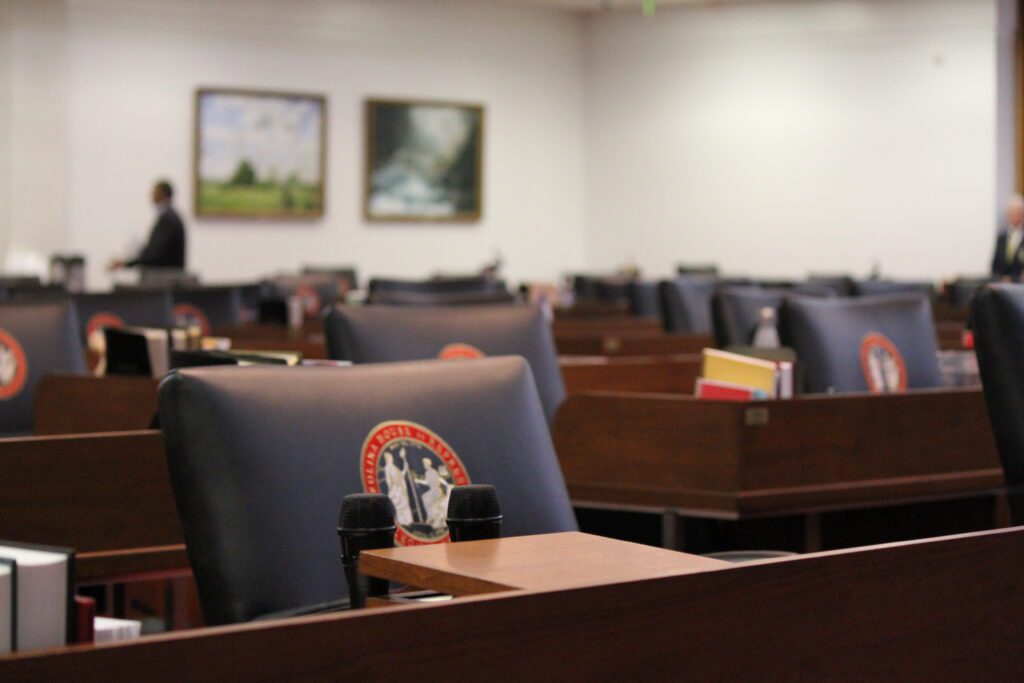
Bills banning diversity, equity, and inclusion (DEI) in public schools, community colleges, and universities are now law after Republicans in the North Carolina House of Representatives voted to override vetoes of the bills on Wednesday. Gov. Josh Stein, a Democrat, vetoed the bills last July. The House also overrode a veto on another bill that would ban DEI in state agencies, which must now be overridden by the Senate.
N.C. House Speaker Destin Hall said in a press release that this ends “divisive DEI policies for good.”
North Carolina’s DEI bans come during a wave of anti-DEI legislation in other states in recent years. South Carolina, Georgia, Tennessee, Virginia, Alabama, and Kentucky are among nearby states that have passed similar bans.
Under the new North Carolina laws, public schools are barred from engaging in “discriminatory practices” or teaching “divisive concepts” to students, with similar restrictions applying to colleges and universities. If the state agency DEI ban passes, state agencies and local governments would be prevented from promoting, supporting, implementing, or maintaining DEI programs, policies, or initiatives.
Another bill, Senate Bill 153, titled the “North Carolina Border Protection Act,” also became law after an override vote on Wednesday. That law, in part, requires University of North Carolina System institutions not to enact policies that restrict federal immigration enforcement.
The votes passed 71-47 along party lines, just clearing the three-fifths requirement to override vetoes in North Carolina. The absence of two members from the House floor allowed Republicans to pass the overrides on their own, without help from Democrats or unaffiliated members.
 Sign up for the EdWeekly, a Friday roundup of the most important education news of the week.
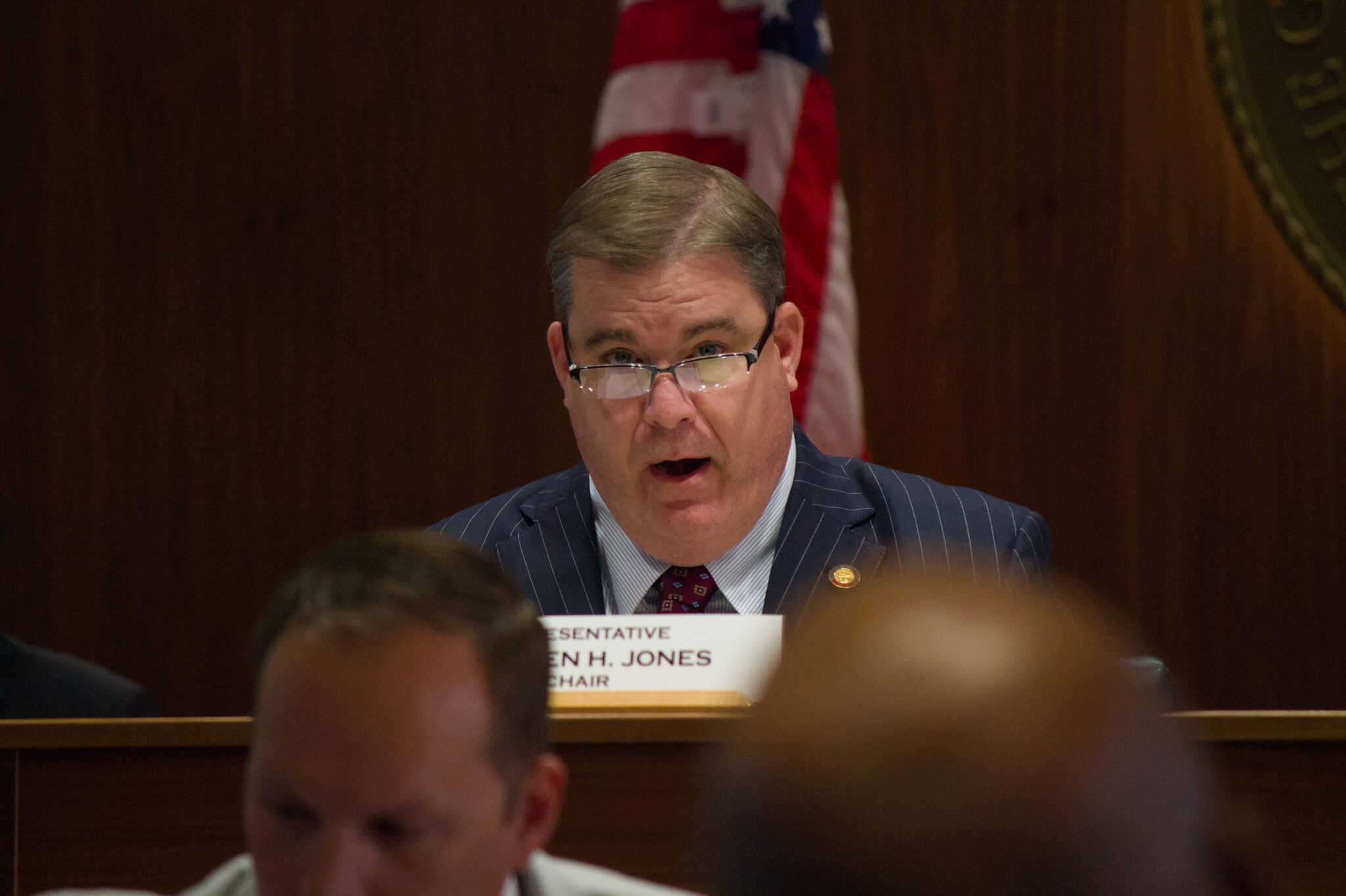
Due to House rules, the anti-DEI bills were not debated before the override votes, but each party was allowed three minutes to speak.
During that time, House Majority Leader Brenden Jones, R-Columbus, said the public school DEI ban stands for dignity, nondiscrimination, honesty, and equal treatment.
“Every child in North Carolina deserves to walk into a classroom and be treated as an individual, not as a category,” Jones said. “Let us stand with parents and students. Let us stand with teachers who want to teach and not indoctrinate.”
Educators react: ‘We do not indoctrinate’
Teachers who spoke to EdNC following the vote rejected Jones’ characterization of their profession.
Ira Smith, an instructional coach and former English teacher, said that “advocating for shared humanity and against oppression is not and has never been indoctrination.”
“We do not indoctrinate,” said Candi Tucker, a civics teacher in northeast North Carolina. “I don’t know of a single teacher that is trying to force their personal opinions on any group of students.”
Democrats highlight need for a state budget
In a statement reacting to the overrides of his vetoes, Stein criticized Republican lawmakers for not focusing on passing a state budget.
“As the legislature leaves teachers and law enforcement officers waiting for hard-earned and desperately needed pay raises, members of the General Assembly are stoking the culture wars that divide us rather than fulfilling their long-overdue responsibility of passing a budget,” Stein said.
In May — nearly a year after not passing a new budget — Republican leaders announced the beginnings of a budget deal, saying they expected a budget vote by mid-June. Most recently, lawmakers said they hope to release a budget by the end of June — next week.
However, last week, Senate President Pro Tempore Phil Berger, R-Rockingham, said there is still a ways to go.
“We’re nowhere close to being finished, but we’re making progress,” Berger told reporters, according to NC Newsline.
On the House floor, Rep. Zack Hawkins, D-Durham, said, “The things we should know before we even begin this debate is it’s no raises, no budget, no (cost of living adjustment), no money in people’s pockets.”
“This does nothing for the people of North Carolina,” Hawkins said.
He compared the DEI ban to House Bill 2 — a now-repealed law that led to boycotts by out-of-state artists and corporations — telling Republican legislators: “No matter how much the state of North Carolina continues to grow, you want to tear down the progress that was made over the last 50 to 70 years.”
He asked Republicans to vote against the veto override “because as a former public school teacher (and) a current school parent, I know that my district and other districts across the state will look at you in shame.”
House Democratic Leader Robert Reives, D-Chatham, said that the DEI bans impact the ability of North Carolinians to learn, be healthy, and have opportunities.
“How dare you say that you want this state to be the best that it can be, and then spend this time trying to figure out how to stop our best and brightest minds — who may be white, who may be Black, who may be female, who may be male, who may be Latino, who may be Asian?” Reives said.
Tying the DEI ban to North Carolina’s economic standing and attractiveness as a state, Reives said “there’s not an amount of money you can pay (young people) to go live somewhere that hates them.”
Read more EdNC reporting on DEI
What will the DEI bans look like in schools?
The laws banning DEI in public schools, community colleges, and public universities, restrict 12 “divisive concepts:”
- One race or sex is inherently superior to another race or sex.
- An individual, solely by virtue of his or her race or sex, is inherently racist, sexist, or oppressive.
- An individual should be discriminated against or receive adverse treatment solely or partly because of his or her race or sex.
- An individual’s moral character is necessarily determined by his or her race or sex.
- An individual, solely by virtue of his or her race or sex, bears responsibility for actions committed in the past by other members of the same race or sex.
- Any individual, solely by virtue of his or her race or sex, should feel discomfort, guilt, anguish, or any other form of psychological distress.
- A meritocracy is inherently racist or sexist.
- The United States was created by members of a particular race or sex for the purpose of oppressing members of another race or sex.
- Particular character traits, values, moral or ethical codes, privileges, or beliefs should be ascribed to a race or sex or to an individual because of the individual’s race or sex.
- The rule of law does not exist but instead is a series of power relationships and struggles among racial or other groups.
- All Americans are not created equal and are not endowed by their Creator with certain unalienable rights, including life, liberty, and the pursuit of happiness.
- Governments should deny to any person within the government’s jurisdiction the equal protection of the law.
The law also prevents the formation of public school offices or divisions promoting “discriminatory practices,” or the above divisive concepts, or that are referred to with the words diversity, equity, and inclusion.
University of North Carolina System institutions and community colleges are prevented from endorsing, advocating for, or compelling students, professors, and other employees “to profess belief in divisive concepts,” the law says, and may not create DEI offices.
See the full text of the bills here:
- Senate Bill 227, “Eliminating ‘DEI’ in Public Education.”
- Senate Bill 558, “Eliminating ‘DEI’ in Public Higher Ed.”
- House Bill 171, “Equality in State Agencies/Prohibition on DEI.”
Opponents worry about vague language
Last year, while the anti-DEI bills were moving through committees, some Democrats and opponents of the bills questioned what the bills would actually do, citing vague language. At one point, Sen. Lisa Grafstein, D-Wake, moved to rename one of the bills “An Act to Do Absolutely Nothing.”
At a committee meeting last year, Liz Barber, director of policy and advocacy for the ACLU of North Carolina, said that SB 227’s language could be unconstitutionally vague.
But even if the laws are vague, opponents to the DEI bans have said the vague language could lead to a chilling effect among educators and state employees.
State Superintendent of Public Instruction Maurice “Mo” Green, a Democrat, and State Board of Education Chair Eric Davis released a joint statement following the DEI veto overrides saying “we believe the law leaves educators with genuine questions about how to apply it.”
“For example, it restricts instruction on certain concepts while expressly and appropriately preserving the teaching of difficult history, including the historical oppression of people based on characteristics such as race, ethnicity and religion,” they said. “Regardless, we trust that our legislators will join us in supporting our public school educators as they continue to do what they do best- helping students think deeply and critically about a wide range of important issues, respect and appreciate people of varied backgrounds and characteristics, and prepare for their next phase of life.”
Deborah Brown, the principal of a charter school in Raleigh, called the DEI bans “a solution in search of a problem.”
“Are they finding that schools are not implementing — that we are not following Equal Opportunity Act hiring practices? Are we not offering opportunities to students to all take (Advanced Placement) classes, to all participate in sports?” Brown said.
Brown worries that teachers might have to second guess their course materials and activities after the ban, and noted her school’s Socratic seminars in which students take on different perspectives in a debate.
“It does feel like a lot of what’s in the legislation might get in the way of that kind of teaching, that sort of critical thinking, by being so, so broad,” she said.
Brown also noted that the words “diversity, equity, and inclusion” themselves cannot be used in public school offices or divisions, but “that is still work that schools have to do.”
“We do want a diverse population of students. We do want to make sure that we are equitable in how we approach kids. We do want to be inclusive of everyone who walks through our doors,” she said.
In a statement, North Carolina Association of Educators (NCAE) President Tamika Walker Kelly said the DEI ban has stripped public schools of the values that make them valuable to children.
“Diversity, Equity, and Inclusion aren’t political talking points,” Kelly said in the statement. “They are the foundation of schools that are safe, welcoming, and strong for every child that steps through the schoolhouse door.”
As EdNC has previously reported, some Republicans have described the DEI bans differently. Senate Majority Leader Michael Lee, R-New Hanover, emphasized last year that the DEI ban in higher education targets perceived misuses of DEI programs and not the values of diversity, equity, and inclusion themselves.
“There’s nothing wrong with diversity. There’s nothing wrong with equity. There’s certainly nothing wrong with inclusion. And I think that the goals of DEI are laudable, and in fact, I think we could probably all agree on them,” he said at the time.
The ‘North Carolina Border Protection Act’
The fourth veto overridden by House Republicans on Wednesday is SB 153, the “North Carolina Border Protection Act,” which instructs select state agencies to take steps to ensure “noncitizens residing in the United States without legal permission” do not receive state benefits nor qualify for programs.
The law also prohibits University of North Carolina System institutions from having “any policy or regulation that limits or restricts the enforcement of federal immigration laws to less than the full extent permitted by federal law.”
See the full text of the law here.