
For growing community colleges, classroom space is often the limit

North Carolina community college enrollment officially surpassed pre-pandemic levels this year, with seven colleges logging full-time equivalent (FTE) student growth of more than 30% since the 2018-19 school year.
Expanded dual enrollment programs, new workforce credentials, and good old-fashioned community outreach seem to be driving much of the surge. Yet that momentum is hitting a physical wall — many colleges simply lack the space to accommodate more students.
 Sign up for Awake58, our newsletter on all things community college.
Growth driven by the trades
According to data released in March, South Piedmont Community College (SPCC) saw a 45% increase in FTE from the 2018-19 school year to 2024-25. That’s a crucial boost, as the majority of state funding for community colleges is based on FTE counts.
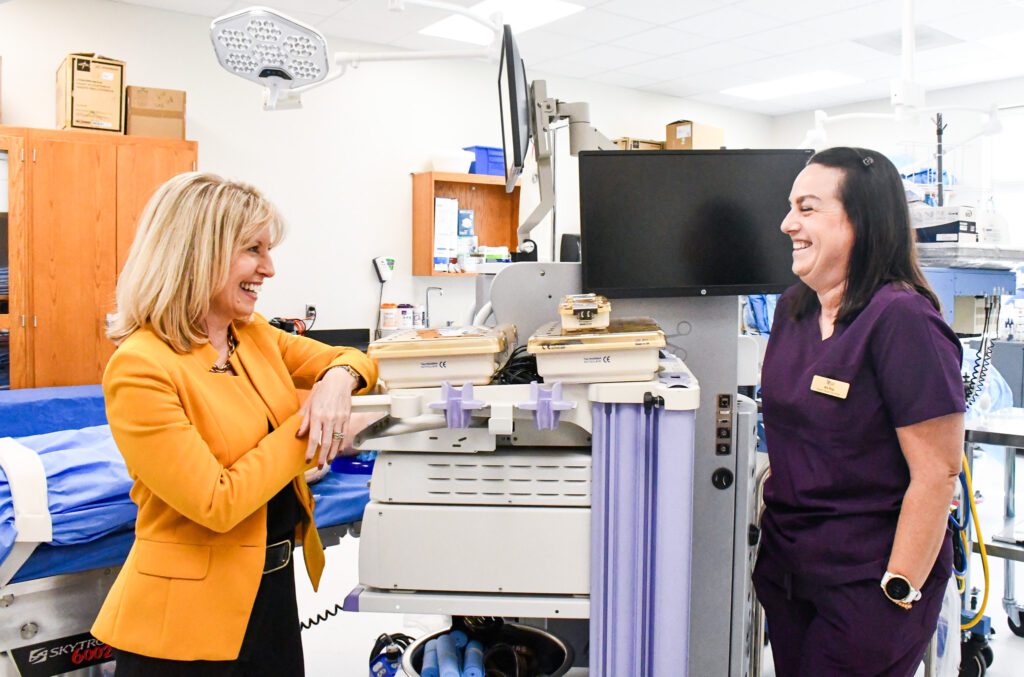
While high school students make up nearly a third of all SPCC enrollment, the college is seeing significant interest from adult students. That’s due to a combination of the college’s intentional community outreach and a high demand for workforce credentials, according to Dr. Stacy Waters-Bailey, president of SPCC. Specifically, HVAC, electrical, and healthcare programs are popular, she said, but they require highly specialized classrooms and equipment.
“Most of our capacity constraints are around our specialized lab spaces that we need to train for those high-tech fields,” said Waters-Bailey. “We are lucky in the sense that I feel like we have been able to respond in terms of the faculty positions and staff positions we need, but our (capacity constraint) is really about space and equipment — not having enough pieces of equipment, or not having a big enough space to add equipment so we can increase our training.”
‘Demand exceeds the available seats’
Dr. David Townsend, vice president of academic affairs at Brunswick Community College, echoed a similar sentiment.
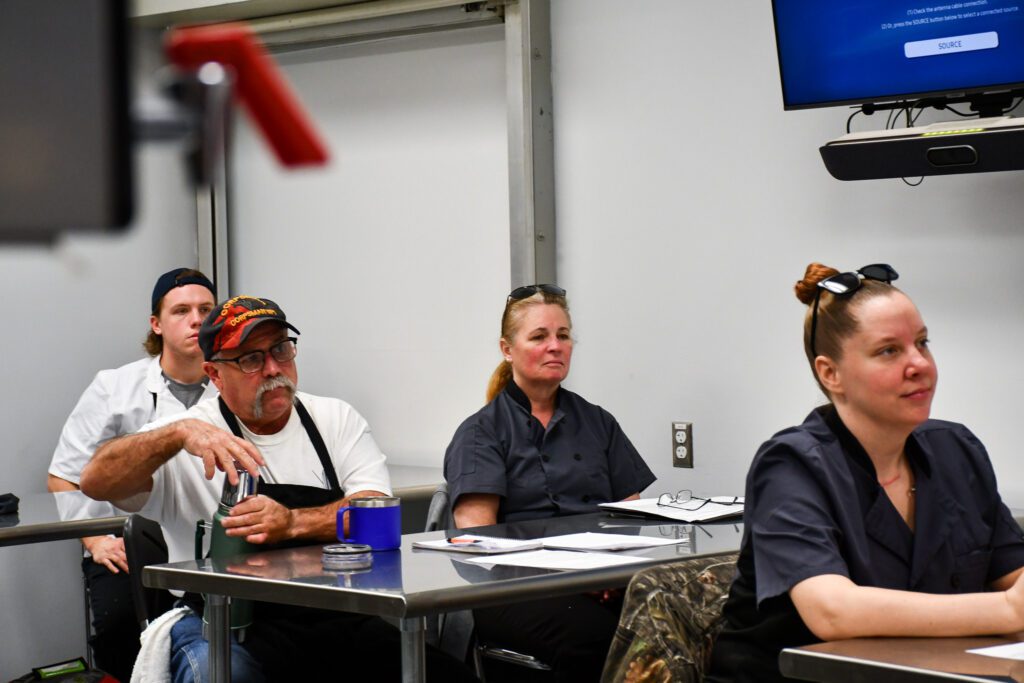
“Enrollment growth has created capacity challenges, particularly with physical classroom space. A classroom designed for 24 students, for example, simply cannot accommodate 35 students because demand exceeds the available seats,” he said. “We have therefore had to be thoughtful about section sizes, scheduling, and the availability of instructional space.”
Brunswick saw 39% FTE growth from 2018-19 to 2024-25. Townsend attributed that growth to a number of factors — expanding dual enrollment programs, boosting digital marketing efforts, creating new curriculum pathways, and responding to community needs. But sustaining that growth is a different challenge.
“Growth is a positive challenge, but sustainable growth means making sure that students have access to the faculty, courses, technology, equipment, and physical spaces they need to be successful,” Townsend said.
James Sprunt Community College, in Duplin County, saw an 83% increase in FTE from 2018-19 to 2024-25 — the most of any in the North Carolina Community College System.
Vice President of Student Services Dr. Shakeena White said some of that growth was due to expanded “workforce-focused programming, and intentional recruitment and outreach.”
Additionally, White said James Sprunt has made efforts to boost dual enrollment programs. Dual enrollment programming — where high schoolers take college-level courses — has been growing across the U.S. In North Carolina, the dual enrollment student population has grown by 37% since 2019.
“Together, these efforts helped make James Sprunt education more accessible to students at different stages of their educational and career journeys,” White said. “Ultimately, our enrollment growth reflects an effort to meet students where they are. Whether that’s a high school student earning college credit, an adult advancing or changing careers, or someone pursuing a credential that can lead directly to employment.”
National trends
That growth also mirrors a broader national trend. This year, a report from the National Student Clearinghouse Research Center showed the overall rate of high school graduates choosing to enroll in community college and credentialing programs is on the rise — outpacing enrollment in bachelor’s degree programs.
Aside from a bachelor’s degree, earning a workforce credential from a community college is the most likely path to a good-paying job for American students and workers. Yet success in increasing enrollment is pushing community college campuses to their physical limits.
“As enrollment has grown, we have begun to experience capacity constraints, particularly in high-demand workforce programs,” White said. “Continued growth requires us to ensure that our facilities, equipment and qualified faculty keep pace with demand so students continue receiving the hands-on training they need and employers expect.”
‘We could serve more students’
Despite the surge in enrollment, funding levels have not kept pace with physical needs. In July, the North Carolina General Assembly passed a state budget delivering one of the system’s largest funding increases in years. But much of the infrastructure allocation targeted technology modernization rather than expanding physical classrooms or building labs.
In 2023, the General Assembly allocated $55 million in one-time funding for high-cost healthcare start up and expansion grants. Roughly 65% of that funding was invested in equipment and instructional materials, but funds could not be used for capital projects.
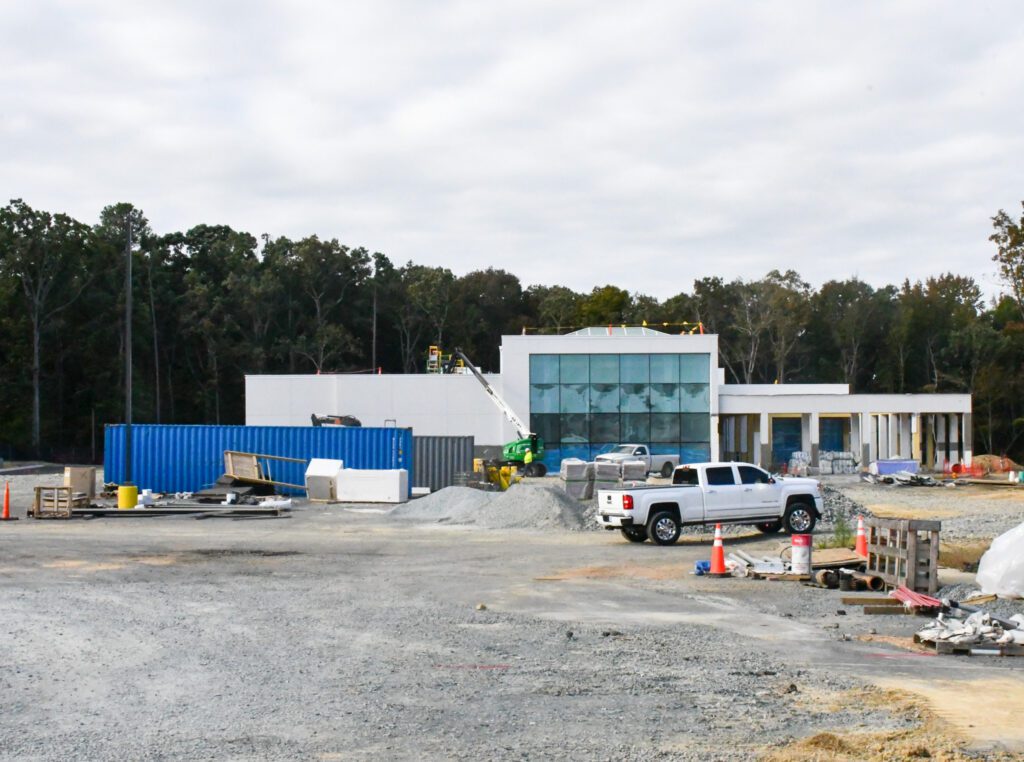
Instead, colleges often rely on a combination of state and county appropriations, philanthropic funding, and donations from businesses to fund capital projects. At South Piedmont, a new Aseptic Training Facility has been supported by $8.4 million in state funds, Union County appropriations, a grant from the Golden LEAF Foundation, interest earned on college investments, and a donation from Glenmark Pharmaceuticals.
As demand for workforce programs continues to grow, North Carolina’s economic future may be impacted by whether its community colleges can secure the space needed to let that growth thrive.
“It’s a positive challenge to have strong demand for our programs,” said White, “But sustainable growth requires investment in the people, facilities and resources necessary to maintain a high-quality educational experience.”
And, critically, Waters-Bailey said, “We could serve more students if we had additional space.”