
In first remarks to community college trustees, Dr. Monty Sullivan shares his story and a call to action

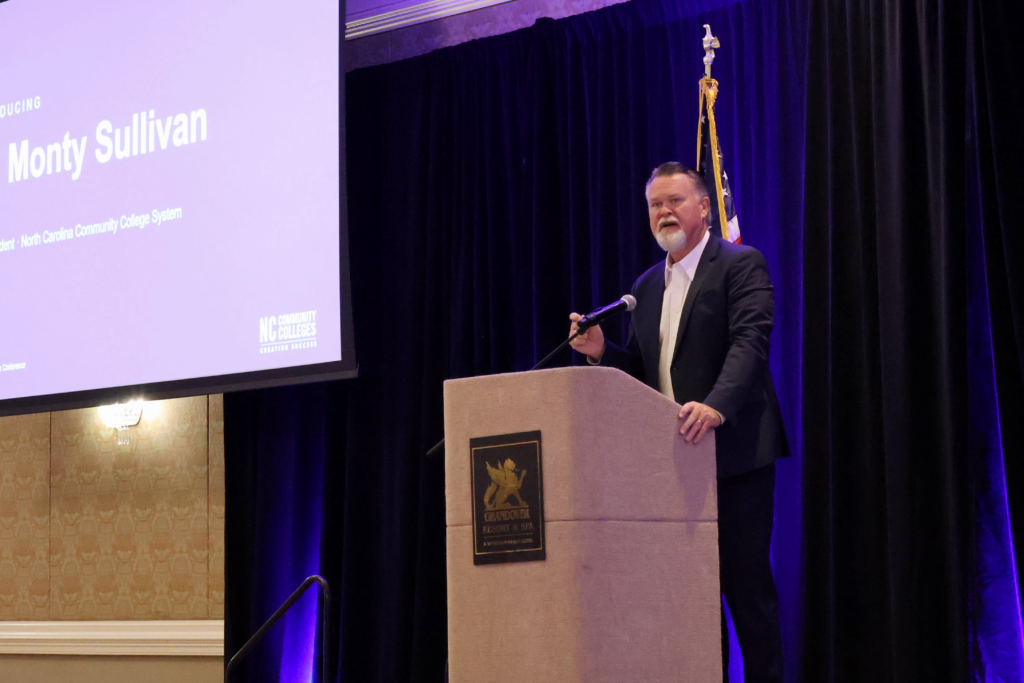
On Friday, Dr. Monty Sullivan — the new interim president of the N.C. Community College System (NCCCS) — addressed an audience of community college trustees and presidents during a seminar held by the N.C. Association of Community College Trustees. His remarks came just five days into his tenure while the General Assembly considers his nomination.
During the nationwide search process that culminated in Sullivan’s selection, the role of system president and CEO was dubbed “the most important job in North Carolina” by the State Board of Community Colleges.
At the beginning of his remarks, Sullivan shifted the focus squarely to North Carolina’s community college students.
“Let me be real clear: I’m not the most important person in North Carolina. You know who is? The folks you serve, and I serve, every day — the students,” Sullivan said. “I didn’t come to North Carolina for a job. I came here to do the good work that you and I know needs to be done.”
 Sign up for Awake58, our newsletter on all things community college.
During introductory remarks, Tom Looney, chair of the State Board, spoke to Sullivan’s qualifications, noting that he served as head of Louisiana’s community college system for 12 years, a longer tenure than most past presidents of the NCCCS. Sullivan is a “proven transformational leader,” Looney said, not someone learning the job.
“I wanted a CEO-type in there with back office skills, because you need that in the system office — we’ve got to be efficient,” said Looney, who has more than 40 years of executive leadership experience from IBM and Lenovo. “But just think if I had someone up here that used to run Lenovo — it would take him two years to understand what you all do. He (Sullivan) knows it. He knows it inside and out.”
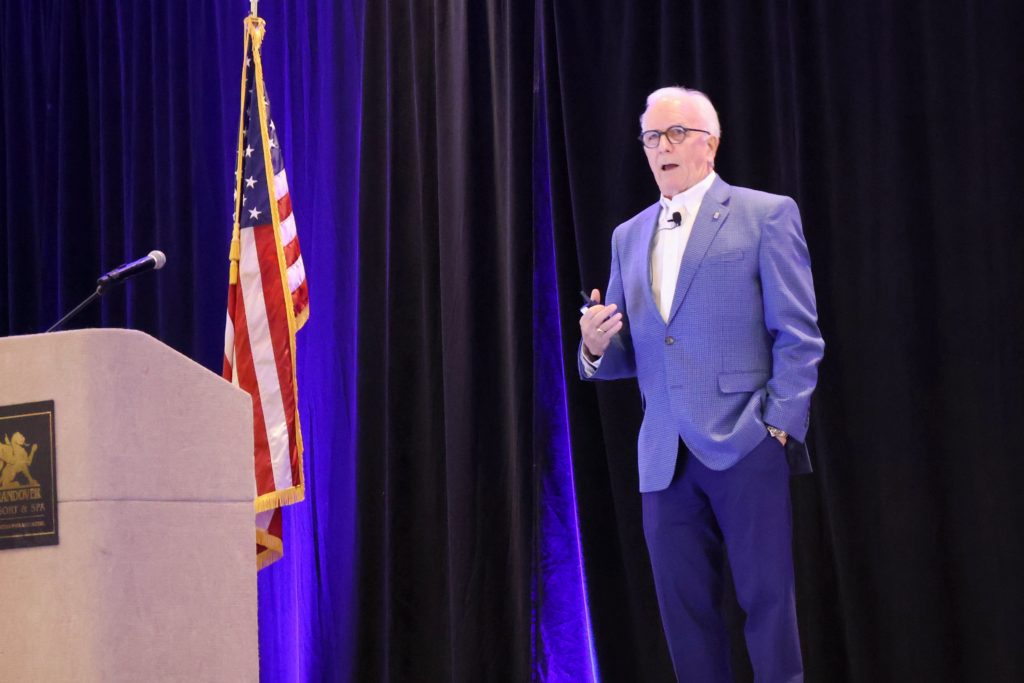
Looney also said that Sullivan’s mandate from the State Board is clear — to build the best workforce development system in the country — and that it will require unity to accomplish.
“There’s 58 college presidents. There’s 700 trustees. He’s got a board. He’s got thousands of businesses across the state,” said Looney. “I believe he can unify everyone, and he can do it quickly.”
Read more on the presidential search
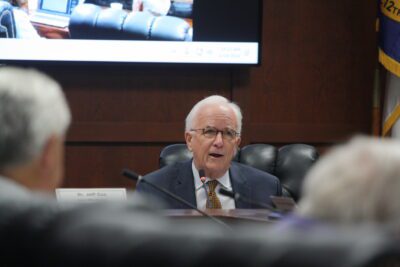
Sullivan shares his story and a charge to ‘find that 42%’
Sullivan opened his remarks by sharing his story, along with his wife Kelly’s story, because “none of this matters unless you know me,” he said.
In college, Sullivan intended to study engineering. But after taking a political science class because it fit his schedule, he quickly decided to change his major. When a professor asked him what he wanted to do with his life, Sullivan said: “I want to help people.” But he didn’t know what that meant, and later dropped out of law school before going on to study education.
Along the way, Sullivan said, he honed his priorities: faith, family, and the mission of helping others. Kelly lived this mission, Sullivan said. After dropping out of high school, she completed her diploma at 21 and went on to complete a registered nursing program at a community college in Virginia.
“I share these stories with you because I want you to know who I am — I want you to know the heart that I have for this mission,” he said.
Sullivan then discussed macro-level trends impacting the community college system, including the state’s fast-growing population that is increasingly aging, the exponential growth in the amount of information being created, and the state’s declining labor force participation rate.
In 2000, North Carolina’s labor force participation rate — the share of people ages 16 and older who are employed or actively looking for work — was 67%. As of July 2026, that rate is down to just 58% — lower than any other month on record except for April 2020 during the height of the COVID-19 pandemic.
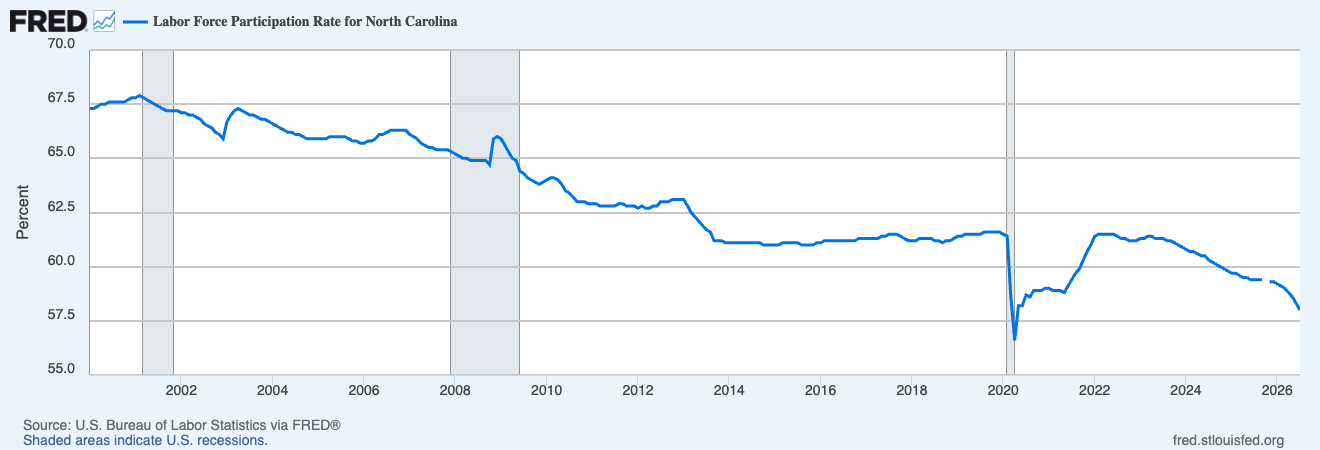
“There is a population of people that we are leaving behind,” Sullivan said of the declining rate. “I ask you to think about what’s happening to that population. Where are they?”
The job of community colleges, Sullivan said, is to create opportunity so that young people aren’t left behind or compelled to leave — which matters both to the vibrancy of local communities and to economic development.
“We can’t afford to leave talent behind in this environment. If we are to create the greatest workforce in the world, can we do it with 58% of our people engaged? No way,” he said.
He called on the trustees and presidents in the audience to “try to find that 42% in your community” and determine “what we need to do differently to change their future.” That will require innovation, Sullivan said, which starts with local grassroots efforts across all 58 community colleges.
“Are we going to do right by the population going forward?” Sullivan asked. “Will you and I ensure that the 5 million households right here in North Carolina, that every single one of them has a college credential or a high-value certification in that household?”
Sullivan expressed excitement to begin working with local presidents and trustees on ensuring more North Carolinians are educated, skilled, and working. He also thanked the audience for the warm embrace and hospitality he was greeted with during his first week on the job, adding that he didn’t move to North Carolina to “be worried about the confirmation.”
“I respect legislature. … I respect the process. But let me tell you, we got work to do,” Sullivan said. “It’s not about confirmation; it’s about what you and I will do for the people of North Carolina.”
At the end of his remarks, Sullivan left the stage to a standing ovation.
National perspectives on credentials of value, navigating change, and the importance of leadership
The seminar also featured national perspectives from Dr. DeRionne Pollard, president and CEO of the American Association of Community Colleges (AACC), and Jee Hang Lee, president and CEO of the Association of Community College Trustees (ACCT). They were joined on stage by Dr. John Enamait, president of Stanly Community College and chair of the AACC board of directors.
Both Pollard and Lee said a common challenge facing community colleges across the country is ensuring that the programs they provide are aligned to jobs that provide greater earnings than a student could otherwise receive with only a high school diploma.
“And the one clarion call that I always tell to boards … is that every job that a student leaves your institution (for) has to pay at least or more than your local McDonald’s,” Lee said. “Why do you go to classes and get a credential for 18 months to about two years and pay less than that?”
Lee also referenced the new federal accountability rules that will hold postsecondary institutions accountable for low-earnings programs.
If a program cannot be redesigned to lead to credentials that provide a “family-sustaining living wage,” Pollard said, then institutions face hard decisions about what to do with the investments already made in that program — including personnel, equipment, and culture.
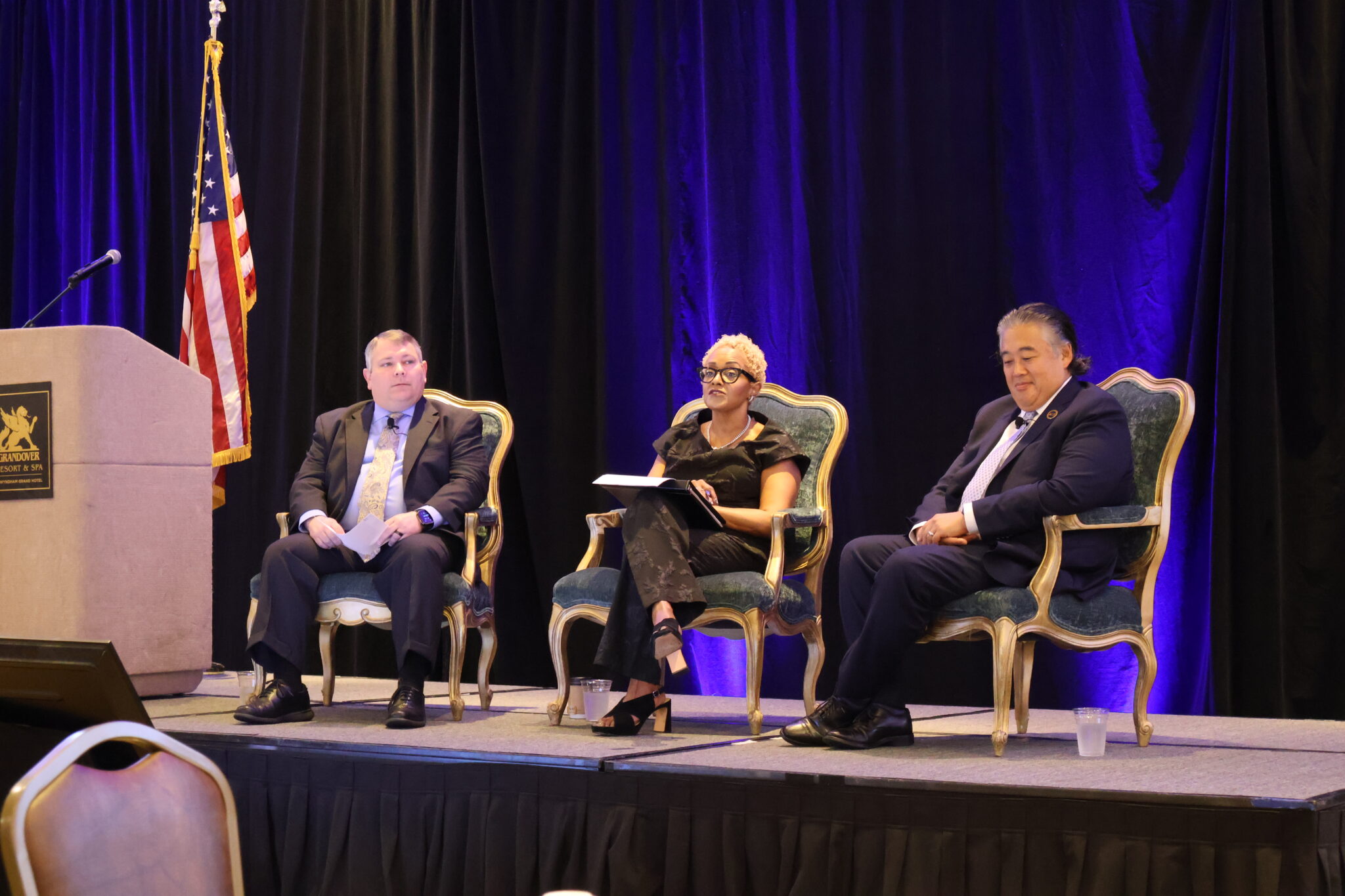
“Let’s have a truth and reconciliation moment right now: Most students who graduate from a cosmetology program will not be able to make a living wage at entry level, and the federal government’s accountability metrics are going to force us to have conversations that are going to be uncomfortable,” Pollard said.
Those conversations, Pollard said, take hard work and time, often including a deep review of local workforce data followed by cultural transformation. Looking ahead to the next decade, Pollard said community colleges need to make credentials of value the default, not the exception, ensuring that programs lead to family-sustaining wages and disrupt poverty in local communities.
Lee and Pollard also discussed the accelerating pace of change that community colleges are facing, from demographic shifts to workforce shortages. To deal with that change, Lee said, leadership is the most important thing.
“We need vibrant leaders. We need leaders that are able to pivot and change programs and have the support of the board to change those programs,” Lee said. “We collectively, as a system, need to be thinking about: How do we support the next generation of leaders of our nation’s community colleges?”
Being a community college president right now, Pollard said, is “one of the hardest jobs in America — because everybody has an opinion on it, and very few of us have done it.”
In a single day, a president may be faced with breaking news, employee challenges, infrastructure crises, and an increasing number of people who feel “your value is no longer necessary in the community,” Pollard said. As trust in public institutions and the perceived importance of higher education decline, Pollard made the case that community colleges are vital to maintaining the fabric of communities.
“We are the soul of our community. We have to protect it and preserve it,” Pollard said. “We have to work diligently, I think, to ensure that our mission is always at the forefront of how we execute the work we do, and that we are also deliberate and making sure that every member of our community has access and has excellence when they walk into our doors.”
Workforce Pell: More than a financial aid initiative
In August, North Carolina approved the first 43 programs for eligibility to qualify for the new federal Workforce Pell Grants — an expansion of Pell Grants to cover certain short-term workforce training programs that meet rigorous standards.
Historically, Pell Grants could only be used to support students pursuing an associate or bachelor’s degree. Once final approval is provided by the U.S. Department of Education, community college students who enroll in those programs may qualify to receive Workforce Pell Grants for programs as short as eight weeks.
During a panel on Thursday, Forsyth Technical Community College President Dr. Janet Spriggs urged the audience of trustees and presidents to not think of Workforce Pell as a financial aid initiative, but as a way to advance workforce development and economic mobility.
“From our perspective, this is a tool for us to help more students access a pathway for education that’s going to lead them to a family-sustaining wage, a good job, and a career opportunity,” Spriggs said.
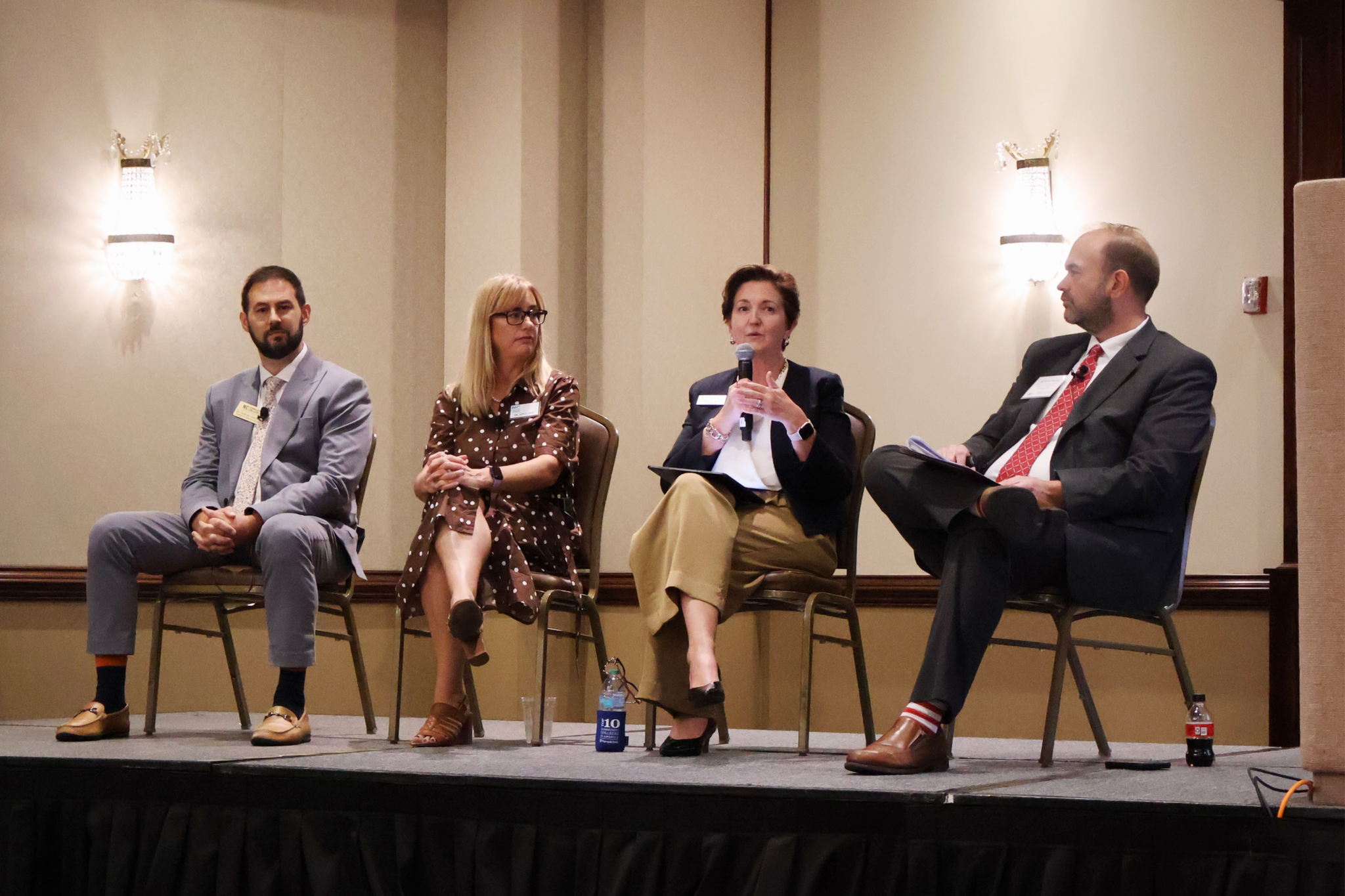
Dr. Annie Izod, executive director of the NCWorks Commission — the lead agency for Workforce Pell implementation — said Workforce Pell is not only a “game changer” for students, but also for employers and training providers, because it is creating greater alignment between what employers need and what colleges are offering.
To qualify for Workforce Pell, programs have to be aligned with a high-skill, high-wage, or in-demand occupation, have strong outcomes — including at least a 70% completion rate and a 70% job placement rate — and be stackable, among other things. Those criteria, established federally, intentionally limit the scope of Workforce Pell to programs that are closely tied to employer demand and career pathways.
Still, North Carolina has taken a broader approach to Workforce Pell implementation than other states, identifying more than 360 eligible occupations that qualify as high-skill, high-wage, or high-demand. Part of the reason for that expansive list, Izod said, is that the state’s economy is diverse, with strong industries across sectors include advanced manufacturing, healthcare, transportation, and more.
Read more on Workforce Pell
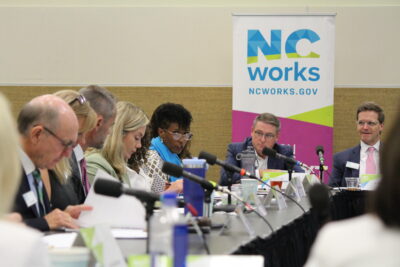

Dr. Andrew Gardner, associate vice president of workforce strategies at the NCCCS, said he thinks of this moment as “Workforce Pell 1.0,” and that the system is also building for 2.0.
“Yes, this is going to be a transformative thing, but it’s also going to be a transition,” he said. “This gives us an opportunity to reimagine our courses and programs, and to get ready to align them to the occupations.”
Gardner also encouraged trustees and presidents to leverage Workforce Pell strategically, not as a special project, a point that Spriggs echoed. Workforce Pell, she said, is a collegewide project that will require the college to align short-term programs with curriculum, financial aid, advising, IT, and more.
The NCWorks Commission has called a special meeting on Sept. 16 to approve additional programs for Workforce Pell, and further approvals will take place during the commission’s quarterly meetings.
“The hope is that over the next year or so, we can approve close to 100 programs,” Izod said, adding that her staff is working with training providers one-on-one to help programs get approved.