
The NC High School Redesign Commission, and more from the second technical corrections bill
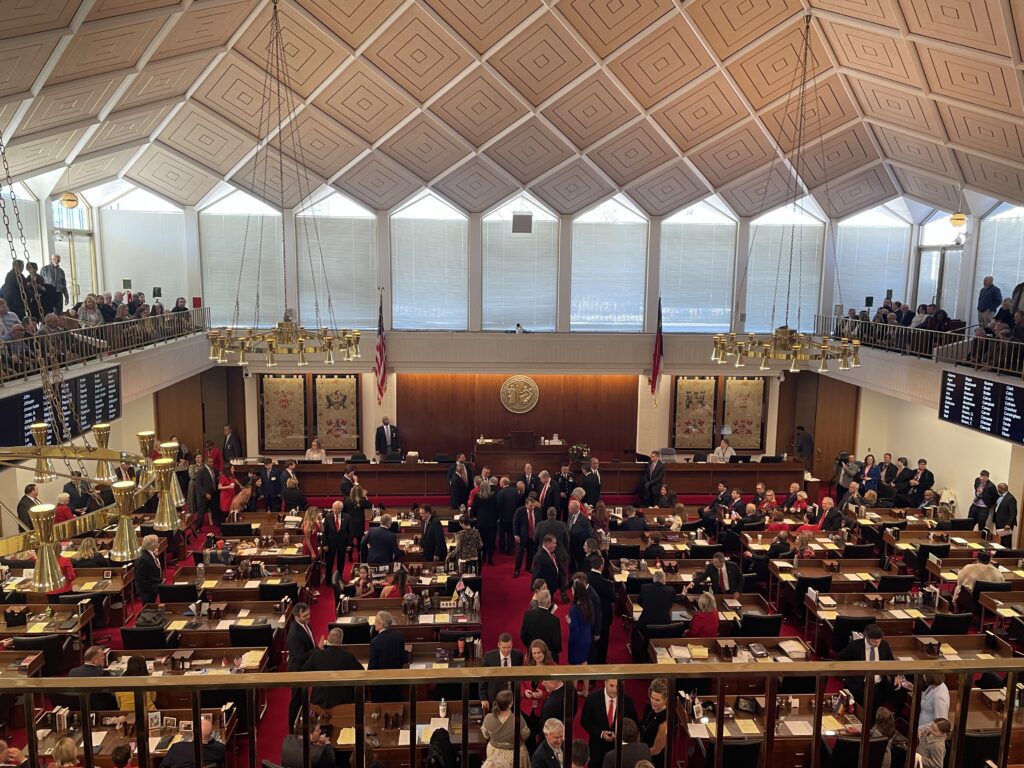
Gov. Josh Stein signed House Bill 268, a second technical corrections bill that adjusts the text of the new state budget, into law on Tuesday, after it was sent to his desk last week. In a statement, Stein said he was signing the bill even though it includes some provisions that take away power from the executive branch.
“This bill strengthens disaster relief, teacher workforce pipelines, and economic development programs,” Stein said. “… It also enables public schools to start teacher apprenticeship programs as early as this year and supports access to loans for North Carolina teaching fellows.”
Stein also signed House Bill 562 on Tuesday, which made minor adjustments to H.B. 268. You can read all of EdNC’s coverage of the new state budget and the first technical corrections bill here.
As per an adjournment resolution, for the rest of the calendar year, the legislature is scheduled to meet on the following dates: Aug.31-Sept. 2; Sept. 28-30; Oct. 26-28; Nov. 16-19; and Nov. 30-Dec. 18. Votes are not expected to be taken until after the election, according to reporting from WUNC, starting on Nov. 16.
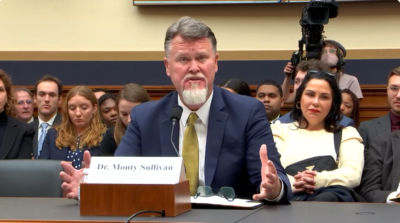
On July 23, the State Board of Community College selected Dr. Monty Sullivan, the former head of Louisiana’s community college system, to serve as the next president and chief executive officer of the North Carolina Community College System (NCCCS). Once a contract is finalized, Sullivan is expected to serve as acting president.
New this year, the Board’s selection of a system president is now subject to confirmation by the General Assembly, within 30 legislative days. If confirmation does not take place by then, statute says “it shall be deemed that the General Assembly has denied confirmation. A person denied confirmation shall not serve as President or interim-President.”
Based on the adjournment resolution’s scheduled sessions — and days the General Assembly met the week of July 27 — the legislature’s deadline to confirm Sullivan in 30 legislative days is likely to take place during the Nov. 30-Dec. 18 voting session. Stay tuned.
Below, you can find a look at items in the second technical corrections bill.
Related reads
The NC High School Redesign Commission
Among the many adjustments the bill put forward was the establishment of the N.C. High School Redesign Commission.
During the State Board of Education meeting on Aug. 5, Department of Public Instruction (DPI) Senior Director of Government Affairs and Strategy Geoff Coltrane highlighted the commission as an impactful bill provision for the Board to be aware of. He said that while the commission will be administratively located at DPI, it “will operate independently of DPI.”
The commission’s stated purpose is to “to explore and recommend changes to policies and systems governing high school and higher education that will better prepare North Carolina students for success as they transition to higher education or the workforce.”
Across the aisle, legislators and leaders in education have signaled their support for a collaborative effort in examining public education in North Carolina. Last year, DPI voted to establish an accountability task force to explore a new system for school performance grades. And in March, the General Assembly announced a bipartisan Blue Ribbon Commission on Public Education.
The High School Redesign Commission was originally introduced as a part of Senate Bill 579, titled, “Transforming the High School Experience Act,” by Sen. Michael Lee, R-New Hanover. At the time, Lee said the bill “reimagine(d) the high school experience by focusing on real-world skills, career pathways, and stronger connections to community colleges.”
S.B. 579 was sent back to committee, and the language establishing the commission was later added to Senate Bill 1006, or the K-12 Innovation and Transformation Act, which was sent back to the appropriations committee on June 3, 2026.
The bill says the N.C. High School Redesign Commission will examine “promising practices in North Carolina and nationally” to inform an annual report to the Joint Legislative Education Oversight Committee. The committee’s first report will be due April 30, 2027, “and annually thereafter,” the bill says, and the commission will operate until June 30, 2031, “or upon filing of its final annual report, whichever occurs first.”
The commission will examine flexible requirements for high school diplomas, access to work-based learning, partnerships between public schools and community colleges, personalized alternative routes for satisfying graduation requirements, competency-based learning, connections with local businesses, uses of artificial intelligence (AI) for career exploration and work-based learning, funding models that will support these items, and other career exploration opportunities for students.
Explore more on workforce education
The makeup of the redesign commission
The bill also lays out the members of the commission:
- Two members appointed by the General Assembly upon recommendation of the Speaker of the House of Representatives.
- Two members appointed by the General Assembly upon recommendation of the President Pro Tempore of the Senate.
- One member appointed by the Governor.
- The State Superintendent of Public Instruction or his or her designee.
- The president of the University of North Carolina or his or her designee.
- The president of North Carolina Independent Colleges and Universities or his or her designee.
- The president of the North Carolina Community College System or his or her designee.
- The chief executive officers of each of the following organizations, or their designees: myFutureNC, the North Carolina Chamber of Commerce, BEST NC, and SparkNC.
- One chief administrative officer or president of a community college participating in a program, project, or initiative developed as a result of the bill, to be appointed by the commission’s chair.
- One superintendent of a local school administrative unit participating in a program, project, or initiative developed as a result of this bill, or their respective designees, to be appointed by the commission’s chair.
The chair of the commission will be selected by the members of the commission from the members appointed the General Assembly.
Explore EdNC’s coverage of the new state budget
Other items in the technical corrections bill
The original state budget eliminated $18 million of performance-based funding for community colleges, leaving $6 million for basic skills. The new technical corrections bill clarifies that the State Board of Community Colleges shall adopt a standards of basic skills to evaluate each community college for the purpose of allocating funds based on their performance.
During the August State Board of Education meeting, Coltrane also highlighted the technical corrections bill provision that removes the deadlines for the Educator Preparation Program (EPP) accountability rule adoptions, which DPI had “worked closely with the UNC system, community colleges, and independent universities” to develop. Ultimately, the provision “does not get rid of the requirement to have the rules, just the deadlines,” said Coltrane.
The bill also establishes a grant to help public high schools serving grades 9-12 to develop or expand a speech and debate team. The grant will be administered by DPI, and funds may be awarded in sums up to $10,000.
It increases the appropriations for childcare services as executed by the Division of Child Development and Early Education to be $444 million, which is $60 million more than originally included in the state budget.
Furthermore, it changes the language regarding CAGC Foundation grant funding for community colleges so that there are no limitations on who is defined as an eligible participant. The original state budget defined eligible participants as anyone who is “a woman, minority, veteran, low-wealth individual, or an individual that has been previously incarcerated.”
 Sign up for Awake58, our newsletter on all things community college.
Other provisions include:
- Changes to where the $3.5 million reduction from the Community Colleges System Budget Code for Enterprise Resource Planning (ERP) came from.
- Extends the timeline that ApprenticeshipNC must compile a report on incentives for employers and apprenticeship sponsors by three months, now due March 15, 2027.
- Adjusts the implementation date for the TeachReadyNC — a new teacher apprenticeship program. The bill requires DPI to issue the initial request for applications by Oct. 1, 2026 for applications to establish registered teacher apprenticeship programs beginning “as soon as practicable and no later than the 2027-2028 school year.”
- Clarifies that the bonuses for school nutrition and custodial personnel do not include people whose employer is not the local school administrative unit.
- Extends nonrecurring funds for Dolly Parton’s Imagination Library to be available until June 2032.
- Shifts the administration of Farm to School program funding in the budget from DPI to the Department of Agriculture and Consumer Services.
- Clarifies that individual test data for students receiving Opportunity Scholarships are not required to be reported to the North Carolina State Education Assistance Authority (NCSEAA), but rather are “subject to collection” by the NCSEAA. The bill also requires nonpublic schools accepting eligible students to annually certify compliance with testing requirements and retain records of test administration for a period of four years.
Here is a list of the other K-12-related items in the bill, created by DPI.