
New NC budget includes $97 million for child care subsidy program, establishes floor rate

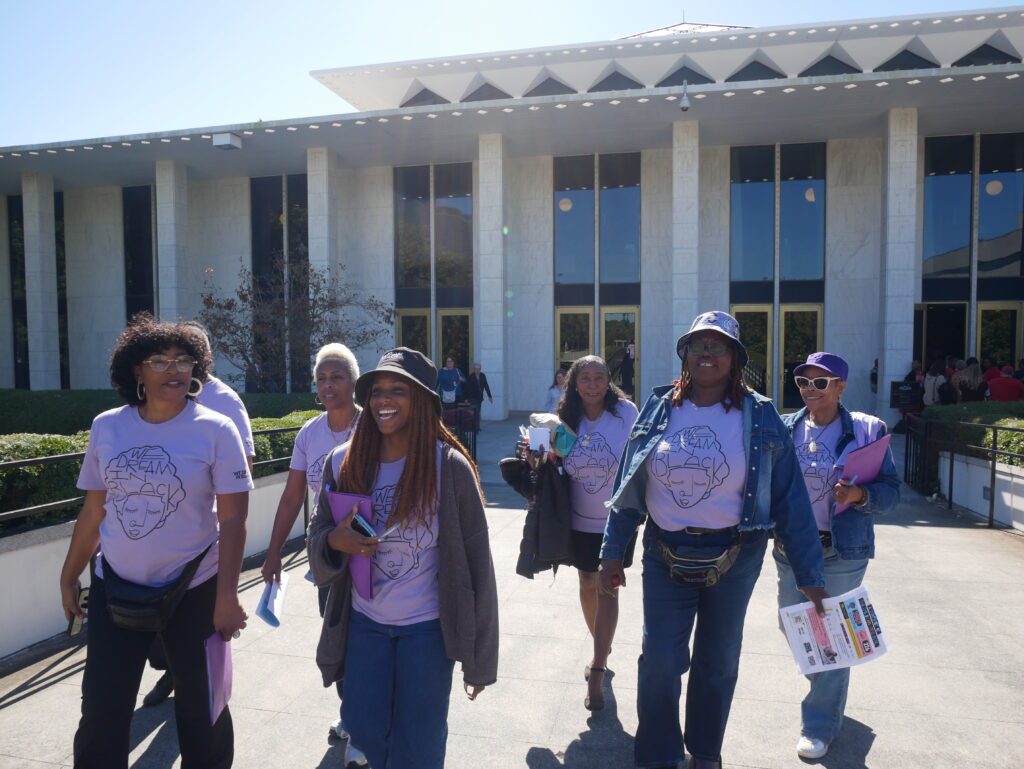
North Carolina’s new budget for fiscal year 2026-27 — passed on Thursday — directs $97 million, recurring, in federal funds to raise the rates child care providers receive to serve children through the state’s subsidy program. The program helps low-income working parents afford licensed care.
The funding will also establish a floor rate, meaning that child care facilities will receive at least the statewide average rate for subsidized care. Without a floor, rates range widely from county to county, making it harder for facilities to serve children in certain communities. Rates are set based on market rate studies, which advocates say do not accurately measure the cost of providing care.
“For too many North Carolina families, finding affordable and accessible child care has simply been out of reach,” said Erica Palmer-Smith, executive director of advocacy nonprofit NC Child, in an emailed statement. “By establishing a statewide subsidy floor, our state is taking an important step to change that. This investment means more children and families will soon have access to the high-quality early learning opportunities they need, giving parents greater freedom to work, pursue education, and support their families.”
Here is the bill text, here is the money report, here is the technical corrections bill passed alongside the budget bill. The technical corrections bill adjusts the implementation date for child care subsidy rate changes from July 1 to Oct. 1.
After passing the budget, the General Assembly voted to adjourn until July 27.
 Sign up for Early Bird, our newsletter on all things early childhood.
Palmer-Smith is also a member of the North Carolina Task Force on Child Care and Early Education, a bipartisan group studying child care challenges chaired by Sen. Jim Burgin, R-Harnett and Democratic Lt. Gov. Rachel Hunt.
“Every child deserves the chance for a strong start, regardless of their zip code,” Palmer-Smith said. “We are grateful to our legislative leaders for making an investment that strengthens families, expands opportunity, and builds a brighter future for North Carolina.”
In a statement to EdNC, Hunt said she was pleased to see “meaningful investments in child care” in the budget, particularly the funding for the state’s subsidy program.
“Reducing waitlists and strengthening the early childhood workforce is a great thing for our state. While there is always more work to do, these investments will help more North Carolina families access quality child care,” Hunt said.
The increased subsidy rates and subsidy floor were the main asks this session from early childhood advocates, as well as from statewide task force. The total revised amount for the subsidy program is $593.1 million in FY 2026-27, funded through federal receipts.
“The establishment of a floor will help stabilize our state’s critical child care infrastructure, especially in rural communities that have historically received lower reimbursement rates,” said Beth Messersmith, NC director of MomsRising and task force member, in an email. “This is an overdue, essential step in giving children their best possible start, helping families make ends meet in the face of our care and affordability crises, and setting up small businesses for success.”
EdNC’s other coverage about the new budget
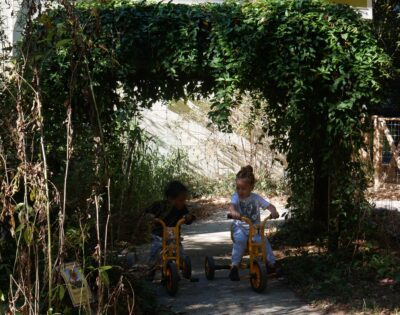
The budget also includes a one-time $7.3 million for Smart Start partnerships to expand mental and behavioral health services “for children, families, and staff in child care facility settings and out-of-school programs” and a one-time $1.5 million for partnerships to launch child care teacher academies.
“The funding they provided to expand mental health services will help so many young children who are struggling and also help child care centers retain their best teachers,” said Dan Rockaway, president of the NC Licensed Child Care Association and task force member, in an email. “And the money they provided to train, credential and retain hundreds of new child care teachers will mean thousands of children come off wait lists and into nurturing spaces that encourage healthy brain development that will last a lifetime.”
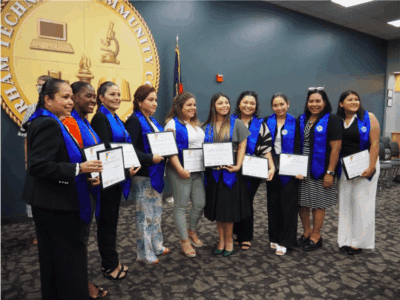
The academies should prepare individuals to be lead child care teachers and may be located in Johnston and Wayne counties, the budget states, plus 10 other local partnerships to be chosen in collaboration with the N.C. Community College System (NCCCS).
The academies are required to operate over a two to three week period and equip graduates to receive the NC Early Childhood Credential required to be a lead teacher in a child care classroom. Partnerships are expected to “strive” for operating three academies in a year and enrolling at least 10 participants each time.
“The pilot program shall establish career-ready lead teacher academies across the State designed to provide free, comprehensive training and support to individuals, with no experience or education in child care, who are interested in pursuing a career in child care,” the budget reads.
Local leaders have created child care academies in recent years with the goal of filling early childhood teacher vacancies. The Division of Child Development and Early Education announced it would use federal funding for academies at 16 institutions of higher education in December 2025. The models vary in length, cost, and content.
More on child care academies

The budget also states that licensed child care centers may use the work and education experience of two staff members instead of one to meet the administrator requirements in the state’s Quality Rating and Improvement System (QRIS), which ranks licensed programs on a scale of one to five stars. The state updated its QRIS in recent years to provide more options for programs to demonstrate quality.
The budget requires one staff member to have at least an associate degree in business administration or a related field or two years of business experience. It requires the other staff member to have at least an associate degree in early childhood education or child development.
The budget also specifies that $5.8 million in federal funds will fund an “Early Education Information System project and a Family Child Care Home Direct Support pilot program to help increase the supply of family child care homes in North Carolina.”
Family child care homes (FCCHs) are licensed programs in home settings that serve fewer children than child care centers. The number of FCCHs decreased by about 41% from February 2018 to May 2026, according to the state child care dashboard. Home-based providers say they need more funding, community, and support navigating licensing rules and regulations.
The budget allocated $1 million in recurring funds and $6 million in one-time funding for statewide administration of the Dolly Parton Imagination Library, a program that sends free books to young children’s homes before kindergarten. However, in a technical corrections bill passed on Thursday, the nonrecurring funds were reduced by $1 million, bringing the revised net appropriation for the program to $13 million in FY 2026-27, instead of $14 million.
Legislators did not allocate new funding for the NC Pre-K program, the state’s preschool program for at-risk 4-year-olds. The budget does require DPI to ensure a dyslexia screener be administered to every NC Pre-K student and teachers and administrators in the program receive training on “appropriate instruction and intervention strategies” for children exhibiting signs of dyslexia. You can read more about the program on page 130 of the budget bill text.
Finally, the budget bill text says there is $350,000 in nonrecurring funds to the Department of Insurance in FY 2026-27 to study the feasibility of creating a liability insurance program for participating North Carolina child care providers, which “which has the potential to support risk distribution while promoting strong governance and shared accountability.” A report on the study is due to the General Assembly by May 1, 2027.
EdNC’s Hannah Vinueza McClellan contributed to this article.