2026 Voter Guide: What to know about education items on the ballot in NC
North Carolina voters have the chance to play a part in determining the educational future of our state. There are many important races on the 2026 general election ballot with high stakes for education across the state.
This article outlines those stakes, walking you through several key races, the duties of the offices with seats up for election, and how they impact education in North Carolina. It highlights the following races: U.S. Senate, U.S. House of Representatives, N.C. Supreme Court, N.C. Court of Appeals, the General Assembly, and local boards of education races.
It also discusses school bonds, which are on ballots in several counties across the state. In addition, you can find more information on the constitutional amendments on the ballot in this dedicated article here.
Turnout for nonpresidential general elections such as this year’s are typically roughly 20 percentage points or more below that of a presidential general election. However, while there is no presidential or gubernatorial election on the ballot, this year’s races will have real impact on public education and the state overall.
Election Day for the 2026 general election is Tuesday, Nov. 3. Early in-person voting begins Thursday, Oct. 15, and ends at 3 p.m. on Saturday, Oct. 31. Voters will be asked to show photo ID. For more information on registering to vote and voting, read our voting guide.
What’s on your ballot?
Not every ballot in North Carolina will look the same. Depending on your address, you will vote on different elections and candidates. You can find your sample ballot, registration details, voting locations, and more on the N.C. State Board of Elections voter search platform. If you wish, you may bring your sample ballot or other notes to the polls to help you make your selections.
You may also bring your phone into the voting booth with you. However, remember that state law prohibits taking photos or video of your ballot.
Below, find information on some of the key elections in the state this election cycle.
 Sign up for the EdDaily to start each weekday with the top education news.
U.S. Senate
The U.S. Senate is a 100-person body of elected officials from each of the 50 states, who serve six-year terms. North Carolina, like all other states, has two senators.
The Senate has equal power with the House of Representatives to amend, approve, or reject spending and appropriations bills. This means that any federal funding for education goes through an approval process in the Senate. The Senate also approves the president’s nomination for all cabinet secretaries, including the secretary of education.
While no one senator may dictate the Senate’s actions, the aggregate of those elected plays a large role in the direction of federal educational policy.
Democratic former Gov. Roy Cooper, Republican Michael Whatley, Green Party candidate Michael Dublin, and Libertarian Shannon W. Bray will compete for one of our state’s seats in the Senate. Whatley is the former chairman of the Republican National Committee, Dublin is a recently retired N.C. public school teacher, and Bray is a Navy veteran and a cybersecurity professional.
The seat will be left open by Sen. Thom Tillis, R-NC, who announced last year he wouldn’t seek reelection following a break with President Donald Trump on Medicaid cuts.
The race will be key in deciding the balance of the Senate. Currently, Republicans have a 53-47 majority. According to NBC News, the North Carolina race is “a must-win race for Democrats if they have any hope of netting the four seats they need to take control of the chamber.”
The four candidates have not debated publicly, but they have spoken about their stances on various education issues. Take a look below.
Roy Cooper
Roy Cooper is the Democratic nominee for North Carolina’s open U.S. Senate seat.
His campaign website describes his “deep commitment to public education,” referencing his work as North Carolina governor to create “a strong education system” in the state.
As a part of the campaign’s “Make Stuff Cost Less” priority, Cooper’s website highlights “making childcare affordable” as a part of his strategy. Below is Cooper’s complete list of tactics related to childcare affordability:
- Expand the Child and Dependent Care Tax Credit to support working families and put money back in people’s pockets.
- Grow and support the child care workforce. Increase the quality and supply of childcare by investing in apprenticeships for child care workers and paying better wages.
- Cut unnecessary red tape that keeps child care facilities expensive – like requiring they provide packaged food instead of preparing fresh fruit – while prioritizing child safety.
- Encourage employers to help employees with child care by providing employer tax credits for on-site child care or employee child care subsidies.
As governor, in May 2023, Cooper declared a “state of emergency for public education in North Carolina,” following the General Assembly’s expansion of the Opportunity Scholarship program.
Cooper also called for a temporary halt to private school vouchers. “I am not against private schools, but I am against taxpayer money going to private schools at the expense of public schools,” Cooper said.
He also established a task force to improve diversity and inclusion in education field.
During his last year of his final term as governor, Cooper proclaimed 2024 the “Year of Public Schools.” He frequently visited public schools during his time as governor. As previously reported by EdNC, Cooper advocated for more funding and resources for K-12 and early childhood education throughout his time in office, as well as for community colleges.
Michael Whatley
Michael Whatley is the Republican nominee for North Carolina’s open U.S. Senate seat.
His campaign website’s issues page lists one policy priority related to education: “keeping radical woke ideology of out schools.”
Whatley has also voiced his support for Opportunity Scholarships and parental choice, saying:
- I believe in public schools, but I also believe that there are opportunities at charter schools … and private schools across the state, and home schools for parents to do better, for kids to do better, and for North Carolina to do better. We need to make sure that this state is following President Trump’s lead in opportunity scholarships.
- The dollars should follow students, whether it is to a public school, a private school, a charter school, or homeschooling. This is absolutely a critical component of education policy under President Trump and the Republicans that we want to make sure that parents have a choice.
Whatley also listed Hurricane recovery as one of his main priorities on his site, noting his work on the FEMA Review Council, which Trump appointed him to in 2025. Whatley has been endorsed by the president and said on his site, “I am committed to advancing President Trump’s America First agenda.”
Whatley recently paused TV ads as his campaign rethinks its strategy, according to a report by the News & Observer. The decision follows national Republicans pulling funding from North Carolina’s Senate race to focus on other national races.
Michael Dublin
Michael Dublin is the Green Party nominee for North Carolina’s open U.S. Senate seat.
Dublin is a recently retired public school teacher and community activist.
His campaign website describes several priorities related to public education, saying he stands for “drastically cutting the US military budget and redirecting those funds toward free universal healthcare, public education, and affordable housing.”
One of the four pillars of his campaign is “Social & Racial Equity,” which says that Dublin will “protect and expand voting rights, fight for affordable housing for all, and ensure that every North Carolinian has access to a quality education, regardless of their zip code.”
His website also says that he supports inclusive sex education.
Shannon W. Bray
Shannon W. Bray is the Libertarian nominee for North Carolina’s open U.S. Senate seat.
With regards to education, Bray says he takes a “liberty-first” mindset to the issue: “protecting individual rights, limiting centralized power, and trusting people over bureaucracy.”
His campaign site’s “Education & Workforce” page explains that he supports:
- Reducing federal control over education
- Supporting skills-based and technical training
- Encouraging parental choice and local decision-making
- Promoting innovation in education
“North Carolina thrives when students are equipped with practical skills and freedom to choose their path,” says the site.
Read more
North Carolina State Supreme Court
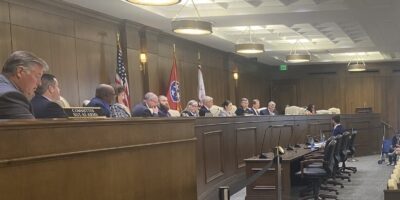
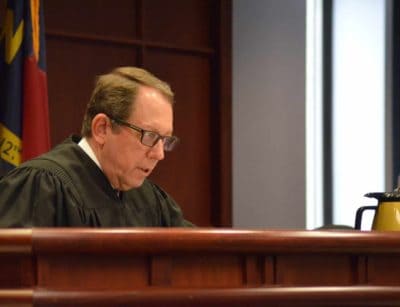
The seven justices of the N.C. Supreme Court, the highest court in the state, are elected to their seats for eight-year terms. There is no further appeal from its decisions on matters of state law.
Any legal question regarding state education law — such as the recently decided, landmark Leandro case — may have its final decision reached in the N.C. Supreme Court, which means that the seven justices hold enormous power in determining the future of education in our state.
This year, just one seat is up for election. Current N.C. Supreme Court Justice Anita Earls, a Democrat, opposes former N.C. Rep. Sarah Stevens, a Republican who was the chair of the House Judiciary Committee.
The court currently has a 5-2 Republican majority. Three Republican justices’ terms expire in 2028, and one — Justice Phil Berger Jr. — has announced that he will not seek reelection.
According to the State Court Report, “If Justice Anita Earls this year wins another term on the court, the next election will give Democrats an easier path to winning a majority when the terms of three sitting Republican justices expire.”
You can explore the candidate’s stances on education below.
Anita Earls
Anita Earls is the Democratic nominee for the seat on the N.C. Supreme Court, which she is seeking reelection to.
During her time on the Court, Earls dissented in the recent landmark case where, among other things, the Court voted to remove their previous order that the state increase their spending on public education in order to uphold their constitutional obligation of every child’s “equal opportunity to a sound basic education” in our state.
Her campaign website says, “providing a sound basic education is a matter of educational rights, not simply education policy, and that it is the solemn duty of the Court to uphold the rights promised to our citizens in the State Constitution, including those rights guaranteed to our children.”
Her site also explains that, during her time on the Court, she has worked to uphold North Carolinian’s right to “a sound basic public education.” During an interview with PBS, Earls highlighted how the courts can impact funding for public education.
Earls is endorsed by the North Carolina Association of Educators, and she thanked them for the endorsement, saying, “A uniform system of public education, which is promised in our North Carolina Constitution, opens doors for students of all backgrounds. It is critical that the Court continue to fulfill its fundamental role of upholding the Constitution and the rights it guarantees.”
As a civil rights attorney, her site says she stood beside “the parents of children who were being denied equal educational opportunities, seeking equal justice under the law in state and federal courtrooms.”
Sarah Stevens
Sarah Stevens is the Republican nominee for the seat on the N.C. Supreme Court.
During her time in the General Assembly, she chaired the judiciary committee, and she has practiced as an attorney for the last 40 years, working primarily as a career family lawyer. She describes herself as a “constitutional conservative” and a “law and order person.”
Her campaign site says that Stevens has a “record of prioritizing our families,” highlighting her work in the General Assembly on the Foster Parent’s Bill of Rights and securing stronger child abuse laws.
EdNC could not find a public statement on Leandro from Stevens. Stevens voted for a bill enrolling North Carolina in a federal school choice tax credit program when she was a state representative.
More on the state Supreme Court
North Carolina Court of Appeals
There are 15 judges on the N.C. Appellate Court — the state’s intermediate appellate court that reviews the decisions of district, superior, and administrative courts and can send cases to the N.C. Supreme Court. The court decides questions of law, not fact. Appellate judges in North Carolina are selected in statewide, partisan elections to serve eight-year terms. There are three N.C. Court of Appeals Judge seats on ballots this election cycle.
The Court of Appeals often has final say over matters involving state laws, many of which involve education.
The following candidates will compete for the three seats — read more about their platforms below:
N.C. Court of Appeals Judge Seat 1
Michael C. Byrne
Michael C. Byrne is the Republican nominee for Judge Seat 1 on the N.C. Court of Appeals. Previously, he served as an attorney, primarily representing law enforcement and public employees. According to his campaign site, he “litigated more than 20 cases in the Court of Appeals as an attorney.” In 2020, he was sworn in as an Administrative Law Judge. His site says his top priority is “giving fair hearings to all parties.”
You can explore the rulings that his campaign has highlighted as significant here. None of the highlighted cases involve public education. You can also explore an interview with Byrne published by The News & Observer here.
Note: Byrne was endorsed by The News & Observer during the primaries.
John S. Arrowood
John S. Arrowood is the Democratic nominee for Judge Seat 1 on the N.C. Court of Appeals. He currently serves on the Court of Appeals, and has served as a judge on this court since 2017. According to his campaign site, he graduated from local public schools and attended Catawba College. In 2014, he described himself as a “product of public schools.”
Public education was not highlighted on his campaign site. You can explore opinions that Arrowood has authored during his tenure as an appellate judge on the North Carolina Judicial Branch’s website here.
You can also explore an interview with Arrowood published by The News & Observer here.
N.C. Court of Appeals Judge Seat 2
George Cooper Bell
George Cooper Bell is the Republican nominee for Judge Seat 2 on the N.C. Court of Appeals. According to his campaign site, Bell has served as a Superior Court judge since 2019. The campaign describes his judicial approach as “Trusted. Experienced. Grounded in Faith and Service.”
Public education was not highlighted on his campaign site. You can also explore an interview with Bell published by The News & Observer here.
Tobias (Toby) Hampson
Tobias “Toby” Hampson is the Democratic nominee for Judge Seat 2 on the N.C. Court of Appeals. Hampson has served on the Court of Appeals since 2018. On his campaign site, he describes himself as a “proud product of North Carolina public schools,” but otherwise, education is not featured on his site.
You can explore opinions that Hampson has authored during his tenure as an appellate judge on the North Carolina Judicial Branch’s website here. You can also explore an interview with Hampson published by The News & Observer here.
N.C. Court of Appeals Judge Seat 3
Craig Collins
Craig Collins is the Republican nominee for Judge Seat 3 on the N.C. Court of Appeals. His campaign website says that he “prosecuted thousands of criminal cases on behalf of the state of North Carolina,” and has “presided over countless trials in criminal, traffic, juvenile, and civil courts.”
Public education was not highlighted on his campaign site. You can also explore an interview with Hampson published by The News & Observer here.
Christine Marie Walczyk
Christine Marie Walczyk is the Democratic nominee for Judge Seat 3 on the N.C. Court of Appeals. According to her campaign site, she has served as a district court trial judge in Wake County for 19 years.
She is also a former instructor at Meredith College’s Paralegal Program and Wake Technical Community College, and she said, “I particularly enjoy mentoring students and teaching.” She is endorsed by the North Carolina Association of Educators.
You can also explore an interview with Walczyk published by The News & Observer here.
Note: Walczyk was endorsed by The News & Observer during the primaries.
More on the Court of Appeals
U.S. House of Representatives
The U.S. House of Representatives is a 435-person body of elected officials from each of the 50 states, who serve two-year terms.
The House has similar legislative powers to the U.S. Senate, but each year’s federal budget bill must originate in the House. North Carolina received about 9% of funding for public education during the 2025-26 school year and about 25% of its general revenue in 2023 from the federal government.
States receive their designated number of representatives based on their population. North Carolina has 14 seats in the House, and all 14 are up for election in November.
Control of the House could be shifted from the Republicans to the Democrats by a net gain of just four or five seats. However, recent redistricting in several states, including North Carolina, could impact election results. A map created by the Guardian showed that North Carolina is predicted to gain one Republican seat in the House as a result of the redistricting.
In 2025, the General Assembly redrew congressional districts with Senate Bill 249. Bob Orr, a former state Supreme Court justice, brought suit on behalf of the state’s voters, claiming the new districts were illegally gerrymandered, “unconstitutionally depriving voters of fair elections,” according to NC Newsline.
Gerrymandering is the “the manipulation of voting district boundaries based on partisanship or race to achieve an unfair advantage,” according to the Campaign Legal Center. The redistricting bill shifted N.C.-1 from a Democratic-leaning district to a Republican-leaning one. Orr’s case was recently rejected by the North Carolina Court of Appeals, which means the map will stand for the 2026 general election.
You can see who your current representative in the U.S. House is through their “find your representative” program here. And you can use the voter search on the N.C. State Board of Election’s website to see who running for the House will be on your ballot.
Read more

General Assembly
All 170 seats in General Assembly are up for election this year. Both state senators and state representatives serve for two-year terms, and neither are term limited.
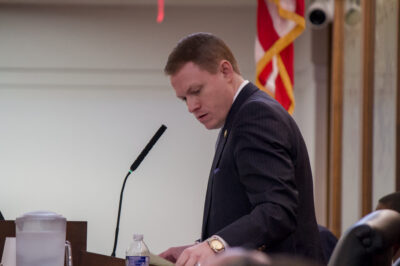
The General Assembly plays a large role in education because they write the laws that govern education in our state.
The legislature also writes the state budget, which determines the funding public schools receive. Check out this article to see how public education was impacted by the most recent budget.
There is currently a Republican majority in the N.C. House and Republican supermajority in the N.C. Senate. The House is led by Rep. Destin Hall, R-Caldwell, and the Senate is led by Sen. Phil Berger, R-Guilford.
Berger will not be returning to the Senate in January, after losing a primary conceded to Sam Page in the Republican primary in March. New Senate leadership is expected to be determined after the election.
You can use the General Assembly’s “find your legislators” tool to see who you are currently represented by in both the House and the Senate. And you can use the voter search program on N.C. State Board of Election’s website to see which state representatives will be on your ballot.
The Public School Forum has assembled a survey, polling state legislative candidates about their views on public education, which you can explore here.
More on the General Assembly
North Carolina tax amendments
In addition to the races on this year’s ballot, North Carolina voters will also decide whether to cap the state income tax rate at 3.5% and whether to require a limit on local property tax increases through ballot measures that, if passed with a simple majority, would amend the North Carolina state constitution.
Educators and school district staff have said the amendments could pose a threat to public school funding, as education spending accounts for large chunks of both local budgets and the state budget.
Read more in EdNC’s article dedicated to the amendments:
School board races
This year, there are a total of 296 local board of education seats in 89 school districts up for election statewide. School boards’ duties include hiring a district superintendent, designating a budget, approving a curriculum, and deciding school policies.
The influence of a district’s local school board is important, especially amid the financial challenges districts are experiencing and while navigating new kinds of decisions like what to do about AI in classrooms.
Historically, many school board seats were nonpartisan positions in North Carolina, meaning the ballot didn’t tie candidates to a political party. However, school board races are increasingly becoming partisan. In 2024, an EdNC analysis of school board races found 52 districts were holding partisan elections versus 41 in 2022. Prior to 2013, there were only 10 partisan school districts in North Carolina.
This year, of the 89 districts holding elections, 61 are partisan. One district that currently holds nonpartisan elections, Currituck County Schools, has a referendum on the ballot that would make future school board elections partisan if passed.
Below, see a map of districts that have school board seats up for election this year.

School and community college bonds
Also on the ballot in a few counties across North Carolina are school bond issues, which ask voters to decide whether the county should borrow money to invest in schools — typically projects such as the new construction or renovation of school buildings.
In North Carolina, school facility costs have historically been paid for by local governments, whereas other education expenses like staffing are paid by the state. Increasingly, districts receive additional contributions for facility costs from state grant programs like the Needs-Based Public School Capital Fund (NBPSCF) and Public School Building Capital Fund (PSBCF), which are funded by the North Carolina Education Lottery.
However, a massive amount of school facility cost needs are unmet, leading to deferred maintenance. Over time, districts can be backed into a corner and forced to make decisions based on a lack of facility investment. As EdNC has previously reported, the high cost of school building maintenance and construction is a major factor in school closure decisions.
Aging schools’ maintenance and replacement costs likely exceed the $13 billion reported in 2020, when the most recent survey was completed. (The K-12 Facility Needs Survey is performed every five years; an updated report is expected to be published this fall.)
School bonds can be a solution, although they aren’t necessarily a silver bullet. A combination of political will, or lack thereof, and potential difficulty in securing good credit rates puts bonds out of reach for many municipalities. According to a 2023 North Carolina School Boards Association (NCSBA) fact sheet, “No Tier I counties, the poorest counties in the State, have passed a school bond in the last decade.”
Here are the North Carolina counties with school bond referenda on the ballot this year:
- Brunswick County (Brunswick County Schools)
- Cabarrus County (Cabarrus County Schools, Kannapolis City Schools)
- New Hanover County (New Hanover County Schools)
- Person County (Person County Schools)
- Wake County (Wake County Public School System)
And the following counties are voting on a potential 0.25% sales tax increase (as permitted under state law), with an explicit plan to send the proceeds to schools:
- Columbus County (Columbus County Schools, Whiteville City Schools)
- Guilford County (Guilford County Schools)
- Sampson County (Sampson County Schools, Clinton City Schools)
A handful of counties are also voting on bonds to fund local community colleges:
- Cabarrus County (Rowan-Cabarrus Community College)
- Wake County (Wake Technical Community College)
And Guilford County’s potential sales tax increase would also partially fund Guilford Technical Community College.