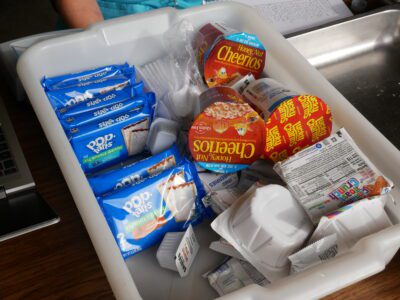
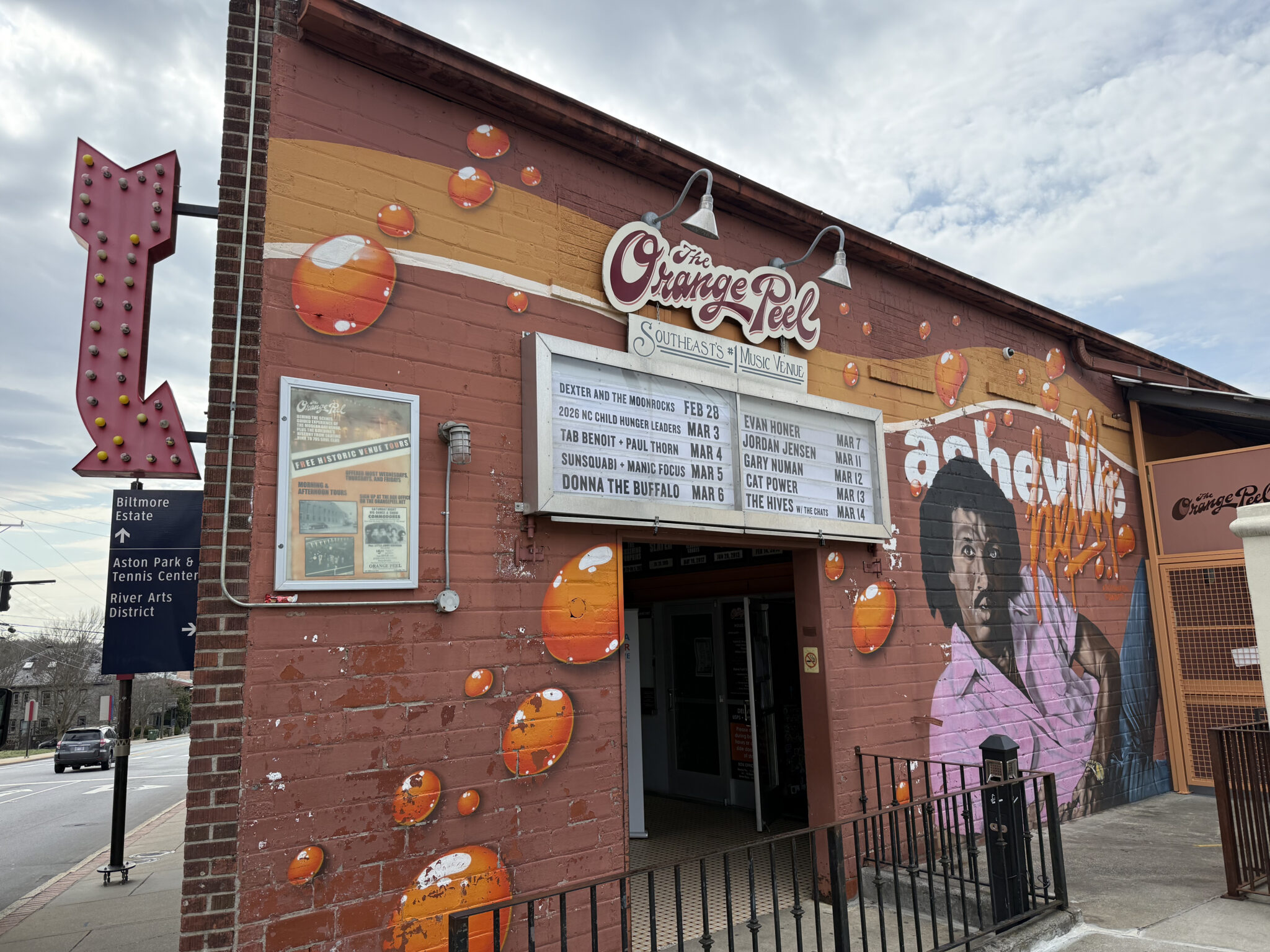
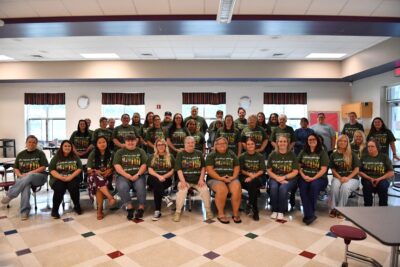
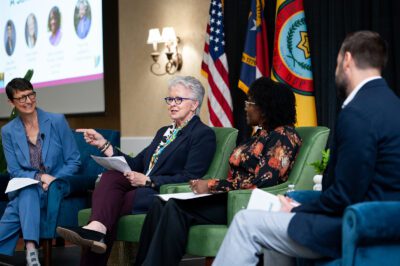
Child hunger leaders from across North Carolina — including representatives from school nutrition departments, food banks, churches, and state government — convened in Asheville this week for an annual conference hosted by the Carolina Hunger Initiative (CHI).
“In this room, we are a community united by one common value: Kids deserve access to healthy food, no matter what,” said Lou Anne Crumpler, director of the CHI.
During conference sessions, which spanned a variety of topics related to school meals, one topic loomed large: the ramifications of changes to the Supplemental Nutrition Assistance Program (SNAP), which was cut significantly by the federal budget reconciliation bill, signed into law by President Donald Trump in 2025.
This year also marked the first time the conference was held in western North Carolina — aligned with a recently announced CHI project, funded by Dogwood Health Trust, that will examine child hunger and strategies to reduce it in the wake of Hurricane Helene.
“Hurricane Helene tested our infrastructure and our spirits,” said Jehan Benton-Clark, vice president of grantmaking and strategy at Dogwood Health Trust. “Western North Carolina has been navigating workforce shortages, market instability, and uncertainty in public funding. And yet, this region also represents what is possible when people show up for one another.”
Preparing for historic SNAP cuts
More than 1.4 million people in North Carolina, including roughly 600,000 children, receive SNAP benefits each month. In addition to alleviating hunger, SNAP supports jobs and local economies — particularly in rural communities, where food benefits play a crucial role in sustaining local grocery stores.
SNAP brings roughly $2.8 billion in federal funds annually to North Carolina, generating a $4.2 billion impact, according to a presentation from the North Carolina Department of Health and Human Services (NC DHHS).
“SNAP is the backbone of food access in rural North Carolina — SNAP is making sure that all of rural North Carolina has grocery stores that remain open,” said Kate Hanson, executive director of Meals4Families.
The federal budget reconciliation bill, also called H.R. 1, reduced federal funding for SNAP by $186 billion through 2034, which amounts to a roughly 20% cut — the largest in SNAP history.
Beginning in October 2026, the bill increases the share states have to pay toward SNAP’s administrative costs from 50% to 75%. According to the NC DHHS presentation, additional costs to cover this increase annually are $69 million for county governments and $16 million for the state.
Separately, beginning in October 2027, the bill requires states with a SNAP payment error rate above 6% to cover a portion of food benefits. Historically, the federal government has covered 100% of SNAP food benefits. Based on North Carolina’s most recent SNAP payment error rate, the state’s cost share for SNAP benefits could total up to $420 million annually.
If the state and counties are unable to absorb these additional costs, SNAP could face reductions or end entirely, threatening food access for hundreds of thousands of households.
“I’ve been calling on the federal government to delay implementation of H.R. 1 until fiscal year 2030 so that we states and the counties have adequate time to reduce our error rates, and to hold states harmless for the errors that occurred during the chaotic period of the federal government shutdown,” said Gov. Josh Stein in a prerecorded statement. “We need the General Assembly to fully fund SNAP in the state budget because we cannot risk losing this program.”
During a keynote address, North Carolina Attorney General Jeff Jackson discussed the temporary lapse in SNAP benefits that occurred during the federal government shutdown in November. Following a lawsuit brought by more than 20 states, including North Carolina, the Trump administration allowed $4.65 billion in emergency funds to be used for partial SNAP payments.
Jackson commended the work of staff at NC DHHS — who he called “unsung heroes” — for their work around the clock to ensure there was not a gap in SNAP benefits. In February, the North Carolina Department of Justice awarded its highest honor, the Dogwood Award, to the NC DHHS SNAP team who worked to “pull off this miracle,” Jackson said.
“Had it not been for them … food would not have been on the table for over a million people across the state,” said Jackson.
During a panel on SNAP, Hanson announced a new campaign called Stronger with SNAP and urged attendees to share the importance of SNAP with their elected officials.
Read more about SNAP
How cuts to SNAP impact access to school meals
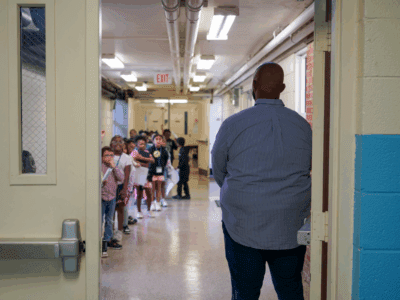
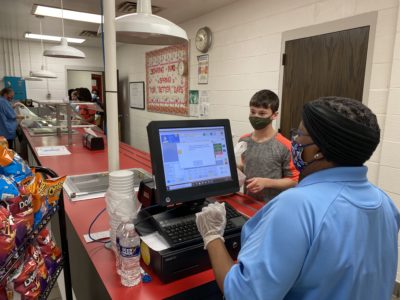
Cuts to SNAP are directly tied to school meals because they impact one of the key ways students access free school meals: direct certification.
School districts regularly receive data from the state that allows them to automatically enroll students in free school meals based on their household’s participation in SNAP. As participation in SNAP declines, fewer students will be directly certified for free meals, and schools will have to return to collecting applications, which are often difficult to get families to fill out. Participating in SNAP also automatically enrolls children in SUN Bucks, a grocery benefit available in the summer.
According to Rachel Findley, senior director of the Office of Nutrition at the North Carolina Department of Public Instruction (DPI), roughly 425,000 students were on SNAP in June 2025.
“That number will continue to decrease, and what that means is these students are no longer categorically eligible for free meals,” Findley said. “Now, our hardworking school nutrition central office staff are going to have to get free and reduced applications completed by families who haven’t completed a free and reduced application — perhaps the entire time that child has been in school.”
Declines in SNAP participation will also impact the Community Eligibility Provision (CEP), which allows eligible schools to serve all students free breakfast and lunch without collecting applications. That’s because CEP eligibility and reimbursements are calculated using the Identified Student Percentage (ISP), a formula based on the number of students directly certified for free meals, such as by participating in SNAP or Medicaid.
As ISPs decline, some schools may lose CEP eligibility entirely, and others may no longer be able to afford to operate CEP — both of which would reduce access to free school meals.
When SNAP benefits lapsed in November, Findley said calls poured in from superintendents and community members across the state trying to figure out how school meals could help get more food to students. Findley’s answer was: “I can’t recreate this program to do things it was never regulated to do.” She described this as an “aha moment” where people realized: What do we do now?
“It’s going to be catastrophic for our students in North Carolina if SNAP benefits expire. It’s going to be catastrophic for school nutrition programs who rely on that categorical eligibility in order to operate meals at no cost for students,” said Findley.
Learn more about how cuts to SNAP are tied to school meals in this article.


Working to secure free school meals for all students
The School Meals for All NC coalition, launched with support from Blue Cross and Blue Shield of North Carolina Foundation, advocates for all North Carolina public school students to have access to breakfast and lunch at no cost to their families. The coalition is co-led by the North Carolina Alliance for Health, The Center for Black Health & Equity, A Better Chance, A Better Community, and CHI.
“Feeding kids isn’t controversial — it’s foundational for a full and a healthy life,” said Merry Davis, director of Health Through Food at the Blue Cross and Blue Shield of North Carolina Foundation.
Advocates cite numerous benefits of free school meals for all, including ensuring access to meals that can support students’ learning and health, reducing stigma in the cafeteria, eliminating school meal debt, and more.
Nine states — California, Colorado, Maine, Massachusetts, Michigan, Minnesota, New Mexico, New York, and Vermont — have passed legislation that provides free school meals to all students. Dozens of other states, including North Carolina, have introduced bills that would do the same.
In April 2025, a “School Breakfast for All” bill was introduced in the General Assembly, sponsored by four Republican House members. Although the bill did not move forward, it garnered support from both Democrats and Republicans, with more than 50 sponsors.
According to Marianne Weant, director of programs at the North Carolina Alliance for Health, 81% of North Carolina voters support school meals for all.
During the conference, Chanel Jones, a teacher in the Alamance-Burlington School System and 2025 Piedmont Triad Region Teacher of the Year, shared her perspective on the importance of school meals for all.
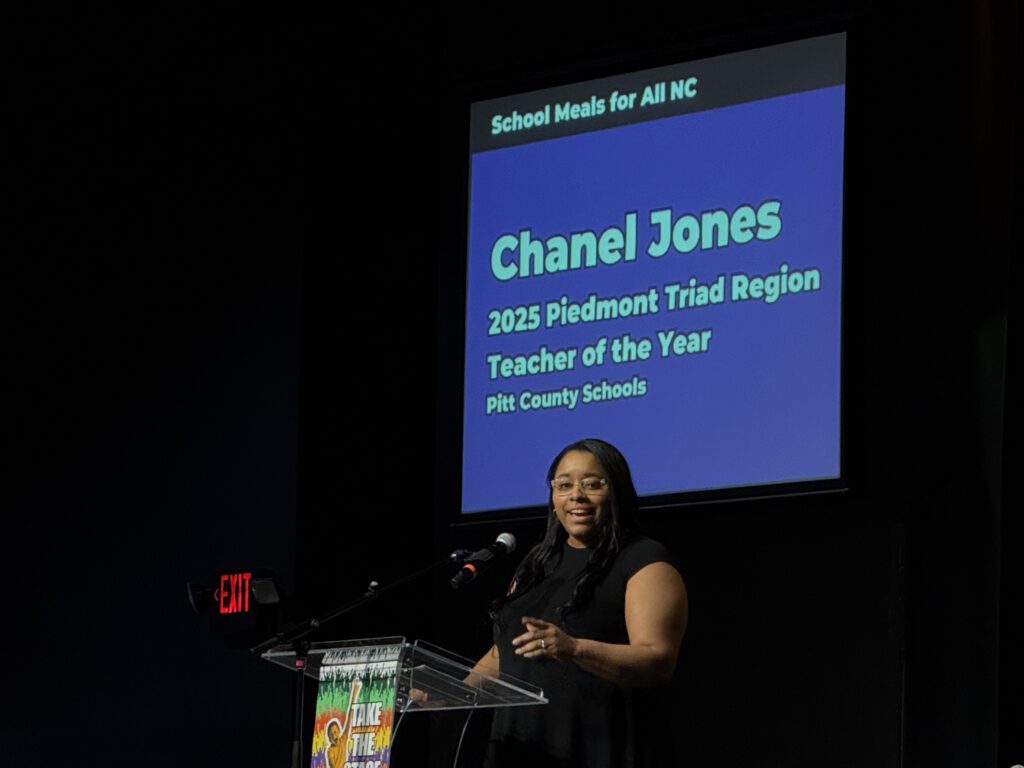
In her remarks, Jones said she cares about school meals for all students because she has seen firsthand how hunger impacts her students, including a lack of focus, irritability, or deciding to put their head down.
“Hunger is quiet, it is subtle. It is often invisible, and yet it changes everything about a child’s ability to fully show up in a classroom,” she said.
At Broadview Middle School, where Jones teaches, all students receive free breakfast and lunch.
“And I can say without hesitation that is how it should be for every student in North Carolina,” Jones said.
Read more about school meals for all

Feeding western North Carolina after Hurricane Helene
In September 2024, Hurricane Helene caused widespread destruction in western North Carolina. Two days after the storm, 25 of North Carolina’s 100 counties were declared federal disaster areas.
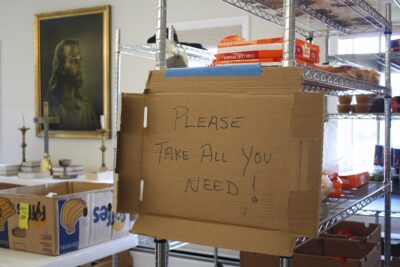
MANNA FoodBank, which serves 16 western North Carolina counties and the Qualla Boundary, lost nearly everything in the storm, including both of its warehouses and all food, equipment, and computer systems.
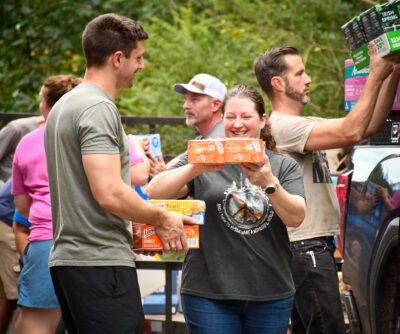
In the immediate aftermath of the storm, Claire Neal, CEO of MANNA FoodBank, said they devised a plan to receive donations in the morning and distribute items in the afternoon. Without cell service, internet, or open roads, “we were really just kind of relying on the kindness and capacity of our local neighbors,” she said.
What came next was “the scariest moment” of her professional life when she arrived at the donation site in the morning and realized how little food would be available to distribute.
“But the truth is … people gave what they had. They pulled things out of their garages to give to their neighbors,” said Neal. “And then when the roads opened up, the rest of the country, and really the world, responded in amazing and beautiful ways.”
Another learning from the hurricane, Neal said, was realizing just how long recovery takes. The food bank only recently restored its freezer and cooler capacity — nearly 500 days after the storm — and is now beginning to rebuild its volunteer center and offices.
“I say all of that just to use MANNA as an example … many of our neighbors are still rebuilding,” said Neal. “It doesn’t happen overnight, but it is something that we can do together.”
Read more about Hurricane Helene recovery
Connecting students to locally grown food
Farm to school — which includes purchasing local food for school meals, educational activities related to agriculture and nutrition, and school gardening — offers numerous benefits for both farmers and students.
For farmers, selling to school districts opens new institutional markets that can provide additional revenue and strengthen local economies. For students, eating local products in school meals and snacks can improve access to nutritious, high-quality food and increase interest in topics related to food systems and agriculture.
During a panel, Danielle Raucheisen, Growing Minds program director at the Appalachian Sustainable Agriculture Project (ASAP), discussed the organization’s efforts to connect local farmers interested in selling to schools with school nutrition directors and child care programs that want to buy local products.
“One way we’re doing this is holding grower-buyer meetings at food hubs here in western North Carolina,” said Raucheisen. “Food hub staff, child care staff, and farmers from the community will learn more about each other and the different systems they all operate in.”

One of the farms ASAP works with is Hickory Nut Gap Farms in Fairview. The farm offers grass-fed beef, pasture-raised pork, and pasture-raised chickens.
Virginia Hamilton, director of operations at Hickory Nut Gap Farms, said the farm supplies up to 8,000 pounds of ground beef to local schools each month. Located on 70 acres, the farm also frequently hosts groups of students for field trips and tours, allowing children from all backgrounds to “be a farm kid for a couple hours,” Hamilton said.
During the panel, Hamilton outlined three ways to support farm to school:
- Secure continuous funding for farm to school: To build momentum, Hamilton said farm to school efforts need continuous funding rather than being susceptible to the decisions of donors or politicians. “Every time we have to restart or retool something, it slows down the progress that we’ve made together,” she said.
- Support independently owned regional food infrastructure: “We can’t feed students if we can’t get the food to the schools,” said Hamilton. Infrastructure needed for large scale distribution of local food includes refrigeration, transportation, trucking, processing and slaughter facilities, and packing infrastructure.
- Advocate for farmland preservation: NC FarmLink estimates that the state will lose nearly 1.7 million acres of farmland to development by 2040. “Farm to school or farm to table just doesn’t actually work without the farm part. When we lose farmland, we can’t get it back,” said Hamilton.
Read more about farm to school

Increasing access to summer meals in rural communities
When school is out for the summer, efforts to feed children don’t end. In 2025, 5.3 million summer meals were served across the state to children ages 18 and under, an increase from the 4.2 million meals served in summer 2024, according to CHI.
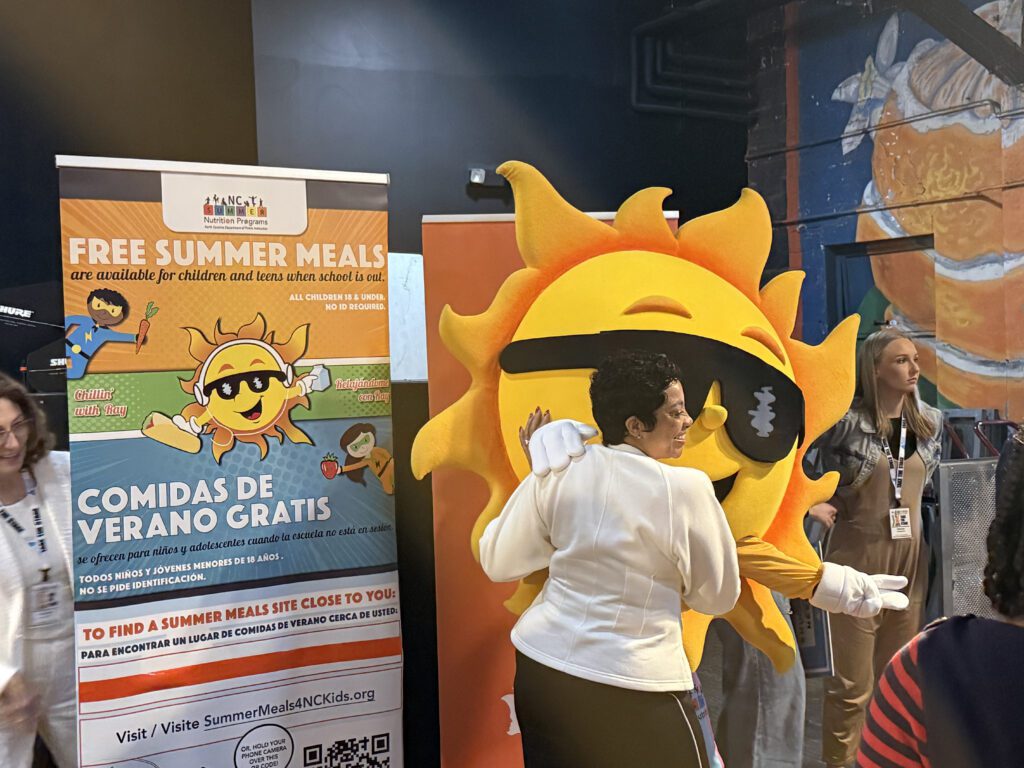
Historically, all summer meals had to be eaten on-site, such as at a park or a library. This can create barriers to accessing summer meals, particularly in rural communities, where children may not have transportation to reach meal sites.
Beginning in the summer of 2023, new federal legislation provided a solution: Summer meals sponsors in low-income, rural areas are now allowed to provide meals that can be eaten off-site, also called non-congregate meals or SUN Meals To-Go.
“SUN Meals To-Go are a game changer,” said Tamara Baker, project and communications director at CHI, adding that serving SUN Meals To-Go also provides a way for school nutrition departments to strengthen their financial position by receiving additional federal reimbursements.
Participation in SUN Meals To-Go has grown rapidly. According to CHI, there were eight sponsors participating in summer 2023, 33 sponsors participating in summer 2024, and 43 sponsors participating in summer 2025.
Two of those sponsors — Hickory City Schools and Second Harvest Food Bank of Northwest NC — shared their experiences with SUN Meals To-Go during the conference.
Nicole Caudill, director of community meals for Second Harvest Food Bank of Northwest NC, said implementing SUN Meals To-Go has resulted in rapid growth in the food bank’s summer meals efforts. In 2025, when the food bank increased SUN Meals To-Go operations, they served roughly 1,200 children per day through congregate meals, and another 1,000 children per day through SUN Meals To-Go — nearly doubling their reach.
“This really opens up doors for us to get meals into rural communities,” said Caudill, adding that more than 54,000 meals were served last year through SUN Meals To-Go alone.
Learn more about SUN Meals To-Go in Hickory City Schools in this article.
Editor’s note: The Blue Cross and Blue Shield Foundation of North Carolina and Dogwood Health Trust support the work of EdNC.

Recommended reading