
New state investments aim to bolster NC school meals as updated federal nutrition standards, SNAP cuts loom

When North Carolina’s public schools opened again in August, so too did cafeteria lines across the state, where millions of breakfasts and lunches are served to students each school year. Research shows that school meals offer many benefits, including alleviating food insecurity, supporting good nutrition, and increasing student achievement.
New investments in school meals, included in the state budget in July, are putting more dollars behind local agricultural products for elementary schools, bonuses for school nutrition employees, and more.
At the same time, school nutrition programs face continued financial strain and uncertainty. Cuts to the Supplemental Nutrition Assistance Program (SNAP) threaten access to school meals, and the federal government is preparing to release a proposed rule updating school nutrition standards that could have significant implications for what gets served in cafeterias.
As the school year begins, here is a look at the key investments and challenges impacting school meals in North Carolina.
 Sign up for the EdDaily to start each weekday with the top education news.
State budget invests in school nutrition personnel, farm to school, and more
School nutrition programs operate financially independently of school districts and primarily rely on federal reimbursements to cover all costs, including food, staff salaries and benefits, equipment, and more.
As costs have increased faster than the federal reimbursement rate, many school nutrition programs are facing financial strain. According to materials provided to EdNC by the School Nutrition Association of North Carolina (SNA NC), an organization of 12,000 school nutrition workers across the state, roughly 84% of school nutrition programs were “in the red post-pandemic,” accruing a statewide total of $15 million in debt as of 2025.
One of the key factors driving increased costs is labor. Beginning in the 2022-23 school year, the state increased the minimum wage for noncertified school personnel, including school nutrition staff, to $15 per hour. That increased minimum wage did not come with additional state funding, leaving school nutrition programs with an “unfunded mandate.” At the same time, many school nutrition programs continue to face labor shortages and retention challenges, often competing with local restaurants for employees.
In the 2026 state budget, among the biggest-ticket items for school meals was a $17 million investment in one-time, $1,750 bonuses for locally and federally funded school nutrition and custodial personnel.
Still, SNA NC’s primary legislative request was left unfulfilled. The group requested a special provision that would cover the differential of the state-mandated salary increases for noncertified school personnel.
“North Carolina’s decision to provide a $1,750 bonus to eligible school nutrition professionals demonstrates the value of the essential work performed every day. School nutrition employees are often among the first to arrive and the last to leave, ensuring students are nourished and ready to learn. This investment not only acknowledges their dedication but also supports efforts to retain and strengthen a workforce that is vital to student achievement,” said Amy Stanley, school nutrition director in New Hanover County Schools, in a statement.
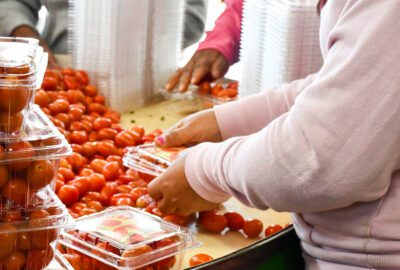
The budget also included $2.5 million in nonrecurring funds for local agricultural purchases in elementary schools through the North Carolina Farm to School Program, including fruits, vegetables, meat, and grains.
School nutrition directors often want to purchase more local products, and farmers often want to sell to school districts, but funding is a challenge, as local products can be more expensive than products offered through large national wholesalers or distributors.
The state budget’s investment will help bolster local school food purchasing following the federal cancellation of the Local Food for Schools Cooperative Agreement. After providing North Carolina with more than $5 million for schools to purchase local food in 2022, the program was set to bring nearly $19 million in additional funding before it was canceled in March 2025.
The $2.5 million state investment in farm to school was supported by the nonpartisan School Meals for All NC coalition, which also advocates for all public school students to have access to breakfast and lunch at no cost. While Gov. Josh Stein’s budget proposal called for providing universal breakfast at no cost to all students, funded in part by the North Carolina Education Lottery funds and the Civil Penalty and Forfeiture Fund, lawmakers did not include that proposal in the state budget.
The state budget also:
- Invests $5 million in state matching funds for SUN Bucks, which will subsequently unlock $60 million in federal funding to provide summer food assistance to eligible children while school is out. Through the program, eligible children receive $120 during the summer break to pay for nutritious food.
- Codifies and provides greater flexibility for the Community Eligibility Provision (CEP) Meal Incentive Program, originally introduced in the 2023 budget. The program is administered by the state Department of Public Instruction and works to expand the number of schools participating in CEP, which allows low-income schools to provide breakfast and lunch at no cost to all students.
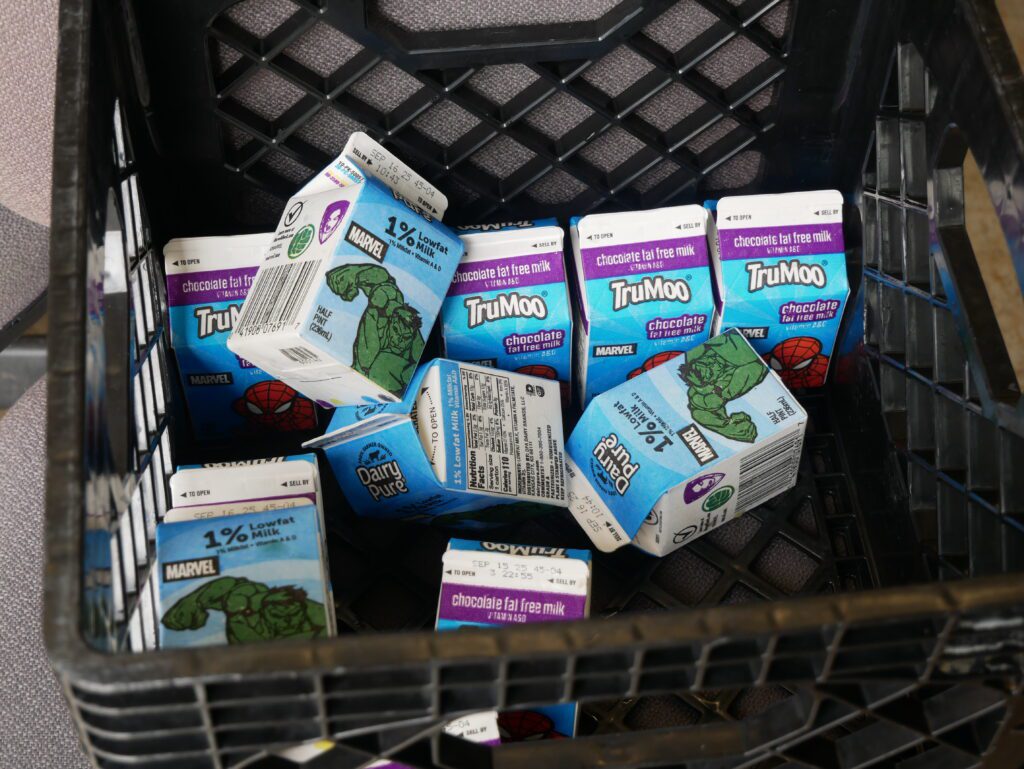
- Prohibits schools from offering alternative school meals based on students’ pay status — including whether or not they have school meal debt, or qualify for free or reduced-price meals. Serving alternative meals, or items other than what is offered on the daily menu, contributes to lunch shaming, stigmatizing students who have school meal debt. While some school districts have already ended the practice of serving alternative meals, this new policy ensures all districts in the state provide students with the same meal.
Read more on NC school meals
New school nutrition standards loom as programs face challenges reducing ultra-processed food
School nutrition professionals across the country are closely watching the upcoming release of a proposed rule that would update school nutrition standards to align with the 2025-30 Dietary Guidelines for Americans (DGAs).
Updated every five years by the U.S. Departments of Agriculture (USDA) and Health and Human Services (HHS), the DGAs determine what food is served in schools and at child care centers, among other things.
In January, the newest DGAs marked a departure from previous guidelines by encouraging the consumption of red meat and full-fat dairy, and, for the first time, urging Americans to limit consumption of “highly processed” foods. The new guidelines also include a higher daily protein recommendation than the federal government’s previous guidance and stricter recommendations on added sugars.
The USDA is required by law to develop school nutrition standards that “reflect the goals” of the most recent edition of the DGAs. To qualify for federal reimbursement, schools must offer meals that meet these guidelines, also referred to as “the meal pattern.” A 2021 study found that school meals — which already include fruits and vegetables, whole grains, milk, and protein — offered better nutritional quality than meals from restaurants, grocery stores, and other sources.
On July 20, 2026, the Office of Management and Budget (OMB) received a proposed rule from the USDA that would align school meal nutrition standards with the new DGAs. OMB’s review is the final step before it is published for public comment. After that, the USDA will develop a final rule.
While it remains to be seen what the proposed rule will include, some of the ways it could reflect the new DGAs include increased protein requirements, stricter whole-grain requirements, and stricter limits on added sugars.
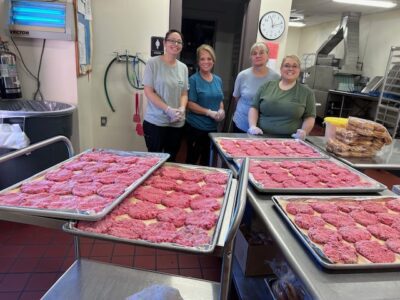
Further, given that the new DGAs recommend limiting highly-processed foods, the proposed rule may also place limits on processed items. School nutrition programs already face many challenges reducing reliance on ultra-processed foods — including funding, equipment and infrastructure, and staffing.
“Any new rules must ensure meal programs are permitted to serve nutrient-dense, pre-prepared foods,” reads a position paper from the national School Nutrition Association. “For example, school kitchens that lack adequate staffing and equipment to prepare and roll burritos from scratch can obtain nutrient-dense pre-prepared burritos, made with low-sodium beans, low-fat cheese and whole grain tortillas.”
Historically, new school meal nutrition standards go into effect at the start of the school year following when the final rule is published and are often phased in over multiple years. Under the most recent update to the standards, published in April 2024, new requirements were phased in between fall 2024 to fall 2027. Depending on when the final rule is published, changes could take effect as soon as next school year.
Read more on scratch cooking
Separately, the USDA’s voluntary “Pledge for Healthier School Meals,” announced in July, reflects the priorities in the latest DGAs and may provide a preview of what’s to come in the proposed rule.
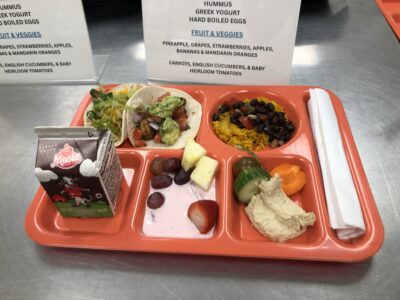
In the pledge, the USDA calls on states and food service companies to pledge to “make school meals and snack programs healthier” through six recommendations:
- Replacing breakfast pastries with whole-food breakfast options
- Preparing meat and meat alternatives using healthy cooking methods
- Serving 100% whole grain products
- Improving Smart Snacks served in schools
- Prioritizing whole fruit
- Serving whole milk
The Chef Ann Foundation, which supports schools in implementing scratch cooking, has helped school nutrition programs across the country implement many of the recommendations in the pledge.
“Moving from an ultraprocessed breakfast croissant to a scratch-made breakfast burrito happens with a step-by-step implementation plan that accounts for your procurement, facilities, finances, staff training, and gaining buy-in from administration, students, and the school community,” said Mara Fleishman, CEO of the Chef Ann Foundation, in a statement about the USDA’s pledge. “If you don’t know where to start or how to address roadblocks along the way, it can be difficult to create that lasting change.”
Relatedly, in August, the USDA announced the “Harvest to Hallways Initiative,” which aims to “strengthen school meals by connecting more American farmers with local schools, investing in school kitchen infrastructure, and giving states and school districts new tools to serve healthier, more nutrient-dense meals to America’s children,” according to a press release.
The initiative includes $50 million in new investments in school cafeteria infrastructure, up to $25 million in new farm-to-school grants, and $50 million in research to identify “practical, cost-effective ways to improve the nutritional quality of school meals.” Through the initiative, the USDA and HHS are also encouraging greater state adoption of the voluntary Pledge for Healthier School Meals.
Cuts to SNAP threaten access to school meals
As of 2025, more than 1.4 million people in North Carolina, including roughly 600,000 children, received SNAP benefits each month — bringing roughly $2.8 billion in federal funds annually to North Carolina and generating a $4.2 billion impact.
In 2025, the federal budget reconciliation bill, or H.R. 1, reduced federal funding for SNAP by $186 billion through 2034, which amounts to a roughly 20% cut — the largest in SNAP history.
SNAP cuts in H.R. 1
At the end of 2025, work requirements for SNAP were expanded, extending them to older adults between the ages of 55-64 and to adults with children ages 14 and older. H.R. 1 also removed previous exemptions for veterans, people experiencing homelessness, and young adults aged out of foster care and under the age of 24.
Beginning Oct. 1, 2026, H.R. 1 increases the share states have to pay toward SNAP’s administrative costs from 50% to 75%. According to a presentation from the N.C. Department of Health and Human Services (NCDHHS), additional costs to cover this increase annually total $85 million, including $69 million for county governments and $16 million for the state.
Separately, beginning Oct. 1, 2027, H.R. 1 requires states with a SNAP payment error rate above 6% to cover a portion of food benefits. Historically, the federal government has covered 100% of SNAP food benefits.
Based on North Carolina’s fiscal year 2025 SNAP payment error rate of 7.36%, the state’s benefit cost share would be roughly $154 million annually. When the benefit cost share goes into effect in October 2027, states may elect either the fiscal year 2025 or fiscal year 2026 payment error rate to calculate the matching fund requirement.
The 2026 state budget included more than $5.3 million to help the NCDHHS improve SNAP administration, investing in automation and staffing with the goal of continuing to lower the state’s SNAP payment error rate.
However, the budget did not provide funding to help counties absorb increased administrative costs that will take effect in October 2026. The budget also established a new cost-sharing formula that will require counties to absorb any future amount of SNAP benefits the state owes beginning in October 2027, further increasing financial pressure.
“This significant new financial burden could result in states having to drop out of SNAP altogether when an economic downturn occurs and need is greatest,” reads a press release from Stein’s office about cuts to SNAP.
According to USDA data, between July 2025 and May 2026, the number of people on SNAP in North Carolina declined by 6.7%. And if the state and counties are unable to absorb the additional costs detailed above, SNAP could face further reductions or end entirely, threatening food access for hundreds of thousands of households.

Cuts to SNAP also impact the ability for low-income students to receive free meals at school. As SNAP participation declines, fewer students will be directly certified for free meals based on their household’s participation in SNAP, and schools may have to return to collecting applications, which are often difficult to get families to fill out. Participating in SNAP also automatically enrolls children in SUN Bucks, a grocery benefit available in the summer.
Declines in SNAP participation will also impact the CEP, which allows eligible schools to serve all students free breakfast and lunch without collecting applications. That’s because CEP eligibility and reimbursements are calculated using the Identified Student Percentage (ISP), a formula based on the number of students directly certified for free meals, such as by participating in SNAP or Medicaid.
As ISPs decline, some schools may lose CEP eligibility entirely, and others may no longer be able to afford to operate CEP — both of which would remove seamless access to free school meals from an entire school or district.
According to a report from the Food Research & Action Center, in North Carolina, 1,928 schools enrolling more than 970,000 students adopted CEP during the 2025-26 school year, and CEP adoption has been increasing year-over-year.
While data on CEP participation for the 2026-27 school year is not yet available, Marianne Weant, director of programs with the North Carolina Alliance for Health, said it looks like CEP participation is holding steady for now because the structure of CEP allows schools to recertify eligibility on a four-year cycle. Facing cuts to SNAP, many school districts recertified early to lock in their existing ISP.
“This provides a runway for schools to adjust to changes, but it also means we’re seeing the impacts from SNAP cuts to CEP more slowly than we see their impacts in the broader community,” Weant said in a statement to EdNC. “That being said, we anticipate we will see significant impacts to CEP over the coming years.”
Andrew Harrell, program and communication manager with the Carolina Hunger Initiative, said it’s a relief that many school districts were able to take proactive steps to continue CEP, but that cuts to SNAP and Medicaid have threatened access to food for children in need.
“School nutrition teams deserve to focus on feeding kids healthy, appetizing meals. Instead, they are being forced to navigate a landscape of constantly shifting expectations with insufficient support to respond to changes,” Harrell said in a statement to EdNC. “Solutions such as additional support for school meals for all kids at the state level would allow school nutrition heroes to get back to the work they are meant to be doing.”