
Take a look at USDA’s new income eligibility guidelines for free and reduced-priced school lunches

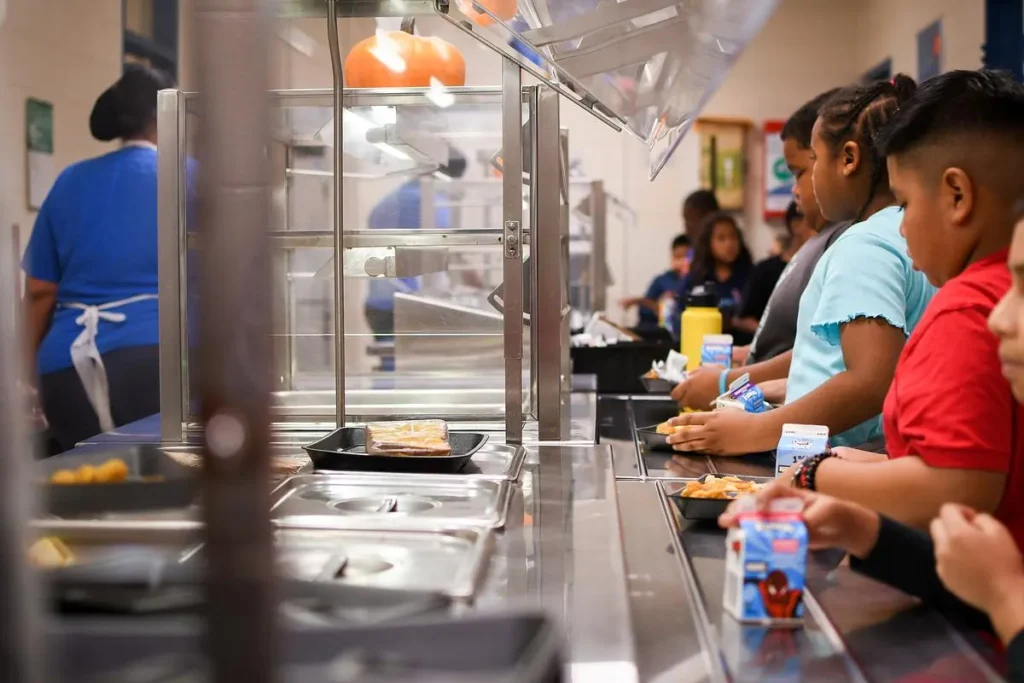
The newest income guidelines for free and reduced-priced school lunches as a part of the National School Lunch Program — which were released by the U.S. Department of Agriculture (USDA) in April — became active for children across the country on July 1. The N.C. Department of Public Instruction (DPI) issued a press release explaining how these updated guidelines affect North Carolinians and how households can apply for free or reduced-price lunches for the upcoming school year.
The program is a federally assisted meal initiative that operates in “public and nonprofit private schools and residential child care institutions,” providing “nutritionally balanced, low-cost or free lunches to children each school day,” according to the USDA. Like in past years, a child’s eligibility is determined by their household size and the total income earned by household members.
“Educational excellence isn’t achieved through engaging and rigorous classrooms alone. Healthy and nutritious meals are essential to ensuring students are focused and ready to learn,” said State Superintendent of Public Instruction Maurice “Mo” Green in the press release. “When students eat school meals, they have improved focus and academic success.”
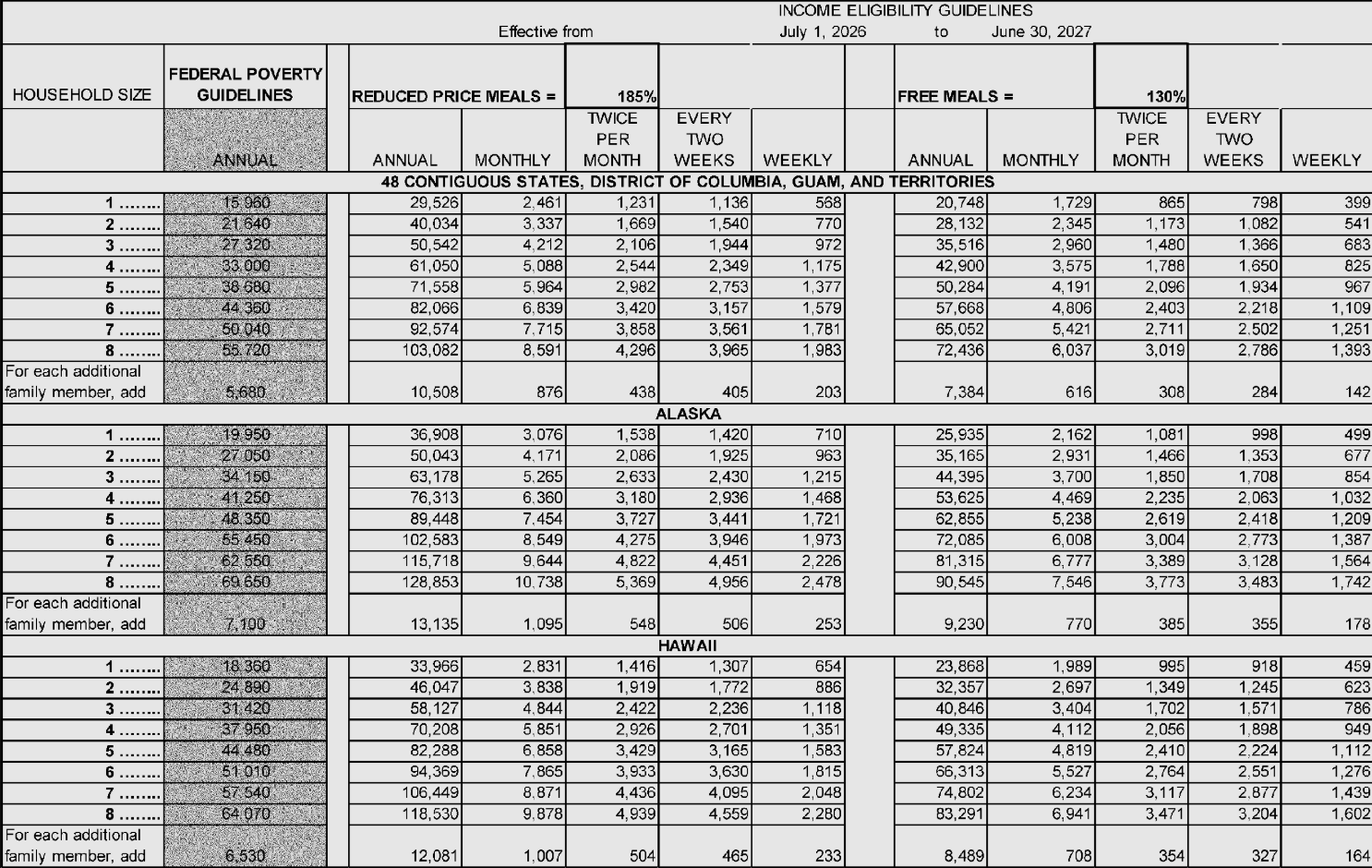
In order to qualify for reduced-price meals, a child’s household must earn at or below 185% of the federal poverty level (FPL), or $5,088 monthly for a household of four. Children from households earning 130% of the FPL, or $3,575 monthly for a household of four, will qualify for free school meals.
Below is a more detailed breakdown of income and household size requirements for qualifying for these lunches, as released by USDA.
Even if the children in your household were approved for free or reduced-price lunches during the last school year, you must submit an application for this school year. Applications should be available at your school’s office, the DPI release says. Each household can submit one application for all students in the household, and it must include:
- The names of all household members,
- The amount and source of income received by each household member, and
- The last four digits of the social security number of the adult household member who signs the application.
If the adult signing the application does not have a social security number, they should indicate that on the form.
 Sign up for the EdWeekly, a Friday roundup of the most important education news of the week.
According to the DPI release, “Children who are members of households that are eligible to receive Supplemental Nutrition Assistance Program (SNAP) benefits or Cash Assistance (CA) are automatically eligible for free meals.” Furthermore, all foster children are deemed categorically eligible for free meal benefits, regardless of what the income of the household where they live is.
Categorically eligible households do not need to submit an application for their children. However, you should still review any documentation that you receive regarding your children’s school lunch benefit eligibility to make sure all children are listed. Any discrepancies should be brought to the attention of your school district’s School Nutrition Administrator.
Additionally, children who meet the definition of homeless, runaway, or migrant are eligible for free meals, as are children who participate in their school’s federally funded Head Start program.
Applications may be submitted at any time throughout the year if changes to household size or to household member’s employment or pay occur. For more information regarding the application process, click here.