
Meeting families where they are: How one rural school district delivers summer meals to doorsteps

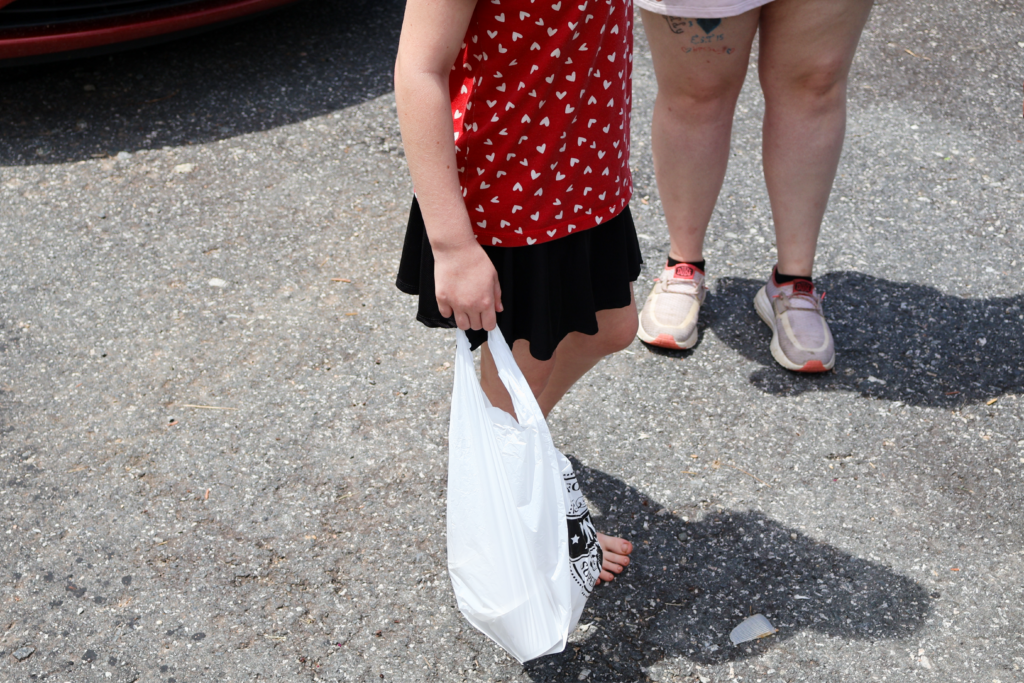
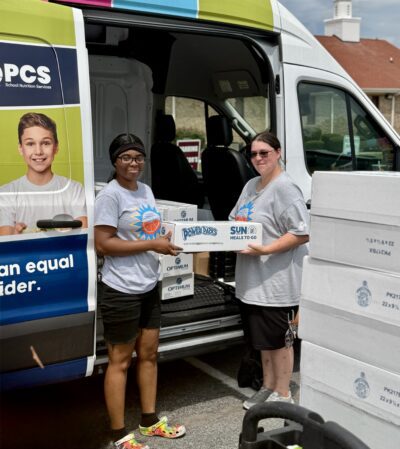
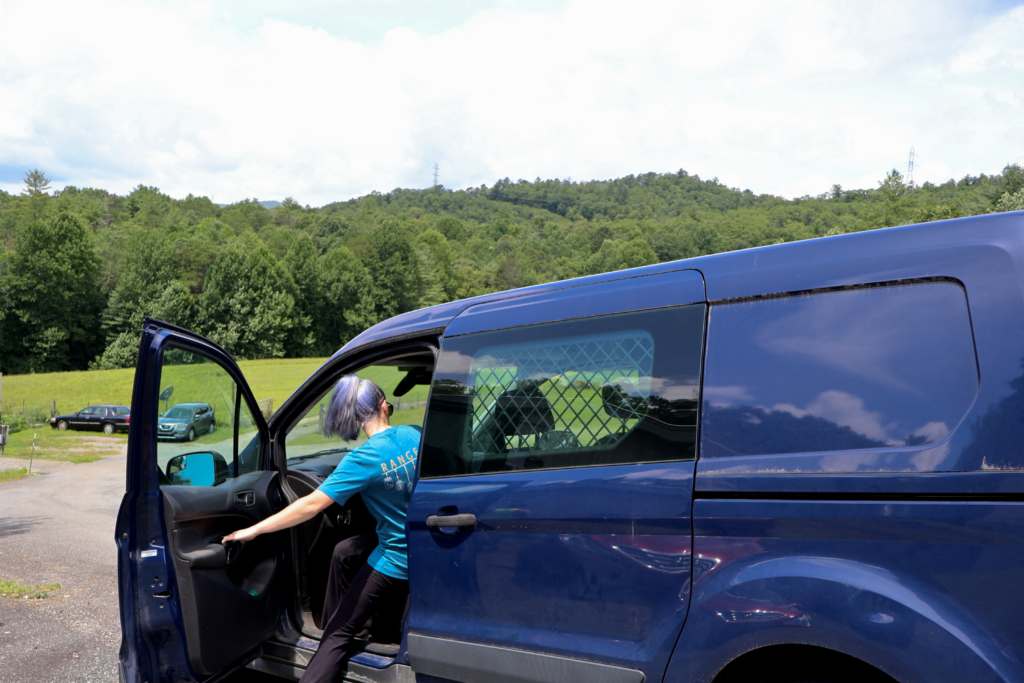
On a warm Tuesday in late July, a blue van marked with a Transylvania County Schools logo pulled into a gravel driveway and let out a light honk. Seconds later, the door of a house swung open. Two children bounded down the steps and into the arms of the van’s passengers — school nutrition employees the students know well because during the school year, they work in their school’s cafeteria.
The employees greeted the children and their parents, reached into the back of the van, and pulled out food from an insulated container. Prepared earlier that morning in the school cafeteria, lunch that day was tacos made with local Brasstown Beef.
“It’s taco Tuesday!” one of the children announced.
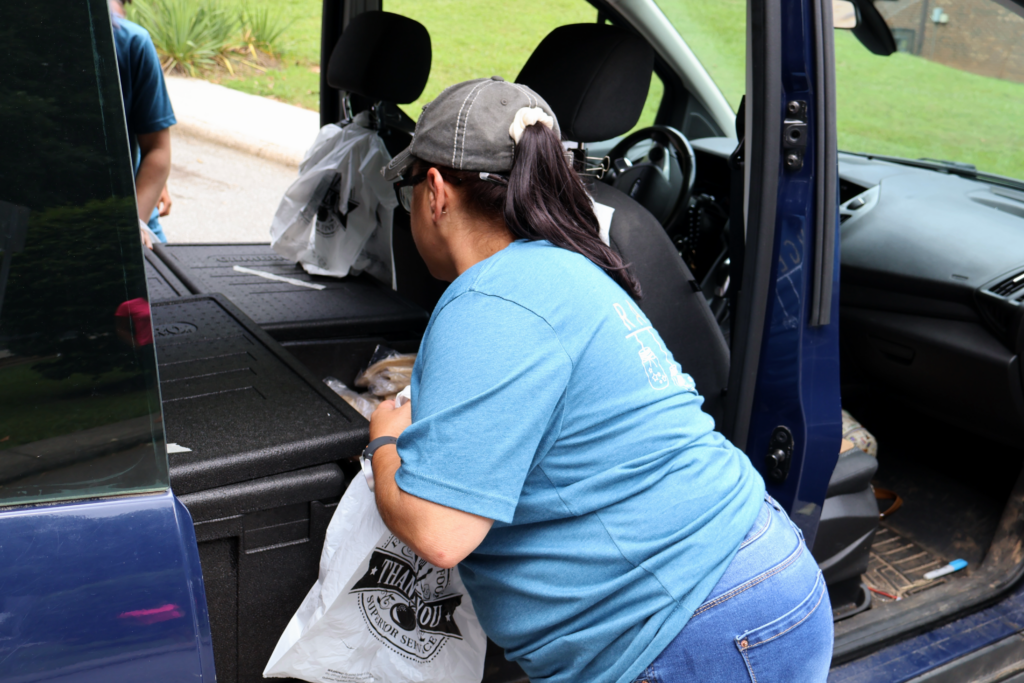
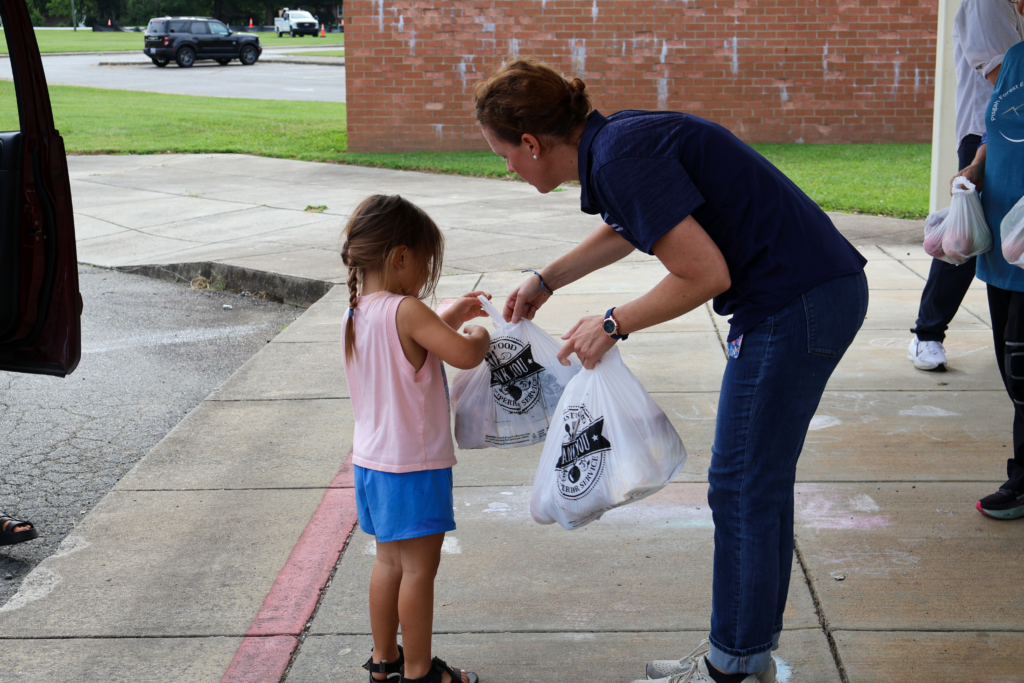
Each child took a bag containing a hot lunch and a breakfast for the next day. The school nutrition employees said a quick goodbye before buckling back in the van and heading to their next stop. “See you tomorrow!” they called out.
This scene unfolds Monday through Thursday, every week of summer break, rain or shine or heat wave, as Transylvania County Schools nutrition staff drive three routes across the rural, mountainous county to deliver free summer meals directly to more than 200 children.
And while it is the district’s third year delivering summer meals, that approach is still rare statewide, with just five sponsors offering it. It’s also rare for programs to offer daily hot meals, with many instead providing boxes with multiple days worth of shelf-stable or frozen items.
Janette Broda, director of school nutrition in Transylvania County Schools, said the motivation behind the district’s summer meals program is to meet families where they are, keep staff employed during the summer months, and offer high-quality meals to children who need it the most. And while it’s more expensive to provide fresh food, she is committed to providing children with the best quality nutrition possible.
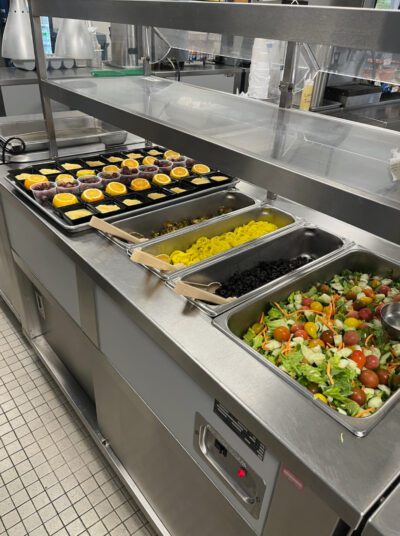
“If we’re feeding children, don’t we want to give them fruits and vegetables? Isn’t that what the program is about?” she said. “My guiding light is: Would I serve this food to my own children who are 9 and 11? And if the answer is no, why would I serve it to these children just because it might be cheaper?”
Transylvania County’s summer meals program has not only become a model in the state — it’s also informing national best practices. In January, Broda joined staff from the Carolina Hunger Initiative (CHI) in Washington, D.C. for No Kid Hungry’s Summer Nutrition Summit. There, she spoke on a panel about innovative strategies used to reach children in “ultra-rural” communities.
“She (Broda) is serving a hot meal every day in home delivery, and that’s not a thing that really any other sponsors are doing,” said Thompson Bertschy, program specialist at the CHI, where he provides support to summer meals sponsors. “And it’s just because she’s so committed and passionate … She’s operating the program to its fullest extent.”
Read more about school meals
New summer meals models emerge
In 2022, Congress passed legislation that made a significant change to the federal summer meals program. Beginning in the summer of 2023, sponsors in low-income, rural areas had the permanent option of providing summer meals that can be eaten off-site — also called SUN Meals To-Go or non-congregate meals — through models like drive-thru, walk-up, home delivery, and more.
Previously, all summer meals had to be eaten at a specific location, like at a public park or library. That requirement created numerous barriers to access, particularly in rural communities where children without transportation often can’t reach sites.
Now, in Transylvania County, any child can access free summer meals to-go through one of three models.
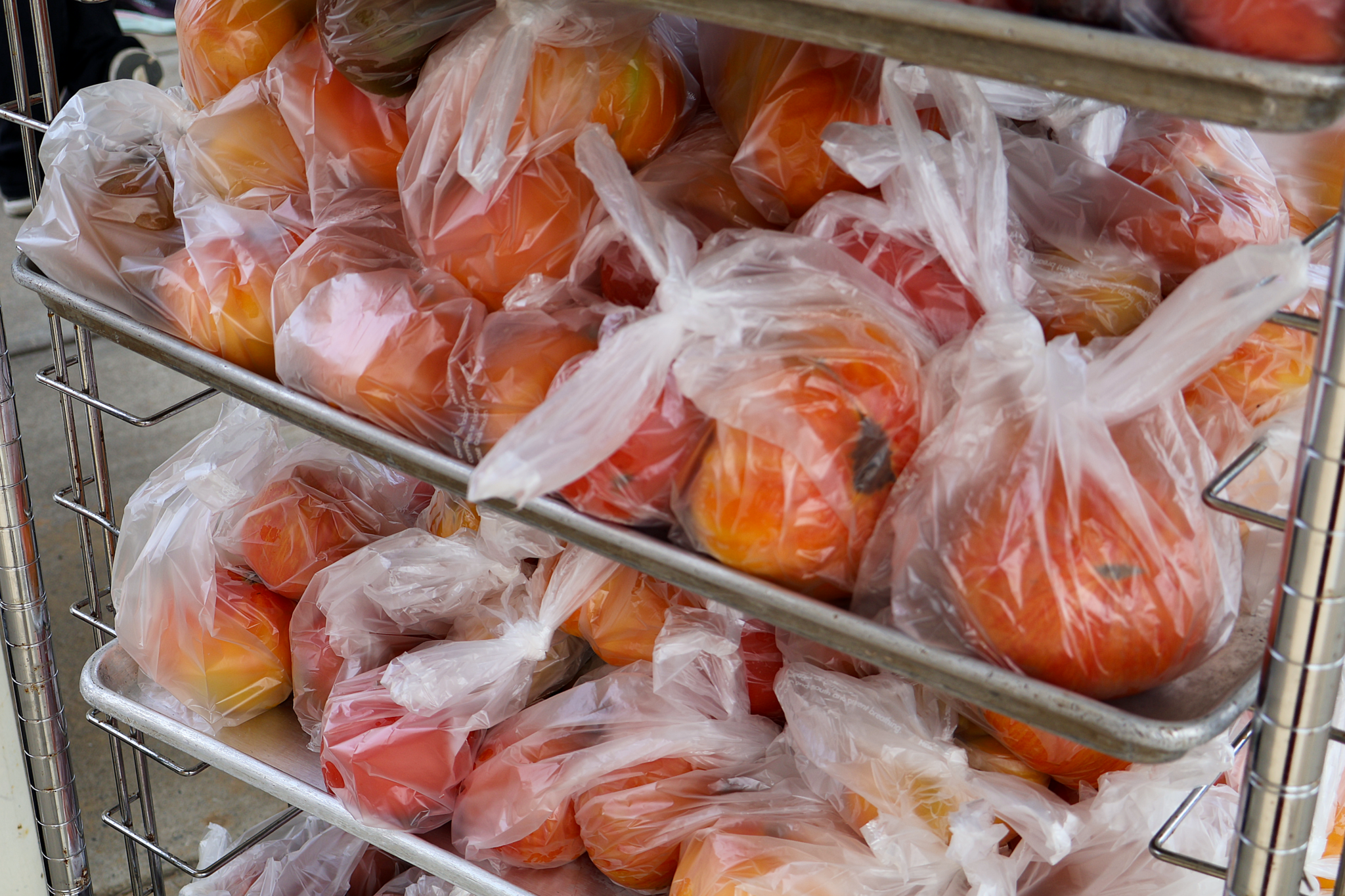
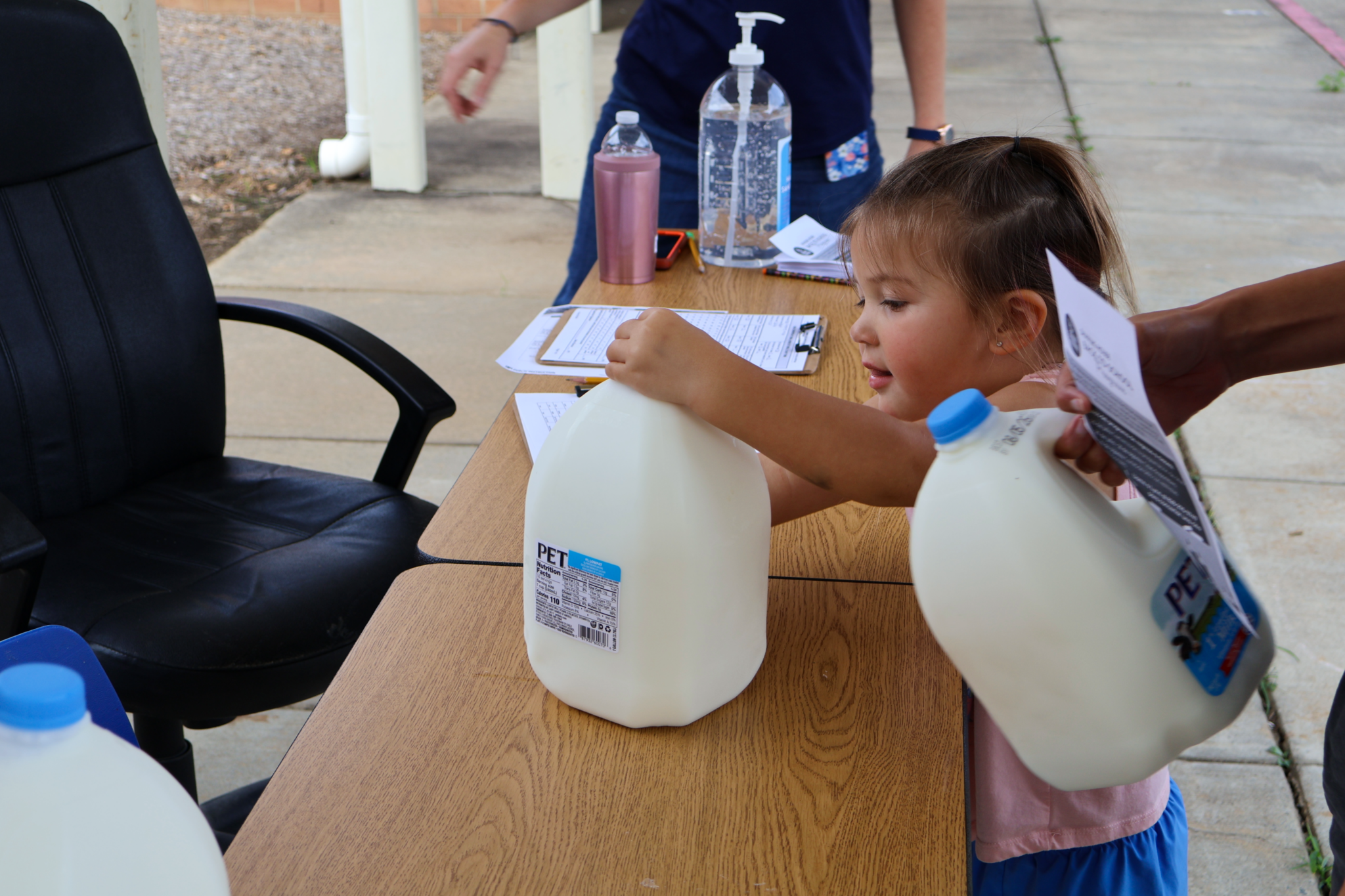
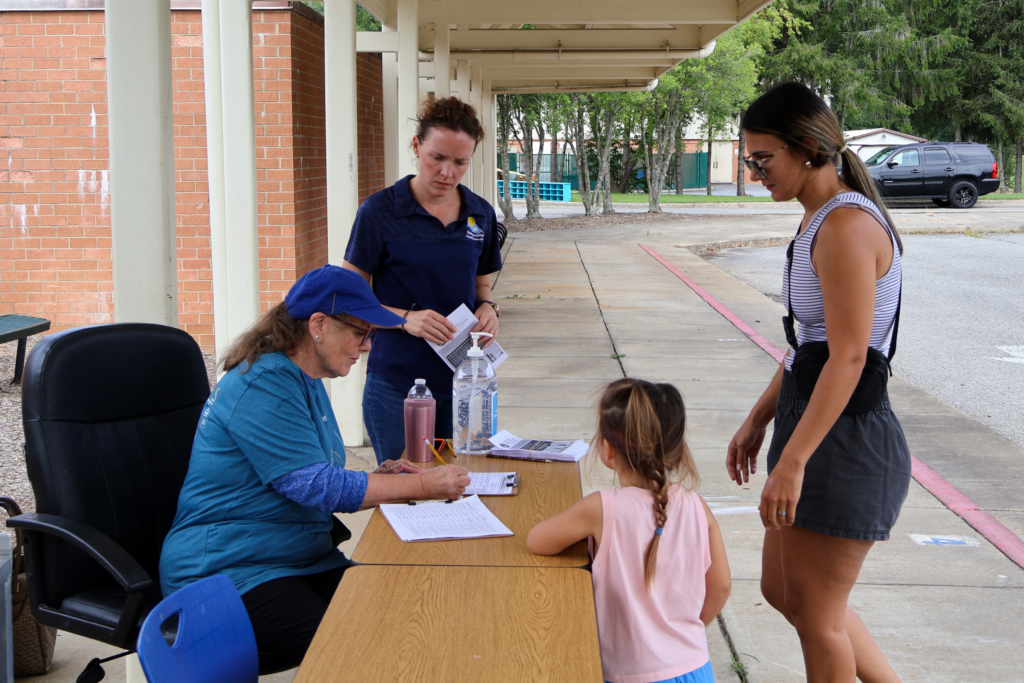
A “groceries to-go” model is offered once a week at Pisgah Forest Elementary. Parents drive through a pickup line and receive all the ingredients needed for seven days of breakfast and lunch. That includes frozen meat patties, whole-grain bread, a gallon of milk, and fresh, often-local produce (families received bags of local heirloom tomatoes, plus apples and oranges, on the day EdNC visited).
Alternatively, families can pick up hot lunches and breakfast for the next day, Monday through Thursday, in the parking lot of a local pool. On Thursdays, additional shelf-stable items are provided to cover breakfast and lunch over the weekend.
But for families facing transportation barriers, a third model — home delivery — provides a crucial solution.
“Those barriers can look like no transportation at all, or a one-vehicle family, or a grandmother who’s taking care of multiple children, or if their road is hard to access, or if we’re hard to access for them,” Broda said.
SUN Meals To-Go has gained traction across the state, with more sponsors offering it each year. According to the CHI, there were seven SUN Meals To-Go sponsors in summer 2023, 33 sponsors in summer 2024, 43 sponsors in summer 2025, and 60 sponsors in summer 2026.
This growth has allowed sponsors to reach more children. In summer 2025, 5.3 million summer meals were served across the state, up from 4.2 million meals served in summer 2024, according to the CHI.
 Sign up for the EdDaily to start each weekday with the top education news.
How home delivery in Transylvania County grew out of moments of crisis
Transylvania County, tucked in the Blue Ridge Mountains between Asheville and Greenville, South Carolina, is also called the “Land of Waterfalls.” The county is home to roughly 30,000 residents, 250 waterfalls, and multiple national forests — attracting tourists and retirees alike.
“It may look affluent — we have a lot of second and third homes here,” Broda said. But the reality is that 81% of the district’s students are eligible for free or reduced-price school meals.
During the school year, the district uses the federal Community Eligibility Provision, available to districts in low-income areas, to provide all students with breakfast and lunch for free. But “hunger doesn’t stop when the school year ends,” Broda said, making summer meals a vital support for the district’s students.
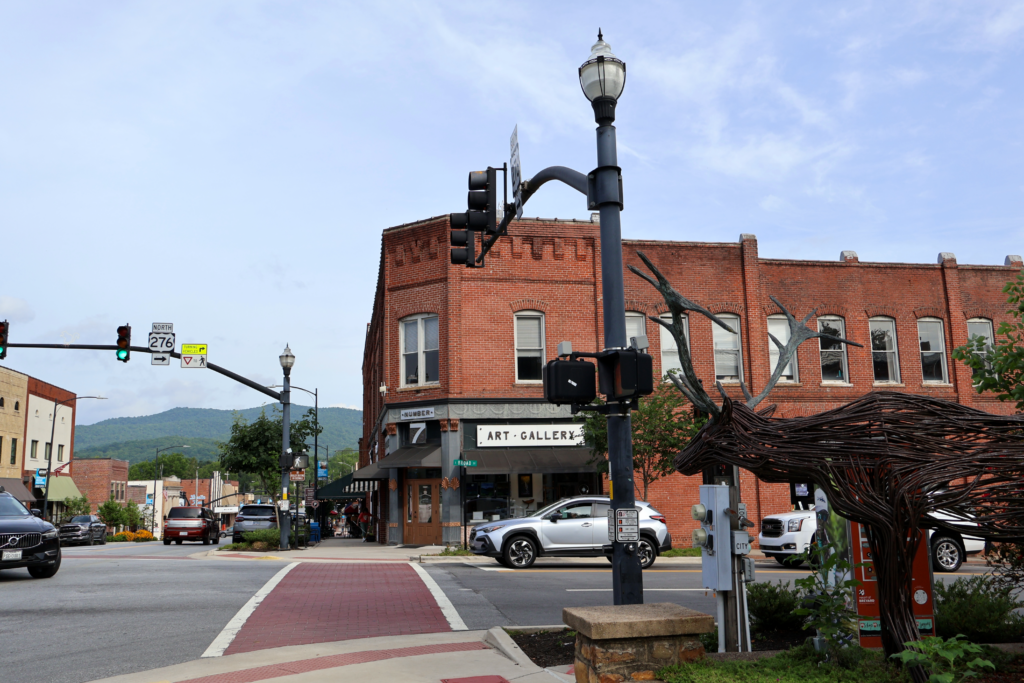
When the COVID-19 pandemic began in March 2020, federal waivers provided schools with the flexibility to offer meals through grab-and-go, curbside pick-up, and home delivery. Soon after schools closed, Transylvania County Schools began a home delivery program to ensure students were still being fed.
“There are three or four trailer park developments that are on top of a mountain with huge poverty, and the children who live in those trailer park areas really can’t access anything,” Broda said. “Our staff are part of that community as well, and they know who the children are. It was a grassroots effort — going out, having sign-ups, and speaking to the community.”
When home delivery became a permanent option in 2023 through SUN Meals To-Go, Broda said the district used lessons learned from delivering meals during the pandemic to inform its home delivery approach, which launched in the summer of 2024.
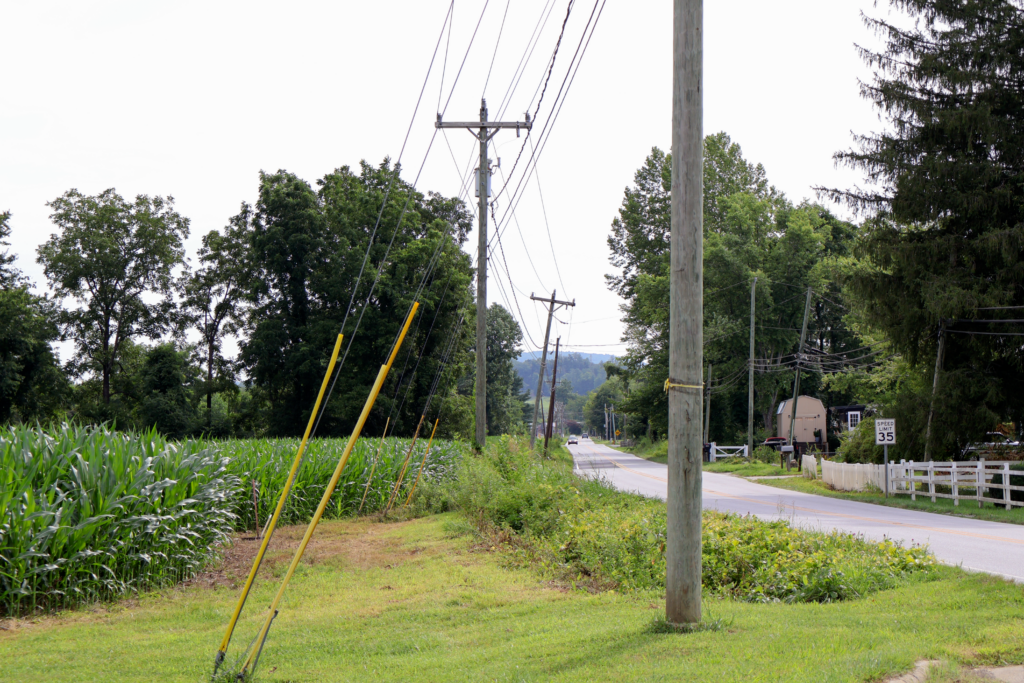
But another crisis was right around the corner. In September 2024, just one month into the school year, Hurricane Helene caused widespread devastation across western North Carolina, wiping out roads, knocking down trees and power lines, and flooding homes.
Communications were down across the county for days, but Broda used word of mouth and walkie-talkies to convene staff at the district’s warehouse. Whoever showed up went to work on feeding students. Once again, the district’s prior experience with home delivery proved valuable.
“After the hurricane, that (next) Monday, we were out serving meals. We were closed for two weeks, but we knew how to get meals to the children because we had these routes established from the summer time,” Broda said.
Recognizing there was greater need across the county after Helene, one home delivery route in summer 2024 expanded to two routes in summer 2025 and three routes in summer 2026, aided by funding from the CHI that helped the district purchase materials, supplies, and an additional vehicle.
What does it take to deliver summer meals?
Broda is the first to admit that delivering summer meals is hard, particularly on top of the other responsibilities her team has for serving meals during the school year.
“There’s a commitment there — both for children and for staff to be employed,” she said. “But we haven’t even ended last fiscal year. We are still being audited for last school year, we started summer, and we have to prepare for the next school year … we’re doing that all at the same time.”
Broda describes home delivery as a “daily grind” — she never wants to cancel a delivery, so when challenges arise or a staff member can’t make it in, there’s a constant need to iterate and adapt. There’s also the heat, the rain, the traffic, and the 10-hour shifts, all when staff could otherwise be taking a well-earned break.
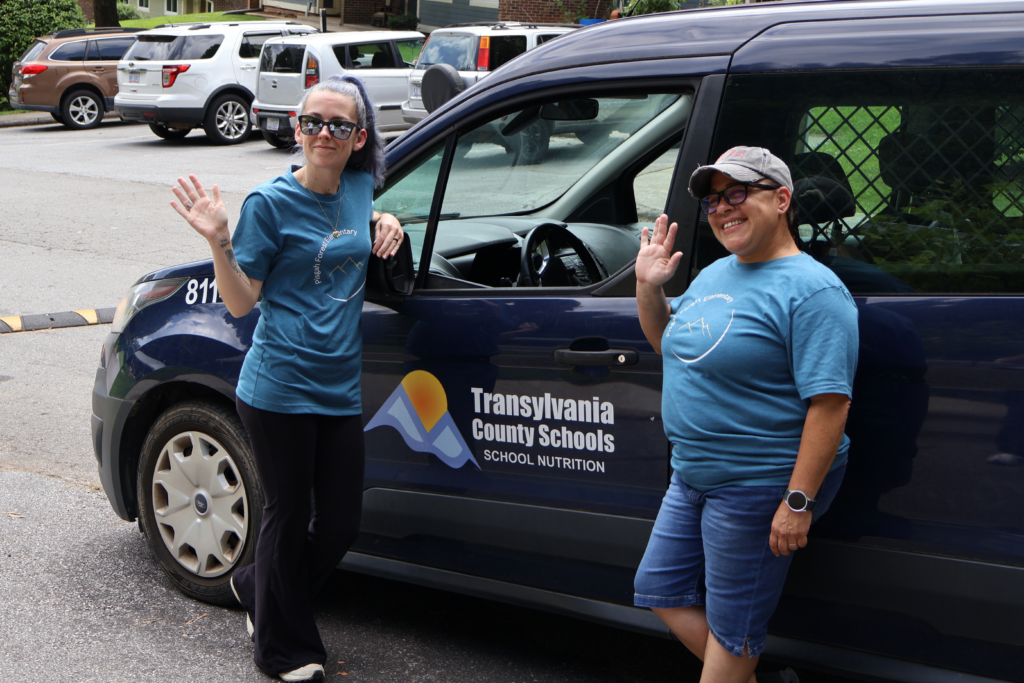
But at the end of the day, it’s all worth it, Broda said, because “a lot of kids don’t go home to a fridge that’s full.”
“Our staff put their heart and soul and sweat in this every single day,” she said. “These are their cafeteria ladies — (the children) know them … and that’s why our staff get back in the vehicle every day.”
Broda said she and her staff work together to make the program as effective as possible, learning from challenges and iterating each year to improve operations and reach more children. And while she believes there is no one-size-fits-all approach to home delivery, factors that have contributed to the program’s success include:
- Sound and shared logistics: The district distributes a Google Form in late May to collect signups for home delivery. Parents or guardians have to provide their address, the children’s names, and a phone number and email address. The district also uses Google Sheets to document everything about the home delivery program, including delivery routes, accountability procedures, eligibility criteria, and more. Using these shared tools allows all staff to seamlessly access information about the program and iterate quickly.
- Consistent delivery times: Families need to know meals will show up at roughly the same time each day so they can be available to receive them. Once signups were collected, routes were created using a combination of artificial intelligence and staff’s knowledge of local roads. Each route runs from 10 a.m. to 2 p.m., and families are given an approximate delivery time based on their sequence in the route. Week over week, that time gets more consistent as the routes are formalized. Instead of approaching doors, staff honk. If no one comes out, they call, and if no one answers, they move on to the next stop.
- Clear communication with families and staff flexibility: In an effort to reduce food waste, families are encouraged to contact the district when they know they won’t be available, and routes can be adjusted to arrive at better times as needed. Broda said staff learned to remain flexible, open-minded, and ready to adjust delivery routes quickly to best meet families’ needs.
- Staff willingness to work: Many child nutrition directors and staff take breaks during the summer months. But operating daily home delivery every week of summer break requires a subset of staff to continue working. In Transylvania County, about 40% of school nutrition staff remain employed through summer meals, which they opt into. Broda requires staff to take a two-week break, but otherwise, they do not take extended leave. This provides consistent employment for those that want to work, but also requires staff to commit to limiting their time off.
Growth in Transylvania County’s home delivery program has significantly expanded access to summer meals. In the summer of 2025, the district served more than 44,000 meals, a 35% increase from the previous summer.
For tips on home delivery implementation, see this resource from the Carolina Hunger Initiative.
What would it take for more districts to do the same?
Before a sponsor can deliver summer meals, they first have to be eligible for and opt into SUN Meals To-Go. From there, the sponsor can choose any number of non-congregate models to serve meals — including drive-thru, pick-up, and home delivery. Some districts, like Transylvania County Schools, operate multiple SUN Meals To-Go models at once, while others stick to a single approach.
The CHI works to support more summer meals sponsors in offering SUN Meals To-Go. As non-congregate models become more common across the state, Bertschy said the Department of Public Instruction (DPI), which oversees the federal summer meals program, has increasingly provided resources and worked to reduce the administrative burden of operating the program. Given the additional logistics that come with operating SUN Meals To-Go, sponsors have to operate congregate meals for at least one summer before DPI will approve them to serve non-congregate meals.
As of the summer of 2026, 60 of the state’s 100 counties are served by a SUN Meals To-Go program, with most using drive-thru or pick-up models.
At the end of the day, Bertschy said, the decision to offer SUN Meals To-Go often comes down to a sponsor being willing to take a leap of faith. Demand is less predictable than at congregate meal sites, which often serve children enrolled in camps or other programming. Sponsors often have to buy food for non-congregate sites before they know how many families will actually show up, and having enough staff available to work the summer months can also be challenging.
With home delivery, there are also vehicle and fuel costs in addition to the logistics of planning routes, storing food, and keeping staff safe.
“It’s just really stepping into the unknown of: ‘How big is this program going to get?’” said Bertschy.
To encourage shared learnings between non-congregate sponsors, CHI is working with DPI to foster a community of practice for non-congregate sponsors by offering office hours, connecting nutrition directors, and coordinating site visits.
Another critical element of summer meal program success is funding. The majority of funding for summer meals comes from federal per-meal reimbursements, which are $3.20 per breakfast and $5.60 per lunch in rural areas. Those funds have to cover every cost to operate the program — including staff, equipment, food, and supplies — and are often stretched thin.
To supplement federal funding, CHI has provided Transylvania County Schools with nearly $60,000 in grants over the last three years, enabling the home delivery program to expand.
“Janette works really hard to make this the example of what the program could be at its best — and if people would support the programs properly with funding and what they need, every district could be like this,” said Andrew Harrell, program and communications manager at the CHI. “It’s not because people don’t want to serve fresh, local foods — it’s because they’re underfunded.”
Broda’s advice to other sponsors considering home delivery is to start small and stay open-minded and flexible. That might look like starting with one route and working out the kinks for a summer before expanding further.
“Home delivery meets our children’s needs the best because we can meet them where they are and give them a hot meal, providing the best quality nutrition we have. And so if you have responsible staff, energy, and motivation to do that, then I would highly suggest it,” she said.
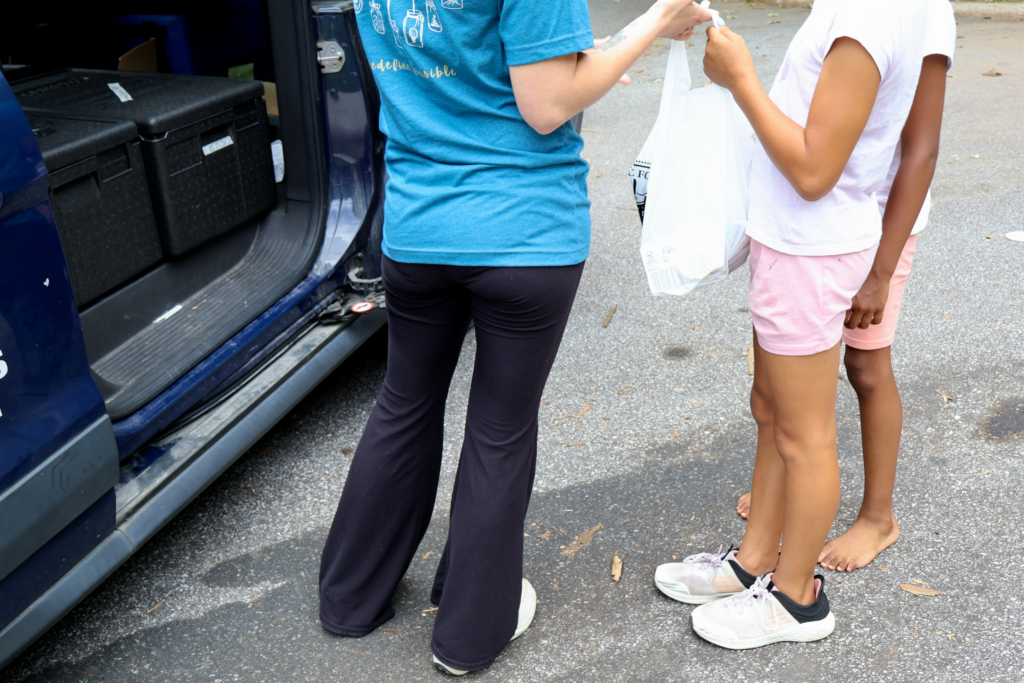
For Yari Rahn, a school nutrition manager who drives one of the home delivery routes, the program does more than provide nutritious food — it also allows her to touch base with students every day, rain or shine, greeting them with a familiar face and checking in on how they’re doing.
During one recent stop on her route, a child was so excited that he was waiting down the block from his house for the van to arrive. Once he saw the van pull on to his street, he ran alongside it until it reached his house.
“It’s hot, but when those kids come out, it’s well worth it,” she said.