2026 midterm election results and what they mean for education
Editor’s note: This article will be updated as races are called and results come in.
This article was updated at 8:00 p.m. on Friday. It includes results in the U.S. Congress and General Assembly races called by the Associated Press. You can scroll to the subheadings “School board election results mapped” and “Full General Assembly results” to view unofficial results from the N.C. State Board of Elections. Unofficial results must still be certified. Stay tuned.
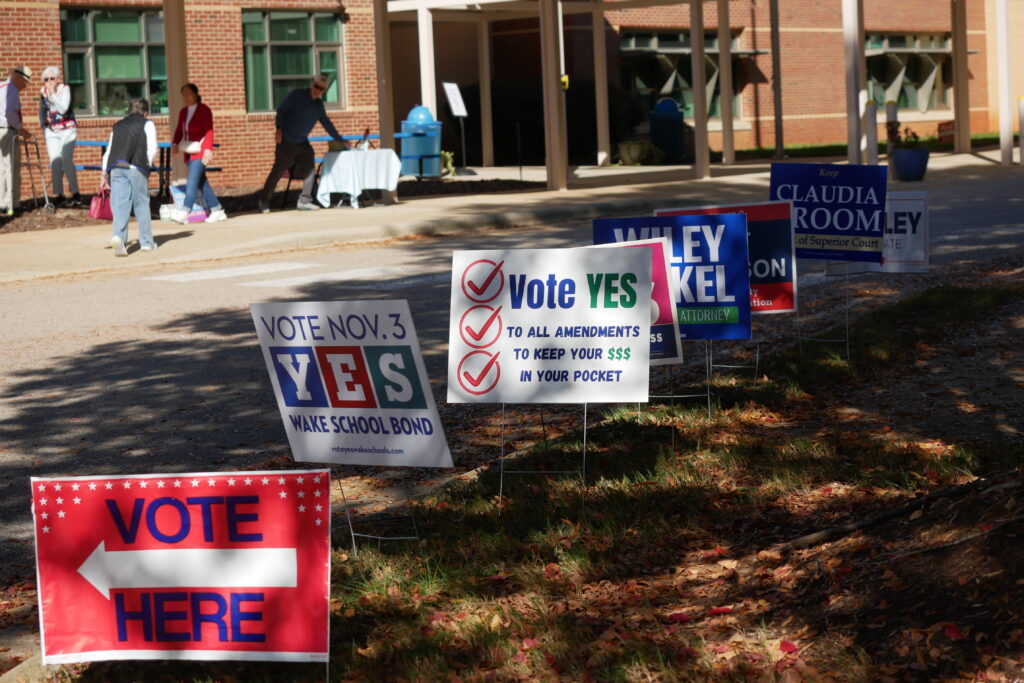
Tuesday was Election Day, and education was on the ballot.
In North Carolina, polls closed at 7:30 p.m., except for in four counties, where the N.C. State Board of Elections (NCSBE) approved a 45-minute voting extension at the Tabor City Courthouse in Columbus County, as well as shorter extensions in Lenoir, Wilson, and Hertford counties, due to technical glitches in the morning.
EdNC covered the results as they came in on Tuesday night and will continue to do so until all statewide races are called.
Explore more of EdNC’s election coverage
Nearly 54% of registered North Carolina voters cast a ballot during the 2026 midterms, per NCSBE’s dashboard on unofficial voting results. In 2022, the last midterm election, that number was roughly 51%.
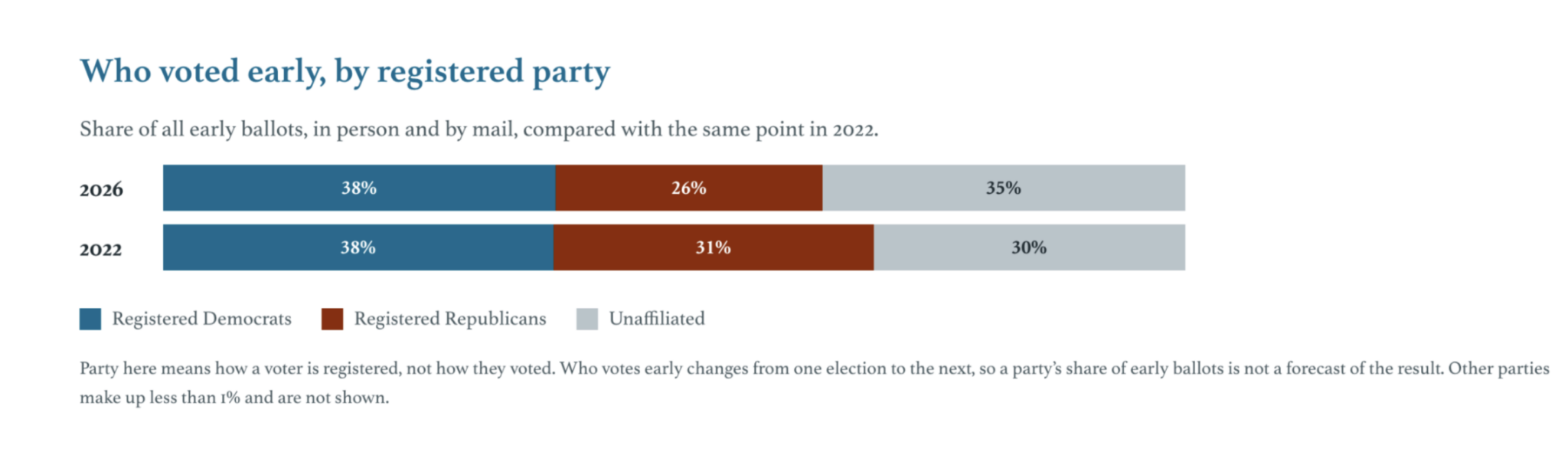
During 17 days of early voting, more than 2.8 million North Carolinians cast their ballot, according to data from the North Carolina Free Enterprise Foundation. Nearly 36% of registered voters turned out for early voting, compared with 29% at the same point in the 2022 midterm. Below is a look at the party affiliation of early voters in North Carolina.
Across the country, pundits widely discussed the possibility of a “blue wave.” As of 1:22 a.m. on Wednesday, Democrats officially won control of both chambers of Congress.
According to the Associated Press, Democrats have won 54 seats in the U.S. Senate, taking the majority in the chamber from Republicans, who previously held a slim majority. Some of the more contested races could take up to a few weeks to call.
The Senate race in North Carolina, between frontrunners Republican Michael Whatley and former Democratic Gov. Roy Cooper, was being watched nationally as a potential indicator of a good election for Democrats. At 8:24 p.m. on Tuesday — roughly 10 minutes after results started being published by the NCSBE — the Associated Press called the race for Cooper.
The Associated Press has also called 10 of the 14 races for the N.C. seats in the U.S. House, with North Carolina voters sending one Republican and nine Democratic candidates to Congress, flipping at least five seats from Republican to Democrat. As of 1:25 a.m. on Wednesday, Democrats took control of the U.S. House, according to the Associated Press.
Tuesday’s election also broke the supermajority Republicans currently hold in the N.C. Senate and the near-supermajority they hold in the N.C. House, gaining Democrats a multiple-seat margin as of 12:30 a.m. on Wednesday, even as some races remain uncalled. As of 1:24 a.m., Democrats hold control of the N.C. House for the first time since 2011, according to the Associated Press. House Speaker Destin Hall, R-Caldwell, officially conceded in the race for the majority. The General Assembly is scheduled to meet twice after Election Day — between Nov. 16-19 and between Nov. 30-Dec. 18 — before the new year, when a new legislature is sworn in.
Longtime Senate President Pro Tempore Phil Berger, R-Rockingham, did not win the Republican primary for his seat in March which means there will soon be new leadership selected in the Senate.
The current Senate Education/Higher Education Committee chair, Sen. Michael Lee, R-New Hanover, was a major contender to replace Berger as president pro tempore. But on Tuesday Lee lost his election to his Democratic challenger, Jessica Bichler, removing him from contention.
Rep. Tricia Cotham, a former educator who switched to the Republican Party in 2023, also lost her seat. She is currently a chairperson of multiple House education committees.
North Carolina voters also voted to cap the state income tax rate at 3.5% and to require a limit on local property tax increases through ballot measures that will amend the North Carolina state constitution. EdNC has reported that the amendments could have a substantial effect on public school funding; educators and advocates have criticized the amendments, saying they threaten school budgets.
Across the state, many voters also voted on local board of education races and on school bonds, which were on ballots in several North Carolina counties.
Below, read more about results in this election’s key races and issues with implications for education.
First, North Carolina election recount rules
Last updated at 2:15 p.m. on Friday
Some of Tuesday’s races look like they could head toward recounts.
Candidates can request recounts after county election boards hold canvass meetings on the results, which are scheduled for Nov. 13.
In county-level races, a candidate can request a recount “if the difference between the votes for that candidate and the votes for a prevailing candidate is not more than one percent (1%) of the total votes cast in the ballot item, or in the case of a multiseat ballot item not more than one percent (1%) of the votes cast for those two candidates,” according to state law.
In state-level races, a candidate can request a recount if the difference between the votes for that candidate and the votes for a prevailing candidate are not more than:
- “For a nonstatewide ballot item, one percent (1%) of the total votes cast in the ballot item, or in the case of a multiseat ballot item, one percent (1%) of the votes cast for those two candidates.”
- “For a statewide ballot item, one‑half of one percent (0.5%) of the votes cast in the ballot item, or 10,000 votes, whichever is less.”
It is not immediately clear if ballot measures, which don’t have candidates to request a recount, could be recounted in the event of a close race. State law has a provision on discretionary recounts: “The county board of elections or the State Board of Elections may order a recount when necessary to complete the canvass in an election.”
General Assembly
Last updated at 2:15 p.m. on Friday
There were 50 N.C. Senate races and 120 N.C. House races on the ballot this year, though many races were uncontested. You can view full General Assembly results in the subheading below.
The General Assembly writes the laws that govern education in our state. Currently, there is a Republican majority in the House and a veto-proof Republican supermajority in the Senate. Republicans have held the General Assembly since 2011.
After the Associated Press called a majority of House seats for Democrats, Democrats will take back control of the chamber for the first time since Republicans took control of both chambers of the legislature in 2011. So far 66 of 120 House seats have been called for Democrats. In the Senate, 24 of 50 seats have been called for Democrats.
Democrats, currently in the minority, have often been excluded from budget negotiations and other key legislative decisions in recent years. Since 2024, the Republican-controlled legislature has overridden more than a dozen of Democratic Gov. Josh Stein’s vetoes, including several connected to education. One law transferred administrative power over charter schools away from the Department of Public Instruction (Senate Bill 254); another eliminated diversity, equity, and inclusion (DEI) programs in public schools (Senate Bill 227).
This election marks a dramatic shift in power by breaking the Republican supermajority in the Senate and handing Democrats much more leverage when crafting legislation.
House Minority Leader Robert T. Reives, II, D-Chatham, is now the presumptive Speaker of the House next year. On Friday, he announced on X that he had “secured commitments from a majority of the incoming North Carolina House of Representatives to be elected Speaker.”
If Republicans keep their Senate majority, they will choose from among their own who to elevate to replace Berger. With Lee out of contention, that leaves four senators who have announced their candidacy for the position:
- Sen. Ralph Hise, R-Mitchell
- Sen. Brent Jackson, R-Sampson
- Sen. Todd Johnson, R-Union
- Sen. Jim Burgin, R-Harnett, who is the co-chair of the NC Task Force on Child Care and Early Education
Hise, Jackson, Johnson, and Burgin were all reelected on Tuesday.
Tax amendments
Last updated at 1:30 a.m. on Wednesday
Three referenda to amend the state constitution on the statewide ballot this year all passed during Tuesday’s election. The three amendments previously met the three-fifths vote requirement in both chambers of the General Assembly with almost entirely Republican support.
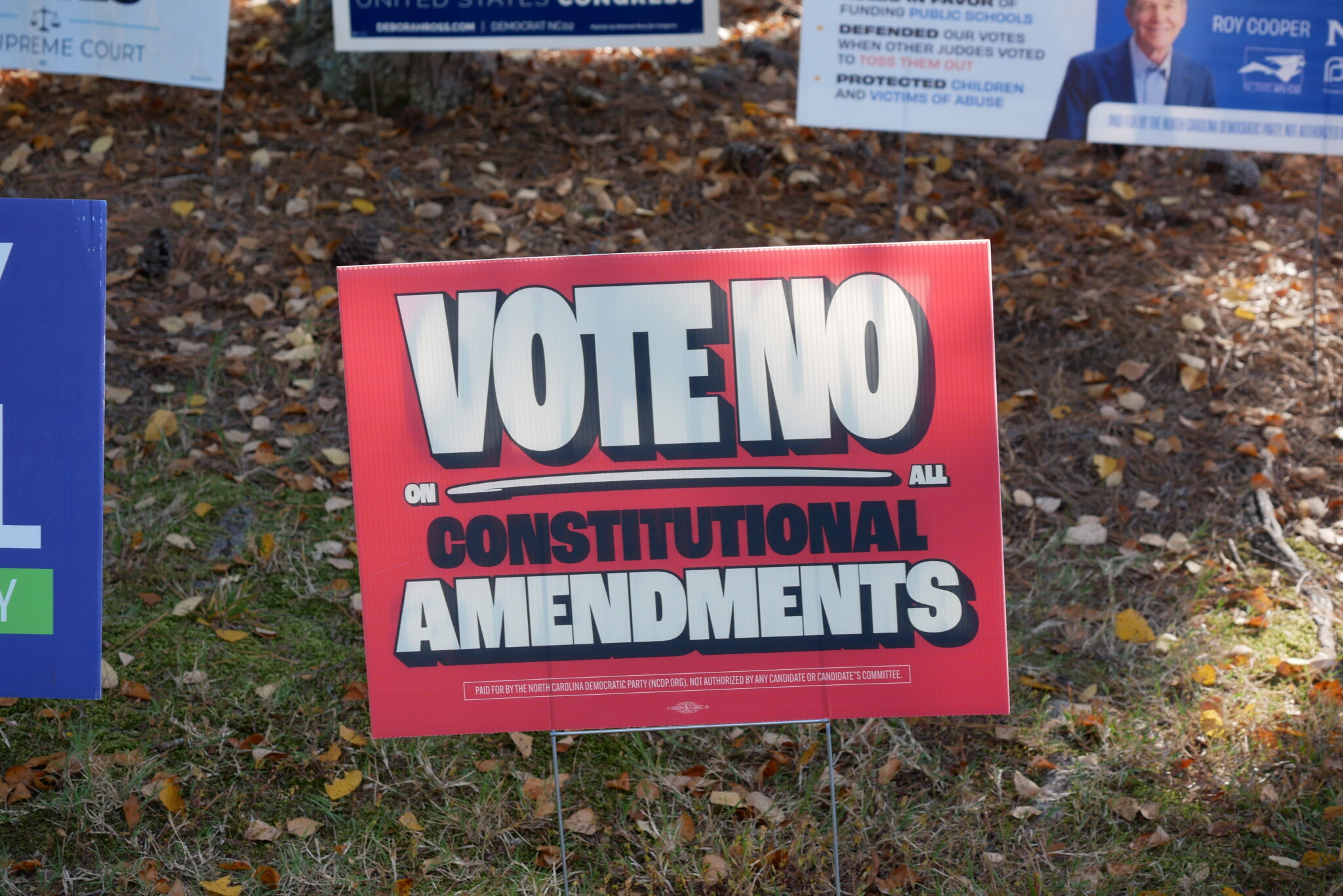
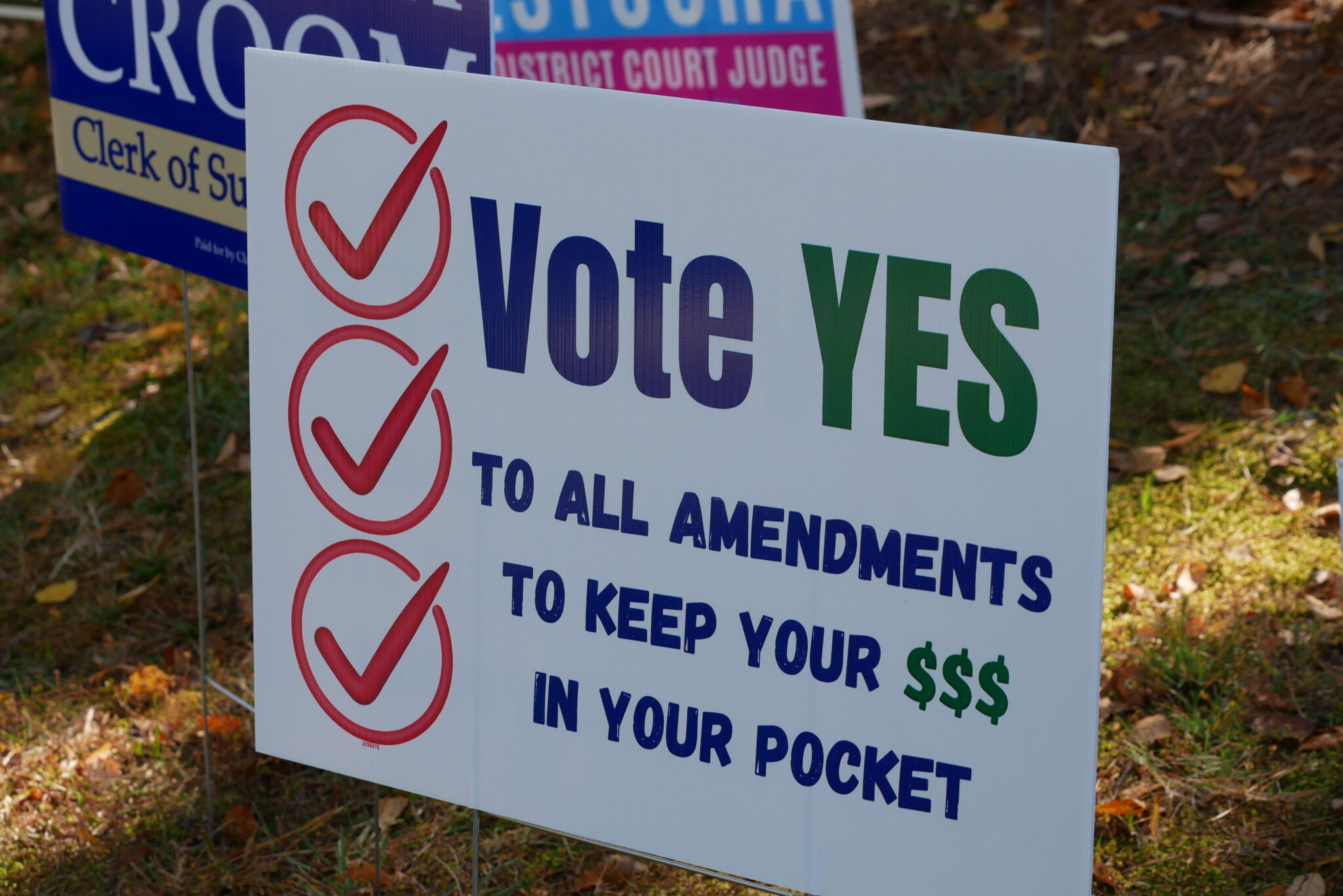
One amendment will require voters to provide photo identification before voting by mail, another will cap the state personal income tax rate at 3.5%, and the third will require the General Assembly to impose a limit on property tax increases by local governments.
As of 1:18 a.m., all precincts across the state were reporting results. The final unofficial vote tally for the amendments is:
- Photo ID amendment: 59.60% for, 40.40% against
- Income tax cap amendment: 61.91% for, 38.09% against
- Property tax increase limit amendment: 60.43% for, 39.57% against
EdNC previously reported on the impact the latter two amendments could have on education in North Carolina. Large portions of both state and local budget appropriations — funded primarily by taxes — go toward education. Educators, school administrators, and advocacy groups have warned that property tax limits could strain school district budgets.
Additionally, some criticized the wording of the language on the ballot as vague.
“I think if people had more information, they might think differently,” Victoria Creamer, principal of Creekside Elementary School in Durham, previously told EdNC.
The details of the property tax increase limits are yet to be determined; the amendment tasks the General Assembly with imposing the limit through legislation.
More on the NC constitutional amendments

U.S. Senate
Last updated at 2:30 a.m. on Wednesday
A few minutes after the NCSBE began posting election results, the Associated Press called the North Carolina race in the U.S. Senate for Cooper. He defeated Whatley, the former chairman of the Republican National Committee.
Cooper, a Democrat, flipped the red seat of outgoing Republican Sen. Thom Tillis who chose not to run for reelection after a public break with President Donald Trump. The race was key in deciding the power balance of the U.S. Senate for at least the next two years.
During his victory speech on Tuesday, Cooper thanked North Carolinians for once again trusting him to serve.
“I am ready to work with anyone to do what’s right for this amazing state that has given me so much,” the former governor said. “At the end of the day, I am still a prisoner of hope. I truly believe that our best days lie ahead — that we can make the course correction that our great country so badly needs.”
Sarah Rankin of the Associated Press reported that, shortly after the race was called for Cooper, Stein said in a speech that North Carolina voters chose “competence over chaos.”
In an emailed statement, the North Carolina Association of Educators (NCAE) congratulated Cooper on his win.
“We are ecstatic to congratulate Roy Cooper on becoming North Carolina’s next Senator. He has been a tireless advocate for public schools, educators, and our students,” said Christina Cole, NCAE president, in the statement. “Time and time again Cooper has proven that he’s willing to put people over politics and do what needs to be done to improve the lives of working class families, children, and everyone in the Tar Heel State. We congratulate and celebrate his victory, a victory for all North Carolinians.”
Nationally, many other Senate races were contentious, and Democrats have officially retaken the majority in the country’s upper chamber.
As of 2:30 a.m. on Wednesday, the following Democrats have flipped key Senate seats, per AP:
- Cooper in North Carolina
- James Talarico in Texas
- Annie Andrews in South Carolina
- Sherrod Brown in Ohio
- Adam Hamilton in Kansas
- Josh Turek in Iowa
- Troy D. Jackson in Maine
- Abdul El-Sayed in Michigan (Kept Democratic seat in important swing state to become the first Muslim senator)
U.S. House
Last updated at 8:00 p.m. on Friday
All 435 seats in the U.S. House of Representatives were up for election, including North Carolina’s 14 seats. The Associated Press has called 10 of the 14 races for the N.C. seats in the House, with North Carolina voters sending the following candidates to Congress:
- Deborah K. Ross, D-NC 02
- Valerie P. Foushie, D-NC 04
- Jamie Ager, D-NC 11 (Flip)
- Alma D. Adams, D-NC 12
- Don Davis, D-NC 1
- Cyril Jefferson, D-NC 6 (Flip)
- Lakesha Womack, D-NC 14 (Flip, beating out Rep. Tim Moore)
- Paul Barringer, D-NC 13 (Flip)
- Richard N. Ojeda II, D-NC 9 (Flip)
- Mark Harris, R-NC 8
The AP has yet to call four races, with one leaning toward Democrats and three leaning toward Republicans. Ahead of the midterms, the North Carolina delegation included 10 Republicans and 4 Democrats. If current remaining leads hold, after midterms, that number will switch to 10 Democrats and 4 Republicans.
There has been a Republican majority in the U.S. House since the 2022 election, but control has shifted to Democrats.
Recent politically motivated redistricting in several states, including North Carolina, was expected to impact election results. A map created by the Guardian showed that North Carolina was predicted to gain one Republican seat in the House as a result of the redistricting of N.C. District 1, which is currently held by Democratic Rep. Don Davis, who the AP reported won the race with 50.1% of votes. According to the Chronicle, Buckhout has conceded the race to Davis.
As of 8:00 p.m. on Friday, the other four House races in North Carolina were within one point with 99% of votes reporting, meaning many could go to a recount. Some races are extremely close: In the NC 05 race, Democrat challenger Chuck Hubbard leads incumbent Republican Rep. Virginia Foxx by just 99 votes.
N.C. State Supreme Court
Last updated at 1:45 a.m. on Wednesday
This year, just one seat was up for election on the N.C. State Supreme Court. Current N.C. Supreme Court Associate Justice Anita Earls, a Democrat, opposed former N.C. Rep. Sarah Stevens, a Republican who was the chair of the House Judiciary Committee. You can track the results of their race by navigating to judicial results on the website of the NCSBE.
The court currently has a 5-2 Republican majority. Three Republican justices’ terms expire in 2028, and one — Justice Phil Berger Jr. — has announced that he will not seek reelection.
According to the State Court Report, “If Justice Anita Earls this year wins another term on the court, the next election will give Democrats an easier path to winning a majority when the terms of three sitting Republican justices expire.”
As of 12:55 a.m., the NCSBE had 100% of precincts completely reported for the statewide judicial races, with Earls winning by nearly 18 percentage points in unofficial results. The New York Times called the race for Earls.
N.C. Court of Appeals
Last updated at 1:45 a.m. on Wednesday
There were three judicial seats up for election on the N.C. Court of Appeals.
Currently 12 of the 15 seats on the N.C. Court of Appeals are held by Republican judges. The three seats held by Democratic judges were up for election this year.
As of 12:55 a.m., the NCSBE had posted unofficial election results, representing 100% of precincts. The following candidates are the unofficial winners of the three seats open on the Court of Appeals.
- Democratic Judge John S. Arrowood won by 13.5 percentage points
- Democratic Judge Tobias (Toby) Hampson won by 13.5 percentage points
- Democratic Judge Christine Marie Walczyk won by 14 percentage points
NCAE issued a press release celebrating the victories of the three Democratic judges to the Court of Appeals, and NCAE President Cole said: “Strong public schools depend on a strong democracy, and these judges are committed to ensuring that our courts uphold the principles of fairness, equality, and justice for all.”
School and community college bonds
Last updated at 1:50 a.m.
In a few counties in North Carolina, voters decided on school bonds, which allow a county to borrow money to invest in schools — typically projects such as the new construction or renovation of school buildings.
As EdNC has previously reported, school bonds can be a solution to the high cost of school building maintenance and construction.
Here are the unofficial results from the North Carolina counties that had school bond referenda on the ballot this year:
- Brunswick County — Brunswick County Schools (Approved, with 54.95% voting for)
- Cabarrus County — Cabarrus County Schools, Kannapolis City Schools (Not approved, with 51% voting against)
- New Hanover County — New Hanover County Schools (Approved, 67.85% voting for)
- Person County — Person County Schools (Not approved, with 62.14% voting against)
- Wake County — Wake County Public School System (Approved, with 63.43% voting for)
And the following counties voted on a potential 0.25% sales tax increase (as permitted under state law), with an explicit plan to send the proceeds to schools:
- Columbus County — Columbus County Schools, Whiteville City Schools (Not approved, 58.49% voted against)
- Guilford County — Guilford County Schools (Approved, 62.85% voted for)
- Sampson County — Sampson County Schools, Clinton City Schools (Approved, 61.54% voted for)
- Macon County — Macon County Schools (Not approved, 50.03% voted against, with a margin of nine votes)
- Yadkin County — Yadkin County Schools (Not approved, 53.38% voted against)
A handful of counties also voted on bonds to fund local community colleges:
- Cabarrus County — Rowan-Cabarrus Community College (Not approved, 51.98% voted against)
- Wake County — Wake Technical Community College (Approved, 62.66% voted for)
Guilford County’s sales tax increase will also partially fund Guilford Technical Community College.
You can view all county referenda that were on the ballot here.
School board election results mapped
Last updated at 4:24 p.m. on Wednesday
After all votes were counted, EdNC collected the unofficial results of this year’s school board elections across the state.
Hover over your county on the map below to see winners. Note that votes in some races may still be recounted in the days following the election.

Full General Assembly results
Last updated at 12:05 p.m. on Wednesday
For the Senate, unofficial NCSBE voting results have all precincts reporting in all 50 races. Races that could go to recount, or have not been called by the Associated Press, are indicated with an asterisk.
- Sen. Jerry Tillett, R-Bertie (District 1, incumbent)
- Sen. Norman Sanderson, R-Carteret (District 2, incumbent)
- Sen. Bob Brinson, R-Beaufort (District 3, incumbent)
- Jessica (Jess) Rivera, D-Wilson (District 4, flip)
- Sen. Kandie D. Smith, D-Edgecombe (District 5, incumbent)
- Sen. Michael Anthony Lazzara, R-Onslow (District 6, incumbent)
- Jessica Bichler, D-New Hanover (District 7, flip; Sen. Michael Lee lost)
- Sen. Bill Rabon, R-Brunswick (District 8, incumbent)
- Sen. Brent Jackson, R-Bladen (District 9, incumbent, uncontested race)
- Sen. Benton Sawrey, R-Johnston (District 10, incumbent)
- Sen. James D. Gailliard, D-Nash (District 11, flip)
- Sen. Jim Burgin, R-Harnett (District 12, incumbent)
- Sen. Lisa Grafstein, D-Wake (District 13, incumbent)
- Sen. Dan Blue, D-Wake (District 14, incumbent)
- Sen. Jay J. Chaudhuri, D-Wake (District 15, incumbent)
- Sen. Gale Adcock, D-Wake (District 16, incumbent)
- Sen. Sydney Batch, D-Wake (District 17, incumbent)
- Sen. Haseeb Fatmi, D-Granville (District 18, incumbent)
- Sen. Val Applewhite, D-Cumberland (District 19, incumbent)
- Sen. Natalie S. Murdock, D-Chatham (District 20, incumbent, uncontested race)
- Sen. Tom McInnis, R-Cumberland (District 21, incumbent)
- Sen. Sophia Chitlik, D-Durham (District 22, incumbent)
- Sen. Jonah Garson, D-Caswell (District 23, incumbent)
- Sen. Danny Earl Britt, Jr., R-Hoke (District 24, incumbent)*
- Sen. Amy Scott Galey, R-Alamance (District 25, incumbent)
- Sam Page, R-Rockingham (District 26, who beat Berger in March)
- Sen. Michael K. Garrett, D-Guilford (District 27, incumbent, uncontested)
- Sen. Gladys A. Robinson, D-Guilford (District 28, incumbent, uncontested)
- Sen. Dave Craven, R-Anson (District 29, incumbent)
- Sen. Steve Jarvis, R-Davidson (District 30, incumbent)
- Sen. Dana Caudill Jones, R-Forsyth (District 31, incumbent)
- Sen. Paul Lowe, Jr., D-Forsyth (District 32, incumbent)
- Sen. Carl Ford, R-Rowan (District 33, incumbent)
- April Cook, D-Cabarrus (District 34, flip)
- Sen. Todd Johnson, R-Cabarrus (District 35, incumbent)
- Sen. Eddie Settle, R-Alexander (District 36, incumbent)
- Sen. Vickie Sawyer, R-Iredell (District 37, incumbent)
- Sen. Mujtaba A. Mohammed, D-Mecklenburg (District 38, incumbent, uncontested)
- Sen. DeAndrea Salvador, D-Mecklenburg (District 39, incumbent, uncontested)
- Sen. Joyce Waddell, D-Mecklenburg (District 40, incumbent)
- Sen. Caleb Theodros, D-Mecklenburg (District 41, incumbent)
- Sen. Woodson Bradley, D-Mecklenburg (District 42, incumbent)
- Sen. Brad Overcash, R-Gaston (District 43, incumbent)
- Sen. Ted Alexander, R-Cleveland (District 44, incumbent)
- Sen. Mark Hollo, R-Caldwell (District 45, incumbent)
- Sen. Warren Daniel, R-Buncombe (District 46, incumbent)
- Sen. Ralph Hise, R-Alleghany (District 47, incumbent)
- Sen. Tim Moffitt, R-Henderson (District 48, incumbent)
- Sen. Julie Mayfield, D-Buncombe (District 49, incumbent)
- Sen. Kevin Corbin, R-Cherokee (District 50, incumbent)
The N.C. State Board of Elections has published unofficial voting results indicating that the following candidates have won a seat in the House with all precincts completely reported.
Races that could go to recount are indicated with an asterisk.
- Rep. Edward C. Goodwin, R-Chowan (District 1, incumbent)
- Rep. Ray Jeffers, D-Person (District 2, incumbent, uncontested)
- Rep. Steve Tyson, R-Craven (District 3, incumbent)
- Rep. Jimmy Dixon, R-Duplin (District 4, incumbent)
- Rep. Bill Ward, R-Camden (District 5, incumbent)
- Rep. Joe Pike, R-Harnett (District 6, incumbent)
- Mark Speed, D-Franklin (District 7, flip)
- Rep. Gloristine Brown, D-Pitt (District 8, incumbent)
- Claire Kempner, D-Pitt (District 9, flip)*
- Rep. John Bell, R-Wayne (District 10, incumbent)
- Rep. Allison A. Dahle, D-Wake (District 11, incumbent)
- Rep. Chris Humphrey, R-Lenoir (District 12, incumbent)
- Rep. Celeste Cairns, R-Carteret (District 13, incumbent)
- Rep. Wyatt Gable, R-Onslow (District 14, incumbent, uncontested)
- Rep. Phillip Shepard, R-Onslow (District 15, incumbent)
- Rep. Carson Smith, R-Onslow (District 16, incumbent)
- Rep. Frank Iler, R-Brunswick (District 17, incumbent)
- Rep. Deb Butler, D-New Hanover (District 18, incumbent)
- Rep. Charlie Miller, R-Brunswick (District 19, incumbent)
- Tim Merrick, D-New Hanover (District 20, flip)*
- Rep. Ya Liu, D-Wake (District 21, incumbent)
- Wellie Jackson, R-Jackson (District 22, uncontested)
- Patricia Smith, D-Edgecombe (District 23)
- Rep. Dante Pittman, D-Wilson (District 24, incumbent)
- Lorenza M. Wilkins, D-Nash (District 25, flip)
- L’Bertrice Solomon, D-Johnston (District 26, flip)
- Rep. Rodney D. Pierce, D-Halifax (District 27, incumbent)
- Rep. Larry C. Strickland, R-Johnson (District 28, incumbent)
- Rep. Vernetta Alston, D-Durham (District 29, incumbent, uncontested)
- Rep. Marcia Morey, D-Durham (District 30, incumbent)
- Rep. Zack Hawkins, D-Durham (District 31, incumbent, uncontested)
- Rep. Bryan K. Cohn, D-Granville (District 32, incumbent)
- Rep. Monika Johnson-Hostler, D-Wake (District 33, incumbent)
- Rep. Tim Longest, D-Wake (District 34, incumbent)
- Evonne S. Hopkins, D-Wake (District 35, flip)
- Rep. Julie von Haefen, D-Wake (District 36, incumbent)
- Winn Decker, D-Wake (District 37, flip)
- Rep. Abe Jones, D-Wake (District 38, incumbent, uncontested)
- Rep. James A. Roberson, D-Wake (District 39, incumbent)
- Rep. Phil Rubin, D-Wake (District 40, incumbent)
- Rep. Maria Cervania, D-Wake (District 41, incumbent)
- Rep. Mike Colvin, D-Cumberland (District 42, incumbent, uncontested)
- Janene Ackles, D-Cumberland (District 43, flip)
- Rep. Charles Smith, D-Cumberland (District 44, incumbent, uncontested)
- Frances Jackson, D (District 45, uncontested)
- Rep. Brenden H. Jones, R-Columbus (District 46, incumbent)
- Rep. John L. Lowery, R-Robeson (District 47, incumbent)
- Rep. Garland E. Pierce, D-Scotland (District 48, incumbent)
- Rep. Cynthia Ball, D-Wake (District 49, incumbent)
- Rep. Renee A. Price, D-Caswell (District 50, incumbent, uncontested)
- April Montgomery, UNA-Lee (District 51, flip)
- Rep. Ben Moss, R-Moore (District 52, incumbent)
- Rep. Howard L. Penny, Jr., R-Harnett (District 53, incumbent)
- Rep. Robert T. Reives II, D-Chatham (District 54, incumbent, uncontested) — Now the presumptive next Speaker of the House
- Clancy Baucom, R-Union (District 55)
- Rep. Allen Buansi, D-Orange (District 56, incumbent)
- Rep. Tracy Clark, D-Guilford (District 57, incumbent, uncontested)
- Rep. Amos Quick, D-Guilford (District 58, incumbent, uncontested)
- Elma Hairston, D-Guilford (District 59, flip)
- Rep. Amanda Cook, D-Guilford (District 60, incumbent)
- Rep. Mary Price (Pricey) Harrison, D-Guilford (District 61, incumbent, uncontested)
- Shelly Headen, D-Guilford (District 62, flip)*
- Ian Baltutis, D-Alamance (District 63, flip)*
- LeVon Barnes, D-Alamance (District 64, flip)
- Seth Woodall, R-Rockingham (District 65)
- Rep. Sarah Crawford, D-Wake (District 66, incumbent, uncontested)
- Rep. Cody Huneycutt, R-Montgomery (District 67, incumbent)
- Rep. David Willis, R-Union (District 68, incumbent)
- Rep. Dean Arp, R-Union (District 69, incumbent)
- Rep. Brian Biggs, R-Randolph (District 70, incumbent)
- Rep. Kanika Brown, D-Forsyth (District 71, incumbent)
- Rep. Amber M. Bake, D-Forsyth (District 72, incumbent, uncontested)
- Thomas J. Monks, D-Cabarrus (District 73, flip)
- Amy Taylor North, D-Forsyth (District 74, flip)
- Jen Wiles, D-Forsyth (District 75, flip)
- Greg Edds, R-Rowan (District 76)
- Rep. Julia Howard, R-Davie (District 77, incumbent)
- Rep. Neal Jackson, R-Moore Randolph (District 78, incumbent)
- Darren Armstrong, R-Beaufort (District 79, uncontested)
- Rep. Sam Watford, R-Davidson (District 80, incumbent)
- Rep. Larry W. Potts, R-Davidson(District 81, incumbent)
- Chris Bishopp, D-Cabarrus (District 82, flip)
- Rep. Grant Campbell, R-Cabarrus (District 83, incumbent)
- Rep. Jeffrey C. McNeely, R-Iredell (District 84, incumbent, uncontested)
- Rep. Dudley Greene, R-Avery (District 85, incumbent)
- Rep. Hugh Blackwell, R-Burke (District 86, incumbent)
- House Speaker Destin Hall, R-Caldwell (District 87, incumbent)
- Rep. Mary Belk, D-Mecklenburg (District 88, incumbent)
- Rep. Mitchell Smith Setzer, R-Catawba (District 89, incumbent)
- Rep. Dan Kiger, R-Surry (District 90, incumbent)
- Rep. Kyle Hall, R-Forsyth (District 91, incumbent)
- Rep. Terry Brown, D-Mecklenburg (District 92, incumbent, uncontested)
- Charlie Wallin, D-Watauga (District 93, flip)*
- Rep. Blair Eddins, R-Alexander (District 94, incumbent)
- Rep. Richard (Todd) Carver, R-Iredell (District 95, incumbent)
- Rep. Jay Adams, R-Catawba (District 96, incumbent)
- Rep. Heather Rhyne, R-Lincoln (District 97, incumbent)
- Rep. Beth Helfrich, D-Mecklenberg (District 98, incumbent)
- Veleria M. Levy, D-Mecklenburg (District 99, uncontested, currently an unaffiliated seat)
- Rep. Julia Greenfield, D-Mecklenberg (District 100, incumbent, uncontested)
- Rep. Carolyn G. Logan, D-Mecklenburg (District 101, incumbent, uncontested)
- Rep. Becky Carney, D-Mecklenburg (District 102, incumbent, uncontested)
- Rep. Laura Budd, D-Mecklenburg (District 103, incumbent, uncontested)
- Rep. Brandon Lofton, D-Mecklenburg (District 104, incumbent)
- Ken McCool, D-Matthews (District 105, flip)
- Rodney Sadler, D-Mecklenburg (District 106, uncontested, currently an unaffiliated seat)
- Rep. Aisha O. Dew, D-Mecklenburg (District 107, incumbent, uncontested)
- Rep. John A. Torbett, R-Gaston (District 108, incumbent)
- Mark D. Carver, D-Gaston (District 109, flip)
- Caroline Eason, R-Gaston (District 110)
- Rep. Paul Scott, R-Cleveland (District 111, incumbent)
- Rep. Jordan Lopez, D-Mecklenburg (District 112, incumbent, uncontested)
- Rep. Jake Johnson, R-Henderson (District 113, incumbent)
- Rep. Eric Ager, D-Buncombe (District 114, incumbent, uncontested)
- Rep. Lindsey Prather, D-Buncombe (District 115, incumbent)
- Rep. Brian Turner, D-Buncombe (District 116, incumbent, uncontested)
- Lynne Russo, D-Henderson (District 117, flip)
- James M. (Jimmy) Rogers, R-Haywood (District 118, flip)
- Mark Burrows, D-Jackson (District 119, flip)
- Rep. Karl Gillespie, R-Cherokee (District 120, incumbent)