
Governor’s Teacher Advisory Committee reflects on the state budget and discusses advocacy strategies

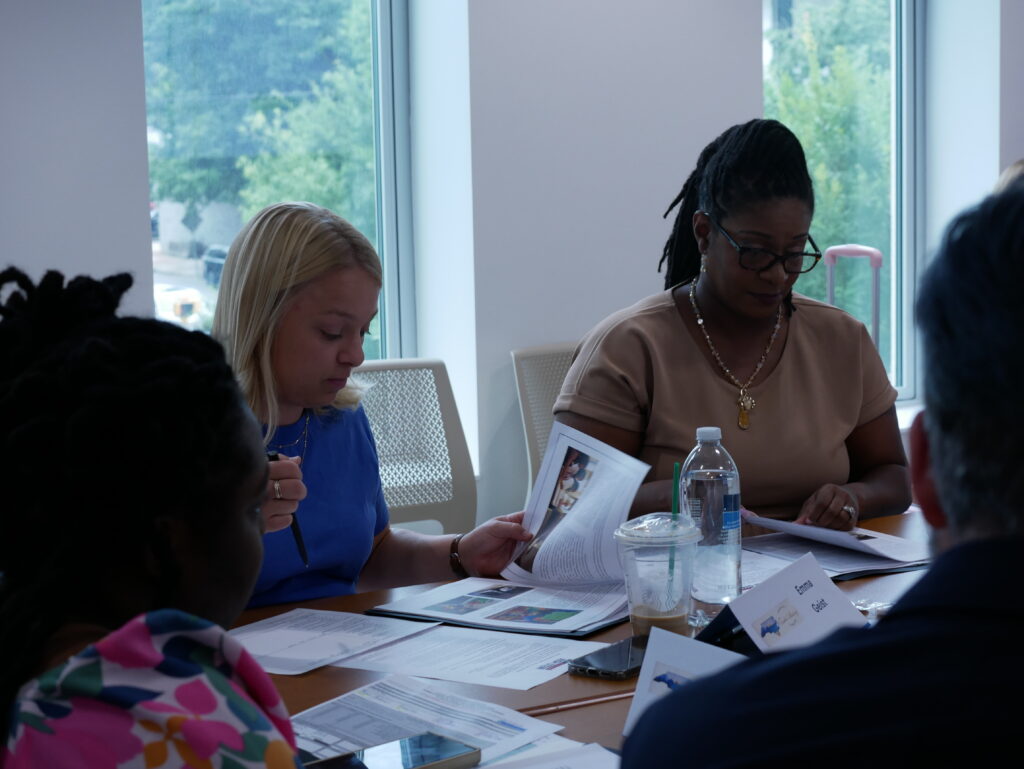
The Governor’s Teacher Advisory Committee (GTAC) met on July 28 to discuss how educators’ priorities appeared in the recent state budget as well as how to be advocates for themselves and their communities.
Commissioned in May 2025 by Gov. Josh Stein, the committee brings together active and former teachers to serve for two-year terms. Their purpose is to advise the governor regarding educational policy and to serve as educational ambassadors throughout the state.
“We have voice and influence in the work we do here, in the update we give them at the end of the year,” said Rachel Candaso, committee chair and 2025 NC Teacher of the Year. “And so we want to make sure that we are leveraging not only this position when we’re together in our meetings, but when we go back to our home districts — being a voice for our community and taking back what we learned here to there as well.”
Governance and schools
The Public School Forum of North Carolina briefed the committee on how to be effective advocates as teachers and how to navigate systems that affect education — from the federal government to the state legislature to local organizations.
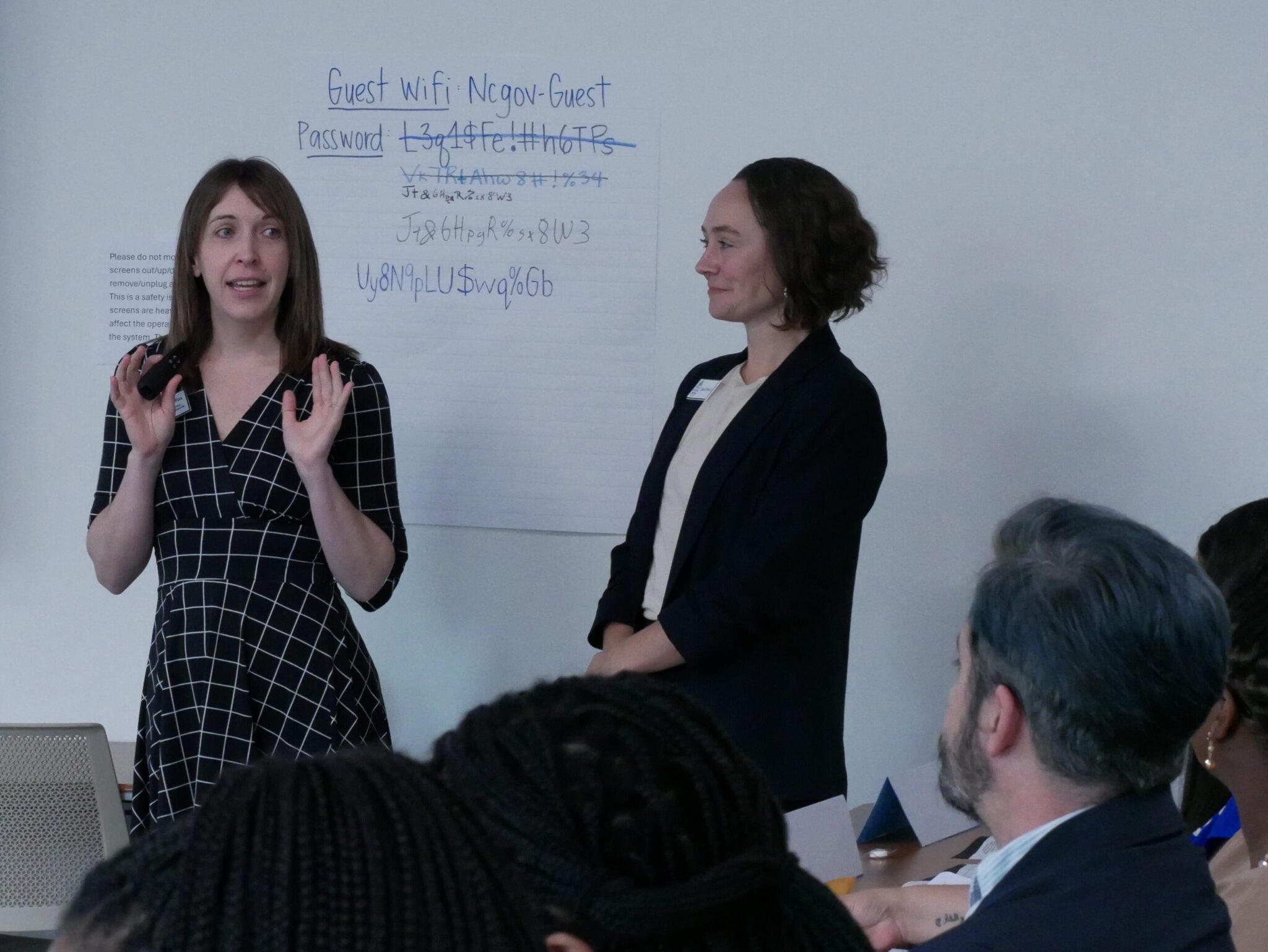
Dr. Lauren Fox, senior director of policy and research at the Forum, outlined each layer of governance within educational policy, describing the important players and encouraging the committee to reach out to various people to “help influence different policy priorities at the school level.”
Fox highlighted the committee chairs of the state’s appropriations and education committees.
“These are really the people that, if you want to get something passed right now in the General Assembly in education, you’ve got to have one of them at least,” she explained.
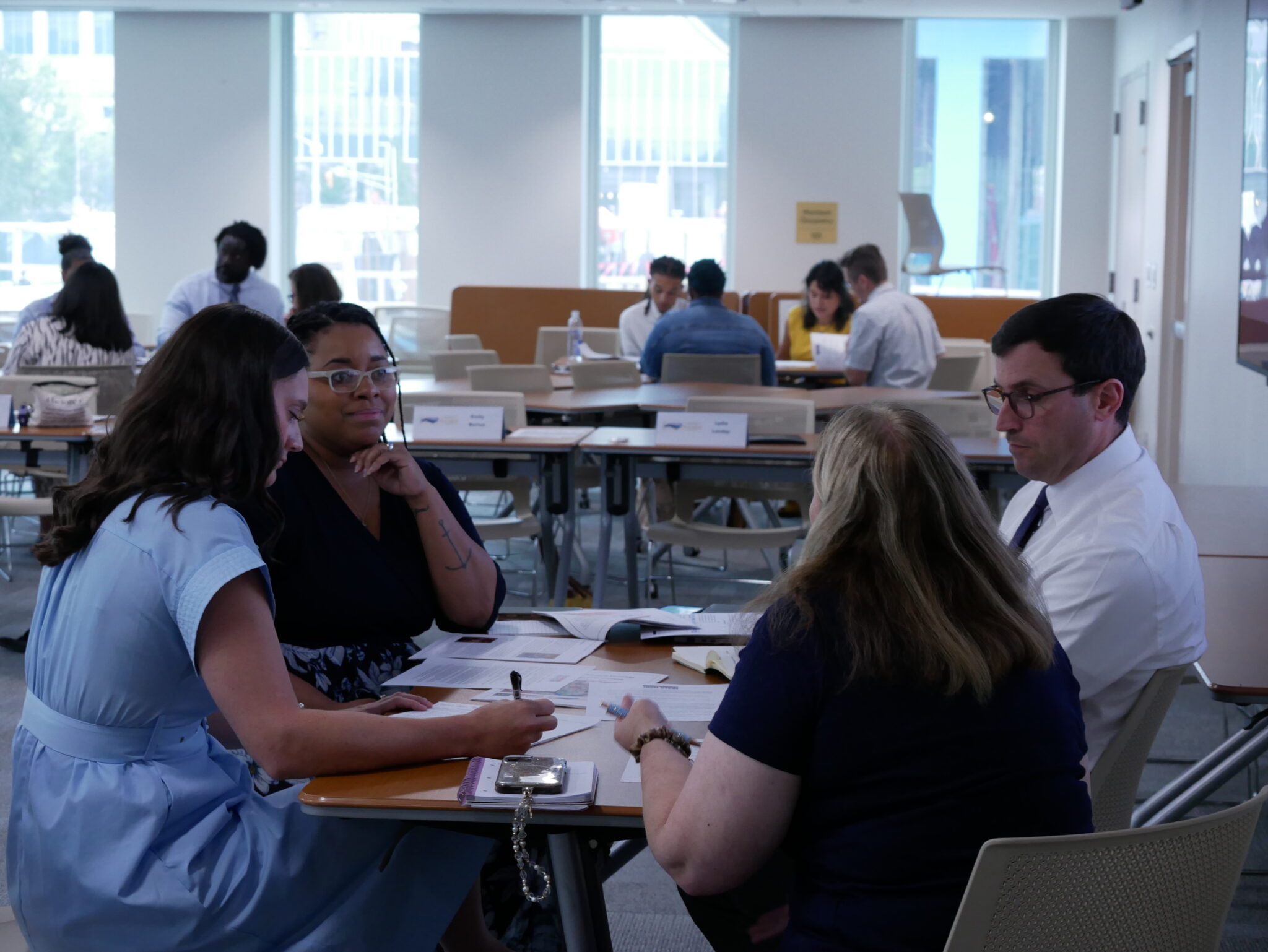
The committee discussed how teachers are not a unified voting block and how that can sometimes decrease their sway within the legislature.
“We have a voice that is not being properly utilized,” said Manzell Spencer, one of the teachers on the committee.
Sara Howell, the Forum’s associate director of policy programs, told the committee that working together is critical for advocacy.
“We’ve been talking all day about all these different people pushing policies in different arenas,” Howell said. “There’s no reason why we can’t align (and) work together, so it’s not policymakers receiving a million different ideas and tactics from a million different education advocates.”
Elyse McRae, one of the teachers on the committee, also noted that she doesn’t think all teachers understand how the governing systems interact or function, which limits their ability to be effective advocates.
“I just want people to feel more informed, but I also don’t want them to be over-inundated because we are receiving so much information all the time, and there’s so much we have to do,” McRae said.
After the committee meeting, the members had the opportunity to tour the General Assembly and Executive Mansion and meet with state representatives.
“We had the intimate space to learn about everything from their daily duties and how they interact with constituents as well as how we as GTAC could move forward within our respective districts and new appointments,” Jannet Lopez Casas, one of the teachers on the committee, told EdNC after the tour. “I walk away with a wealth of knowledge and guidance on how to best serve on GTAC.”
 Sign up for the EdWeekly, a Friday roundup of the most important education news of the week.
Legislative updates
Since the committee last met in April, the legislature passed the first state budget since 2023, and Stein signed it into law. The governor’s team provided a legislative update led by Deputy Legislative Director Amber Harris. The update focused on how the budget aligned with educator and state needs.
Harris described the budget as a “mixed bag,” as it represents “a lot of compromise, both between our office and the legislature, but also legislators’ compromises with each other.” There were, however, many positive aspects of the budget that she highlighted in her update.
Read more of EdNC’s budget coverage
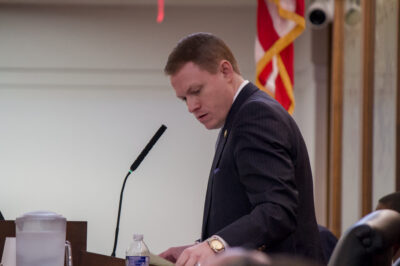
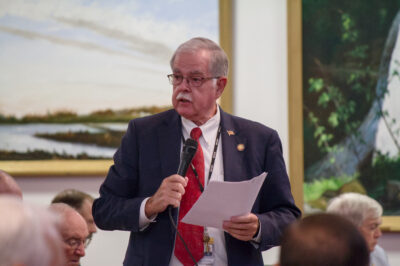

The budget fully funded Medicaid for Fiscal Year 2026-27, which Harris said was a “big deal.” Other wins, she said, included raises for law enforcement and teachers. She also celebrated that SUN Bucks received state funding in this budget.
“To see the General Assembly sort of come around and see the value of this program, both in terms of feeding children over the summertime and also in not leaving federal dollars on the table, was just a really good thing that I was really excited about,” said Harris.
However, Harris noted a few recent legislative actions that were “the biggest disappointments” to the Stein administration, including the elimination of the Office of Historically Underutilized Businesses in the Department of Administration and the ban on diversity, equity, and inclusion in public schools and state government.
Harris also discussed the bills currently under consideration by the legislature, like House Bill 958, also known as the Elections Law Changes bill, as well as their regulatory reform work. She noted that Stein’s office would be watching how they progress in the coming weeks. The legislature convened last week, and they plan to work one week every month until December, Harris said.
New members
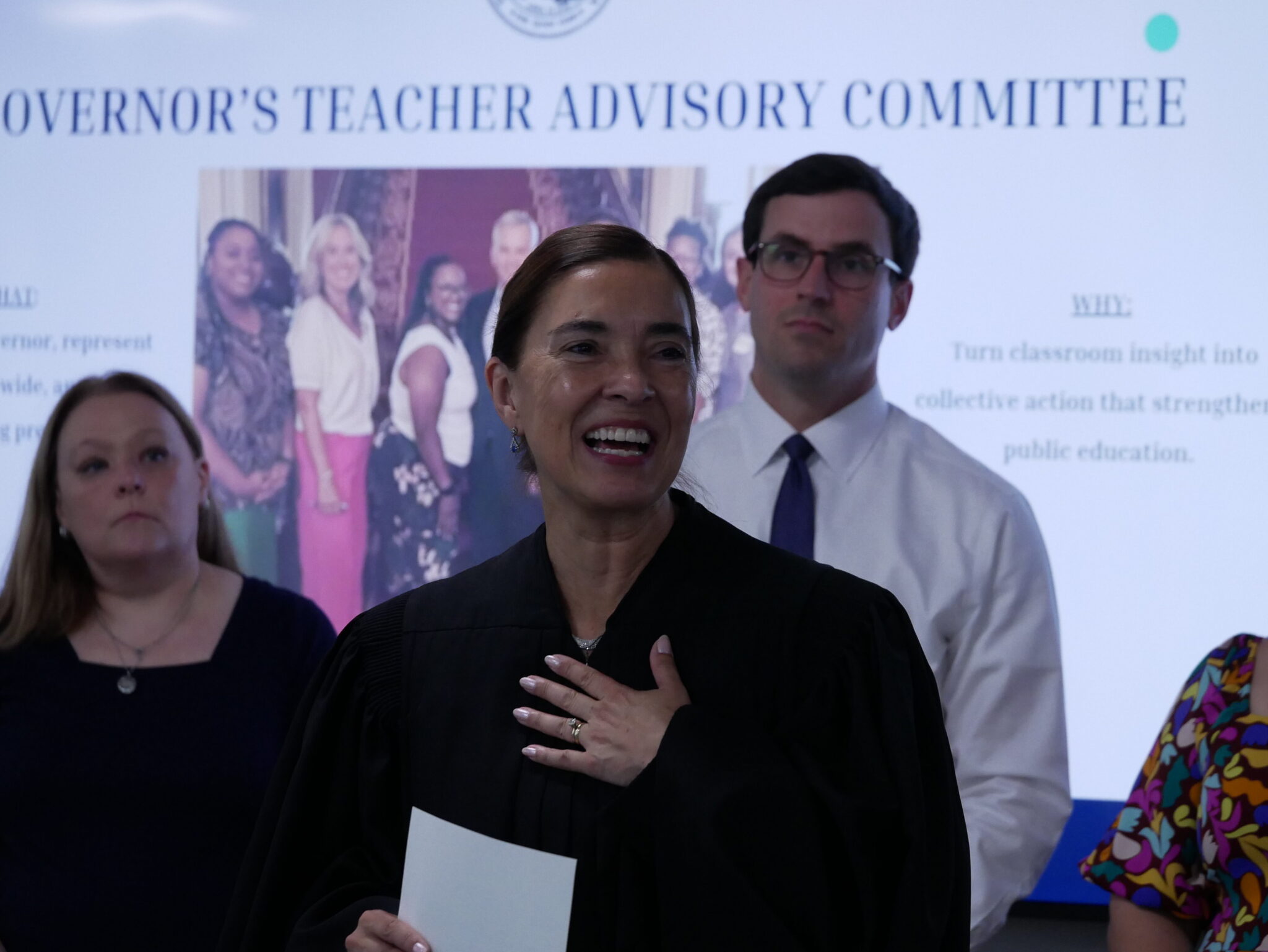
At the beginning of the meeting, several new members to the committee were sworn in by Anita Earls, associate justice of the Supreme Court of North Carolina. Earls expressed her gratitude to the people in the room for all that they do to uphold and better public education in the state.
“It’s the people and the skills and the talent that you bring to our youth that will make the difference,” said Earls.
Candaso welcomed the new members, emphasizing the power that they have as members of the committee and the wide range of experience present in the group.
“We are here to advise the governor and represent educators statewide while also elevating the teaching profession, and we can do that through the different perspectives we bring to the table,” Candaso said.
The new members are:
- Jannet Lopez Casas, ESL teacher
- Amy Harrison, special education teacher
- Nishelle Henson, middle school math teacher, Western Regional Teacher of the Year
- Gina Holste, reading intervention specialist (K-8), Northwest Region Teacher of the Year
- Cason Justice, high school history teacher, 2026 N.C. Teacher of the Year
- Manzell Spencer, middle school social studies teacher, Sandhills Region Teacher of the Year
Here is the full list of committee members. The next committee meeting will be held virtually on Oct. 27, and you can find a livestream here.