Cultivating future-ready learners: Educators gather for UNC Global Education Symposium

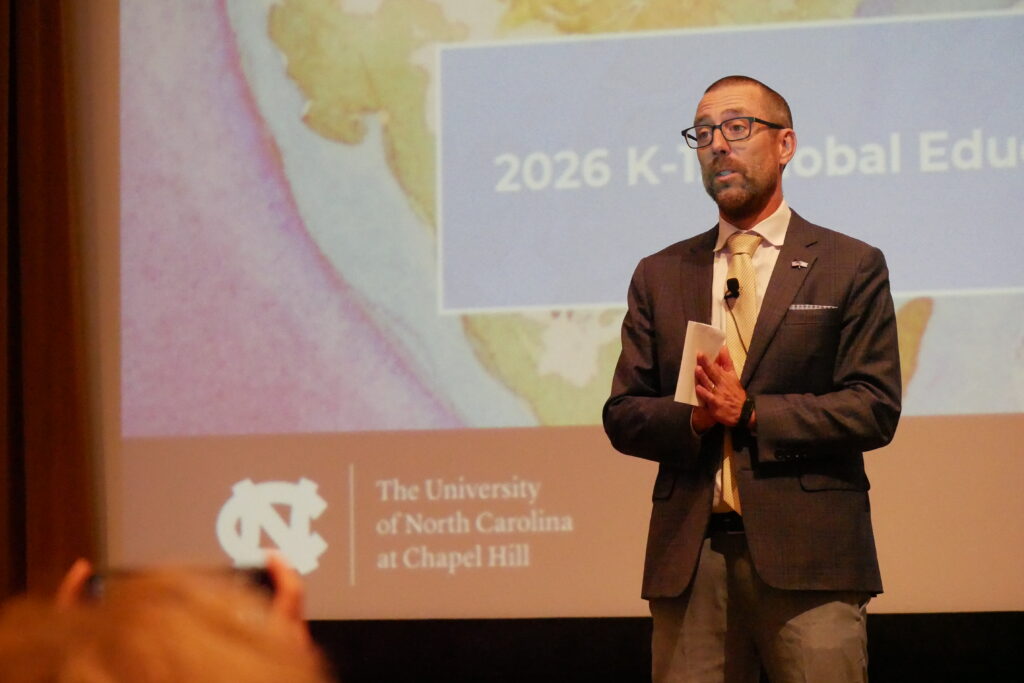
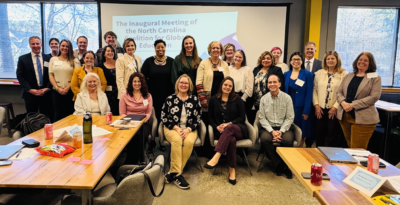
Educators from 30 North Carolina counties, as well as 19 countries outside of the U.S., gathered at the Friday Center earlier this month for UNC-Chapel Hill’s K-12 Global Education Symposium: “Cultivating Future-Ready Learners.” Throughout the day, participants listened to lectures, participated in breakout sessions and open dialogues, and made connections across the state and globe.
The Oct. 8 symposium was hosted hosted by World View, a UNC Global Affairs program that provides continuing education to teachers all over the world serving in both K-12 and community colleges incorporating global content into their teaching practice.
The program was started in 1998 to help educators prepare students for an increasingly connected world, according to Charlé LaMonica, director of UNC World View.
“These are very unique times that require all educators to have a unique global mindset as you cultivate students for the future,” LaMonica said during opening remarks. “Educators have an opportunity every day to create positive change in the life of a student.”
 Sign up for the EdWeekly, a Friday roundup of the most important education news of the week.
What is global education?
According to the N.C. Department of Public Instruction (DPI), the North Carolina State Board of Education (SBE) formed a Global Education Task Force to assess the state’s efforts to produce “globally competitive” graduates in 2011. According to previous reporting by EdNC, their final report, which followed in 2013, included these findings:
- We aren’t preparing students for a global tomorrow; North Carolina is global today. North Carolina’s economy is globally connected in every important respect — from economic investment and employment to trade — and these economic changes are occurring as North Carolina boasts a population that is becoming more ethnically and culturally diverse than before.
- Pilot programs won’t cut it. Preparing globally competent graduates requires a comprehensive approach.
- To prepare our students for the world, we need to prepare their teachers.
- North Carolina was once a leader in language learning. It’s time to return to the pole position. The reality is that as North Carolina has become more international, our world language effort has declined. In order to maintain and increase our competitive advantage, North Carolina public schools must graduate students with advanced cultural and language skills.
- Building networks of schools, districts, higher education, third-party providers, and the business and governmental communities is a critical step to ensuring strong practice and innovative ideas go beyond the schools and communities in which they originate and make an impact on students across North Carolina.
- Our state needs scalable approaches with ongoing support. Consistent communication about the competitive advantage and opportunities that a globally informed education will offer to individuals, communities, and our state is critical.
Going forward, the vision of the Board has prioritized global education:
The vision of the North Carolina State Board of Education is that every public school student in North Carolina will be empowered to accept academic challenges, prepared to pursue their chosen path after graduating high school, and encouraged to become lifelong learners who will engage in a globally-collaborative society
Dr. Magnus Egerstedt, UNC’s executive vice chancellor and provost, told participants in the opening ceremony that the major questions and issues humans will confront in the coming years are global ones: climate change, new viruses, advancements in technology, artificial intelligence, and more.
“I think it’s so important that we really lean in and embrace the fact that big questions require a global perspective, and I really like this idea of focusing on real-world, global experiences in the classroom for our K-12 students,” said Egerstedt.
Implementation in the classroom
LaMonica told EdNC that the symposiums offered by World View are designed to meet the current needs of educators, allowing them to discuss “present relevant global issues” but also take home “immediate skills and strategies” to use in their teaching practice.
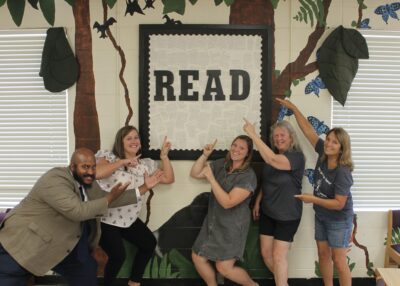
Several of the presentations that participants engaged with were from educators themselves, who discussed practical methods they have used to incorporate global education into their curriculum. They emphasized starting small — just adding an extra question to an existing lesson plan that challenges students to think more globally about a given topic.
“A global education is education, pure and simple. A global perspective can be integrated into every discipline and grade level and adhere to North Carolina teaching standards,” LaMonica told EdNC.
Breakout sessions allowed participants to reflect on their curriculum, discuss with others about how the implementation of global education had succeeded or been challenged, and encounter creative ideas about engaging students with a global perspective — allowing their students to understand how the “global is local.”
Educators as learners
The central theme of the event was the understanding that teachers should always be learning in order to best serve their students and community.
From the professional development opportunities in breakout sessions that showcased many classroom activities and strategies to the presentations on North Carolina’s workforce landscape and histories, educators had the opportunity to interact with new ideas and practices throughout their time at the symposium.
“Now we’re here to learn a little bit today, right?” said Kenny Flowers, chief deputy secretary at the N.C. Department of Commerce, in his presentation on developing the state’s economy to be “First in Opportunity.”
LaMonica said during several casual conversations with participants at the event, she heard how committed many teachers are to learning.
“Educators shared with me that they consistently work to expand their own global knowledge so that they can provide their students with relevant global content for our ever-changing world,” she said. “Great teachers and administrators always want to hone their skills and strategies to make classroom experiences capture the attention of their students.”
Egerstedt, in his opening remarks, explained that in order to truly prepare students for their future careers, educators must recognize that no one knows what will happen in the future. Developing a global education practice, then, must be an ongoing act of learning, he said.
More on global education

Developing a future-ready workforce
During one of the conference’s plenary sessions, Flowers discussed North Carolina’s current approach to workforce development, including the importance of centering educational institutions as the foundation of career pathways.
Over three of the last five years, North Carolina has been ranked No. 1 in the country for business by CNBC. Flowers said that in order to stay competitive in business, the state needs to focus on “alignment, investment, communities, and people.” Prioritizing those four items, he explained, will help attract business to the state.
“Nothing is going to get us jobs and investment opportunities more than workforce,” he told the audience of teachers. “And that’s exactly the space that you operate in most: preparing our students for pathways to jobs and opportunities that really are the foundation for our successes in North Carolina.”
He described the state’s First in Opportunity Strategic Economic Development Plan, which builds on the previous First in Talent Plan. The plan recognizes that workforce readiness is the “foundation of our economic development success,” according to Flowers. In order to grow workforce readiness, though, he said the state must expand existing career pathways and include K-12 voices in that conversation.
“The sooner we can align with our students and our teachers, the better off we’ll be in terms of building those strong pathways that we know are so important,” said Flowers.
Egerstedt highlighted that building a future-ready workforce doesn’t necessarily mean predicting what job will be the most in-demand 10 or 15 years from now, but instead ensuring that students have “creativity, curiosity, storytelling, problem-solving, critical thinking, adaptability,” as well as a global perspective.
“Our students, your students, they’re going to graduate into a world that’s increasingly connected, increasingly global,” Egerstedt told teachers. “They’re going to be working with people from other countries. They’re going to be working at places in other countries, and having a global perspective is absolutely critical in order to not only hang in there, but actually lead and thrive 15 years from now.”
More from World View
World View has several events coming up that will bring together educators from across the state and world to expand their capacity for incorporating global education into their teaching practice.
Community college educators are invited to attend the Community College Symposium, The Future of Work: Global Trends, Local Impact on Nov. 6.
For more on upcoming events and opportunities for professional development, explore World View’s website here.