
Perspective | Character education in action: How a rural elementary school uses global competencies to grow life-ready learners

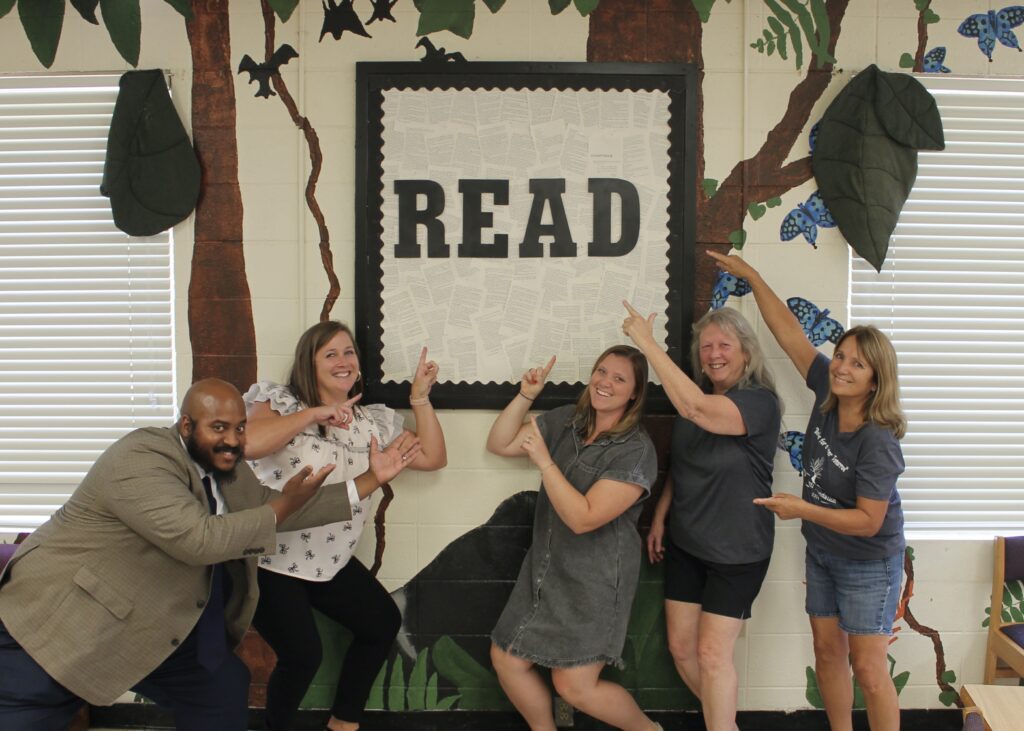
A few weeks into the school year, after a morning meeting on empathy and poverty, first graders set out to learn what their community needed for the winter. After interviewing a local community organization, they learned socks were a major need. That’s when a first grader walked into class with an idea: “Could we do Socktober to help our neighbors?”
Using their writing and communication skills, students designed collection boxes and posters, rallied the school, and collected over 1,000 pairs of socks in the month of October for the local clothing bank, helping keep their community warmer this winter.
That’s the story I tell when people ask what global competencies look like in young learners. These durable skills — empathy, communication, curiosity — help students interact successfully with others today and succeed in their future. At Woodland Elementary, this is what we mean by global learning: not just learning about faraway places, but also paying attention to real needs in our immediate community, feeling connected to one another, and taking action.
A decade-long shift toward global leadership
Woodland Elementary, located in rural Semora, North Carolina, is a dual language and global leadership school in Person County School District. Nearly a decade ago, our understanding of global education was limited to cultural enrichment: continents, flags, and holidays. We realized that truly preparing students for a complex, interconnected world requires equipping them with the skills to lead, serve, and solve problems.
Using the global competencies as a foundation, we created a cohesive structure for instruction, leadership, and community engagement. This redefined our approach to character education and career readiness, making it part of our school’s identity.
We’ve learned that global competencies are fundamentally character builders:
- Intercultural understanding helps students honor different backgrounds.
- Empathy guides them to consider others’ experiences.
- Communication empowers them to advocate for what’s right.
- Global connection helps them understand they are part of and responsible for a larger community.
We embedded the competencies into existing structures, including Positive Behavioral Interventions and Supports (PBIS), classroom expectations, and morning meetings that integrate social-emotional learning. Through clarity and repetition, students and adults use this shared language in their day-to-day lives.
 Sign up for the EdDaily to start each weekday with the top education news.
Global competencies in action through student leadership
Global competencies are designed not only to teach students durable skills but also to provide structured opportunities to practice them. When students repeatedly practice these competencies in their leadership roles, during morning meetings, and through service, they develop the core traits of integrity, compassion, and responsibility.
In other words, global competencies give structure and language to what a strong character looks like in action.
Woodland Ambassadors: Leadership with purpose
The most visible way we put the global competencies into action is with the Woodland Ambassadors, a fifth-grade leadership program that now includes nearly every student. Families receive a menu of leadership roles, including public relations, kindergarten helpers, flag team, mail delivery, school stewardship, and morning announcements. Students rank their top choices, then we train them and rotate assignments throughout the year. Over time, language becomes a form of identity, and students learn to lead with purpose.
Here are examples of how these roles model essential global competencies:
Announcements → Communication and intercultural understanding
Students lead morning announcements with clear, confident delivery. They switch between English and Spanish to include all families. They practice tone, pacing, and cultural awareness as they share daily updates.
Kindergarten helpers → Empathy
Students support kindergarteners during end-of-day routines. They help with packing up, tying shoes, and calming big feelings. They practice patience, kindness, and mindfulness.
Flag Team → Communication
Students arrive early to raise the U.S. and state flags and lower them each afternoon. They follow proper flag protocol and maintain the schedule reliably. They also coordinate with teammates to ensure the job is always covered.
Stewardship → Global connection
Students care for the campus by watering plants, collecting recycling, and keeping shared spaces tidy. They notice what needs attention and take initiative. They learn that tending their “piece of land” strengthens their whole community.
Related reads
Building a resilient and connected school culture
Since we began using the global competencies, what’s changed the most is our culture. As a rural school, we want students to understand that “local is global.” When they serve their own community, they make a positive impact on the world.
Belonging creates courage
We see fifth graders helping younger peers safely navigate slippery steps. Students speak Spanish to welcome families in the car line. Conflicts have decreased as students learn to communicate with care. When students recognize their needs, feel connected to others, and take action, global competence stops being theoretical and becomes a lived experience.
What changed for teachers
Like many districts, we’ve weathered retirements and new hires. That churn could have stalled our progress. Instead, the global competencies gave new teachers a shared playbook: consistent language, clear expectations, and ready-to-use practices that connect character, academics, and community.
Our next step is to expand the Woodland Ambassadors to fourth grade, because leadership isn’t a one-year event.
What any school can try starting next week
You don’t need a new program, a grant, or a wall of posters. Start small and embed the language of durable skills into your existing daily practice:
- Name what you already value. If a student helps a peer, say: “That’s empathy in action.” When you name it, students replicate it.
- Tie jobs to competencies. Give everyday roles a purpose beyond logistics. Add a line to each description: “In this job, you’ll model collaboration.”
- Use morning meetings as your multiplier. Ten focused minutes a day builds a common language across classrooms.
- Make global local. Ask: “What’s our piece of land?” Then serve it, with food drives, reading buddies, and neighborhood clean-ups.
- Invite families in. Have parents co-apply with students for leadership roles. Agency grows when home and school align.
- Recognize relentlessly. Global Leader of the Week, quarterly acknowledgements, and shout-outs in announcements make the invisible visible.
The promise of global education isn’t that students can label a map — it’s that they can read a moment and respond with empathy, clarity, and courage.
When you put global competencies at the center, students build character and learn to change their corner of the world. At Woodland, students are proving that leadership starts wherever they stand.