
Learn more about the NC Coalition for Global Education

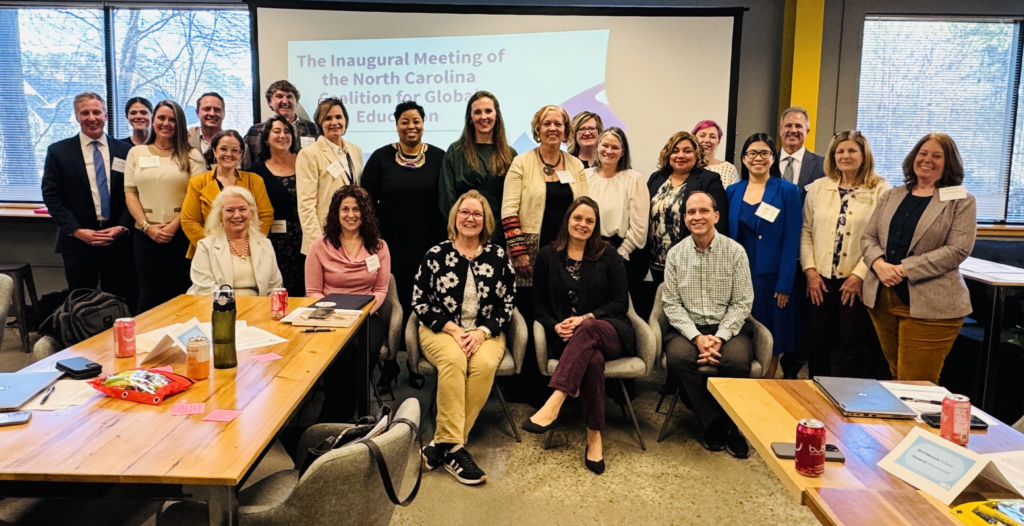
The NC Coalition for Global Education kicked off in February 2026 and has been meeting throughout the year with the goal of creating a statewide network that unites public/private partnerships and maximizes global education opportunities across North Carolina. At the first meeting of the coalition, about 40 interested partners — from across the education continuum and cross sector — showed up to learn more.
The coalition is a dream realized for Freebird McKinney, the 2018 Burroughs Wellcome Fund North Carolina Teacher of the Year who now works with Participate Learning as the director of partnership engagement.
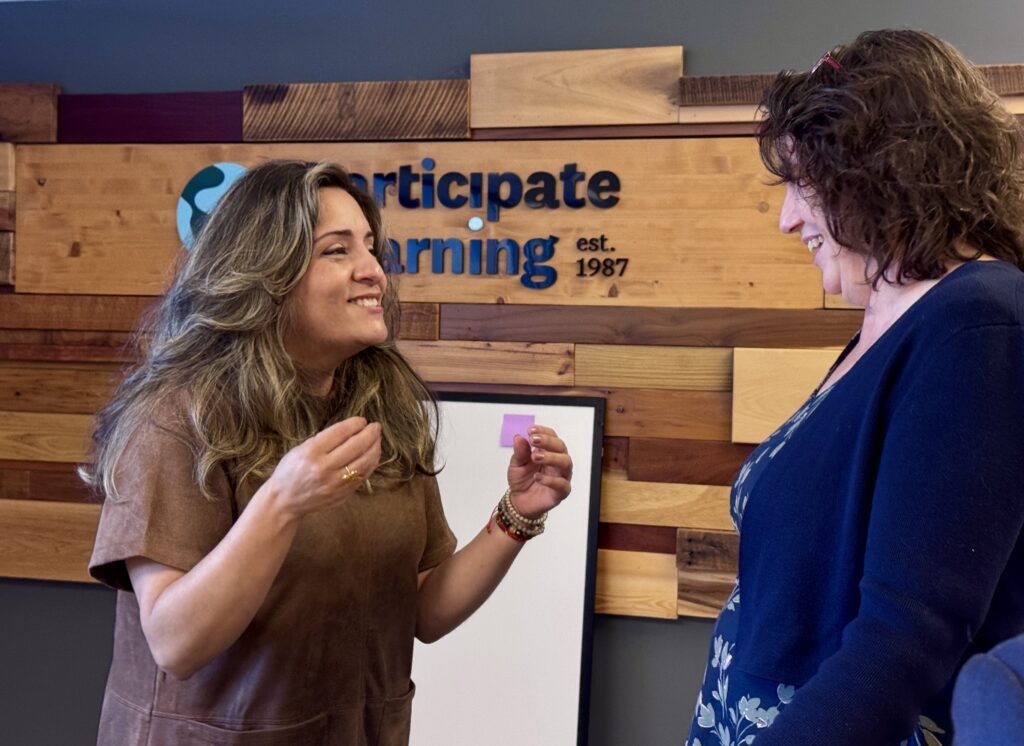
McKinney and Meredith Henderson, the executive director of Global NC, are facilitating the work of the coalition together.
Since 1987, Participate Learning has partnered with schools and districts to prepare students for career success through cultural exchange, dual language programs, and global learning. We help students build bilingual fluency, problem solving, and critical thinking skills to apply their learning in real-world settings and any career path.
— Participate Learning’s website
Global NC is a 501(c)(3) nonprofit organization committed to making North Carolina a great place to invest, work, study, visit, partner, and live. We provide transformative international experiences to educators, government, business, and community leaders. We have been strengthening North Carolina through global connections since 1979.
— Global NC’s website
“If you are trying to prepare elementary students for the world they will find in 10-15 years,” said David Young, the CEO of Participate Learning, “you’d have to assume that we will be even more globally connected, requiring knowledge, skills, and attitudes that enable international collaboration, effective communication across cultures and languages, adaptability, empathy, and the ability to understand issues from multiple perspectives.”
“Global education is not a single program or initiative. It is a shared responsibility and a strategic investment in North Carolina’s future,” said Henderson. “Our state’s students will enter a world where the ability to communicate across cultures, navigate different perspectives, adapt to change, and collaborate globally will be essential.”
The founding of the coalition
Held at the offices of Participate Learning, McKinney wrote about the founding of the coalition in February 2026.
At this convening, in this moment, the NC Coalition for Global Education was formed and founded.
We collaborated on how global education represents an initiative that connects what students learn in school to meaningful, real-world problems, as well as local workforce needs.
We discussed how embedding global competencies into everyday instruction fosters engagement, relevance, and purpose, where students begin to see their learning not just as preparation for a job but as a way to authentically contribute to their communities and the WORLD.
We promoted how companies benefit from employees who think critically, solve problems collaboratively, and bring global perspectives to local challenges and how communities benefit from citizens who are globally aware, culturally fluent, and civically engaged- individuals who understand how local actions connect to global outcomes and who are motivated to act responsibly in both worlds.
We affirmed MULTILINGUALISM is a superpower and lifted up the bilingual experiences of our students and the lived experiences of their families and communities.
In essence, we echoed the voices of generations of global education advocates before us, the strategic investment in our shared future, and pledged our collective commitment to equipping young people with the skills necessary to navigate complexity, connect across cultures, innovate, lead, and make a positive impact, all qualities increasingly demanded in a rapidly changing, globally networked 21st Century landscape.
— Freebird McKinney
While the coalition is new, the work is not
Fifteen years ago, in September 2011, the North Carolina State Board of Education formed a Task Force on Global Education to assess the state’s effort to produce “globally competitive” graduates ready to live, work, and contribute in an interconnected world. This final report followed in 2013, including these findings:
- We aren’t preparing students for a global tomorrow; North Carolina is global today. North Carolina’s economy is globally connected in every important respect — from economic investment and employment to trade — and these economic changes are occurring as North Carolina boasts a population that is becoming more ethnically and culturally diverse than before.
- Pilot programs won’t cut it. Preparing globally competent graduates requires a comprehensive approach.
- To prepare our students for the world, we need to prepare their teachers.
- North Carolina was once a leader in language learning. It’s time to return to the pole position. The reality is that as North Carolina has become more international, our world language effort has declined. In order to maintain and increase our competitive advantage, North Carolina public schools must graduate students with advanced cultural and language skills.
- Building networks of schools, districts, higher education, third-party providers, and the business and governmental communities is a critical step to ensuring strong practice and innovative ideas go beyond the schools and communities in which they originate and make an impact on students across North Carolina.
- Our state needs scalable approaches with ongoing support. Consistent communication about the competitive advantage and opportunities that a globally informed education will offer to individuals, communities, and our state is critical.
For many, this report continues to serve as a blueprint for global education in the state.
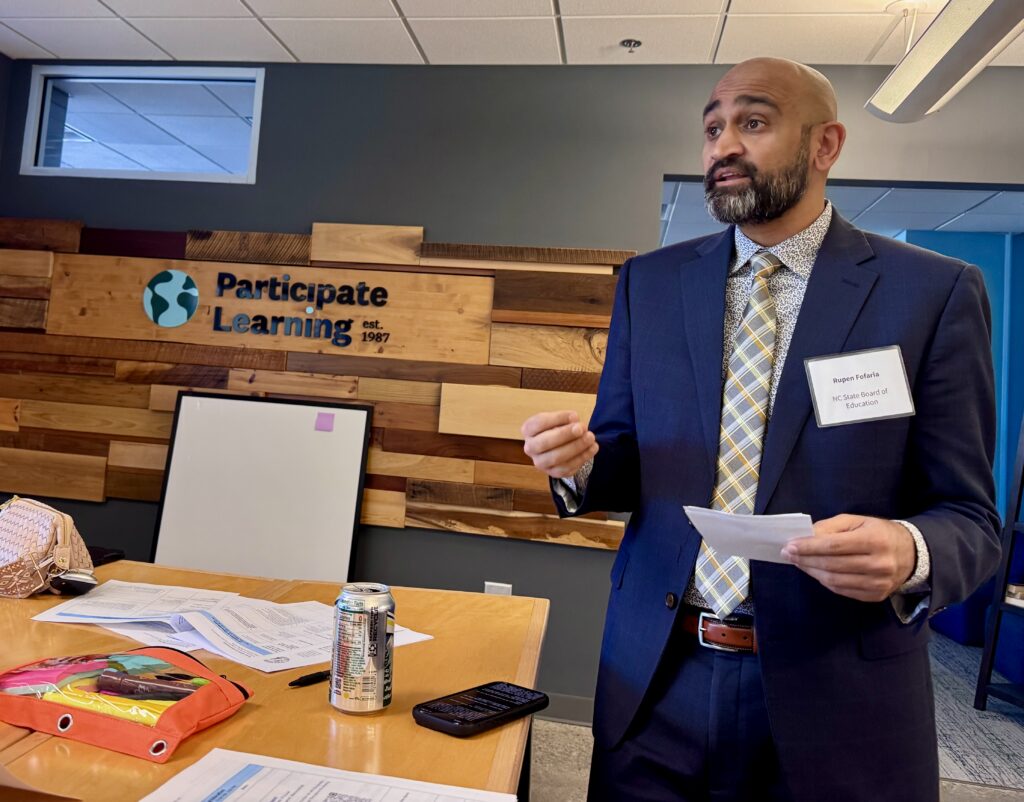
Rupen Fofaria, the director of the State Board of Education’s operations and policy, told the coalition that the board continues to believe that preparing students for a global society is not optional, it is essential. “Not only to economic vitality,” said Fofaria, “but also to civic strength, educational excellence, and the personal success of every single student.”
The vision of the board, said Fofaria, is for each student to have the capacity to engage in a globally collaborative society.
Two bright spots more recently emerging from this historic report are the newly formed coalition and also the N.C. Department of Public Instruction’s Global Education Recognitions for students, educators, schools, and districts.
The work of the coalition aligns with the current strategic plan of DPI and the State Board of Education.
Preparing North Carolina’s talent for a global economy
North Carolina’s goal of 2 million adults ages 25-44 with a high-quality credential or degree by 2030 is ultimately about preparing people for opportunity — and our state for the workforce needs of the future.
As North Carolina’s economy becomes increasingly global, broader perspectives can strengthen connections among education, workforce preparation, and the opportunities awaiting North Carolinians.
Cecilia Holden is the CEO of myFutureNC, an organization that leads the work towards the state’s attainment goal.
Participate Learning recently included her on a trip with Global NC to Southern Africa, including Botswana and Zambia.
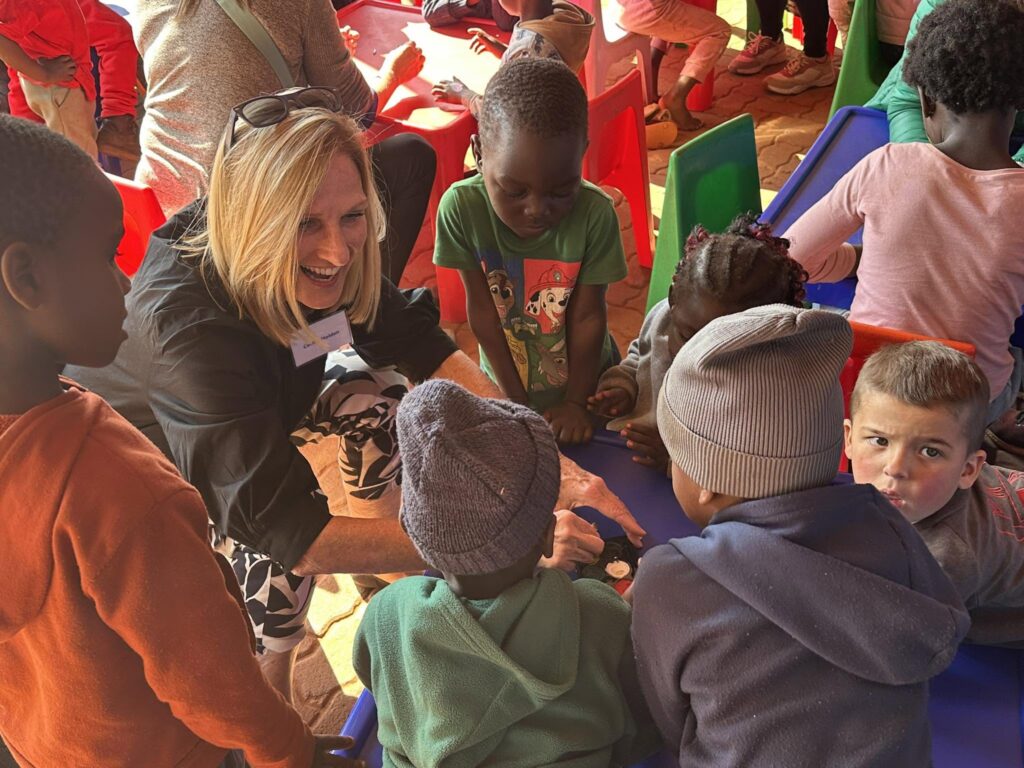
“The opportunity to travel with and see things through the lens of teachers who had never been on a plane before was HUGE! If you can’t see it, you can’t be it … and you definitely cannot teach it,” says Holden, who is part of the coalition.
“Given the significant impact other countries have on the North Carolina economy has on North Carolina’s jobs,” she says, “equipping our teachers with an experiential learning opportunity to get outside of their classroom is a fantastic way to broaden teacher’s awareness of the global economy.”
Why the work of the coalition matters
At the first meeting of the coalition, partners had an opportunity to share why they believe global education needs to be prioritized across North Carolina. The responses included:
“To build opportunities for students’ futures.”
“To promote belonging.”
“To invest in future leaders of our state.”
“To teach students how to think critically and design and achieve the life of their dreams.”
Henderson said, “The Coalition gives us an opportunity to bring together the people and organizations already doing this work, learn from one another, and build a stronger, more connected ecosystem so that these opportunities can reach students and educators in communities across North Carolina. By working together, we can make global education not an enrichment opportunity for some, but an essential part of preparing every North Carolina student to thrive in our increasingly interconnected economy and communities.”
Moving forward, the work of the coalition will expand to include a teacher council, which will become a pipeline for teacher voice and leadership in global learning opportunities.
Guiding documents for the coalition
- “Preparing Students for the World: Final Report of the State Board of Education’s Task Force on Global Education,” 2013
- Portrait of a Graduate — NC DPI
- “Achieving Educational Excellence” — NC DPI’s 2030 Strategic Plan
- A Practical Guide to Career Readiness in Schools: How Global Education Drives Global Competitiveness — Participate Learning
- The Blueprint for Global Engagement — Go Global NC & the NC Coalition for Global Competitiveness