
Gov. Stein releases budget proposal with 11% average raise for teachers, highest starting pay in the Southeast
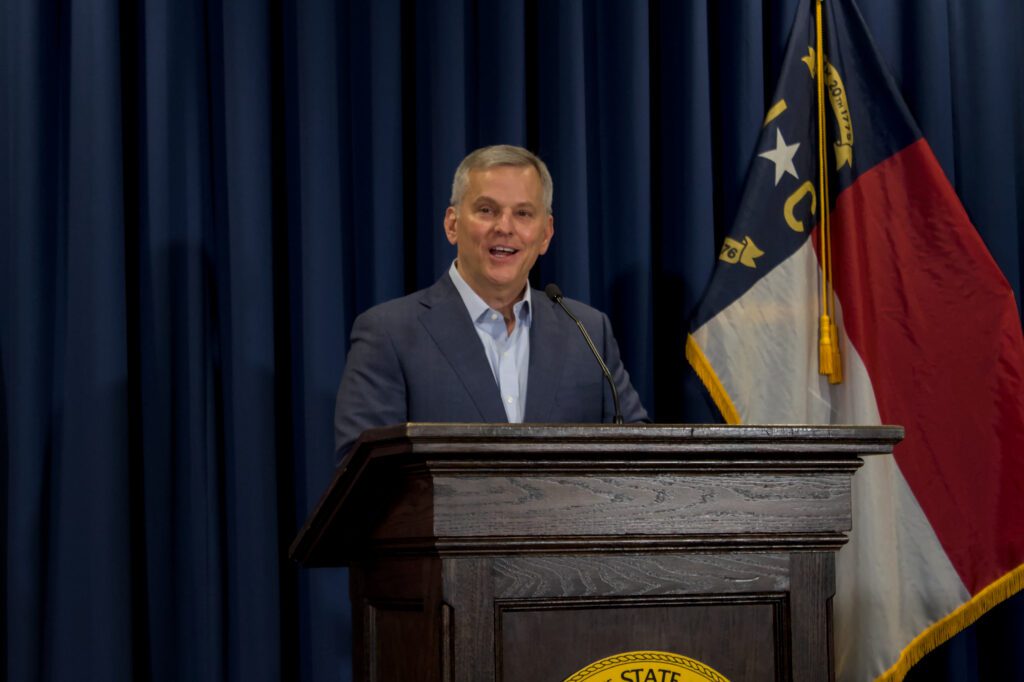
Gov. Josh Stein announced on Tuesday his proposal for a fiscal year 2026-27 state budget, calling on the legislature to act quickly. Last year, North Carolina was the only state in the country not to pass a state budget, following disagreements between the Republican-led House and Senate about pay raises, personal income taxes, and other budget items.
Stein said North Carolina’s success as a state is at risk as inflation, 325,000 new residents, federal unfunded mandates, and Hurricane Helene recovery all contribute to higher expenses. Stein put public schools front and center in his announcement.
“If we’re going to continue to build on our long-term economic success, we must start by investing in our public schools,” he said during a press conference on Tuesday. “Our children truly are our future. So investing in them must be our greatest priority.”
The lack of a budget last year meant state employees, including teachers, went without raises. Stein said raises for teachers are “long overdue.” His proposal includes an average 11% pay raise for teachers, and would bring starting teacher pay to the highest in the Southeast.
 Sign up for the EdWeekly, a Friday roundup of the most important education news of the week.
In March, Stein proposed a “critical needs budget” meant to “fill the gap” until the legislature could agree on a full budget. Among other things, that proposal included raises for teachers and state employees for fiscal year 2025-26, $319 million to fully fund Medicaid after federal funding cuts, and funds to raise the state’s subsidy reimbursement rate for child care.
He also proposed a third Hurricane Helene recovery budget in March. No action has been taken on either proposal in the legislature.
The General Assembly’s short legislative session began this week. Stein said conversations with House Speaker Destin Hall, R-Caldwell, and Senate Pro Tempore Phil Berger, R-Rockingham, have made him hopeful that there will be a budget this session. However, he said “there remain issues of dispute” between the two legislative chambers.
Below, find the education highlights of Stein’s proposed budget.
K-12
School choice and vouchers
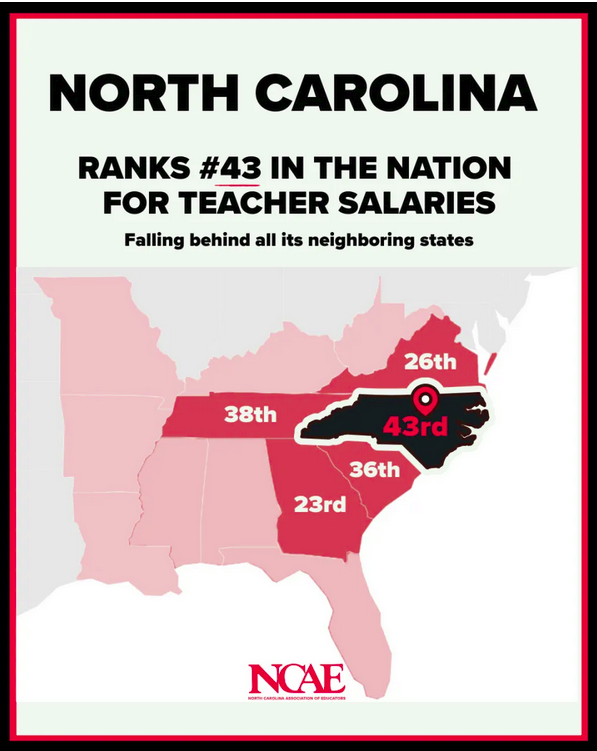
Stein said North Carolina is ranked 49th in the country for per-pupil funding, and is ranked 43rd in the country for average teacher pay.
“These are some embarrassing and unacceptable facts,” he said.
Stein cited private school vouchers distributed through the state’s Opportunity Scholarship program as a contributing factor to North Carolina’s low public school funding, saying tax dollars shouldn’t be given to wealthy parents to send their kids to “unaccountable” private schools.
Data shows only 8.4% of voucher recipients during the 2024-25 transferred from public to private schools, meaning most beneficiaries were already in private schools. Families of any income level can qualify for vouchers, with higher award amounts given to families based on income tiers.
“The way (the voucher program) was pitched to the entire state was, we’re going to come up with a program that helps poor kids who are in public schools that are failing. My view is, let’s invest in public schools so that they don’t fail,” Stein said. “And let’s give parents choice within the public school system through magnet schools and other ways of creating choice within the public school system, before we abandon it and create a second, competing system that requires its own resources.”
Related reads

Stein’s budget proposes winding the voucher program down by not providing any new awards, and letting families with children in grades K-12 making 150% or less of the eligibility income renew their awards. He said if the program is left unchanged, $7.5 billion in public dollars will go toward private schools in the next decade.
Stein’s budget proposal comes in advance of a planned May 1 protest in Raleigh coordinated by the North Carolina Association of Educators (NCAE). NCAE is advocating against private school vouchers and for raises for educators, among other issues.
“Why don’t we just pay our teachers a salary that they deserve, and then we won’t ever have to worry about any of this,” Stein said when asked about schools closing for the protest.
Educator pay
According to National Education Association (NEA) data, North Carolina is ranked 43rd in the nation for teacher pay — lower than all of its neighbors. North Carolina teachers have gone without a raise since July 1, 2024.
Teachers in North Carolina are paid on a salary schedule, with their salaries generally rising with years of experience.
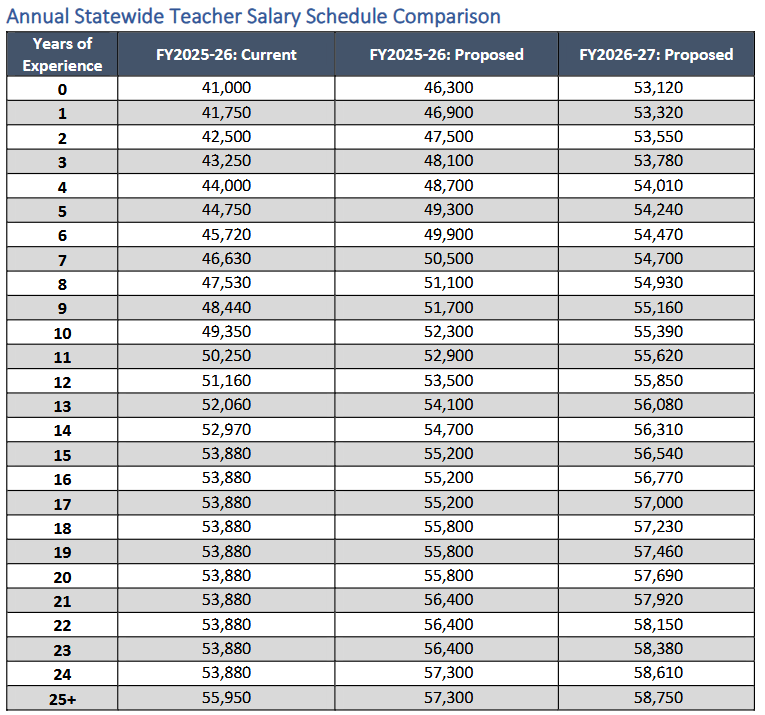
Stein’s budget proposes raising the average teacher pay by 11%, and would make starting teacher pay the highest in the Southeast. It would also remove the “pay plateau” for teachers between 15 and 24 years of service and restore master’s pay — higher pay for teachers with master’s degrees in the subject they teach.
Starting teacher pay is currently $41,000 in North Carolina. Under Stein’s proposal, that would rise to $53,120 by fiscal year 2026-27. You can see Stein’s proposed salary schedule below:
In addition to the salary increases, Stein’s budget includes a $1,000 bonus for all state employees and local education employees — with an additional $500 going to employees with an annual salary of less than $75,000 — and a $300 tax-deductible stipend for teachers to “to offset out-of-pocket costs teachers cover for classroom materials.”
The proposal would also give raises to school administrators, with school principals receiving a 5% salary increase over the biennium “to keep up with inflation.” Non-certified staff and Central Office personnel would also see a 2.5% raise in each fiscal year.
It would also provide funding for a 5% increase to State Health Plan contributions. The State Health Plan provides coverage to nearly 750,000 teachers, charter school employees, community college employees, other state employees, retirees, and dependents. Finally, the proposal also includes a 2.5% one-time retiree supplement in each fiscal year.
Advanced Teaching Roles
Stein’s budget would expand the Advanced Teaching Roles (ATR) program, allocating $38 million for over 3,200 new teacher salary supplements and $2 million for design and implementation costs.
Through ATR, some districts have implemented a model that gives schools a new organizational structure. Lead teachers oversee a team of classrooms and receive higher pay. Some teachers are also designated as “Classroom Excellence” teachers, accepting higher pay in exchange for larger class sizes.
Brenda Berg, president and CEO of BEST NC, advocated for funding to ATR at a Joint Legislative Education Oversight Committee meeting earlier in April.
She said over 600 schools will have implemented ATR as of this fall, but that there are still 16 qualified districts on the waiting list, even after a “game-changer” $10.9 million investment in 2023 by the General Assembly.
Berg said the total cost of ATR, if implemented across the state, would be $200 million.
Stein’s budget proposal says “advanced teachers create a multiplier effect to improve quality school-wide by coaching novice teachers and reaching more students.”
New Exceptional Children funding formula
Stein’s budget proposal includes $63.5 million, recurring, and $33.5 million, nonrecurring, to fund a new Exceptional Children (EC) funding model.
“The new allotment formula accounts for the frequency, intensity, and duration of special education and related services and aligns resources with students’ individualized education program (IEP) requirements,” the budget proposal says.
The state would support 70% of the model, with the remainder split between the federal government and school districts.
School meals and SNAP
Stein’s budget calls for universal breakfast at no cost to students, an idea which advocacy groups have long called for. Universal breakfast would be funded in part by North Carolina Education Lottery funds and the Civil Penalty and Forfeiture Fund, the proposal says.
The nonpartisan School Meals for All Coalition NC previously celebrated the inclusion of no-cost breakfast in Stein’s 2025 budget proposal.
“We urge the NC General Assembly to continue to prioritize this vital policy measure, thereby ensuring that every child in North Carolina starts their day with a nutritious meal,” its director said at the time. “… By funding school breakfast for all North Carolina students, the Governor and General Assembly send a clear message that North Carolina cares about its young people and is committed to removing the barriers that stand in the way of their success.”
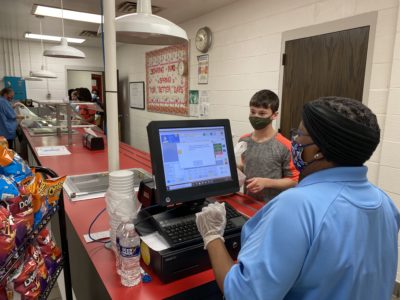
The proposal says school cafeterias will be enabled to serve almost 190,000 free school breakfasts each school day.
Schools participating in the Community Eligibility Provision (CEP) already serve breakfast at no cost to students. However, the number of CEP schools could decrease soon.
Through a process called direct certification, CEP uses other means-tested programs, such as the Supplemental Nutrition Assistance Program (SNAP), to determine whether schools qualify to provide breakfast and lunch at no cost to all students.
EdNC has previously reported on looming SNAP cuts which could threaten schools’ CEP qualifications.
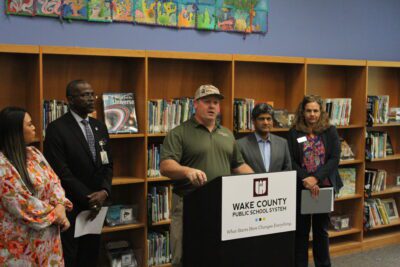
At a press conference alongside advocates in October 2025, Wake County Public School System Superintendent Robert Taylor said that a 10% decrease in the number of students directly certified for free or reduced-price school meals due to federal cuts to Medicaid and SNAP would mean 33 of the 41 Wake County schools that qualified for the CEP could become ineligible.
Stein’s budget allocates $15 million to ensure North Carolina can continue to operate SNAP. The federal budget reconciliation bill, signed into law last year by President Donald Trump, raised the cost-sharing requirement of SNAP’s administrative costs for states.
EdNC reporting on federal SNAP cuts
Stein’s budget proposal also allocates $5 million in state funds for the Summer Electronic Benefits Transfer Program for Children (SUN Bucks) program, which would allow North Carolina to receive federal matching funds.
The SUN Bucks program offers $40 per child, per month, for grocery benefits over the summer, helping children who depend on school meals.
“It’s a 25 to one federal-to-state match,” Stein said. “That is an incredible return on state investment.”
Student safety and well-being
Stein said schools need more support staff like counselors, nurses, and social workers, because they improve students’ mental health, reduce absenteeism, and strengthen academic performance.
“My budget will hire more of all of them,” he said.
More than 360 new school health personnel positions would be funded by the budget’s proposed $32 million investment, moving North Carolina toward the recommended ratios for the positions in schools, the proposal says.
Data that NC Healthy Schools presented to the State Board of Education in March 2025 showed there was one school psychologist for every 1,928 students in 2024. The recommended ratio is one psychologist for every 500 students.
Stein’s proposal also funds School Resource Officer (SRO) positions, including $50 million to place one SRO in every middle school.
And one-time school safety grants totaling $20 million, from the American Rescue Plan Act Temporary Savings Fund, would go to school districts for equipment including cameras, exterior locks and fences, weapon detection, and metal detectors.
Miscellaneous allocations and classroom supplies sales tax holiday
Other notable allocations in Stein’s proposal include:
- $85 million to continue to provide laptops for every student as laptops bought with COVID-era relief funds reach end-of-life, plus an additional $15 million funded through receipts.
- $115 million transferred from the State Capital and Infrastructure Fund to the Public School Building Repair and Renovation Fund for classroom renovations and other infrastructure improvements.
- $15 million recurring and $23.6 nonrecurring to expand the early grades literacy initiative to sixth through eighth graders.
- $8.1 million for the Uniform Education Reporting System.
- $4.5 million for “DPI’s district and regional support model, which provides targeted and comprehensive assistance to low-performing schools and districts through professional learning, coaching, systems design, and capacity building.” There is also $3 million to support high-impact tutoring in low-performing districts.
Stein also proposed a sales tax holiday for school supplies and equipment.
The sales tax exemption would apply to school supplies, clothing, computers, and computer supplies over three days during the first weekend in August, and would reduce costs for back-to-school shoppers by $30 million in fiscal year 2026-27, the proposal says.
Community colleges
“In many ways, our state’s community colleges are our secret weapon,” Stein said. “Almost all North Carolinians live within 30 minutes of a community college.”
By way of investing in community colleges, he said, North Carolina can accelerate its impact and expand pathways to good-paying jobs.
Propel NC
The North Carolina Community College System’s (NCCCS) legislative request this session is centered around Propel NC, an overhaul of the system’s funding model first proposed in 2024. The model’s goal is to move NCCCS toward a labor-market-driven model of community college programs by prioritizing funding for high-wage, high-demand sectors.
See EdNC’s breakdown of the Propel NC request:
Stein’s budget partially funds the NCCCS Propel NC request. It fully funds the ask for $6 million to establish an enrollment growth increase reserve that will provide funding for colleges which see enrollment increases greater than budgeted levels.
Community college total enrollment increased by 6.5%, or 16,422 full-time equivalent (FTE) students, from the budgeted amount in fiscal year 2025-26, Stein’s budget says. It funds the system’s enrollment increase request of approximately $102 million, including $76 million in state allocations and $26 million in expected receipts from tuition and registration fees.
As for the main component of Propel NC, funding to modernize the workforce sector funding formula, Stein’s budget would allocate $34.3 million — short of the system’s $68.5 million request.
“We must commit to Propel NC,” Stein said. “Propel NC strengthens the alignment between the courses that community colleges offer and the skills that employers need.”
Stein’s budget does not include a $24.4 million allocation for base funding modernization and enhancement, as requested by NCCCS.
It does, however, include $3.1 million for ApprenticeshipNC, North Carolina’s apprenticeship program, which is also a priority for NCCCS. In fiscal year 2024-25, ApprenticeshipNC exceeded 10,000 active registered apprenticeships and served more than 3,000 employers and 16,000 apprentices, according to Stein’s budget.
Free tuition for high-demand, non-degree credential programs
In pursuit of a stronger workforce, Stein proposed free community college tuition for students enrolling in non-degree, short-term workforce training programs. Eligible programs, the budget says, “are those that lead to a high-demand state and industry-recognized workforce credential.”
The proposal includes $17.2 million for this item, funded through receipts in the Strategic WorkForce Training fund. Students could receive up to $750 per credential in financial assistance, the budget says.
“This investment will close a critical student funding gap, strengthen North Carolina’s talent pipeline, and expand access to the state’s high-demand career pathways,” the budget says.
Raises for community college employees
As part of the NCCCS legislative request, the system also asked for pay raises for community college staff and faculty in line with state employee rates.
Under Stein’s proposal, community college employees, like other state employees, would receive a raise of 2.5% in fiscal year 2025-26 and fiscal year 2026-27 “to help address inflationary pressures.”
Community college employees would also receive the $1,000 bonus for all state employees — with an additional $500 bonus to employees with an annual salary of less than $75,000 — and the 5% increase in State Health Plan employer contributions.
Stein’s budget also makes a “market-aligned” adjustment to the NCCCS president’s salary, increasing it by $150,000. NCCCS is currently searching for its next president.
“The funding ensures compensation remains competitive with comparable institutions and supports the recruitment and retention of high-quality system leadership,” the proposal says.
Early childhood
Stein’s budget calls for additional funding for the state’s early childhood programs, including the child care subsidy program and NC Pre-K, and establishes a refundable Child and Dependent Care Tax Credit.
The proposal would allocate $80 million recurring to the subsidy program, which helps eligible families afford child care, and $11 million recurring to NC Pre-K, the state’s preschool program for at-risk 4-year-olds. Both allotments would increase the per-child funding facilities receive to participate.
The budget also includes $55 million per year to introduce the Child and Dependent Care Tax Credit, which the proposal states would provide an average of $250 annually to families with children under 18 years old to help offset child care costs.
“Child care is one cost that’s weighing heavily on families,” Stein said in Tuesday’s press conference.
Stein’s budget states that the $80 million in subsidy funding, including $60 million in recurring state funds and $20 million in block grant funding, would “stabilize North Carolina’s child care programs across the state by bringing outdated subsidy rates into federal compliance and establishing a statewide subsidy reimbursement rate floor for all ages.”
A coalition of early childhood advocates, along with the North Carolina Task Force on Child Care and Early Education, have asked the state for a child care subsidy reimbursement floor to even out the funding participating child care programs receive, which varies widely depending on location. A floor rate would help child care programs stay open, retain staff, and keep care more affordable for families, advocates say.
Stein pointed to recent child care program closures as his motivation to increase child care investments.
“Our state has suffered a net loss of 262 child care programs since the state last passed a budget, due in part to inadequate child care subsidies,” he said in the press conference. “My budget adopts the task force’s recommendation, which will enable our state to better pay early educators and make more slots available for families.”
Advocates are asking this session for $101 million to increase subsidy rates for licensed facilities serving 3-12-year olds and establish a floor rate for facilities serving infants and toddlers, no matter where they are located in the state, based on age and program quality. Advocates decided to focus on infant and toddler care because it is the most expensive and hardest to access for families.
The recurring $11 million for NC Pre-K would raise reimbursement rates by 6%, according to the proposal. The program is offered in both private child care centers and public elementary schools.
“By providing additional resources to recruit and retain qualified teachers and increasing administration support, these funds address fundamental barriers to stabilizing and expanding this nationally recognized model for early childhood education,” the proposal reads.
Taxes and Medicaid
The issue of taxes was central in the budget conflict between House and Senate Republicans that left North Carolina without a state budget last year.
Current North Carolina law will lower the state income tax over time — based on tax triggers set in statute to activate once certain revenue thresholds are met — and eventually fully eliminate the corporate tax if no action is taken. The corporate income tax rate, previously the lowest in the nation among states that collected corporate income taxes, at 2.5% before 2025, is being phased out entirely by 2030.
Stein said going down that road isn’t an option. His budget calls for a repeal of those scheduled tax changes to “avert the fiscal cliff” North Carolina is headed toward. He proposed maintaining the state income tax and corporate tax rates at their 2026 levels — at 3.99% and 2%, respectively.
The budget proposal notes North Carolina would still have the lowest personal income tax rate among East Coast states with an income tax, and would remain the state with the lowest corporate tax rate among the 44 states with a corporate tax.
“I’m calling on the General Assembly to look closely at the current realities we live in, and to hit pause on these outdated, pre-programmed tax breaks,” Stein said. “If we don’t, we will face an imminent shortfall in our budget of $5 billion, risking massive cuts to critical services, the likes of which we have not experienced in North Carolina since the Great Recession 17 years ago.”
At the same time, Stein proposed some targeted tax cuts, including the school supplies sales tax holiday and the refundable Child and Dependent Care Tax Credit. The other cuts would be a Working Families Tax Credit, which would provide up to $823 to eligible families, and an increase of the standard deduction by $1,000.
“Budgets require choices, and with the choice between investing in our children’s education, in the health of our kids, versus giving money to corporate shareholders — or between cutting taxes for working families and cutting taxes for wealthy out-of-staters, I choose North Carolina’s kids, families, and future every time,” Stein said.
Medicaid
“More than 3 million North Carolinians — about a quarter of the entire state, including children, pregnant and postpartum women, people with disabilities, older adults, working families — have Medicaid,” Stein said. “My budget ensures that we fully fund Medicaid so that the millions of North Carolinians can stay healthy, and the entire health care system, which depends on it, can remain strong.”
Stein’s proposed budget would spend $319 million this year, and over $1 billion in fiscal year 2026-27, to “cover the cost of sustaining the existing Medicaid program” following federal cuts and changes in enrollment and utilization rates.
On the same day as Stein’s budget proposal announcement, House and Senate leaders announced that they had reached a deal to put $319 million toward the state’s Medicaid rebase for the remainder of the fiscal year.
A press release from Hall’s office said the House is expected to vote on that bill, House Bill 696, on Wednesday.