
State Board of Education considers recommendations for school psychologist shortage, Whole Child policy priorities

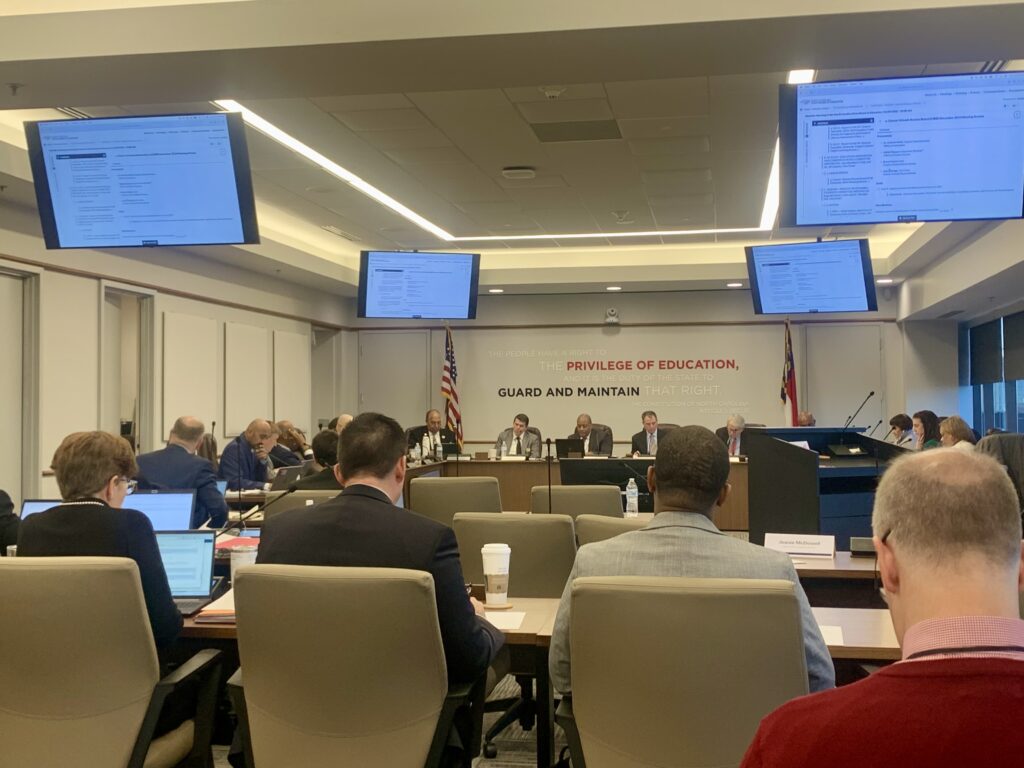
Data and recommendations on specialized instructional support personnel and school health centers were presented to the State Board of Education at their monthly meeting Wednesday.
The Whole Child North Carolina Advisory Committee was established to identify and review nonacademic barriers that students face and then make recommendations to the Board. The committee has 22 members from several organizations and state agencies.
Representatives from the committee stated their ongoing priorities from the 2023-2024 school year as follows:
- Funding the position for Whole Child NC
- Partnering with principal preparation programs to include information on the Whole School, Whole Community, Whole Child model
- Expanding school-based access to health services
 Sign up for the EdWeekly, a Friday roundup of the most important education news of the week.
From these priorities, representatives from the committee and NC Healthy Schools gave policy recommendations to the Board this month.
“We know that non-academic barriers are very challenging, not going to be solved overnight, and not by one committee.” Susanne Schmal, a consultant for NC Healthy Schools and Specialized Instructional Support, said.
School counselors, social workers, and psychologists all fall under the category of specialized, instructional support personnel. The committee’s first recommendation that they presented was to advocate for funding for such personnel while continuing to address pipeline issues.
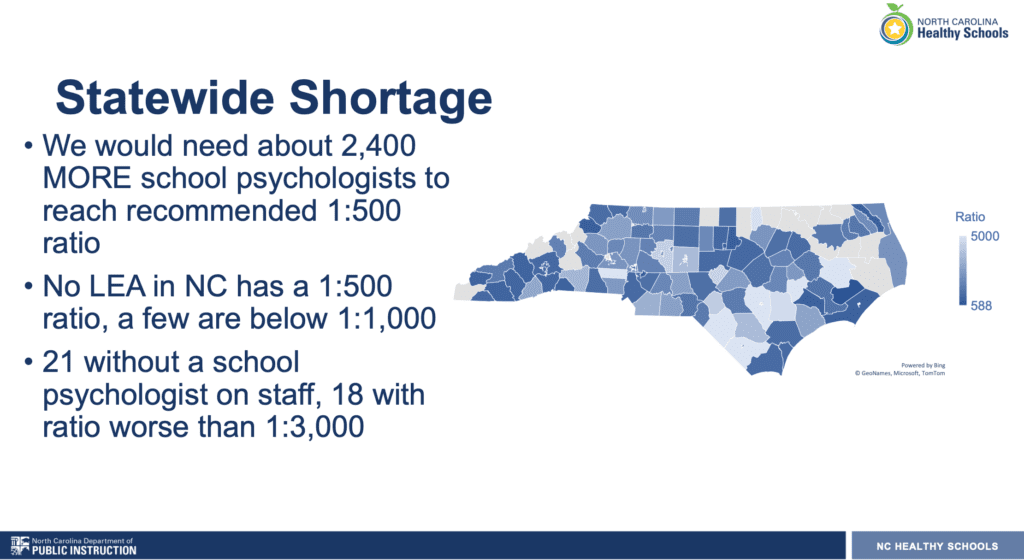
The committee recommended that the board support fully funding a state school psychology position, employed full time and housed at DPI. The person in this role would help recruit school psychologists across the state.
According to the data presented by NC Healthy Schools, there was one school psychologist for every 1,928 students in 2024. This is 73 more students than last year.
The recommended ratio is one psychologist for every 500 students.
“The ratios are continuing to get worse,” Schmal said.
Compared to the need for social workers and counselors, psychologists are far from hitting their recommended ratio, the presenters explained to the Board.
No school district in the state has the recommended 1 to 500 ratio, and 21 districts have no school psychologist on staff at all.
“Right now we do not have enough people in school psychology programs to fill positions even if we got them all licensed,’” Ellen Essick, section chief of NC Healthy Schools, said.
Board Chair Eric Davis said the need for more school psychologists coupled with the need for more teachers comes down to our priorities as a state.
“We’re living in, a robust, economically successful, growing state that is generating billions of dollars,” Davis said. “The question is, what are we going to do with them?”
Another recommendation from the group is to support master’s level pay for school social workers. The National Association of Social Work recommends that people with an undergraduate degree in social work continue to get their master’s degree. The committee presented the different abilities of people with a bachelor’s degree in social work versus a master’s in depth here. North Carolina removed master’s pay for social workers for everyone hired after 2013.
“If they obtain their degree before 2013, they qualify for that master’s pay. So you can imagine how that might feel for others who come in, who graduate later, who go in and they’re not eligible for that master’s pay,” Schmal said.
Past coverage of master’s pay
The last recommendation was to collaborate with the N.C. Department of Health and Human Services to expand opportunities for school-based health centers in school districts that are not currently being served by them.
Some of the benefits presented of having school health centers were keeping students in school, keeping parents at work, and keeping students out of emergency rooms, Schmal said.

According to the presented graph, there are about 90 school-based health centers across the state. Schmall said 30 centers received about $44,000 in start-up money from the state. The cost of operating the centers in the first three years is $300,000.
“They rely on partners, which is great. They should rely on partners to help fund that, but it’s a huge void to fill in terms of the amount of funding,” Schmal said.
Federal funding
In their presentation to the board, the committee said eight of the 11 positions at NC Healthy Schools are federally funded. Only one position is a completely state funded position.
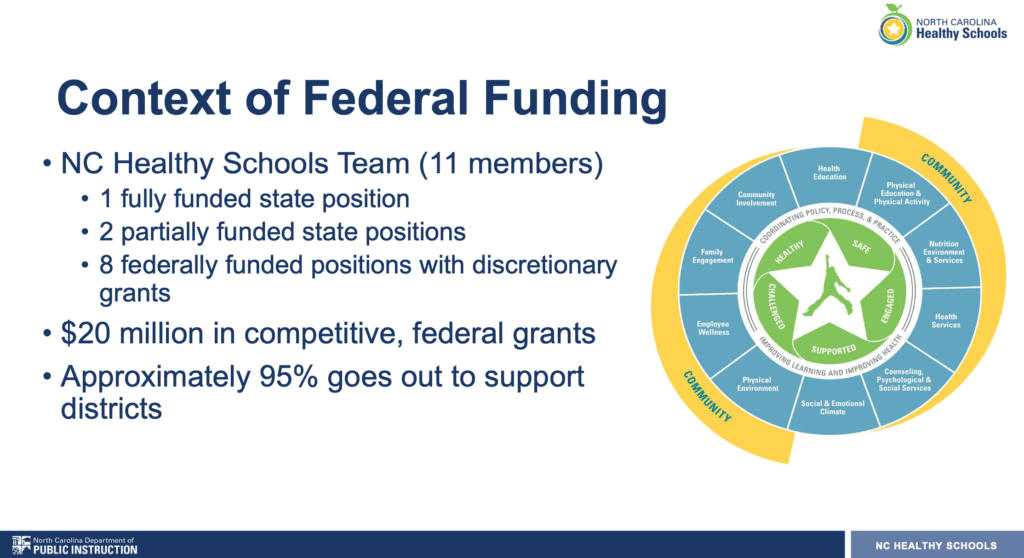
Besides the recent executive orders and court motions, NC Healthy Schools representatives said they have not received any direct communication about the future of their federal funding. They are currently in the process of collecting data for the 2025 Youth Risk Behavior survey.
The full presentation can be found here.
Editor’s Note: This article has been updated and now reflects that the amount of start-up money school-based health centers received was about $44,000.