
Perspective | Measuring what matters in North Carolina’s community colleges

At the League of Innovation national conference this spring, a community college president from Michigan described a startling gap between the way her state measures success and the reality on the ground.
By federal Integrated Postsecondary Data Systems (IPEDS) standards, her college posted a success rate around 15%. When the state recalculated using a broader, mission-aligned lens — counting part-time students, transfer and other meaningful outcomes — the figure was closer to 50%. That 40-point swing was not the result of a sudden transformation in student performance. It was a reminder that for community colleges, the way we count our work often misrepresents the true impact.
North Carolina’s community colleges sit squarely in that tension. Our sector is increasingly judged by narrow completion metrics designed for a very different kind of institution. Those numbers show up in conversations with legislators, county commissioners, boards, and the public — often stripped of context — and they shape decisions about funding and support. If we want to sustain public trust and strengthen community colleges’ role in the state’s economic and social mobility engine, we need to be honest that the current scorecard does not fit the community college mission and, in many cases, undercounts success.
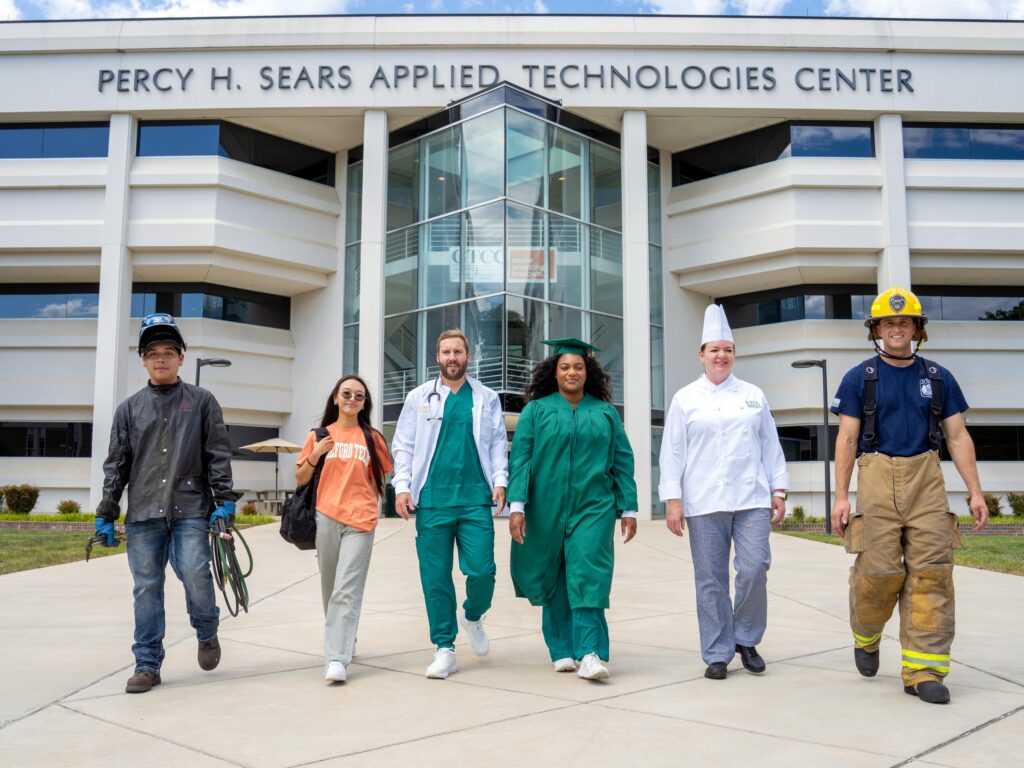
Traditional completion rates were built for a world when most students attended full-time, began in the fall, and moved in a straight line from enrollment to credential/degree. That is not the world of North Carolina’s community colleges. Our campuses predominantly serve part-time students who swirl in and out as work and family allow, high school students in dual enrollment, adults returning for a career pivot, and workers who need just a course or two to move up in their current jobs. Many of our students plan to transfer after one year, never intending to complete an associate degree before joining one of our state’s four-year public or private colleges. Others come with a specific, short-term goal — finish a credential, refresh a certification or gain a new technical skill.
 Sign up for Awake58, our newsletter on all things community college.
Under the prevailing metrics, far too many of these students are invisible. A student who completes 30 hours of transferable coursework, moves smoothly into a university/college and eventually earns a bachelor’s degree, may still show up as a “non-completer” for the community college that launched their pathway. A mid-career worker who completes a cluster of courses in logistics or advanced manufacturing, earns a promotion, and increases their wages is often counted no differently than someone who stopped attending without gaining any traction.
When our official numbers level these distinctions, they send an unintentional message: Unless you fit a narrow profile, your success does not matter.
This mismatch has real consequences. It feeds the broader crisis of public confidence in higher education that many of us felt so acutely at the conference. Families who hear that only a small fraction of community college students “graduate” may understandably question the value proposition, especially against a backdrop of student debt headlines, political critiques from both sides, and viral social media stories that glamorize skipping higher education altogether.
Inside institutions, it distorts incentives, pushing colleges to focus on what is measured rather than what their communities most need. At the policy level, it risks steering resources away from short-term training, transfer preparation and upskilling — the work that fuels North Carolina’s talent pipeline.
Related reads


Measuring what matters does not mean abandoning completion as a core outcome. Earning a certificate or degree will and should remain a central goal for many of our students. But completion should sit within a broader framework that reflects the diverse reasons students choose community colleges. That framework could start with a few concrete categories that every North Carolina community college could track and share.
First, we should capture transfer momentum. Students who complete a substantive block of transferable coursework — say 30 or more credits or a defined transfer pathway — and then enroll at a four-year institution are clear success stories, even if they never pick up a community college degree/diploma along the way.
Second, we should follow workforce outcomes for short-term and non-degree learners: wage gains, promotions, and in-field employment for those who complete high-quality certificates or course bundles in areas like health care, IT, aviation, and advanced manufacturing.
Third, we should define and report “skill builder” success — students who complete targeted course sequences to maintain licenses, adapt to new technologies, or expand their responsibilities at work.
Layered with these outcomes, we can also track key engagement and support indicators that we know correlate with student learning and persistence: meaningful advising contacts, use of tutoring and wraparound services, and participation in learning communities or cohort programs.
Community colleges have always done far more than deliver content in classrooms; our metrics should reflect the full ecosystem of support that helps students meet their goals.
Of course, shifting how we measure success is as much a leadership challenge as a technical one. Presidents at the conference spoke about the demands of “navigating upheaval on four fronts” — demographic change, political scrutiny, technological disruption, and evolving workforce needs. In that environment, it is tempting to default to familiar metrics because they are convenient, comparable, and already embedded in state and federal systems. But effective leadership in North Carolina’s community colleges today requires what one presenter called “decision resolve” and “unapologetic focus” — the willingness to choose a clearer, mission-aligned story of success and stick with it, even when the old numbers are easier to quote.
It also requires a deeper understanding of how change is experienced on our campuses. In sessions on resistance and leadership styles, we were reminded that resistance is often information, not defiance. When faculty or staff push back against new dashboards or performance expectations, they may be signaling that the measures do not reflect their students’ realities or their own professional judgment. Engaging that resistance by inviting practitioners into the design of new metrics, listening carefully to their concerns and co-creating definitions of success will be essential if we want these measures to be more than another compliance exercise.
Finally, measuring what matters most will change how we talk about our colleges beyond campus. Mission-aligned metrics give North Carolina presidents, trustees, and system leaders a stronger footing in conversations with legislators, business partners, and the public. They allow community colleges to say with integrity, “here is who our students are, here is what they are trying to accomplish, and here is how often they succeed when you look at the outcomes that truly matter.”
North Carolina is ranked first in the nation for business. Our community colleges are central to the state’s goals for economic mobility, workforce development, and community vitality. The question is not whether we are doing important work; it is whether we are counting that work in ways that honor our mission and build trust. If we can align our measures with our students’ goals, and have the courage to tell that fuller story, we can move from defending incomplete numbers to leading a more honest, hopeful conversation about opportunity in North Carolina.