
Ahead of Boost expansion to 7 more NC community colleges, leaders reflect on impact from first year


Marisa Phisyavong-McNellie, a biotechnology student at Johnston Community College, balances many responsibilities outside the classroom. As a mother of four children and the spouse of a disabled veteran, she wasn’t sure if returning to college would be possible after being out of the classroom for 14 years.
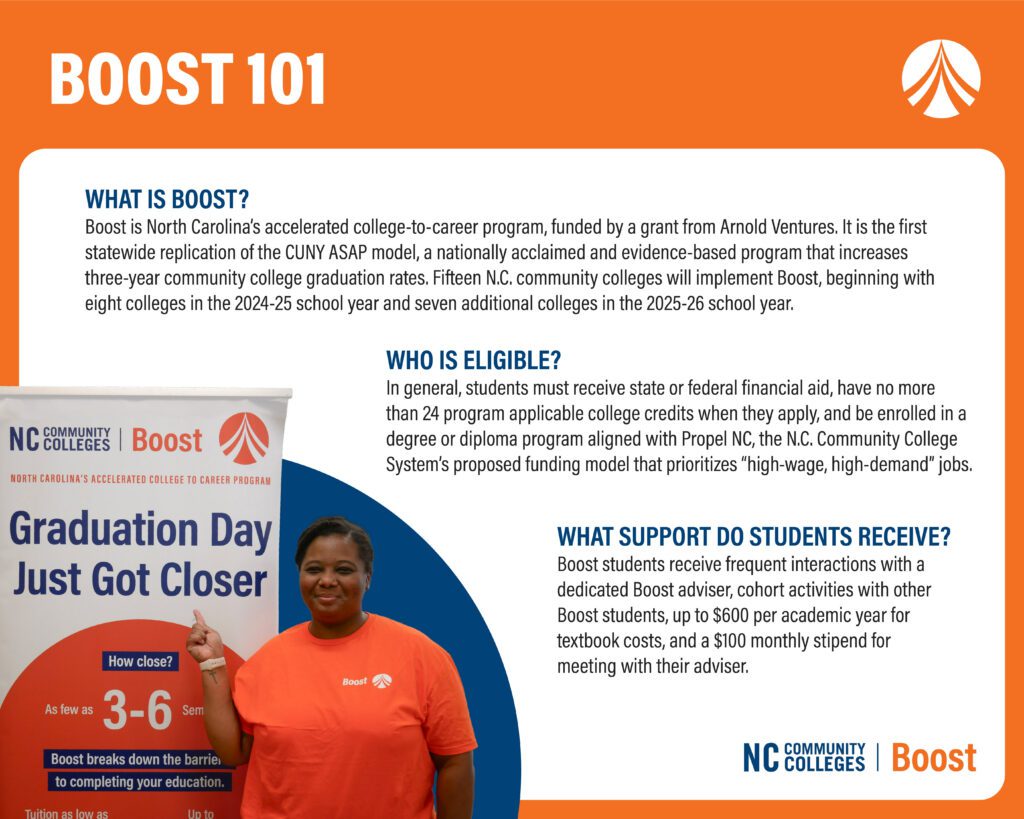
But then she learned about Boost — North Carolina’s replication of CUNY ASAP that provides students with a variety of wraparound supports, including intensive advising, monthly stipends, and funding for textbooks and supplies.
According to Nicole Dittilo, director of Boost for the N.C. Community College System (NCCCS), the program helped connect Phisyavong-McNellie with child care support and provided funding to cover essential supplies for her lab courses.
“With those barriers eased, Marisa was able to focus on her education and creating a brighter future for herself and her family,” said Ditillo, adding that she completed her first semester with a 4.0 GPA.
As one of the roughly 1,000 students served by Boost statewide, Phisyavong-McNellie’s story reflects the promise of the program — helping students overcome obstacles outside of the classroom, stay enrolled in courses, and work toward earning credentials on time that lead to meaningful employment.
During recent remarks to the Governor’s Council on Workforce and Apprenticeships, Ditillo said the biggest challenge in meeting the state’s attainment goal is not access, but completion.
Enrollment across the state’s 58 community colleges has rebounded above pre-pandemic levels, but only 45% of first-time curriculum students that are not dually enrolled ultimately graduate, transfer, or are still enrolled by their fourth academic year.
“Learners of all ages, traditional age and adult, are stopping out of postsecondary pathways for reasons that are often unrelated to academic ability,” she said.
Boost offers a solution to both increase on-time graduation rates and fill workforce shortages. To be eligible, students must be enrolled in programs aligned with Propel NC, the proposed funding model for the NCCCS that would prioritize high-wage, high-demand workforce sectors. In data shared by the NCCCS, significant workforce shortages exist in nearly every Propel NC sector.
As Boost concludes its first year of implementation at eight community colleges — with seven more set to implement the program this fall — leaders reflected on early outcomes and what lies ahead for year two.
Read more about the first colleges to implement Boost


Read more

Outcomes from the first year of Boost
While the program is still in its early stage of implementation, Ditillo said initial data on student outcomes is promising.
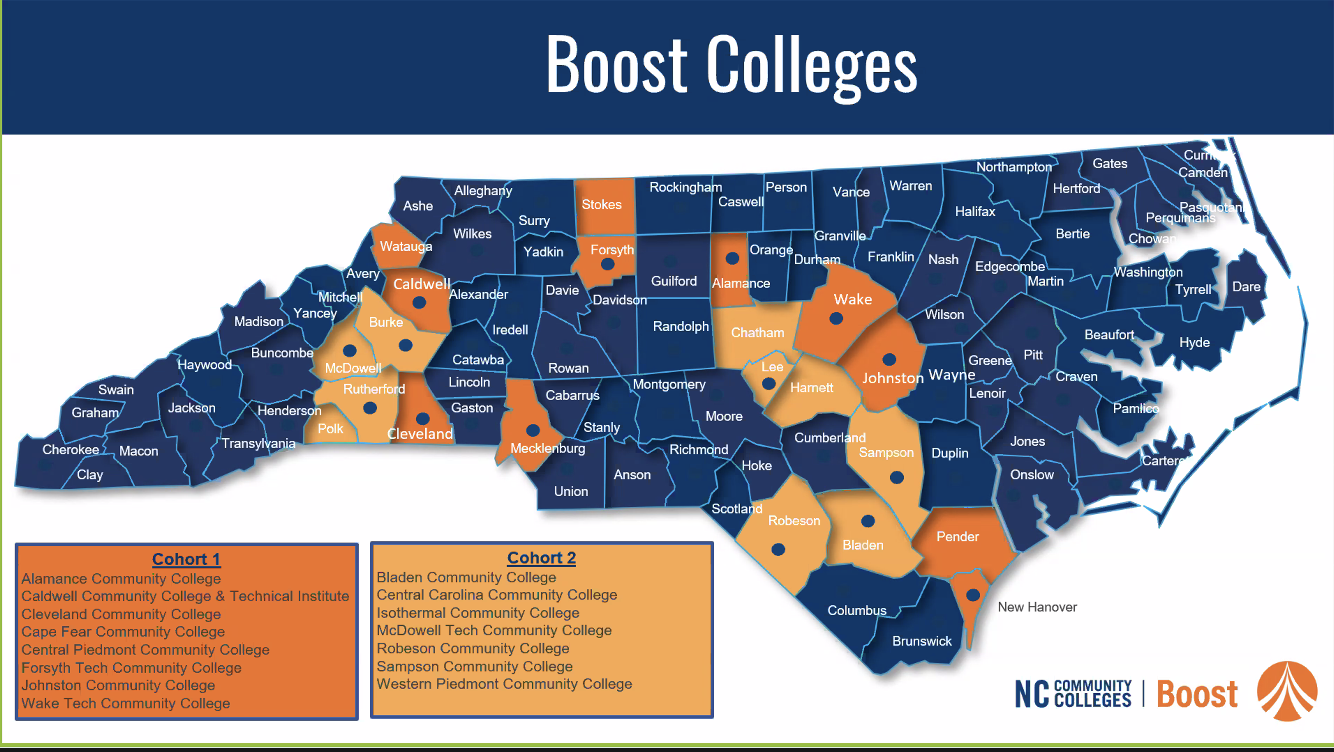
In fall 2025, eight community colleges — Alamance, Cape Fear, Caldwell, Central Piedmont, Cleveland, Forsyth Tech, Johnston, and Wake Tech — launched Boost. Caldwell and Cleveland, two rural colleges with smaller student populations, joined as a consortium where a single Boost director oversees implementation across both colleges.
Each college in the program aimed to enroll 150 students in the first year of Boost, except for the Caldwell and Cleveland consortium, which aimed to enroll a combined 200 students.
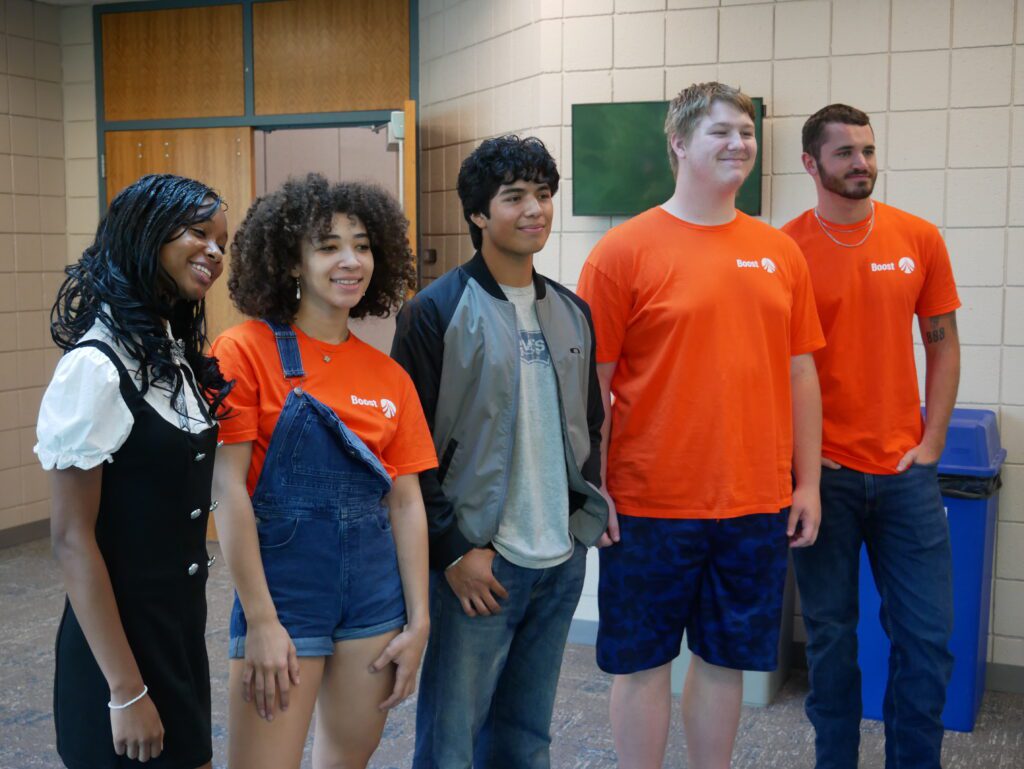
One of the first hurdles colleges faced was identifying eligible students and enrolling them in the program. Given the robust benefits Boost provides — including $100 monthly stipends and $600 for textbooks — many students initially found it hard to believe it was true.
By Nov. 1, 806 students were enrolled in Boost across the eight participating colleges, and enrollment efforts continued. EdNC spoke with Boost leaders who said one-on-one, personal outreach to eligible students was vital to overcome skepticism and convince them to join the program.
By March, 1,008 students were enrolled in Boost, which Ditillo said is 92% of the way to the program’s year one enrollment target. By fall 2026, that enrollment figure is expected to triple, as the original eight colleges enroll their next cohort of students and the program launches at seven additional colleges.
“That’s very promising and in line with what (CUNY) ASAP has seen with other replications,” Ditillo said.

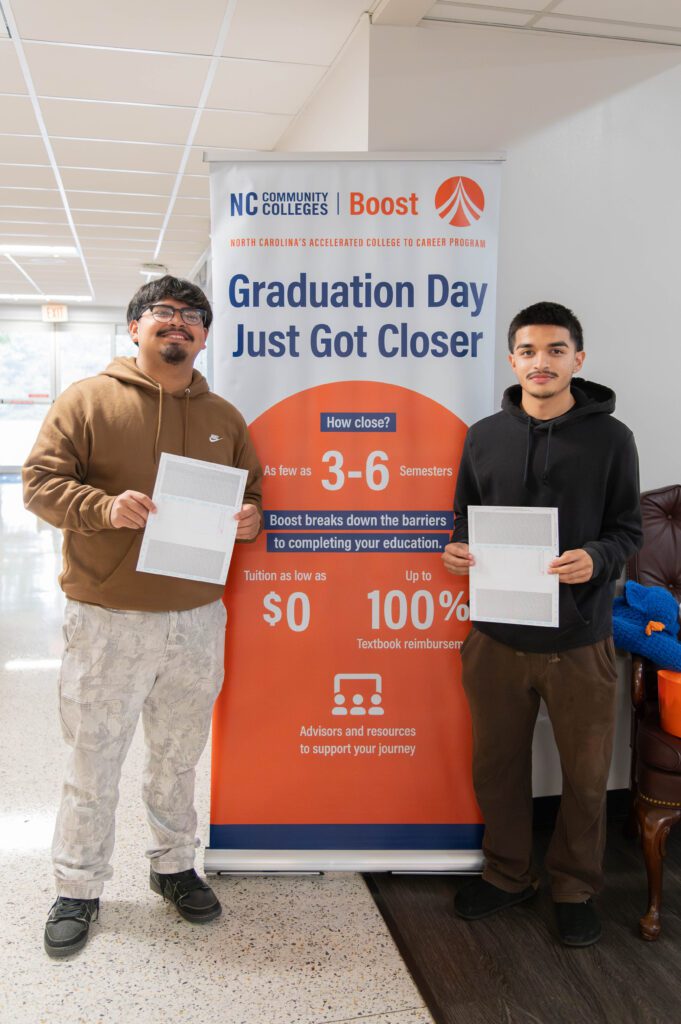
To track Boost student outcomes, the NCCCS launched Power BI dashboards that can compare Boost students to their comparable, non-Boost peers — meaning students who are also eligible for Pell Grants, not dually enrolled, and are enrolled in a curriculum program, among other things.
While spring 2026 data is still being finalized, preliminary data from fall 2025 shows a “promising jump in early academic success indicators,” Ditillo said.
Compared to similar students not enrolled in the program, Boost students, on average, attempted more credit hours (12.3 credit hours compared to 9.9 credit hours) and completed more credit hours (10.3 credit hours compared to 7.9 credit hours).
Beyond these outcomes, Ditillo said the NCCCS recently collected stories of impact from Boost students. One theme across student stories, she said, was the important role Boost advisers play in supporting students.
“That has helped students feel more confident academically and feel connected to the campus and to each other,” she said.
The importance of Boost advisers was also reflected in an initial report on the program from the Belk Center for Community College Leadership and Research, the research and evaluation partner for Boost.
The report found that relationships with the Boost adviser and director were “some of the biggest draws for students,” adding that first-time students found the adviser to be an “anchor: someone who checked in regularly, offered encouragement and helped them chart a clear path to completion.”
Read more

Looking ahead to year two
In August, seven additional community colleges will launch Boost, including Central Carolina and two consortia — an eastern consortium consisting of Bladen, Robeson, and Sampson, and a western consortium consisting of Isothermal, McDowell Tech, and Western Piedmont.
This expansion will increase the program’s footprint to 15 colleges serving 21 counties, bringing the program to more rural areas of the state.
Boost is primarily funded by a grant from Arnold Ventures, but the program’s early success is already starting to bring in additional philanthropic support. In May, the NCCCS announced $6 million across two investments to further expand the program.
A $3 million investment from the William R. Kenan Jr. Charitable Trust will make Boost available to roughly 450 students in health care programs at Wake Tech. Separately, a $3 million investment from AmeriHealth Caritas North Carolina will launch the Bridge initiative, an adaptation of the Boost model for students pursuing short-term health care credentials.
“The credibility of the Boost model is undeniable, and we believe in this model and the ambitious statewide vision of Propel NC,” said Robby Russell, grant officer for the Kenan Charitable Trust, in a press release.
In addition to these expansions, Boost’s eligibility requirements recently changed to broaden the pool of eligible students.
Previously, students had to be enrolled in an associate degree program to participate in Boost. Now, students may also be enrolled in a diploma program. Ditillo said this change was made after reviewing labor market outcomes on the earnings potential for diploma earners in Propel NC sectors, reflecting Boost’s close tie to meeting workforce needs.
As the next seven colleges prepare to implement the program, Ditillo said the system is working intentionally to connect leaders to share learnings and best practices. In late June, the system will convene staff across all 15 Boost colleges for an in-person summer training, providing an additional opportunity for connection and collaboration.

By May 2027, the first Boost associate degree and diploma students will be celebrating graduation — something Ditillo said she is especially looking forward to.
“I’m pleased with the first year of implementation, but I think we always want to continue to build and make this program as good as it can be, because it’s about student success,” said Ditillo. “We’re doing this because we want to see students graduate, we want to see them earning family-sustaining wages, we want to see them feeling confident in their decision to enroll in education.”
A vision for Boost at all 58 community colleges
During the Governor’s Council on Workforce & Apprenticeships meeting, Ditillo said the vision for the long-term future of Boost would be to scale it to all 58 community colleges in the state.
Kelly McManus, executive vice president of education at Arnold Ventures, told council members that North Carolina is a proof of concept to see if a replication of CUNY ASAP can be scaled and sustained statewide.
Boost is primarily funded by a five-year, $35.6 million grant from Arnold Ventures, but colleges will assume a portion of the costs of the program beginning in 2027. The grant will cover 90% of funds starting August 2027, 60% of funds starting August 2028, and 30% of funds starting August 2029.
“So there will be an opportunity for state investment to come in and complement those resources as they get drawn down,” McManus said. “When you’re thinking about what an evidence-based investment might look like, there isn’t a better social program out there … that has the level of evidence that this program has. So we see North Carolina as the proving ground. We’re very excited for you all to demonstrate what is possible.”
Editor’s note: Arnold Ventures supports the work of EdNC.