
New literacy data shows promising gains for North Carolina students


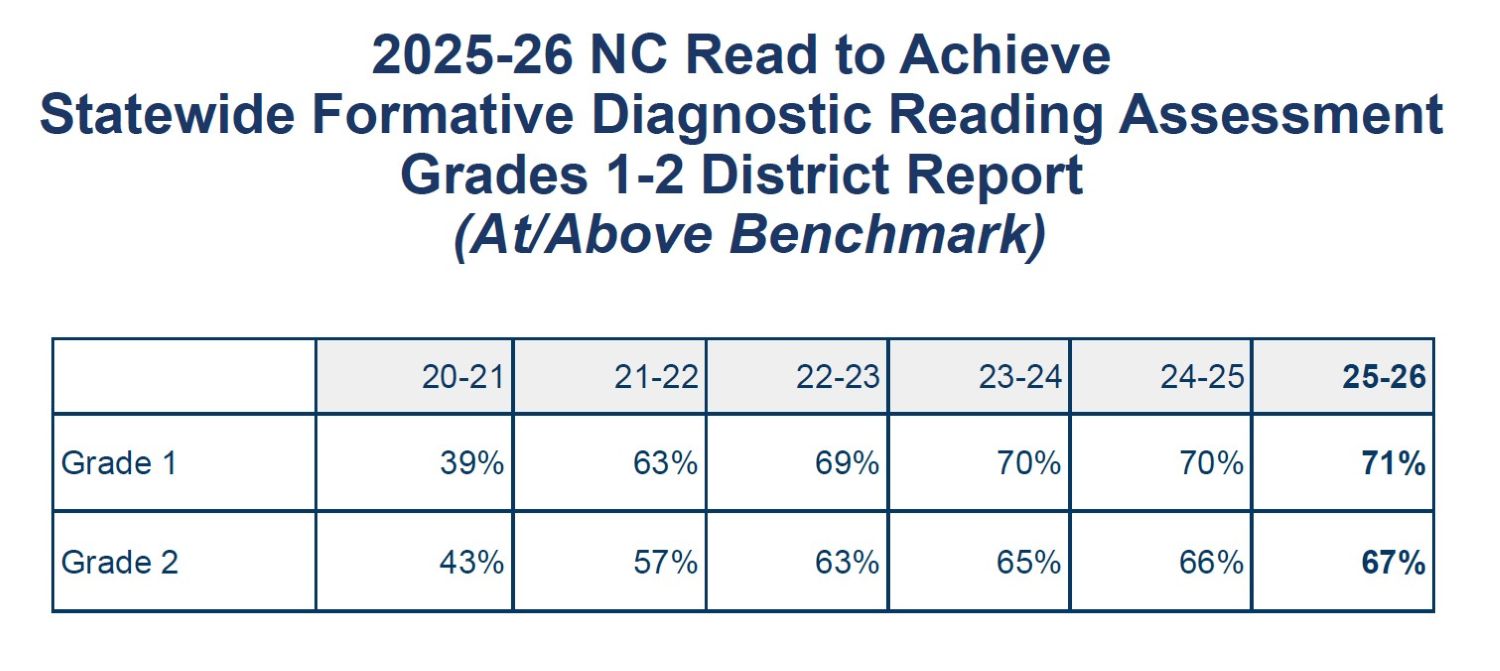
At the end of the school year, 71% of first graders and 67% of second graders performed at or above benchmark on the statewide formative diagnostic reading assessment, DIBELS 8 (Dynamic Indicators of Basic Early Literacy Skills, 8th Edition), according to data presented to the State Board of Education this week. Both grades increased by one percentage point from 2024-25.
The longer-term trend is also encouraging. First grade results have increased from 39% in 2020-21 to 71% in 2025-26, while second grade results have increased from 43% to 67% over the same period.
A closer look at third grade
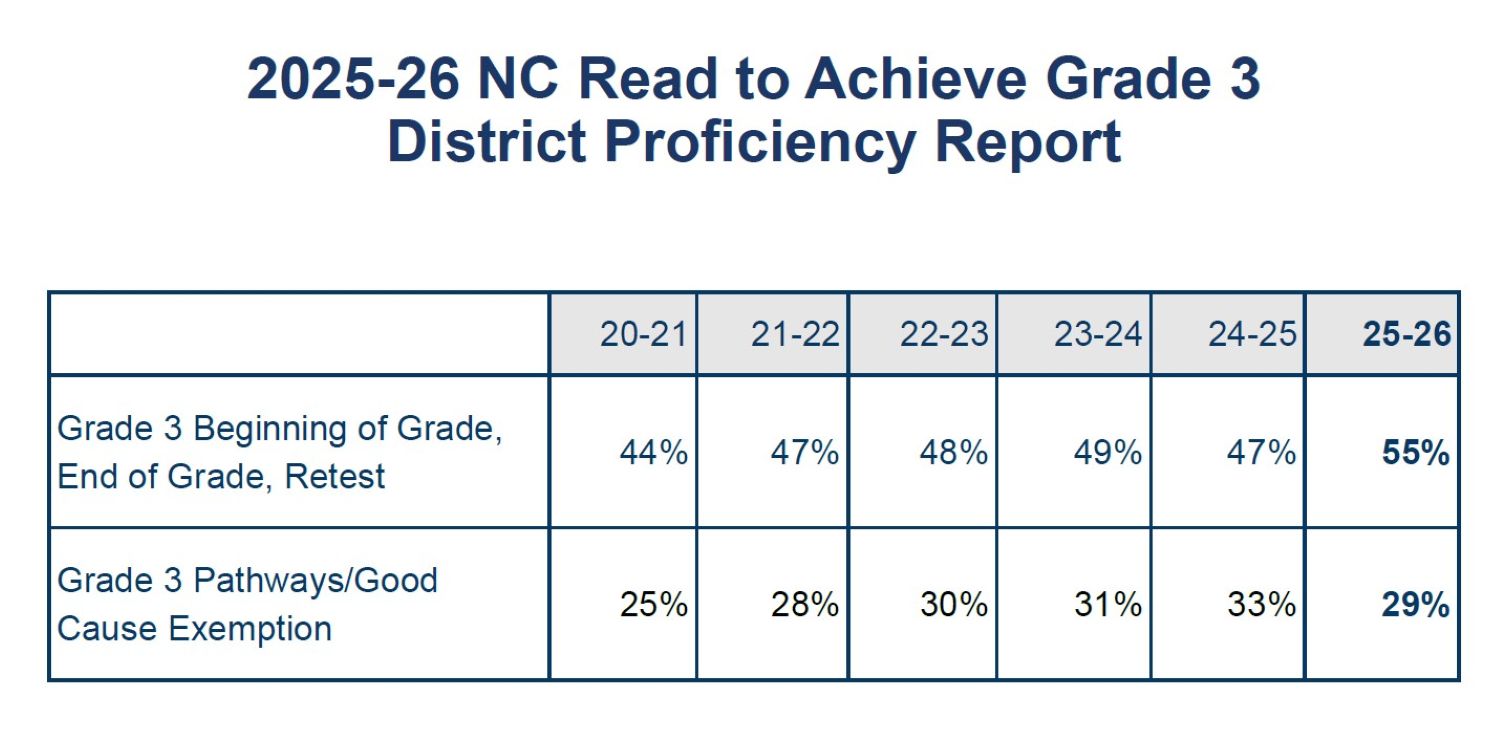
Third grade saw a more substantial increase. The percentage of students demonstrating proficiency through the beginning-of-grade, end-of-grade, or retest assessments rose eight percentage points, from 47% in 2024-25 to 55% in 2025-26.
The state also reported that 29% of third graders demonstrated proficiency through alternative pathway measures.
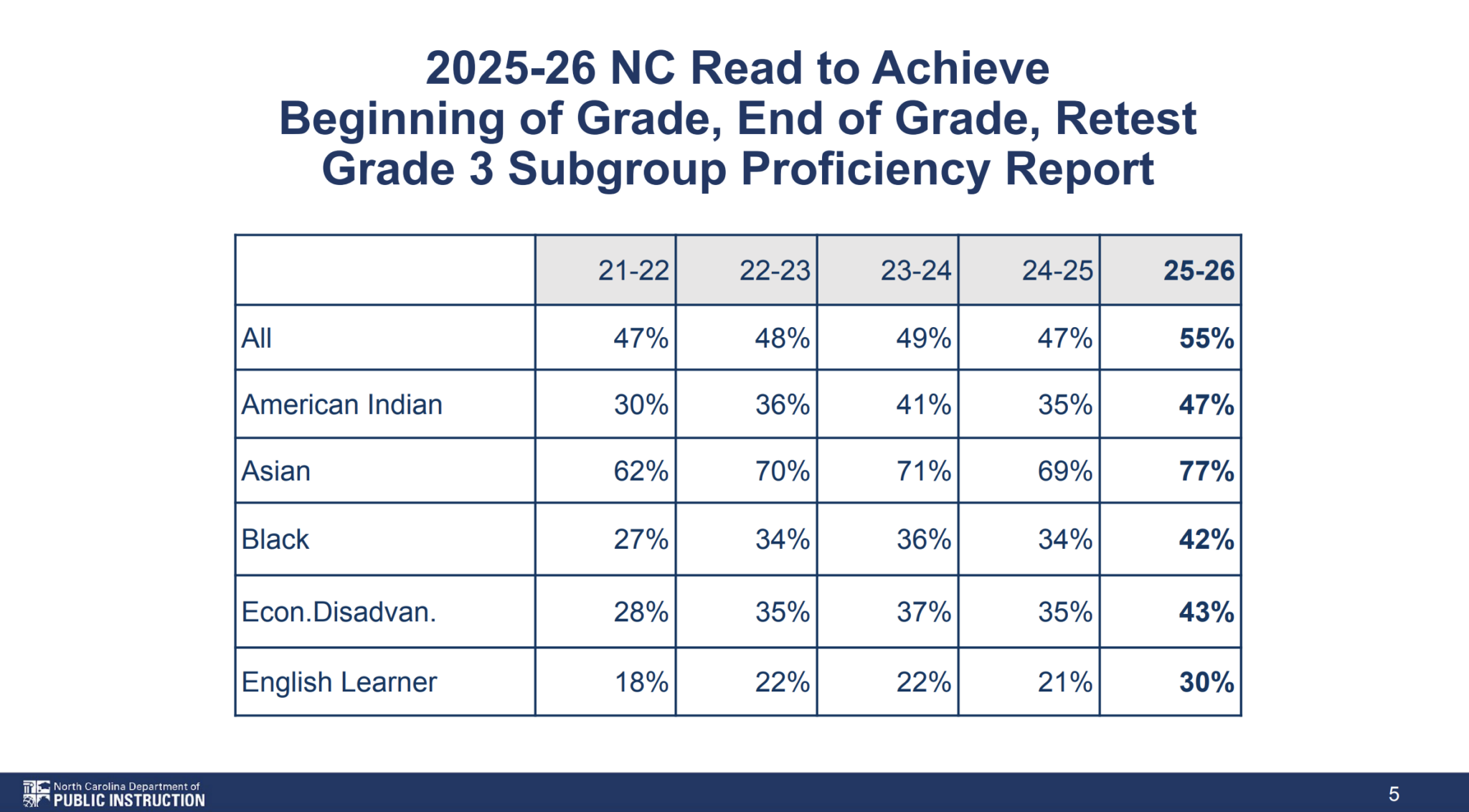
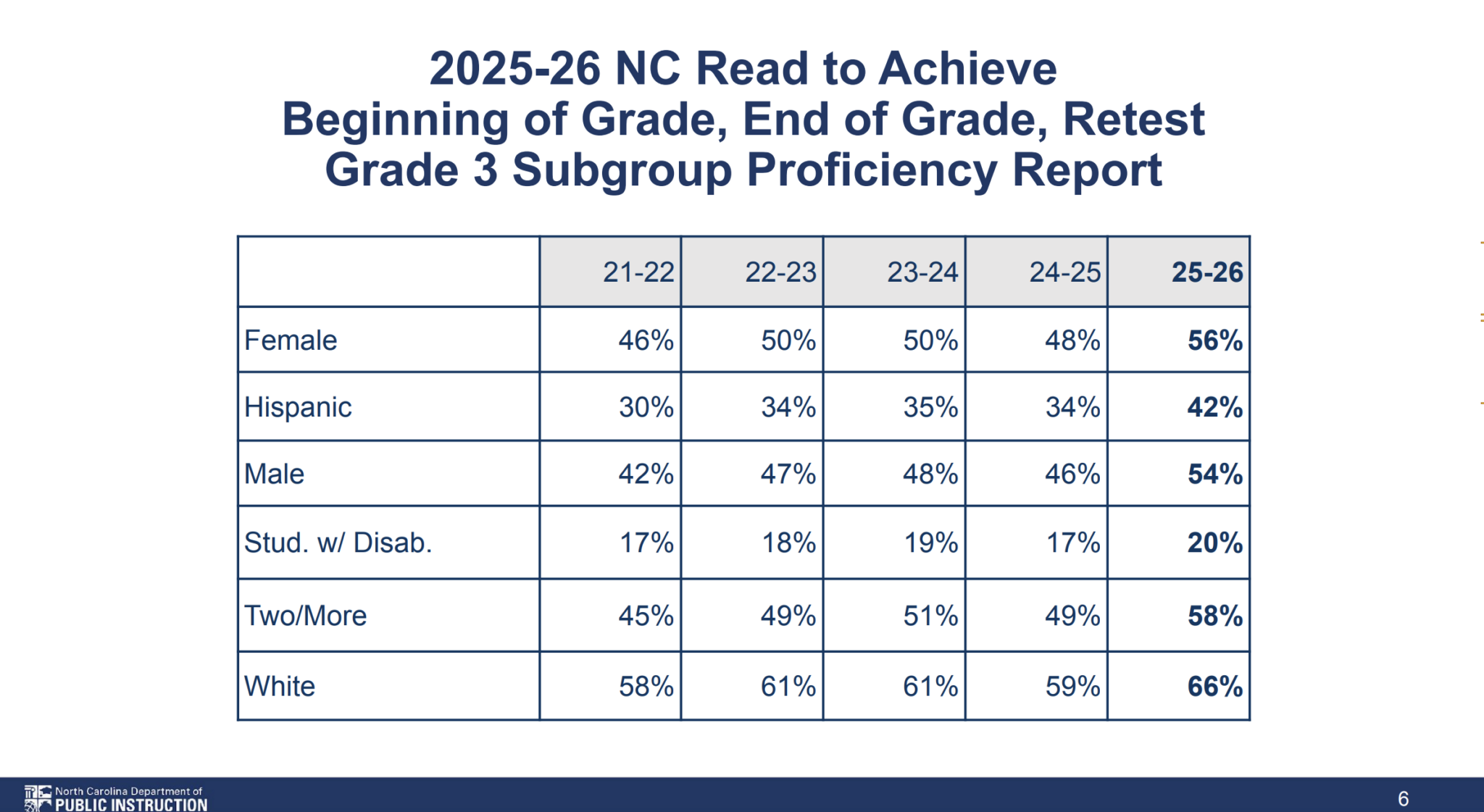
A closer look at third grade results shows gains across every subgroup reported for the beginning-of-grade, end-of-grade, and retest assessments. Increases from the prior school year ranged from three to 12 percentage points. Although the improvements are encouraging, differences in proficiency among student groups remain an area of focus.
Alternative pathways data show a different trend, with lower percentages reported across subgroups than the previous year. In North Carolina, third graders who do not demonstrate reading proficiency on the end-of-grade assessment have other opportunities to show what they know, including a retest, the Read to Achieve assessment, an approved alternative assessment, or a student reading portfolio.
However, fewer students required an alternative pathway assessment. These results are one part of the overall picture and should be considered alongside the gains seen on the beginning-of-grade, end-of-grade, and retest assessments.
Reading camp results show progress
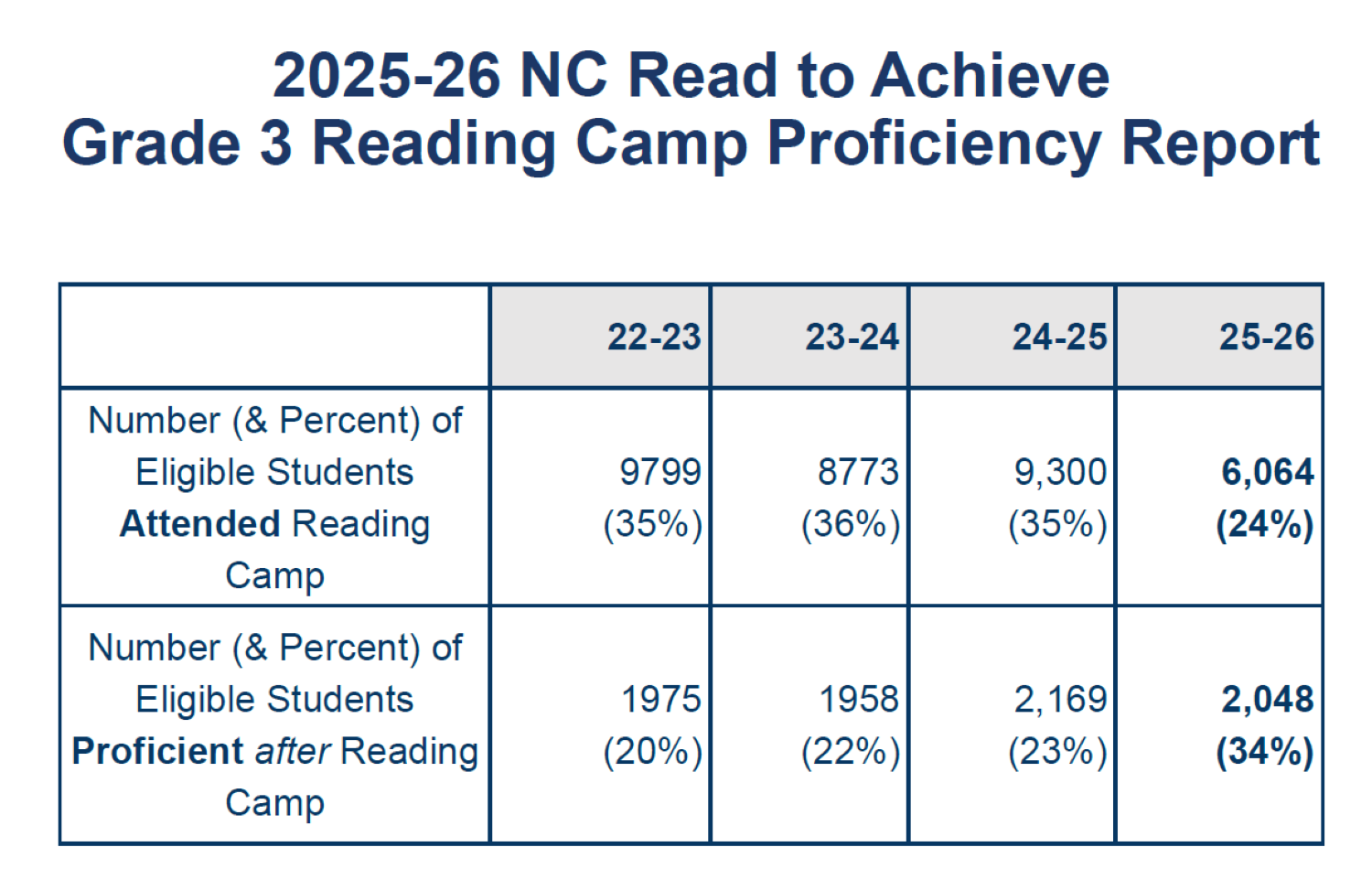
Reading camp results also showed improvement. While the overall number of eligible students who attended decreased, a higher percentage of those who attended demonstrated proficiency following the experience.
Among second graders, 7,493 students attended camp in 2025-26, representing 23% of eligible students, compared with 9,970 students, or 29%, the year before. Of those who attended, 1,450, or 19.4%, demonstrated proficiency after camp, compared with 1,074, or 11%, in 2024-25.
The pattern was similar in third grade. Attendance dropped from 9,300 students, or 35% of eligible students, to 6,064, or 24%. Yet 34% of students who attended camp demonstrated proficiency, up from 23% the previous year.
Understanding the results over time
Although the 2024-25 results reflected the first decline in third grade proficiency since science of reading implementation began during the 2022-23 school year, this year’s increase not only recovers that decline but moves proficiency beyond the previous high — within two percentage points of pre-pandemic levels.
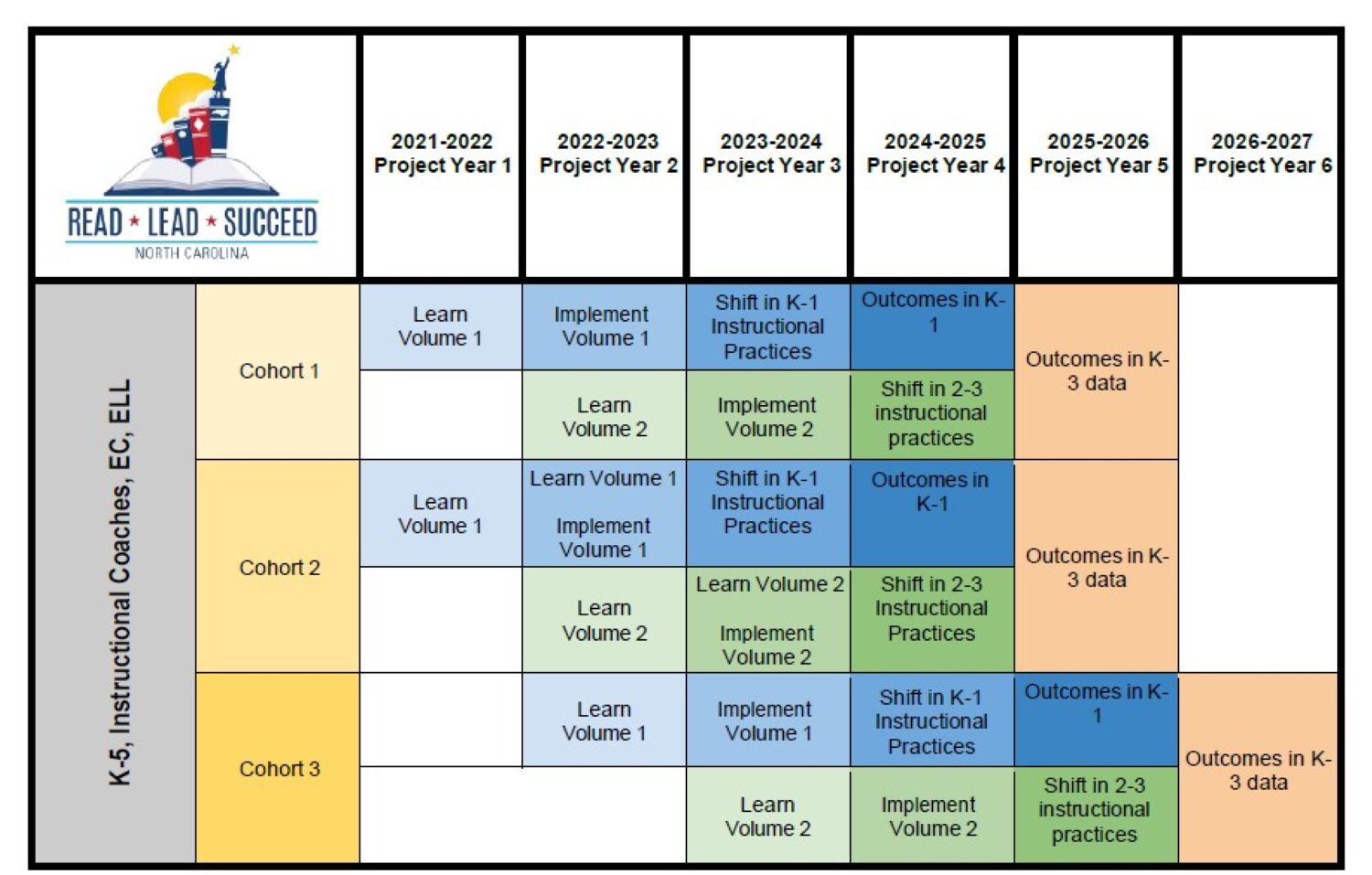
When North Carolina began implementing Language Essentials for Teachers of Reading and Spelling (LETRS) professional development, state leaders cautioned that changes in student outcomes would take time. Teachers first needed time to learn the Science of Reading, apply that learning in their classrooms, and make meaningful shifts in literacy instruction.
The timeline for seeing potential data shifts at the state level was shared with policymakers at the beginning of implementation, illustrating how much time it may take before changes were evident in overall proficiency data.
The 2025-26 results offer another important point in that longer story. First and second grade benchmark performance continued to increase, while third grade proficiency on the beginning-of-grade, end-of-grade, or retest assessments increased from 47% to 55%.
The work continues
The results do not mean the work is finished.
Dr. Cynthia Barber, director of the Office of Early Learning, said: “The data is a result of years of hard work across North Carolina. In addition to the increases noted in the report, we have also seen the quality of instruction and reading camps improve. We credit the hard work and dedication to teachers and staff working directly with students, as well as their school and district leaders.”
While pleased with the progress, Barber also emphasized there is still plenty of work ahead to ensure all North Carolina students learn to read, opening doors to greater access and opportunity.
The latest data offers an opportunity to view North Carolina’s literacy work as it was originally intended: a long-term investment in building educator knowledge, changing classroom practice, and improving outcomes for students.
For the educators and leaders who have spent years learning, adjusting instruction, and strengthening literacy practices, these results provide an important opportunity to examine what is improving, where gaps remain, and how to sustain progress for all students.
You can see DPI’s full presentation here, and DPI’s report on the data here.