
North Carolina drops in pre-K rankings as legislative session begins
The State of Preschool Yearbook is here
Early Bird readers, hello again. Newcomers, welcome! If you were forwarded this email, you can sign up here to receive it every two weeks, and join our conversation on issues facing North Carolina’s young children and those who support them. If you’re already a subscriber, please help us reach more people by sharing this with your friends and co-workers interested in early childhood education.
Each year, the National Institute for Early Education Research’s (NIEER) releases a report called the State of Preschool Yearbook. The latest edition dropped last week, a few days after the start of the General Assembly’s short session.
The news for public pre-K access in North Carolina was pretty grim.
“North Carolina Pre-K has lost its place as a leader in preschool with the state dropping in pre-k access rankings as other states catapult ahead,” said Dr. W. Steven Barnett, NIEER’s founder and senior director.
North Carolina dropped from 28th to 32nd in the nation in preschool access for four-year-olds, according to the report. Both spending on and enrollment in public pre-K decreased from 2024 to 2025.
Pre-K is just one aspect of the state’s overall early care and learning landscape, which was on the agenda at the annual Holshouser Legislator Retreat leading into the start of the session.
EdNC’s CEO and editor-in-chief, Mebane Rash, attended the event, where legislators and experts spoke about early childhood education as a driver of the state’s economy and as a workforce readiness issue.
She summarized the takeaway from experts:
The child care economy in North Carolina is shrinking, they said, and the upshot is that parents can’t afford the care, teachers can’t afford to stay in these jobs, and our children are paying the cost.
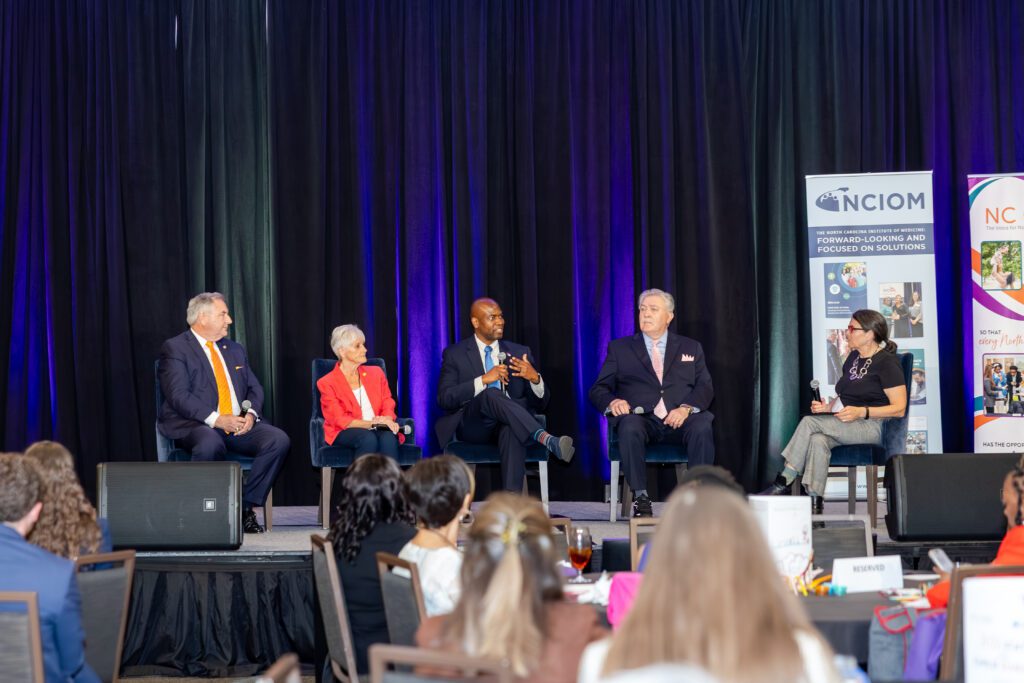
The cost that children are bearing due to the lack of access to affordable, high-quality early care and learning, was also a focus at the third annual State of the Child Summit, which Liz and I attended before the start of the short session. Experts and legislators there emphasized the importance of supporting the health and well-being of children and families in every ZIP code — even when progress seems stalled.
In a video message, U.S. Sen. Thom Tillis, R-North Carolina, told the audience that “childhood resilience isn’t just a buzz word, it’s a policy imperative.”
At both the Holshouser Retreat and the State of the Child Summit, leaders pointed to local actions as a source of inspiration and hope for policy change.
That’s what my colleague and friend Liz Bell will be studying on the national level as she embarks on the next chapter of her career. Liz is one of four writers selected as a Spencer Education Fellow at Columbia Journalism School for the 2026-27 academic year. Starting in August, she’ll be based in New York, studying some of the first attempts at universal child care across the U.S., and their lessons for the rest of the country.
I can’t wait to see what she learns — and what North Carolina can continue to learn from her.
More from EdNC on early childhood
Pre-K access in North Carolina below the national average, and drops in national rankings
North Carolina now ranks 32nd nationwide in preschool access for four-year-olds, according to the National Institute for Early Education Research’s (NIEER) 2025 State of Preschool Yearbook, dropping four positions from last year. The report finds that North Carolina Pre-K served...Leaders say childhood resilience is a ‘policy imperative’ at State of the Child Summit
At this year’s State of the Child Summit, hosted by NC Child and the North Carolina Institute of Medicine, the focus was on supporting the health and well-being of children and families in every ZIP code — even when progress...Highlighting the role of education in getting to a good job, 2026 Holshouser Legislators Retreat convenes ahead of short session
Dr. Javaid Siddiqi, the president and CEO of The Hunt Institute, kicked off the annual Holshouser Legislators Retreat this weekend ahead of the short session of the N.C. General Assembly, which convened on Tuesday, April 21. The institute is celebrating...Gov. Stein releases budget proposal with 11% average raise for teachers, highest starting pay in the Southeast
Gov. Josh Stein announced on Tuesday his proposal for a fiscal year 2026-27 state budget, calling on the legislature to act quickly. Last year, North Carolina was the only state in the country not to pass a state budget, following...Legislative preview | Child care advocates ask for state funds to 'sustain what we have' amid closures and waitlists
Mary Moody bought Silver Bluff Kids Early Learning Center in 2023, one of seven child care centers set to close in western North Carolina at the time. The owners cited insufficient child care subsidy funding. Today, the Canton center, where...Child Care Choice Voucher Program helps thousands of children and families access child care in Ohio
For two years, Ohio has been trying something new in its effort to make child care more affordable for working families — vouchers. The Child Care Choice Voucher Program provides funding for up to 20,000 young learners from 12,500 households...This home-based child care program is serving farmworkers' children in new ways through Head Start
In 2024, Mama Freda’s Tiny Tots Child Care opened as Grow Early Learning’s first in-home child care program in North Carolina. The licensed family child care home (FCCH) in Kings Mountain is one of four of its kind across three...Department of Education opens public comments for proposed ‘do no harm’ earnings test for postsecondary programs
The U.S. Department of Education (DOE) issued a Notice of Proposed Rulemaking (NPRM) to establish a new earnings accountability framework on Friday. Under the proposed rule, if an undergraduate program does not produce graduates who earn at least as much...Governor's visit to Guilford Tech highlights early childhood workforce programs
Gov. Josh Stein visited Guilford Technical Community College on Tuesday alongside educators, students, and leaders from Forsyth Technical Community College to highlight child care workforce training programs in the Triad, according to a press release. “Child care continues to be...Perspective | Supporting principal leadership for early learning
Across the country, elementary principals are being asked to take on an impossible list of responsibilities. They are instructional leaders, talent managers, culture builders, and community partners — all while juggling the daily crises of school life, from finding substitute...Perspective | Appreciation as a catalyst for investment: Why North Carolina’s after-school professionals need more than just thanks
This week, North Carolina celebrates the national Afterschool Professionals Appreciation Week. It is a time to recognize the “heart of afterschool” — the tens of thousands of dedicated educators and community leaders who step in across the state when the...Chirp! Chirp! Opportunities to share your voice
Send Liz some love this week! Reply to this email with how her reporting and expertise has shaped your perception of early care and learning in North Carolina. I’ll make sure she sees it ;)
The big picture for little kids
Legislative Updates
Last week was a busy first week of legislative action. Early childhood advocates this session are pushing for funding for the child care subsidy program, which helps low-income working and student parents. A coalition of early childhood organizations want the state to establish a subsidy floor rate for child care facilities participating in the program and serving infants and toddlers. This would help the facilities struggling to stay open and retain staff, they told EdNC. They’re asking for $101 million in recurring funds. Read on for more details.
Gov. Josh Stein also released his budget proposal for the session. In March, Stein proposed a “critical needs budget” meant to “fill the gap” until the legislature could agree on a full budget. Last week, his larger proposal included $80 million recurring to the subsidy program and $11 million recurring to NC Pre-K, the state’s preschool program for at-risk 4-year-olds.
The budget also includes $55 million per year to introduce the Child and Dependent Care Tax Credit, which the proposal states would provide an average of $250 annually to families with children under 18 years old to help offset child care costs.
Stay tuned for coverage as the session continues!
News & Research
- Lessons for Engaging Youth in an After-School Program - From Child Trends
- The Trump Administration’s Changes to the Child Care and Development Fund Would Strip Families of Thousands of Dollars in Potential Child Care Savings - From Center for American Progress
- Transforming State Early Childhood Governance - From Prenatal-to-3 Policy Impact Center
- Why Are State Departments of Early Childhood Education So Trendy Right Now? - From The 74 Million
- Finding the Balance: Transforming How We Think About the Body’s Response to Stress in Early Childhood - From Center on the Developing Child
Taking flight! Opportunities to spread your wings
Lunch-and-learn series in May and June
From the organizer: Nearly 700,000 children under age six are experiencing homelessness across the United States. The consequences are profound—developmental delays, social-emotional challenges, reduced school readiness, and a higher likelihood of homelessness later in life. But across the country, early childhood programs, schools, and community partners are stepping up with innovative solutions to meet the unique needs of these young children and their families.
In this lunch-and-learn series, SchoolHouse Connection will spotlight programs that are making a real difference. Participants will hear practical examples from the field and learn replicable strategies that can strengthen identification, enrollment, and support for young children experiencing homelessness in a range of community settings.
Date: May 15, 2026
Time: 12:00 p.m. to 1:00 p.m. ET
From the organizer: Early intervention is a key support for young children’s development, but it can be hard for families to access services due to the program’s complexity. Eligibility varies widely across states, and even states trying to serve a broader population of children can struggle to connect children to these important services. Sometimes services are delayed, and sometimes referrals and service connections are never made. Good policy—like automatic eligibility—can help eligible infants and toddlers be identified, but effective implementation is what ensures they actually receive services.
 Sign up for Early Bird, our newsletter on all things early childhood.