
Perspective | In Boston-Thurmond, we’re building readers one pizza night at a time
Boston-Thurmond is one of the oldest Black neighborhoods in Winston-Salem, and if you spend any time here, you’ll feel the pride in it. We have schools our community is proud of too. Kimberley Park, one of our three Books for K and Books on Break partner schools, which just celebrated its 100th anniversary, and Paisley Magnet School, which brings an International Baccalaureate program right here to our neighborhood.
We have deep roots, strong assets, and a long memory of taking care of our own. At Boston-Thurmond United, our work touches housing, health, and education because in a neighborhood like ours, those things were never separate to begin with.
Literacy is no different. It’s not a program we run alongside community life — it’s part of it.
That’s the spirit behind what happened this year in partnership with Book Harvest, and especially what happened this summer, when the school year ended but the reading didn’t.
Book Harvest’s big dream is a home library for every child. In keeping with that ambition, last fall, Book Harvest and Boston-Thurmond United joined forces to launch the Boston-Thurmond Book Initiative. With generous support from local philanthropic leaders, we brought Book Harvest’s Books for K program to three elementary schools in our neighborhood — Cook Literacy Model School, Anderson Academy, and Kimberley Park Elementary.
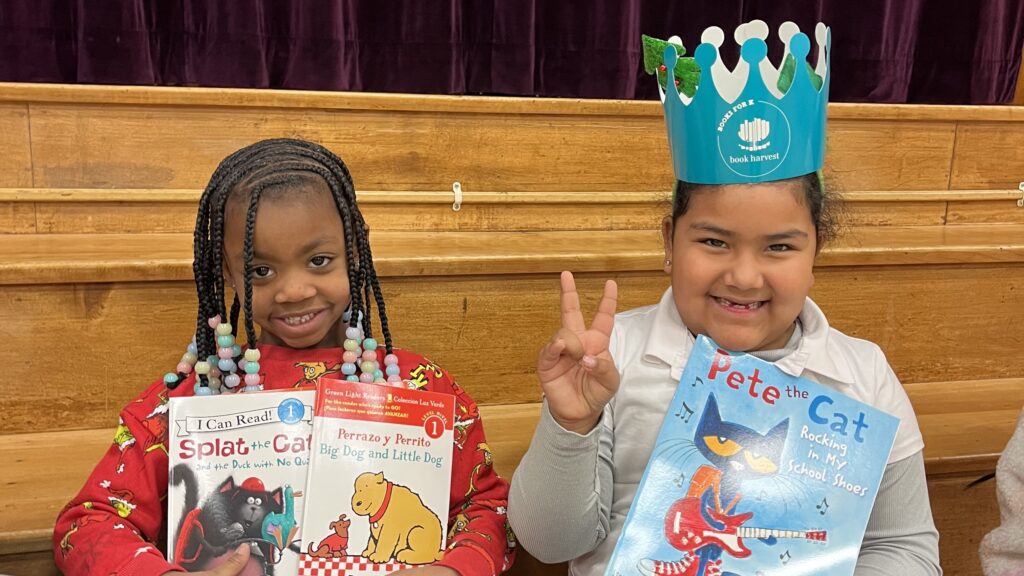
Every kindergartener in these three schools — 125 of them in all — got to build a home library of 10 new books they selected for themselves. They took home 1,375 books in all, plus a crown and a tote bag to carry their growing collection.
This spring, that grew into Book Harvest’s Books on Break program, which reached every student at all three schools — 738 kids, more than 7,380 books — sent home for summer with a backpack full of 10 new self-selected books and resources to help families keep learning alive when school lets out.
 Sign up for the EdDaily to start each weekday with the top education news.
Between the two programs, our students carried home over 8,755 books this year. That number still stops me. But the number I keep coming back to is six.
When Books on Break wrapped up, we tucked a bookmark into every backpack, inviting families to join a summer book club. Sixteen families signed up. Six kids showed up. We gathered in the evenings — twice in June and twice in July — at the Boston-Thurmond United Community Center.
We read together. We did activities tied to the books. And every single time, we ate pizza — ordered from a different restaurant each time, so the kids could compare crusts like young food critics. Thin crust. New York style. They debated their favorites with the seriousness of people twice their age, and every one of them left with an opinion and a new favorite pizza spot. In August, we brought it all together with a celebration during National Night Out. And we’re not stopping — book club is continuing into the school year.
Six kids and a slice of pizza might not sound like the headline of an education story. But I think it’s the whole story, actually.
Reading doesn’t stick because a child was handed a stack of books. It sticks because reading became something a family does together, something a neighborhood shows up for, something as normal and anticipated as sports practice. That’s what I want for Boston-Thurmond: for book club to matter to a kid the same way soccer practice or football practice matters. Something they don’t want to miss.
Related reads
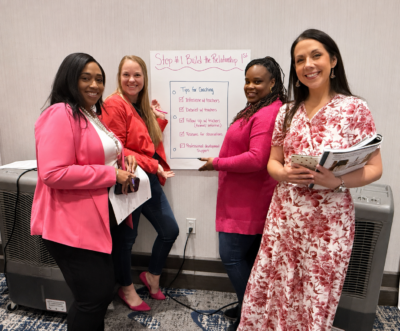
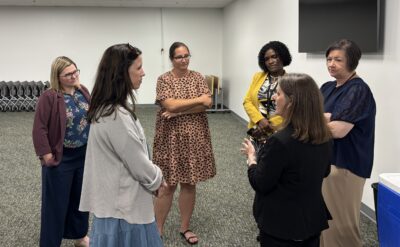
We’re also thinking about parents, not just kids, because literacy in a home is a family habit, not a solo assignment. That’s where our staff member Victoria Hall comes in.
Victoria leads story times all over this community — she reads with children while they wait for appointments, and she runs a group for expecting mothers called Reading in the Womb, so that the very first voice a baby knows is the one reading to them. She meets families exactly where they are, and she’s full of ideas for what comes next: cooking nights built around books, puppet shows, and gatherings that pull kids toward stories and away from screens.
The data backs up what we’re seeing on the ground. Every parent surveyed after Books for K told us the program was a valuable support to their child’s literacy, and 92% said they were actually sitting down and reading the books with their kids, not just stacking them on a shelf.
Every staff member we surveyed said the same. And after Books on Break, 96% of staff told us they saw kids more excited about books, more motivated to read over the summer. One teacher told us she loved watching kids walk out the door reading and walk back in the next morning still holding the same book.
That’s Boston-Thurmond: A neighborhood that has always understood that you take care of your own — and that now includes taking care of the readers we’re raising, one book, one bookmark, one pizza night at a time.