
NCDHHS encourages parents to ensure their children are up-to-date on vaccinations for new school year

The North Carolina Department of Health and Human Services (NCDHHS) has issued guidance to parents, encouraging them to make sure their children have received all necessary and recommended vaccinations. In light of recent changes to federal recommendations for vaccinations, NCDHHS reaffirmed its belief in the importance of vaccines for keeping kids healthy and safe, according to a recent press release.
“Families and health care providers have the same goal: keeping our children healthy as they return to school,” said Dr. Kelly Kimple, director of the NCDHHS division of public health, in the release. “Vaccines are an essential part of this goal. Together, we can help ensure every child has the opportunity to start the school year healthy, protected and ready to learn.”
Issued on Aug. 10, 2026, Executive Order 14420 from President Donald Trump recommends that all children get immunizations to provide protection against 11 diseases. This guidance is a decrease from the previous 18 diseases, and states with vaccine requirements were encouraged to update their laws, according to previous reporting by EdNC.
The release from NCDHHS, however, said that North Carolina does not “anticipate changes to its clinical guidance regarding childhood immunization.” You can view the below dashboard to find immunization data for North Carolina kindergarteners.
The state’s vaccine law applies to all school-aged children, including homeschooled children. Homeschools are legally required to maintain immunization records by the NC Department of Administration Division of Non-Public Education, according to NCDHHS’s website.
“Vaccinations play a vital role in protecting children, their families and communities from the preventable spread of infectious diseases,” said NCDHHS Chief Medical Officer Dr. Larry Greenblatt, regarding the new federal vaccines guidelines. “Nothing has changed regarding the strong evidence supporting current vaccine recommendations and vaccines remain widely available and accessible for individuals and families throughout the state.”
Here are North Carolina’s current vaccine requirements for school-aged children.
More news on vaccines
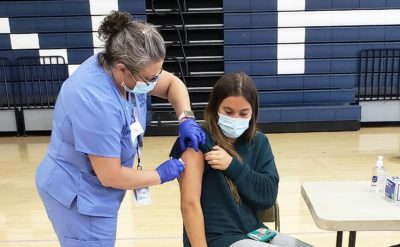
This year, there has been a rise in vaccine-preventable diseases across the country and in North Carolina, which includes diseases like meningitis, measles, pertussis (whooping cough), and others. The release says that making sure kids are fully protected from these diseases with vaccines is the “best way to keep them healthy while reducing severe illness and unnecessary absences from school.”
“Back-to-school season is an important reminder that protecting our children’s health is both a shared responsibility and a shared goal,” said NCDHHS Secretary Dev Sangvai. “Vaccines help keep our children and teens healthy and in the classroom.”
 Sign up for the EdDaily to start each weekday with the top education news.
According to NCHHS, vaccines are “widely accessible” across the state. In addition to private medical practices, the release says vaccines are also available at community health centers, local health departments, and pharmacies. NCDHHS said that caregivers should speak to their healthcare providers for more information about which vaccines are recommended and available for their children.
“You can use any health care visit, including for sports or camp physicals, school health assessments, checkups and sick visits to ensure your child is up to date with their vaccines,” said Sangvai.
Children may also be eligible for low-cost or free vaccinations through NCDHHS’s Vaccines for Children (VFC) Program, which covers all all vaccines required for school and child care in North Carolina. Children can qualify for free vaccinations if:
- They have NC Medicaid or are eligible to get NC Medicaid
- They do not have private health insurance
- They are underinsured (their health insurance doesn’t cover all of the recommended vaccines)
- They are American Indian or Alaskan Native
You can click here to find a VFC provider near you. You can find information on how to talk to your child about vaccines here.
NCDHHS has also composed a bilingual Childhood Vaccines Toolkit as a resource for healthcare providers and families to discuss childhood vaccinations. You can explore the toolkit here.