
NC Attorney General Jackson announces $451 million minimum settlement with Meta in child safety case

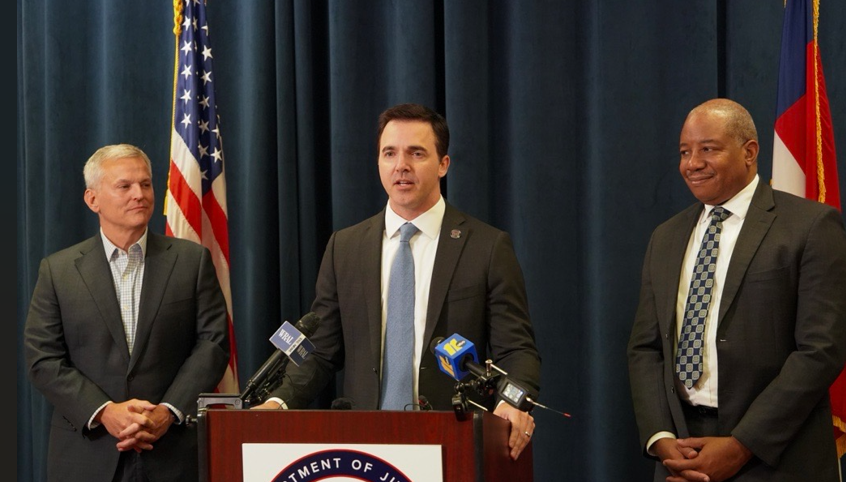
North Carolina Attorney General Jeff Jackson announced at a Wednesday press conference that a $451 million minimum settlement has been reached in the case against Meta for their alleged harms to child users. The state could receive up to $645 million if an industry-wide adoption is reached with other social media companies in the next five years, Jackson said, and the settlement will be paid out in $45 million installments to North Carolina over the next several years, starting in 2026.
Meta — which owns Instagram and Facebook — will also implement “major child safety upgrades to its apps,” according to a press release from Jackson’s office.
This case is the largest big tech settlement in U.S. history, the release says, with the total settlement for all states involved being up to $17.1 billion. Jackson said the reason states decided to pursue a settlement was largely due to the child safety features that Meta will now implement, which would have been years delayed in the case of litigation.
“The main purpose of this settlement is not money,” said Jackson. “It is to protect kids and empower parents.”
 Sign up for the EdWeekly, a Friday roundup of the most important education news of the week.
The case began in 2023 when then-Attorney General Josh Stein joined a bipartisan coalition of 41 other state attorney generals taking legal action against the tech company for deceiving the public. The internal documents that the investigation uncovered showed that Meta specifically engineered products to be addictive to young people.
For example, research from Meta identified features that held the attention of child users, convincing them to keep returning to the apps. Records also showed that Meta was aware their apps interrupted children’s’ sleep and learning at school. Furthermore, Meta was aware that children could be led to harmful content and that millions of children under 13 were app users.
On Wednesday, Stein said that when he first joined the case with other state attorney generals, it was because of the need for accountability from tech companies with regards to child safety.
“Meta did not see children as precious beings to be protected,” said Stein. “They saw them as dollar signs to be exploited.”
You can read the full list of known harms that the investigation uncovered here.
In line with the settlement, Meta is required to implement many safety features for teen users — including time limits, increased age verification measures, and disabling several harmful features like beauty filters or visible like counts. According to the release, the following features will now be the default for users between the ages of 13 and 17:
- Daily time limit: Teens will only be able to access their account for two hours every day
- Nighttime block: The apps will not be accessible from midnight to 6 a.m. to protect teens’ ability to sleep
- No school hour notifications: During school hours, Instagram and Facebook push notifications for teens will be off (8 a.m. to 3 p.m. on weekdays from Aug. 15 to June 15)
- Scrolling pauses: Every 15 minutes, Meta will also now be required to put up roadblocks to prevent mindless scrolling, with harder blocks for an hour of continuous scrolling
- Likes: Meta will turn off counts of likes and reactions by default on all posts, stories, and reels
Meta will also be required to verify user ages “to 95 degrees certainty, with between the ages of 13 and 15, and 90 degrees certainty for ages 16 and 17,” Jackson said. These changes to Meta’s apps are expected to take place in the next two to six months, he said.
State Superintendent Maurice “Mo” Green talked about why these new features matter, referencing the results of the 2025 Youth Risk Behavior Survey for high school students in North Carolina. While there were several things to celebrate in the results and the indicators of mental health had improved in recent years, Green said the numbers were still too high.
“Continued progress will not happen if our students are struggling with mental health issues. Student mental health and learning are interconnected,” said Green.
Explore more on youth well-being


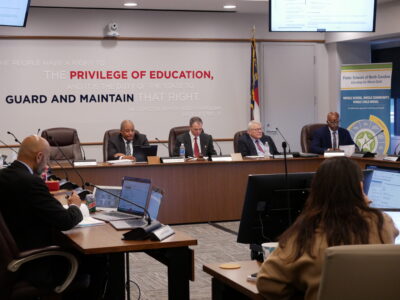
Furthermore, when Green embarked on his “Mo Wants to Know Listening Tour” across every region of the state in 2025, he said he heard repeatedly from teachers, parents, and students that youth need more mental health support. While support exists across the state, Green explained that there are not nearly enough programs or personnel to meet the need he witnessed.
“The recommended ratio for school social workers is one for every 250 students,” said Green. “North Carolina was at one to every 1,055 in 2025. The recommended ratio for school psychologists is one for every 250 students. North Carolina was at one to every 1,954 in 2025.” (Read Green’s full statement here.)
Stein said that the recovery settlement will be used to expand mental health support for children across the state. The press release says Jackson is “encouraging the General Assembly to use the money to fund after-school and summer school programs across the state, crisis helplines for struggling children, and school health personnel.”
“I look forward to working with the Attorney General, with the legislature, Department of Health and Human Services, the Department of Public Instruction, to figure out how we can best utilize these dollars to make the biggest impact on improving young people’s mental health,” said Stein.