‘I see the impact it’s having every day’: 7 more NC community colleges prepare to launch Boost

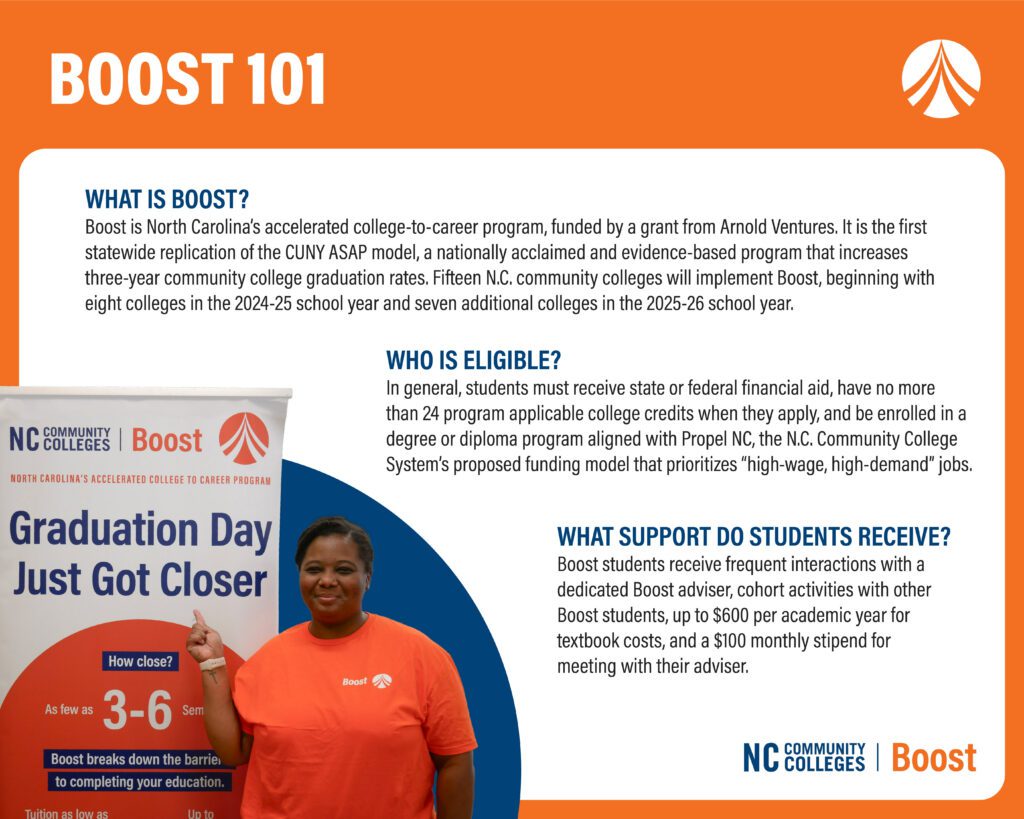
Nearly one year after Boost launched at Wake Technical Community College (Wake Tech), Bailey Thompson said she sees a difference in her students.
As one of the college’s dedicated Boost advisers, Thompson oversees a caseload of roughly 150 students that joined Wake Tech’s first Boost cohort in the fall of 2025.
By the end of the spring semester, Thompson said, many of her students who were once shy were now eager to speak with her about their hobbies, volunteer work, and academic achievements.
Boost, a replication of the CUNY ASAP model, is an accelerated college-to-career program designed to increase completion rates and move students into high-wage, high-demand jobs. In addition to frequent meetings with a dedicated adviser like Thompson, Boost students receive monthly stipends and funding for textbooks and supplies.
“I see the impact it’s having every day,” Thompson said of the program.
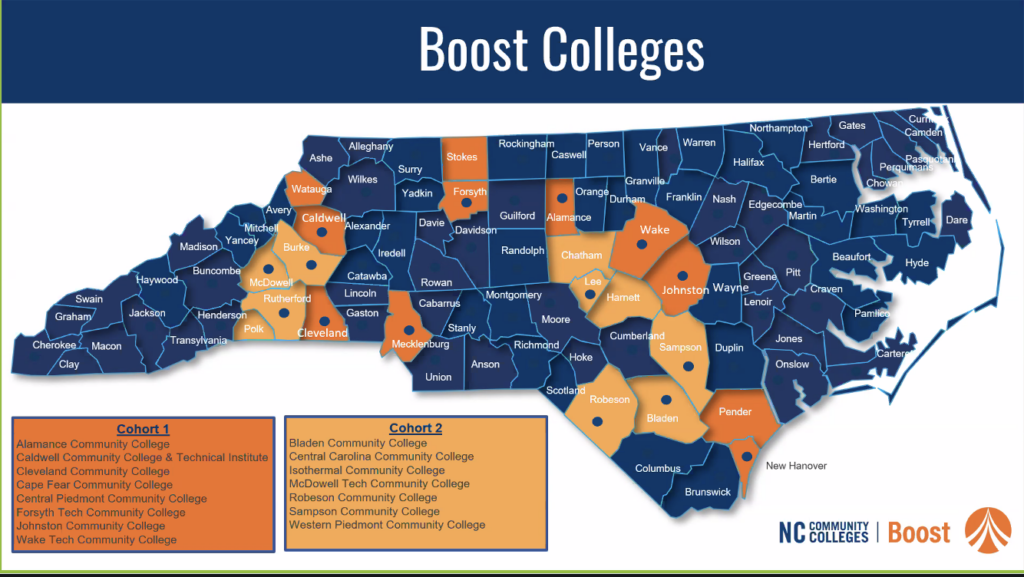
Last year, the program rolled out at eight North Carolina community colleges. This month, seven additional community colleges will launch Boost, including two consortia:
An eastern consortium consisting of:
A western consortium consisting of:
- Isothermal Community College
- McDowell Technical Community College
- Western Piedmont Community College
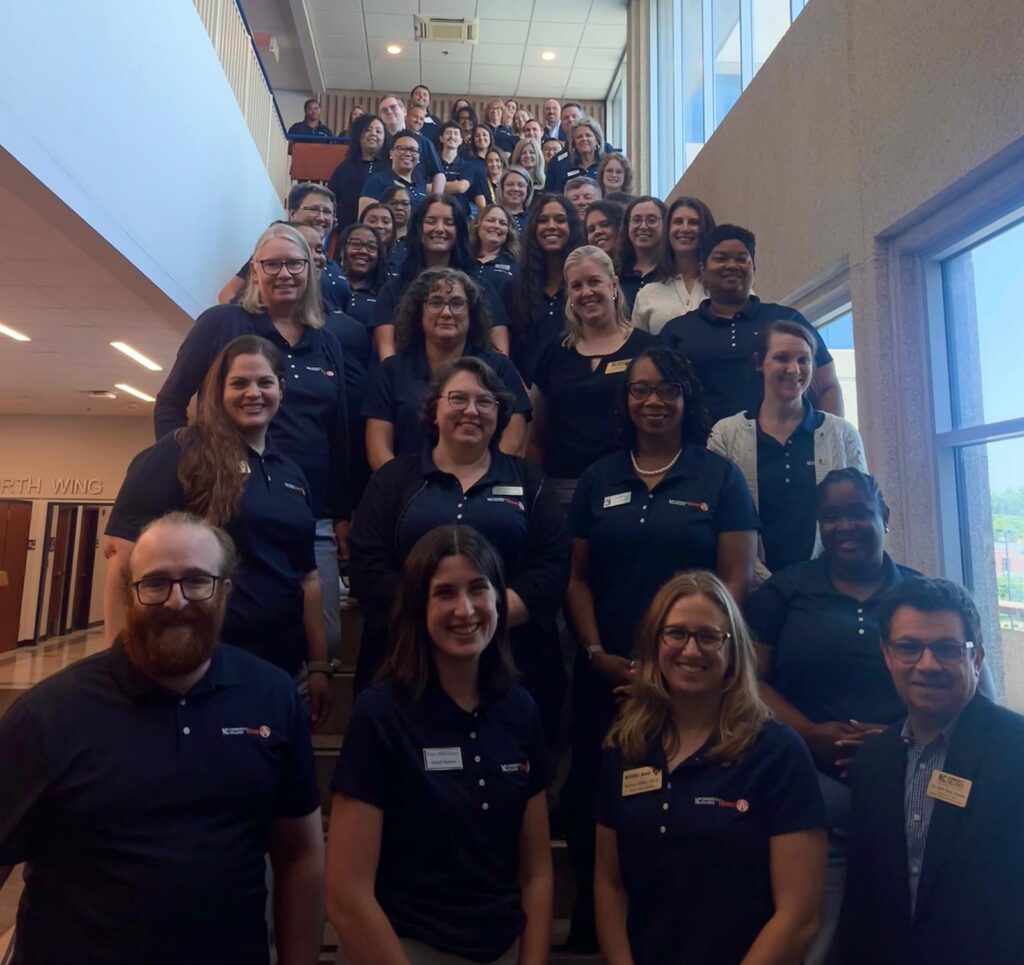
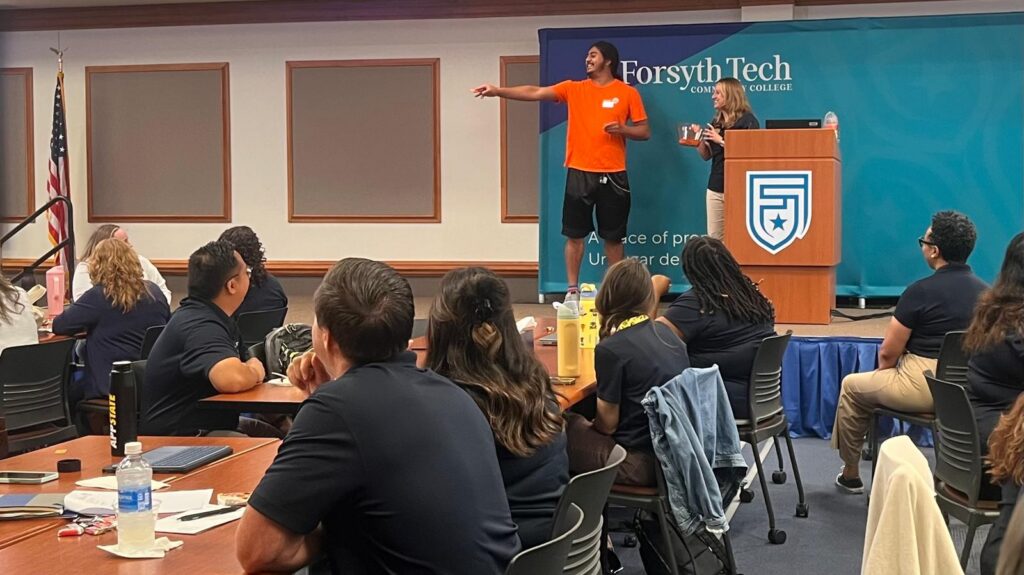
In late June, Boost staff from across the state and leadership from the North Carolina Community College System (NCCCS) gathered at Forsyth Technical Community College (Forsyth Tech) to reflect on lessons from the first year of implementation and prepare to expand the program to a total of 15 community colleges.
Intensive advising models and preliminary student outcome data reveal impacts from Boost’s first year
As Thompson’s reflections on her first year as a Boost adviser suggests, the personalized, intensive advising that Boost students receive is a key ingredient in the “secret sauce” behind the CUNY ASAP model.
Under the model, each Boost adviser is assigned a caseload of 150 students and uses a student support tier system to determine how often a student must meet with their adviser per semester. All newly enrolled Boost students are initially placed in the highest support level, meaning that they must meet with their Boost adviser seven times during their first semester.
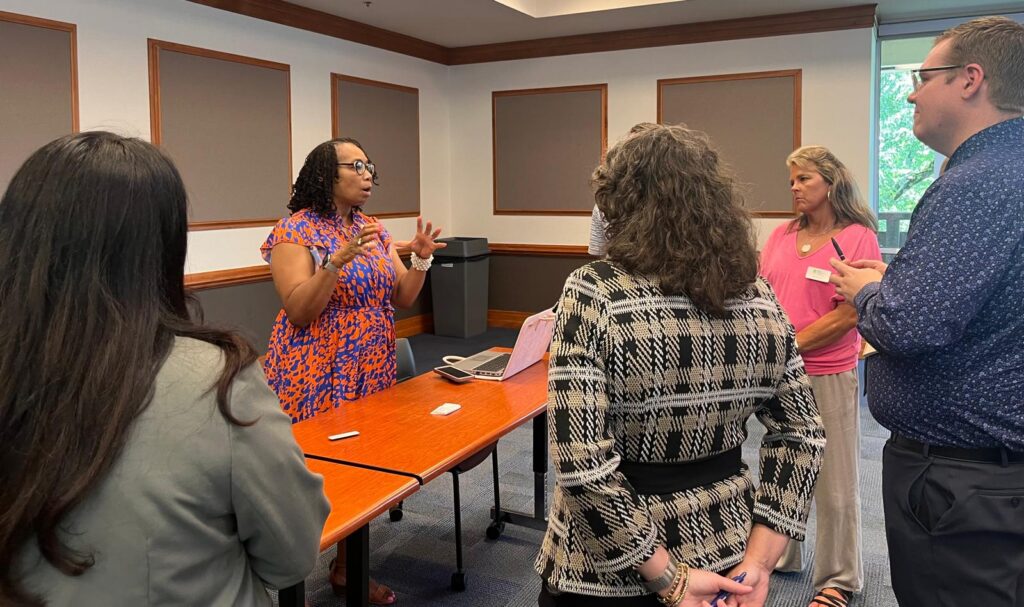
“You are the linchpin of this working,” Nicole Ditillo, director of Boost for the NCCCS, told Boost advisers during a breakout session at the summer training, acknowledging the substantial amount of time and energy advisers invest in students.
Students and their needs are diverse, Thompson added, highlighting the human-centered approach she takes to advising.
“It’s important to be very patient with yourself and with the students, and always approach every day with curiosity and kindness. Because every day is going to need some curiosity and kindness,” Thompson said.
Data shared with EdNC shows that, overall, students are engaging with and benefitting from the program.
In the 2025-26 academic year, Boost students, on average, attempted more credit hours (12.4 credit hours compared to 9.9 credit hours) and completed more credit hours (10.4 credit hours compared to 8 credit hours) compared to similar students not in the program.
On other measures of academic progress, data shows that, of the Boost students required to take them, the proportion of students taking and passing developmental English and math courses has increased from the fall to spring semester.
Other data from Boost’s first year show that:
- The majority of students enrolled in Boost are between the ages of 18 and 24. In the fall 2025 semester, 60% of Boost students fell into this age range. In spring 2026, 54% of Boost students fell into this age range.
- Most Boost students are enrolled in transfer programs (63%), followed by healthcare (15%), trades and transportation (8%), information technology (7%), public safety and first responders (4%), and engineering and advanced manufacturing (3%) programs.
Heading into year two, colleges focus on enrolling students and building Boost’s brand
One early hurdle that colleges discussed at the summer training was the process of finding and enrolling eligible students in the Boost program. On a panel, Boost leaders from three colleges shared their reflections and lessons learned during the first year.
Leaders from Alamance Community College, Forsyth Tech, and Wake Tech all agreed it was important to socialize Boost as a program long before enrolling the first students, as institutional buy-in across campus made it easier for the Boost implementation team to identify eligible students.
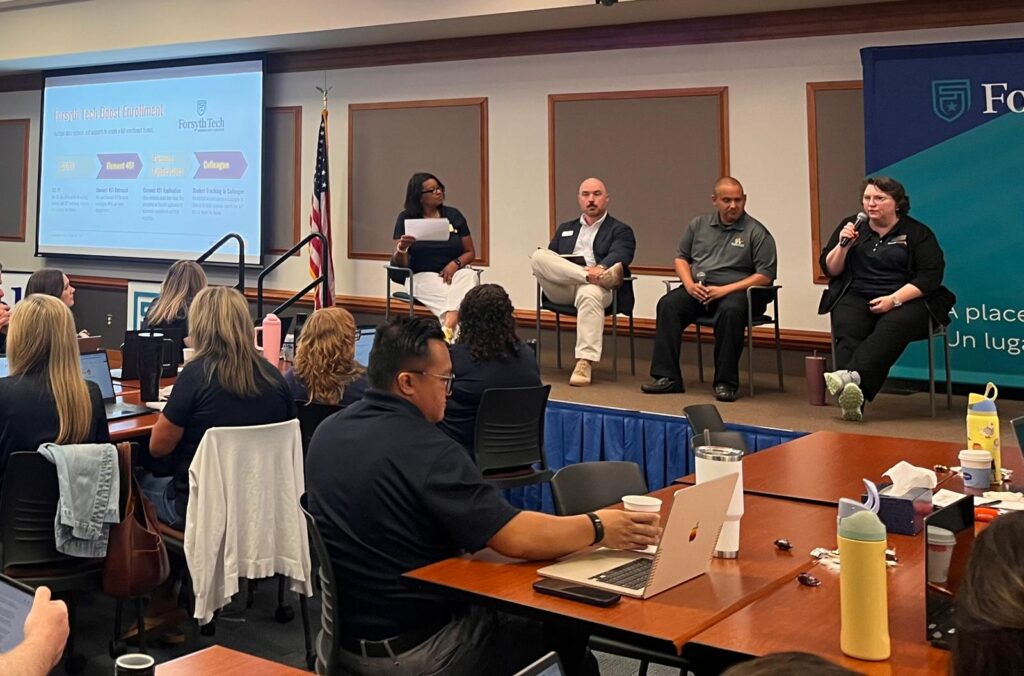
At Alamance Community College, Boost Director Matthew Eckhoff said his team embedded Boost programming into many campus events already happening, such as orientations and resource fairs.
Eckhoff said his team also attended departmental meetings across campus to share information about Boost. Similarly, Amy Ball Braswell, Forsyth Tech’s associate vice president of student success, said her Boost team started conversations with deans, faculty, and staff in the college’s financial aid and business offices early on so that as many people as possible were aware of the Boost program and able to direct eligible students to the right place.
When it comes to actually enrolling students, panelists agreed that direct outreach is essential to getting students to join the program and overcome skepticism that the program is too good to be true.
Similarly, an initial report on Boost from the Belk Center for Community College Leadership and Research, the research and evaluation partner for Boost, as well as previous EdNC reporting, suggest that personal outreach to students is an essential enrollment tool.
Lessons from Boost’s first consortium
Last year, Caldwell Community College and Technical Institute (CCC&TI) and Cleveland Community College formed the first Boost consortium.
This year, six of the seven new Boost colleges will form two additional Boost consortia. Each consortia is served by a single Boost director (with Boost advisers on each campus) and serves a combined enrollment of 150 to 275 students per year — rather than 150 students per college. By allowing multiple colleges to team up, the consortia model scales enrollment targets to fit colleges’ population size, allowing smaller and more rural colleges to implement the program.
The state’s eastern consortium (Bladen, Robeson, and Sampson) will collectively aim to enroll 275 students. The western consortium (Isothermal, McDowell Tech, and Western Piedmont) will aim to enroll 150 students.
Nancy Risch, the director of the CCC&TI and Cleveland Boost consortium, has spent the last year navigating the unique challenges that accompany this role. Risch, who is employed by CCC&TI, said one hurdle has been navigating the different data systems, cultures, and approaches to Boost at each of the two colleges.
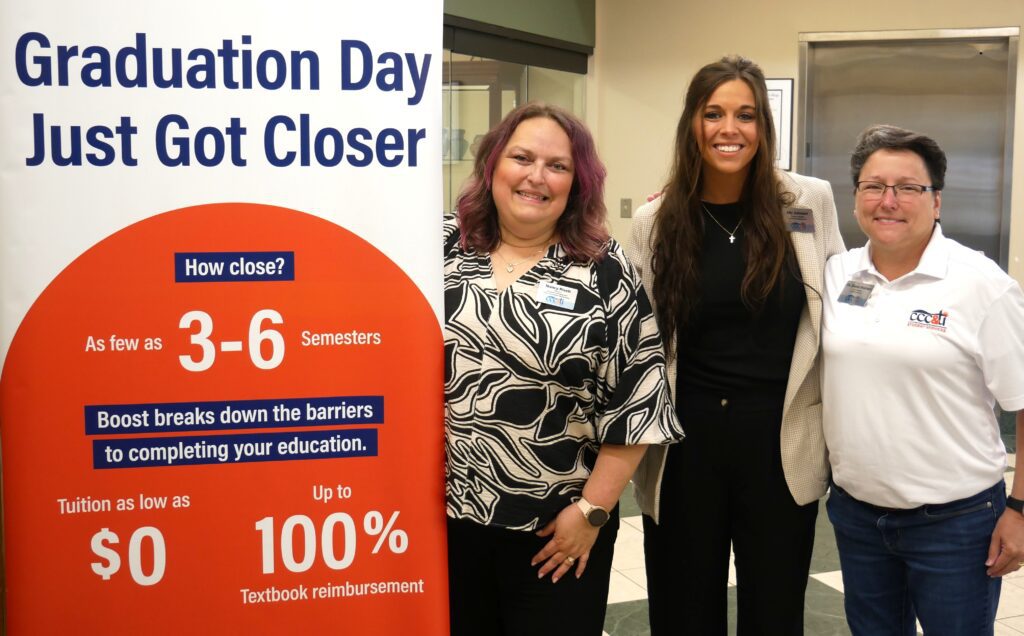
Her advice for the leaders of the two new consortia is to be proactive.
“Meet early and often,” she said, and try to create consistent guidelines and policies pertaining to the Boost consortium to streamline how the different colleges operate the program.
Risch also said it’s been important to get to know each college’s day-to-day operations. Building relationships within and across campuses, she said, is an important way to share knowledge and resources that can make the Boost program work better for students.
“The more you can meet, and learn, and introduce yourself to other folks on campus, you can allow for more partnerships,” Risch said.
Bringing Boost and its resources to students in more rural parts of the state is one of the things Bladen Community College leaders are most looking forward to. The college is charged with enrolling 47 of the eastern consortium’s 150 students.
Lisa DeVane, vice president of instruction at the college, said that as a large county, access to reliable and affordable transportation plays an important role in students’ persistence and completion. Boost’s $100 monthly financial incentive for meeting program requirements is a promising way to address that need.
Bruce Blansett, Bladen’s instructional operations administrator, added that the program is an opportunity for the college to respond to students’ financial needs as the cost of living increases.
Blansett also said that he believes the positive data and stories he’s heard from the first cohort of colleges, especially considering the brief time frame the colleges had to get the program started, is encouraging.
“There’s so much about (Boost) that we aren’t going to know until we are truly in the thick of it and students are actually in the program,” Bansett said, adding that the networking and knowledge sharing the training provided has helped build the team’s confidence ahead of Bladen’s first year of Boost.
Ditillo echoed Blansett’s appreciation for his Boost colleagues. After the three days of summer training, Ditillo said she was struck by the “strong, supportive community” Boost colleges and the system office have built in the past year.
“You could see those networks in action through the discussions happening in training sessions and the clusters of staff coming together during breaks,” Ditillo said. “It was the perfect illustration of how the whole is greater than the sum of its parts.”