
NC students urge legislature to support schools and well-being, plus updates on Helene recovery and more


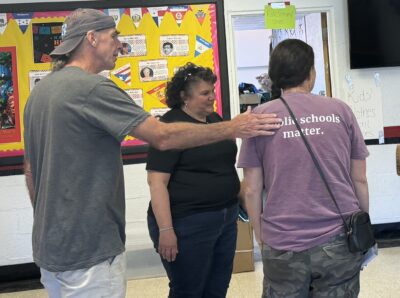
Students of all ages gathered on the front lawn of the North Carolina General Assembly on Tuesday, holding signs that read: “Education is a right, not a budget cut,” “Hate has no place in schools,” “Fund Leandro,” and more. These student leaders and adult advocates with Every Child NC spoke about their experiences in public schools while asking lawmakers to support North Carolina public education.
They called on state legislators to prioritize the needs of public schools and the safety of their neighborhoods in the long-awaited state budget. Students also spoke about the impact of increased immigration enforcement in their communities and schools.
The strain on student support systems
The state of North Carolina has gone more than 1,000 days without passing a new comprehensive budget plan. Aisosa Limon, a rising sophomore at Wake Young Men’s Leadership Academy, described the stress this delay has placed on his home school system.
“This has created strain for Wake County Public School System due to the inability to get staff for schools,” said Limon. “Access to mental health resources in schools is lacking, and with the advent of social media, student mental health is on the decline. We need to invest more in the mental health of our students.”
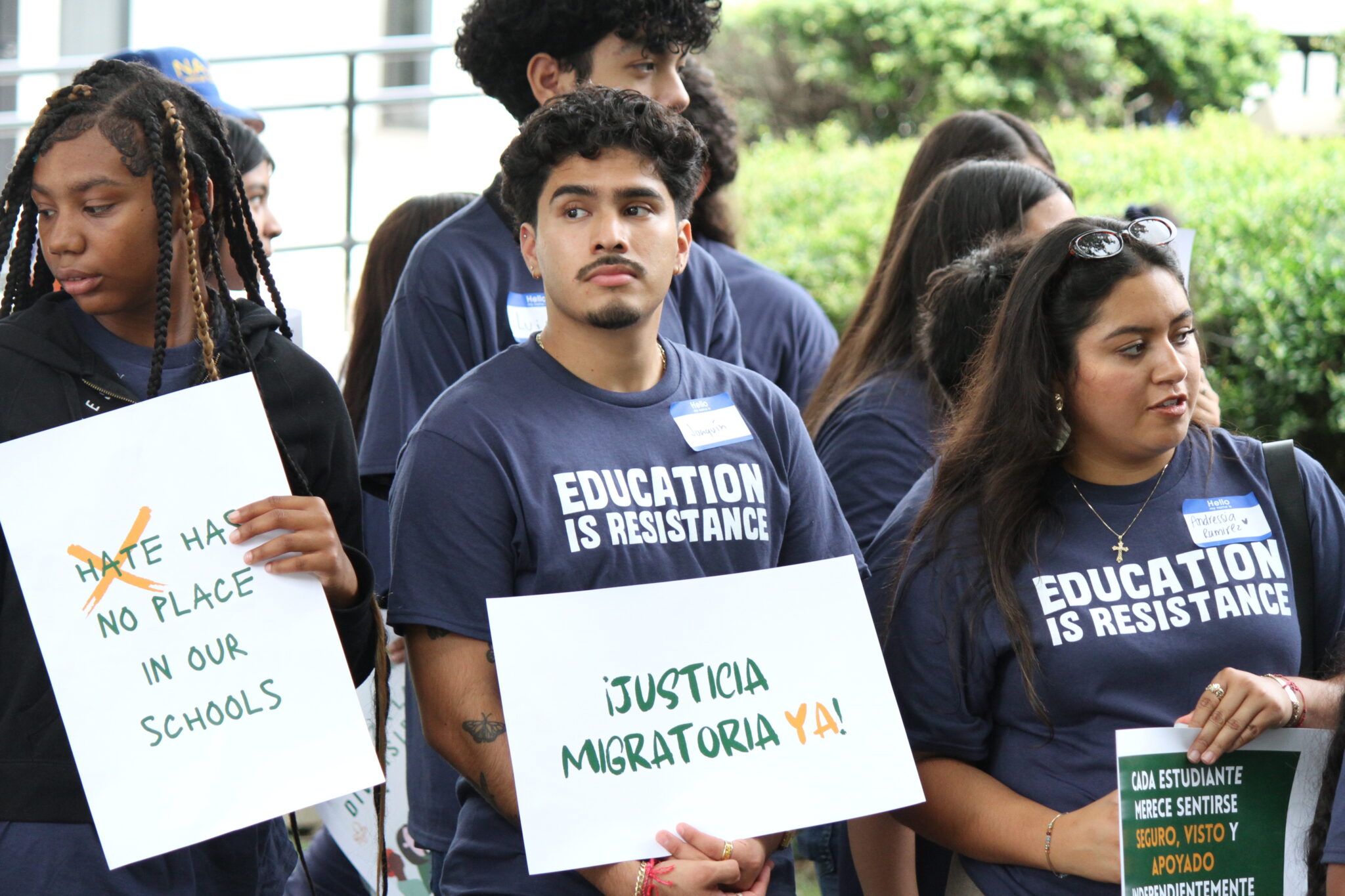
The students also said there is a lack of resources and adequate support staff in their home schools. From mental health resources to after-school activities to a feeling of safety, students said many schools cannot currently provide what students say is needed for them to succeed.
“We ask our North Carolina legislators to invest in more youth programs, mentoring organizations, after-school activity, mental health services, (and) safe places where kids can learn, grow by supporting organizations that are already working in our community,” said Blessing Gaddy, a student in Winston-Salem and participant in Full Circle Mentoring.
Read more
Fear in the classroom
Several students also spoke about how the recent increase in immigration enforcement near schools and in North Carolina has brought “anxiety” and “fear” into their classrooms.
“Students should not have to worry about immigrant enforcement while they’re in class,” said Victoria Rodriguez, a rising sophomore and Casa Azul de Wilson participant. “Keeping schools focused on education helps ensure that every child has the opportunity to learn and succeed without fear.”
The threat of deportation also impacts the whole community, Rodriguez said, as many families feel less comfortable “reporting crimes, participating in community activities or accessing educational resources.”
The students described the lack of safety that they felt, largely because of immigration enforcements.
“That is why I’m asking you today to invest in our youth, invest in safe learning environments, invest in polices that protect students and their families, invest in the belief that every child, no matter where they come from, deserves the chance to succeed,” said Winston-Salem student Marceline Privado Zarate. “Because when you invest in us, you invest in the future of this country.”
After the press conference, students also met with state legislators, advocating for their schools and their communities. While the student speakers covered a wide range of issues, they all spoke about how their state could support them if they were willing to listen.
 Sign up for the EdWeekly, a Friday roundup of the most important education news of the week.
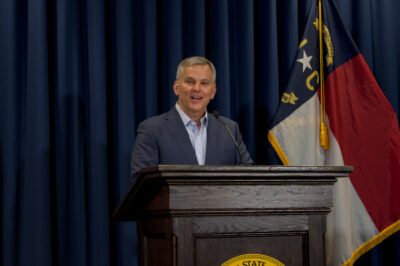
Gov. Josh Stein has also recently spoke out about needs for North Carolina schools and communities, including by promoting his office’s school supply drive and highlighting remaining Hurricane Helene needs. Read more in the subheadings below.
Recommitting to Helene recovery
On June 10, Stein published a letter to the North Carolina Congressional Delegation requesting additional, continuous investment in Hurricane Helene recovery efforts in western North Carolina. On June 23, he reiterated this need to the Western North Carolina Recovery Advisory Committee.
The governor’s request prioritizes rebuilding damaged homes, strengthening water and wastewater systems, restoring local roads and dams, and supporting the small businesses that power the region’s economy, according to a press release.
So far, North Carolina has appropriated approximately $2.4 billion in funds to Helene recovery, the release says, and “redirect(ed) more than $2 billion beyond that.” However, the storm was responsible for roughly $60 billion of damages, and several local leaders from western North Carolina joined the governor in describing the ongoing need for federal support of recovery efforts.
“Every disruption is a magnified disruption at this point, so when our hurricane economic drag is combined with high gas prices, less discretionary spending, and global belt tightening, the compound effect leaves very little wiggle room for businesses to operate with confidence or certainty,” said David Jackson, president and CEO of the Boone Area Chamber of Commerce.
“We’ve made progress, and I’m proud of what our communities have fought to rebuild, but the depth of need that remains demands bold action from our federal partners. The people of Western North Carolina wake up every single day still carrying the weight of what Helene took from them,” said Dee Dee Perkins, owner of D.D. Bullwinkle’s Outdoors.
“Every single day in Western North Carolina, families are still deciding whether to stay, rebuild, or start over somewhere else,” said Rep. Lindsey Prather, D-Buncombe. “We have businesses that are deciding whether to hang on or close the doors for good. That math doesn’t change until the funding does.”
Read the full statements here.
Read more

Kicking off the Governor’s annual school supply drive
For the eighth year in a row, the North Carolina Office of the Governor has begun its school supply drive, according to a recent press release. From June 29 to July 31, people can place donations in the 275 donation boxes at all of State Employee Credit Union’s (SECU) locations across the state, a major partner in this event.
On top of community donations, through a partnership with SECU, the North Carolina Parent Teacher Association, Boys & Girls Clubs of North Carolina, Communities in Schools of North Carolina, and the Governor’s Office will donate supplies to students in need across the state, the release says.
“When we invest in students, we invest in our communities, our workforce, and our future,” said Secretary of Revenue McKinley Wooten in the release. “Every contribution, no matter the size, sends a powerful message of commitment and support to the educators and children of our great state.”
The release says the event aligns with the governor’s recent budget priorities, which were announced in April. The first pillar of his proposed budget centered around supporting public education in the state. Some of the major items under that pillar included raising teacher salaries, adding a $300 stipend for teachers to help with traditionally out-of-pocket classroom costs, and funding school safety measures.
“Students learn better in a classroom that is equipped with the tools they need to succeed,” said Stein. “By donating supplies, we can provide foundational materials that will help set our kids up for another successful school year and relieve teachers of that burden.”
Requested supplies include:
- Paper: all types, including copy paper
- Pens and pencils
- Crayons and markers
- Dry erase markers
- Fidget toys
- Headphones
- Spiral notebooks
- Sanitizing wipes
- Tissues
Find a donation location near you here.