
NC House Speaker, other legislators hear how Boost supports students at CCC&TI


Brittany Dula, a student in the medical sonography program at Caldwell Community College and Technical Institute (CCC&TI), quit her full-time job to come back to school.
A mother of four, Dula receives financial aid that covers expenses like tuition and books — but her program also requires hundreds of dollars of out-of-pocket, up-front expenses, including shoes and multiple pairs of scrubs. Taking on those expenses without starting the program made her nervous, Dula said, because “you don’t know what you’re getting into.”
On her first day of class, two CCC&TI staff members came in with a bucket of candy to talk about Boost — North Carolina’s replication of CUNY ASAP that provides students with a variety of wraparound supports, including intensive advising, $100 monthly stipends, and funding for textbooks and supplies.
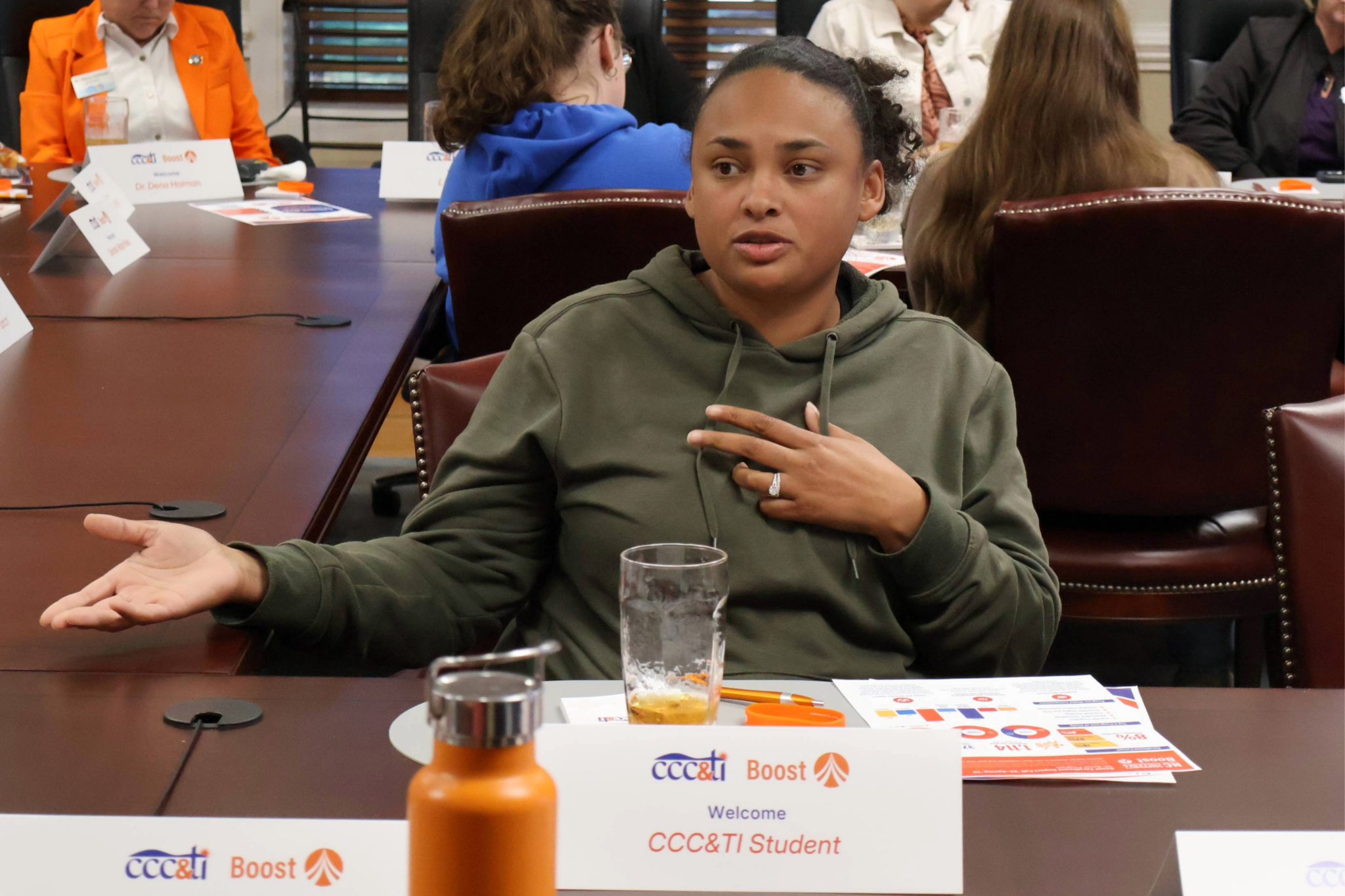
As a student in the college’s first Boost cohort, Dula receives up to $600 each academic year for course materials and supplies, plus a $100 monthly stipend for meeting regularly with the college’s Boost adviser, Ally Johnson.
“She said, ‘Show me the shoes. Just send it to me in an email, and I’ll get it ordered,’” Doula recalled of the support she received from Johnson. “That took off a lot of stress.”
In late October, three state legislators heard Dula’s story during a visit to CCC&TI to learn about Boost and other initiatives at the college. North Carolina Speaker of the House Destin Hall, R-Caldwell, was joined by Sen. Ralph Hise, R-Caldwell, and Rep. Ray Pickett, R-Watauga, who attended CCC&TI as a student.
During the visit, legislators heard from students, college leaders, and philanthropists supporting the Boost program, which is designed to help students complete credentials and start careers in high-demand fields faster.
Fifteen colleges across the N.C. Community College System (NCCCS) are implementing Boost — eight launched the program in fall 2025, and seven more launched in fall 2026. Eight of the colleges implementing Boost, including CCC&TI, are doing so as a consortia where a single Boost director oversees implementation across multiple small, rural colleges.
“I appreciate the work that community college does and has done for a long time. And this is another great example of that,” Hall said of Boost.
Read more about Boost

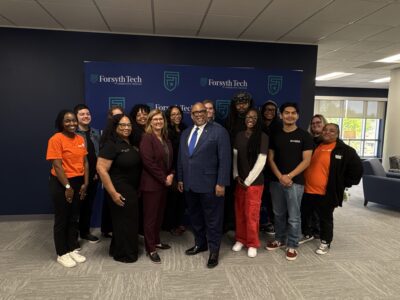
During the legislative visit, CCC&TI welding student Brandon Dishman said he was drawn to Boost at first for its financial support — but has since seen the tangible benefits of the dedicated advising support.
“Two or three days before the semester started, all my classes got dropped. She got me right back in them in one day,” he said of Johnson. “No matter what time it is, she’ll email you back.”
Dula also spoke to how the Boost program has helped her build engagement and connections at the college. Earlier that week, she had attended a Boost-hosted activity, where she painted a pumpkin for her daughter.
Johnson also knows that Dula is an adult learner and a student parent, so she connected her with the college’s adult learner program. Of the 114 students enrolled in Boost at CCC&TI in the 2025-26 school year, nearly half were ages 25 and older.
Other Boost students shared that the financial support provided by Boost makes it possible for them to stay in their program — helping cover gas for long drives to and from campus and clinical sites, paying for expensive textbooks and equipment, and more.
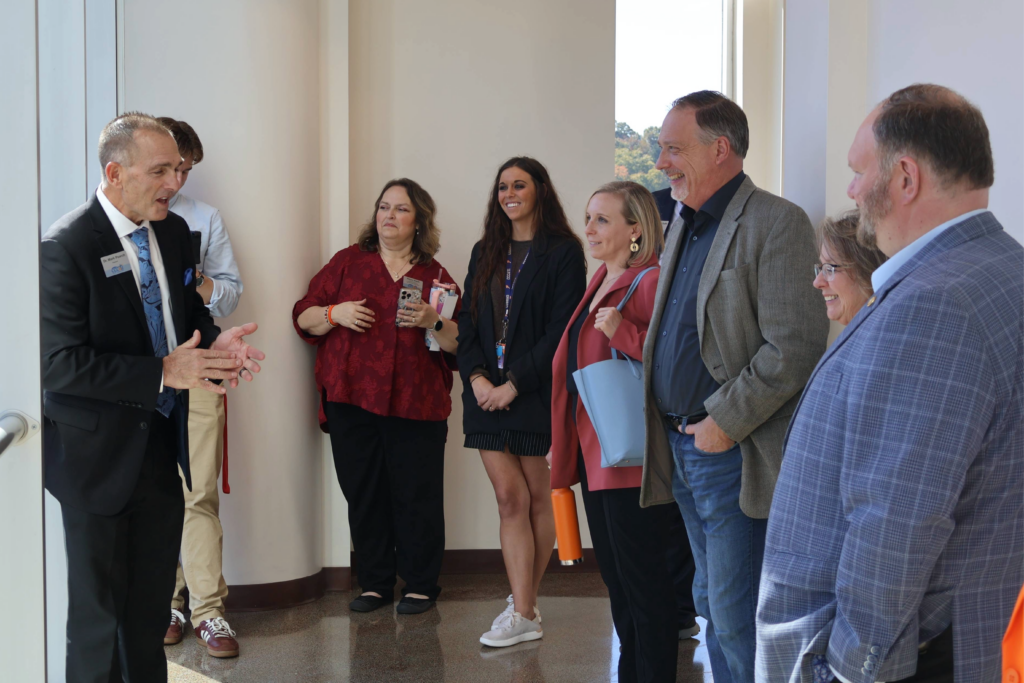
“We always say our community college students are one flat tire away from dropping out of school,” said Dr. Mark Poarch, president of CCC&TI. “Many of them are working. Many of them have families and children. We have some driving a long way. So anything that we can do to provide those wraparound supports, extra financial incentive for them to be here.”
Boost is primarily funded by a five-year, $35.6 million grant from Arnold Ventures, but colleges will assume a portion of program costs beginning in the third year of implementation. During a May meeting of the Governor’s Council on Workforce and Apprenticeships, Nicole Ditillo, director of Boost for the NCCCS, said the long-term vision for the program would be to scale it to all 58 community colleges in the state.
During the legislative visit, Kelly McManus, executive vice president of education at Arnold Ventures, spoke about Laura and John Arnold’s decision to invest in a statewide replication of CUNY ASAP in North Carolina — the first of its kind nationwide.
“They wanted to test out a state that wanted to be experimental and do right by students and really think about the return on investment, both for the dollars, but also for bringing people together. And North Carolina was just a natural place,” she said.
Editor’s note: Arnold Ventures supports the work of EdNC.