
NC legislators visit Forsyth Tech to learn about the impact of Boost on student success
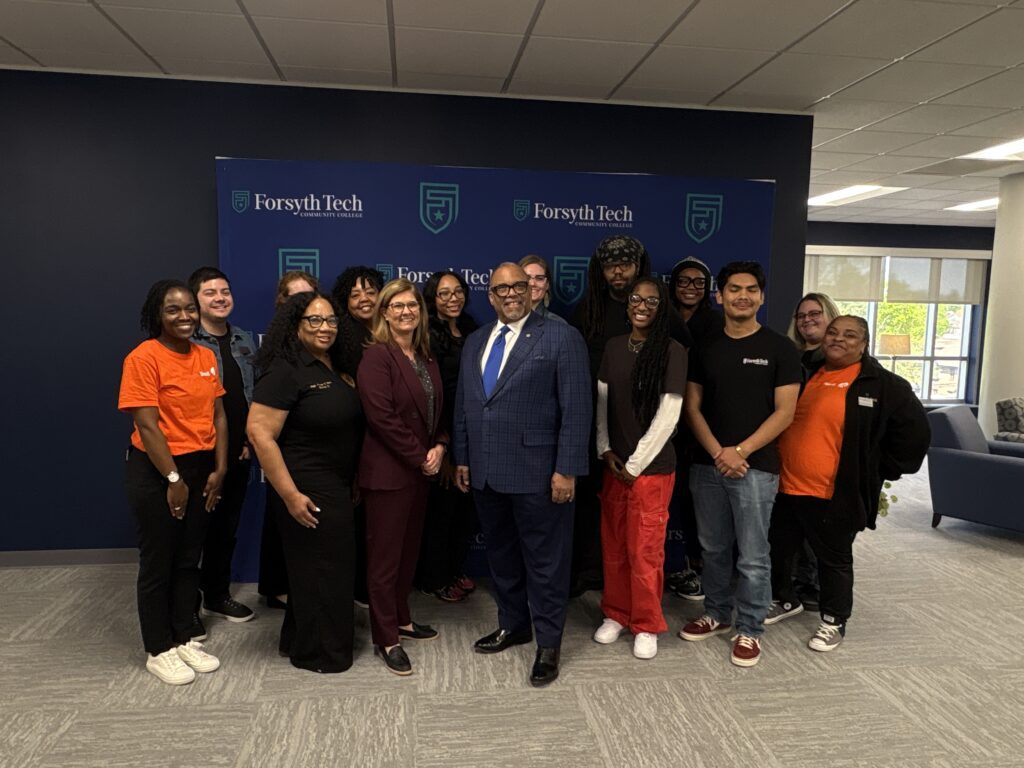
Forsyth Technical Community College (Forsyth Tech) students, staff, and faculty recently gathered with Rep. Amber M. Baker, D-Forsyth, Sen. Dana Caudill Jones, R-Forsyth, and Sen. Paul A. Lowe, Jr., D-Forsyth, to discuss the college’s strategic plan alongside the implementation of the Boost program.
 Sign up for Awake58, our newsletter on all things community college.
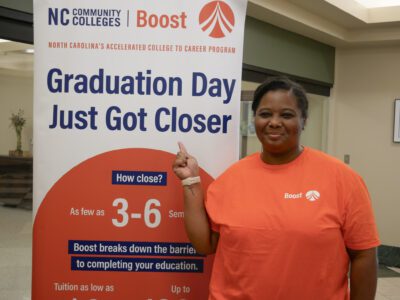
Boost is an accelerated college-to-career program designed to increase completion rates and move students into high-wage, high-demand jobs.
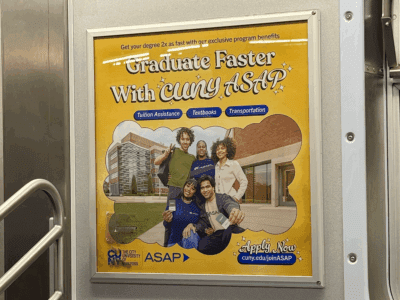
Funded by a grant from Arnold Ventures and launched in the fall of 2025, Boost is a statewide replication of the CUNY ASAP model. The program began with eight community colleges and will expand to 15 in total.
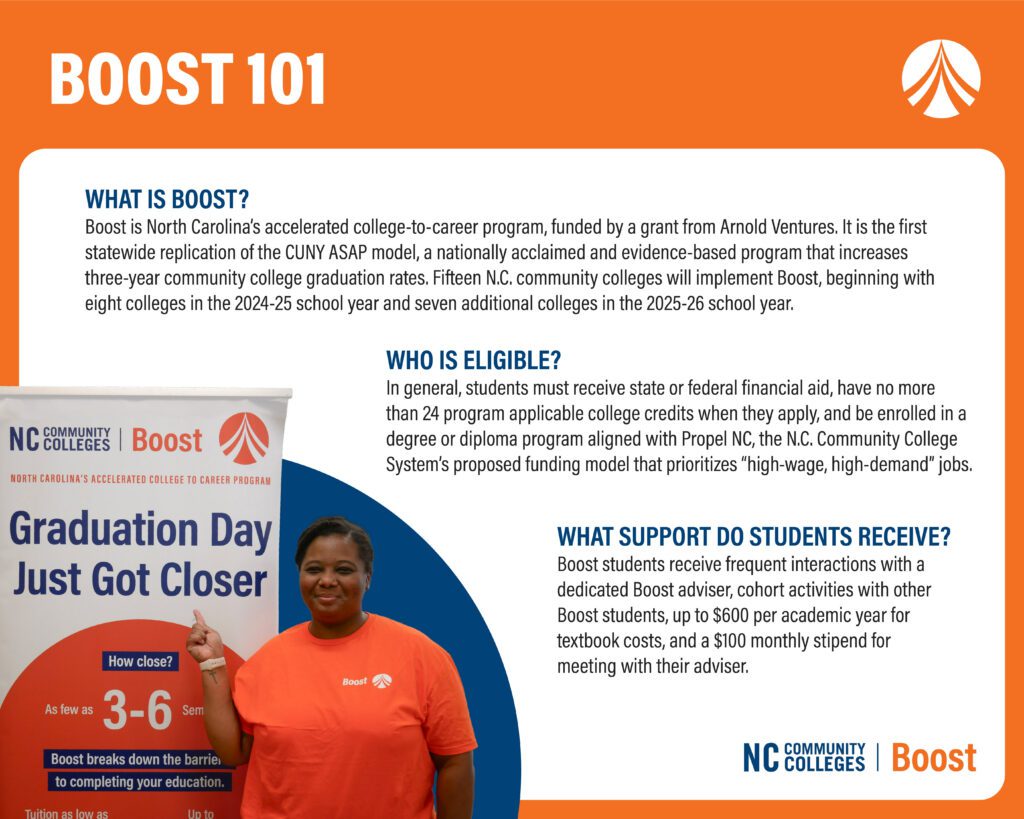
Amy Ball Braswell, Forsyth Tech’s associate vice president of student success, described Boost as “an economic development tool for the state of North Carolina,” to be leveraged for student empowerment. As a part of the model, students have access to support services such as intensive advising, $600 annual textbook stipends, and $100 monthly stipends to help meet basic needs.
Braswell reported that adult learners ages 25 and older make up 45.5% of the students within Forsyth Tech’s first Boost cohort. Geographically, 45% of students in the cohort are in areas designated as economic opportunity zones around Winston-Salem and Forsyth County.
“We wanted to make sure the supports were getting to the students who needed it most,” Braswell said, explaining the college’s effort to help students in opportunity zones transition into careers offering livable wages.
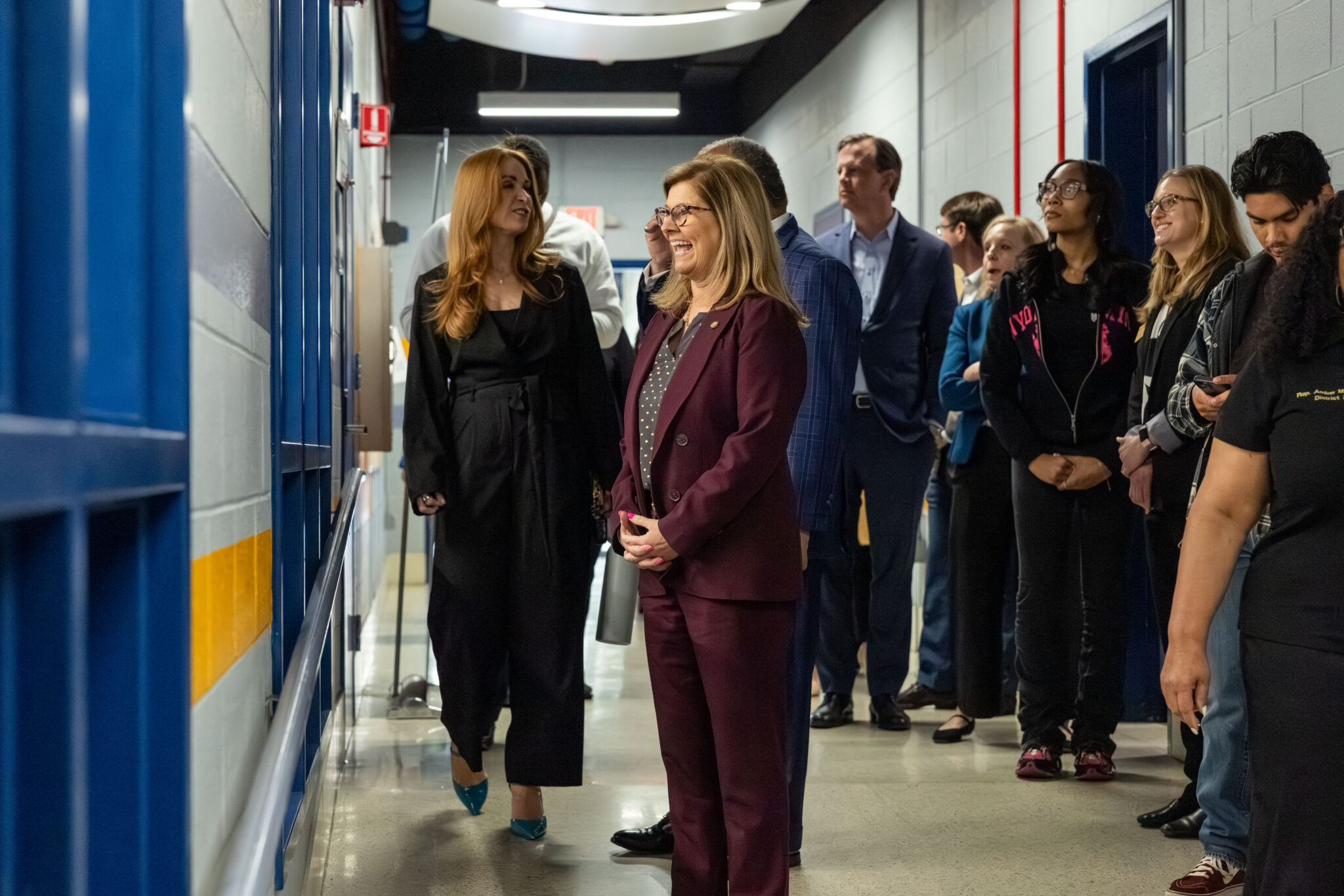
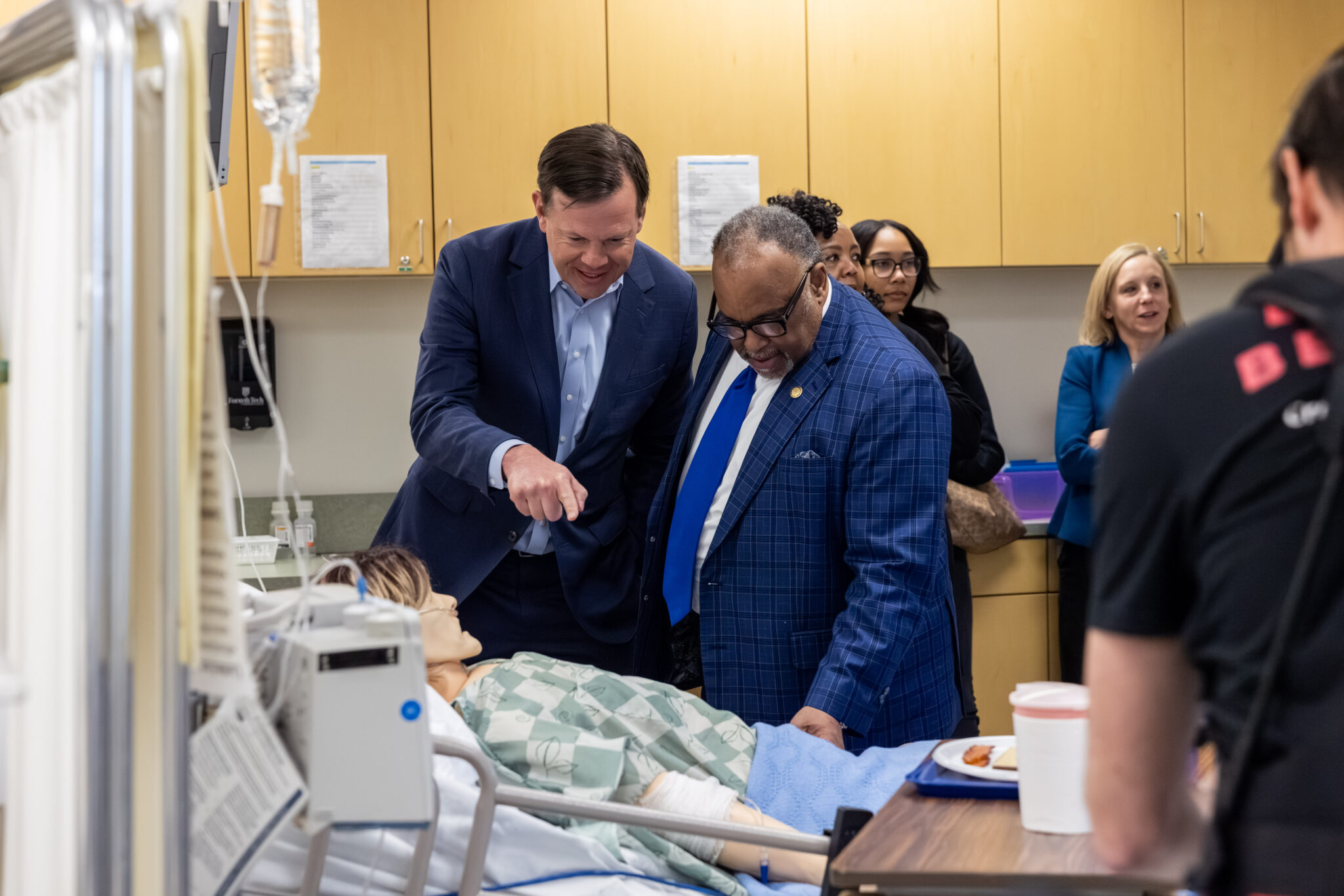
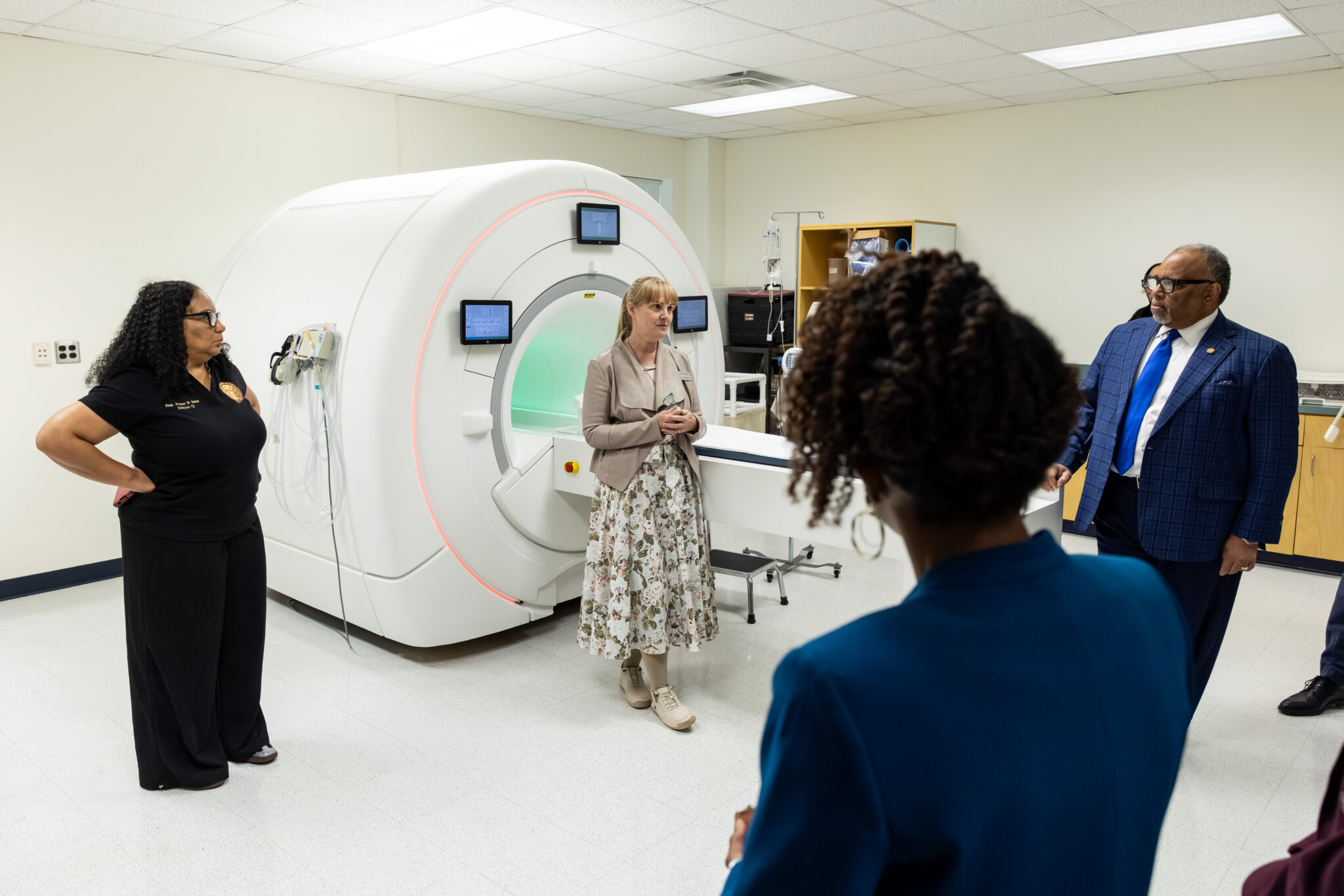
Throughout the visit, held on April 8, Forsyth Tech showcased their advanced manufacturing, biotechnology, and health sciences departments, displaying the laboratories that support students with attaining practical experience for their future careers.
Braswell shared that the majority of Boost students are enrolled in high-demand career pathways such as health, technology, engineering, and transfer programs that will allow them to continue at a four-year university. Notably, 41% of Boost students at Forsyth Tech are enrolled in health-related associate degree programs, setting them on a path to careers in health care.
The strength of advising when ‘life happens‘
Advising is a significant part of the Boost model. Braswell said that traditionally, the student-to-adviser ratio at the college is 400:1, while Boost allows a 150:1 ratio. As a result, students are able to receive advising that she describes as high-intensity and, jokingly, probably annoying at times due to the frequency of intentional outreach from advisers.
As the success adviser for Boost at Forsyth Tech, Megan Meraz believes that it is important for students to have rapport with someone who is invested in their success. Being involved in every aspect of students’ educational journey is what draws Meraz to programs like Boost. In addition to one-on-one advising, she works to develop academic and career workshops that support students with building skills that North Carolina employers are looking for.
For Meraz, advising isn’t just academics, but rather the cultivation of a sense of community where students feel welcomed. She feels that a part of the success of the program is the trickle effect of one student’s engagement ultimately leading to other students becoming and remaining engaged.
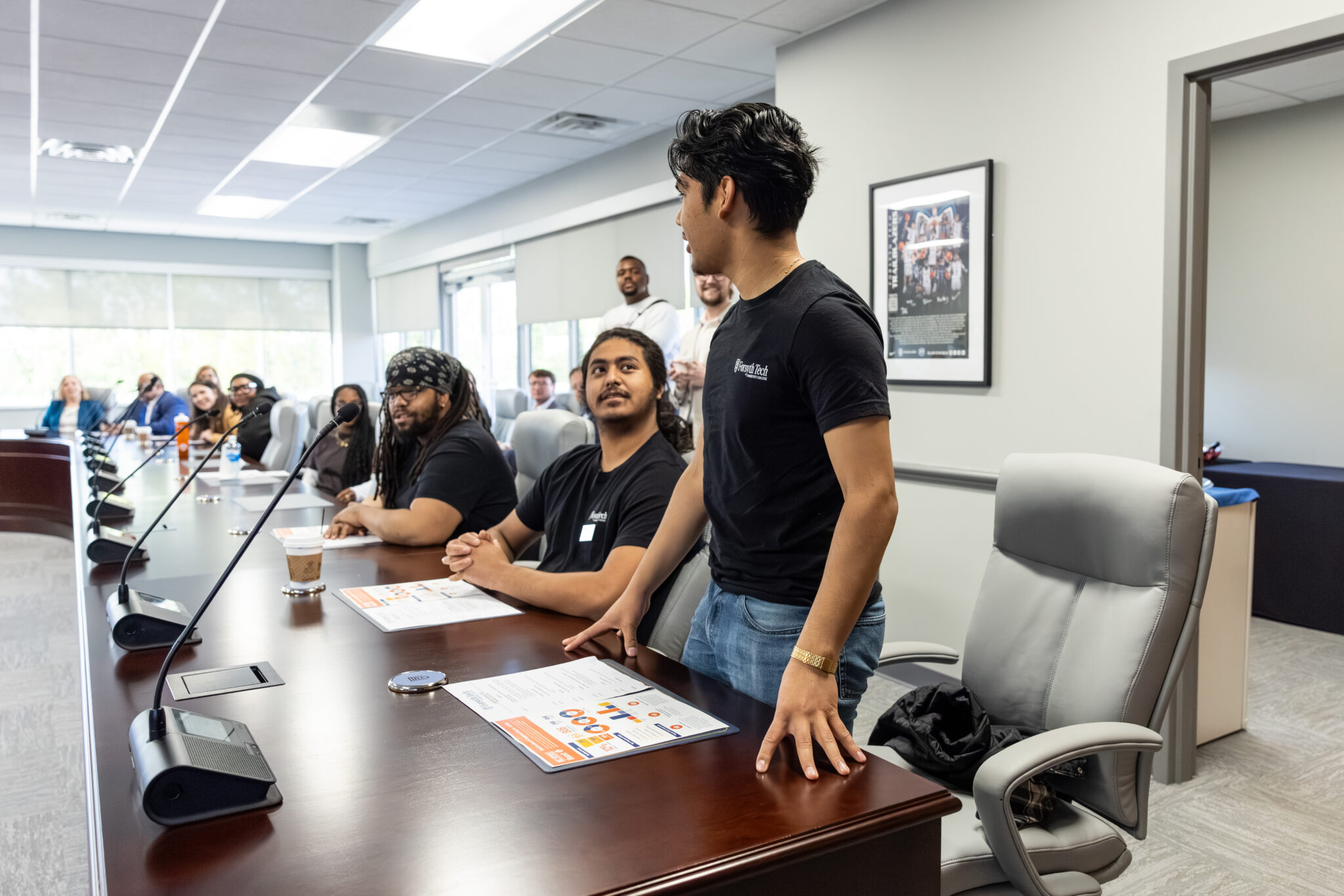
Forsyth Tech Boost student Gael Garcia-Quinterrio stated that while he considers himself to be academically capable, he felt lost entering into college. Garcia-Quinterrio expressed that meeting Meraz and joining Boost has single-handedly been the greatest impact on his college journey so far.
“It gives us a community essentially,” he said. “I’m excited to go to school every day because I go to the Boost room, everyone’s there, we can chat it up, we can study, we can advise each other. It’s just such a good group.”
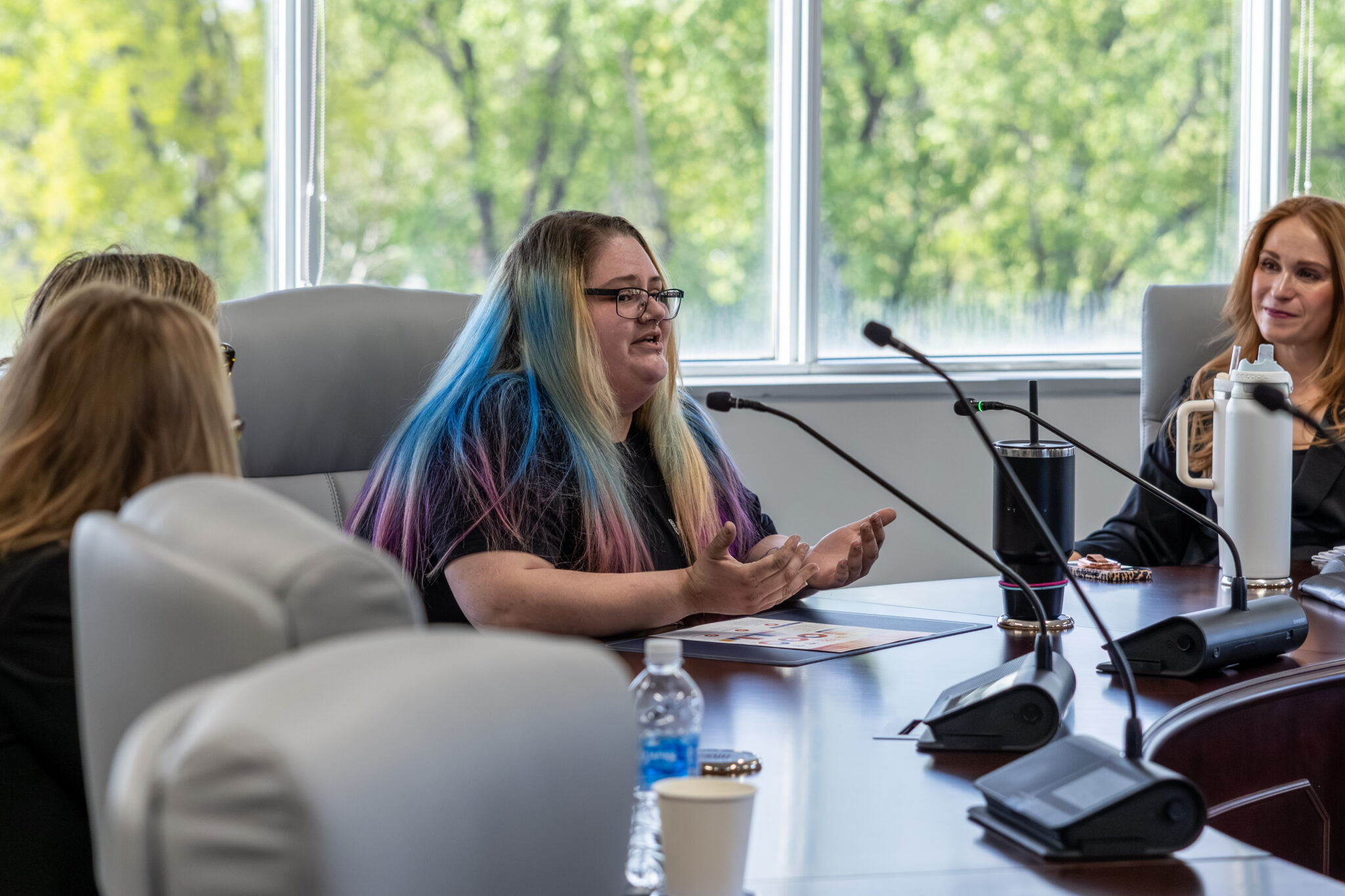
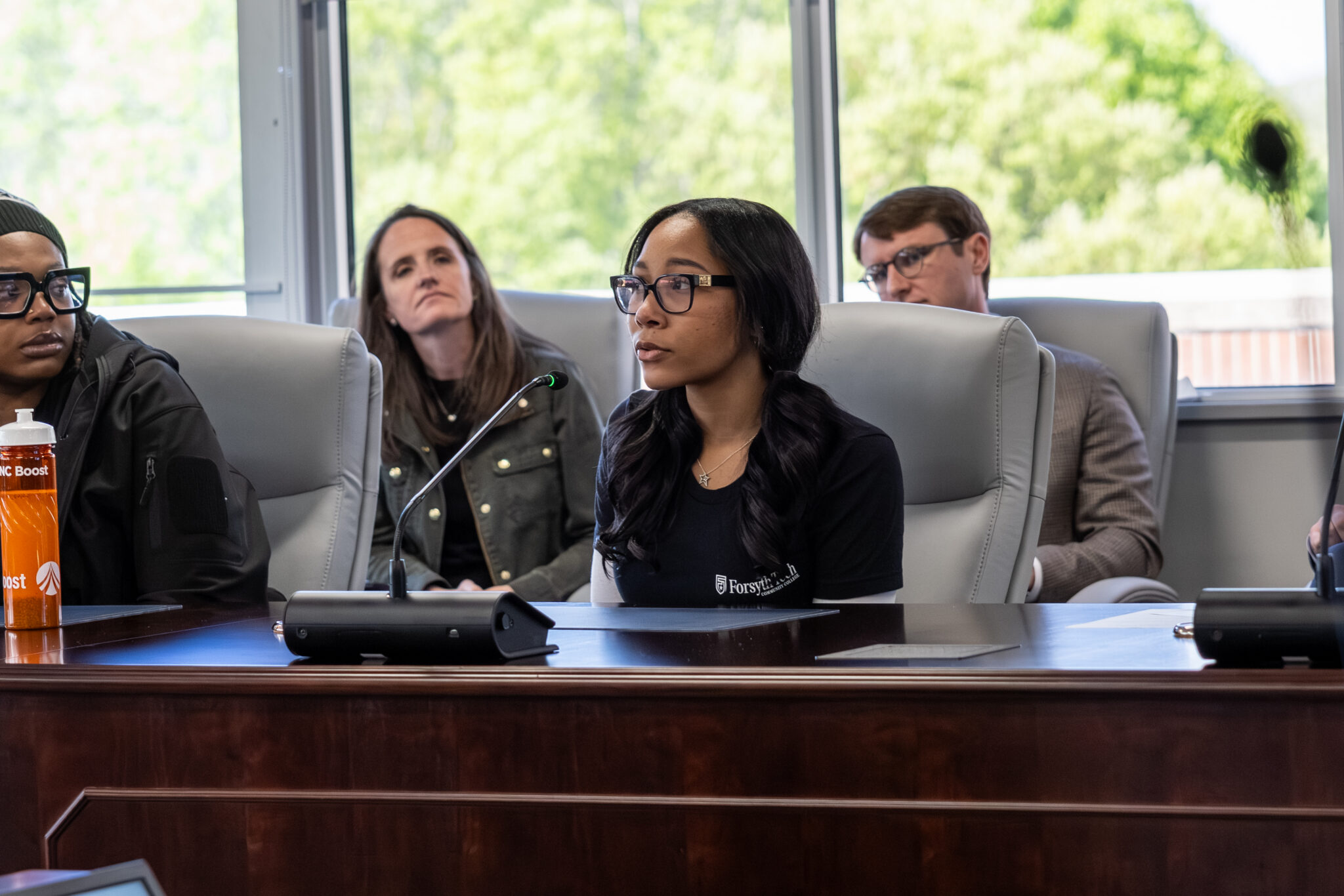
Another Boost student, Alyssa Ramirez, said that prior to joining the program, she struggled in her first semester. After entering the program, Boost advisers connected her with Forsyth Tech Cares before the semester started. Ultimately, Ramirez was able to get financial support in addition to the emotional support needed as she entered the academic year.
“They were just there and it was great having something that was on my side to help us out through all the hard times,” she said.
Carmen Canty-Johnson is Forsyth Tech’s director of student success coaching and accelerated pathways. According to Canty-Johnson, the benefits of proactive and intense advising are reflected in the data.
“Life happens” is a euphemistic, “pretty phrase,” that she uses to express the multitude of hardships faced by students as they navigate the program.
When real-life circumstances detour a student’s attention from their academic pursuit, Canty-Johnson said that the college’s attendance alert system allows advisers to reach out and intervene. When an alert is raised, Boost students are able to continue the program about 80% of the time, preventing the need to withdraw.
Jeanice Exil, a Boost student at Forsyth Tech, expressed that she is grateful to be seen, heard, and really cared for by the advising team. Exil voiced that the advising team invests in keeping students on track and making sure that their college experience is running smoothly. She considers advisers to be a valuable resource, especially when “life gets in the way,” and students may find themselves falling behind.
Read more about Boost
The foresight of Forsyth
Dr. Paula Dibley is the chief officer of student success and strategic innovation at Forsyth Tech. According to Dibley, the college is focused on increasing economic mobility, which serves as the throughline between initiatives and frameworks pursued to impact student completion.

When explaining the rationale behind the college’s intentions, Dr. Sara Singleton, Forsyth Tech’s associate vice president of governance and strategic innovation, referenced a Harvard study that named Winston-Salem among the lowest places nationwide for upward economic mobility.
As a result, beyond graduating, the goal for students at Forsyth Tech is “to move on to make that livable wage,” which Dibley said serves the college’s ultimate purpose as a community college.
“We’re investing in the people who work here. We’re investing in this community,” she said.
Dibley expressed that Forsyth Tech’s Vision 2030 strategic plan, also referred to as “Future Ready by Design,” centers on forecasting what the community needs, not just today, but also moving forward to be ready for the future.
In all, Nicole Ditillo, Boost program director for the N.C. Community College System (NCCCS), said the visit was a great portrait of how Forsyth Tech has built on their strengths and continued to serve students. She sees Boost as one brick in the foundation the college has created to ensure students have access to supports and that they’re successful once they’re on campus and post-completion.
Kelly McManus, executive vice president of education at Arnold Ventures, believes that Boost is designed to align with Forsyth Tech’s goal of increasing economic mobility in the county.
She describes it as “the perfect marriage,” given the program’s focus on identifying high-value degree programs, meeting students where they are, and ensuring that they are going on to jobs that provide a liveable wage.
“I think Forsyth Tech is going to be a model for Boost implementation more broadly, or how community colleges can drive economic mobility in our country,” McManus said.
Editor’s note: Arnold Ventures supports the work of EdNC.