School psychologists are more than ‘testing machines.’ In Cumberland County, here’s how else they support well-being
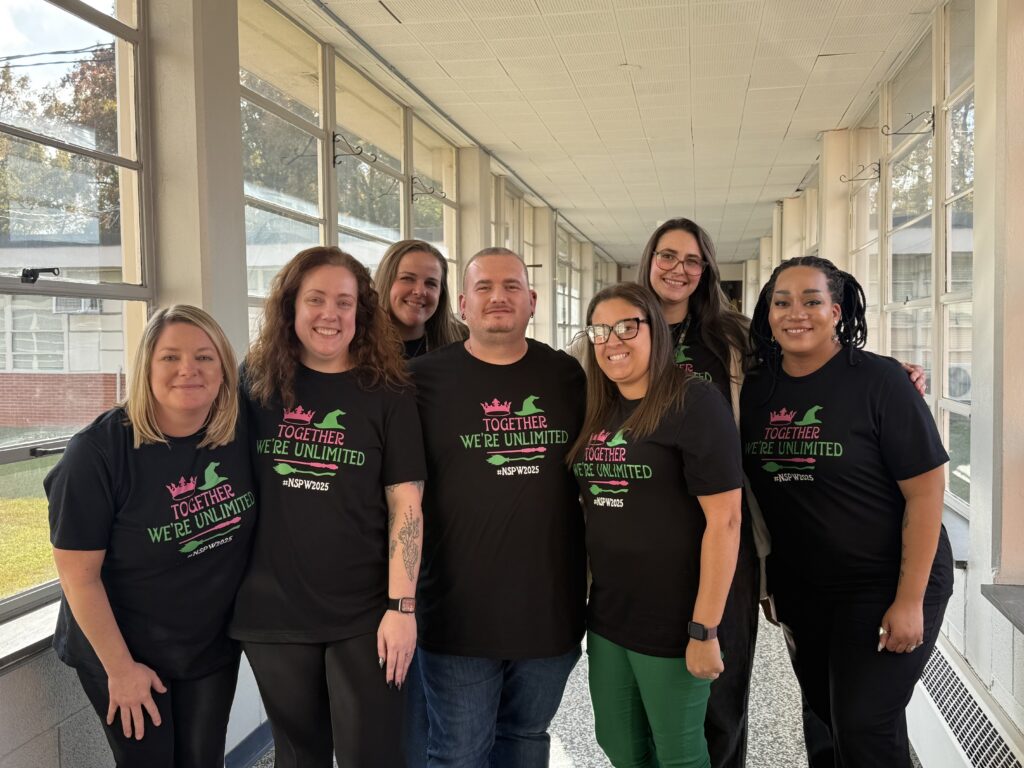
It’s National School Psychologist Week, and Cumberland County Schools is celebrating all week long.
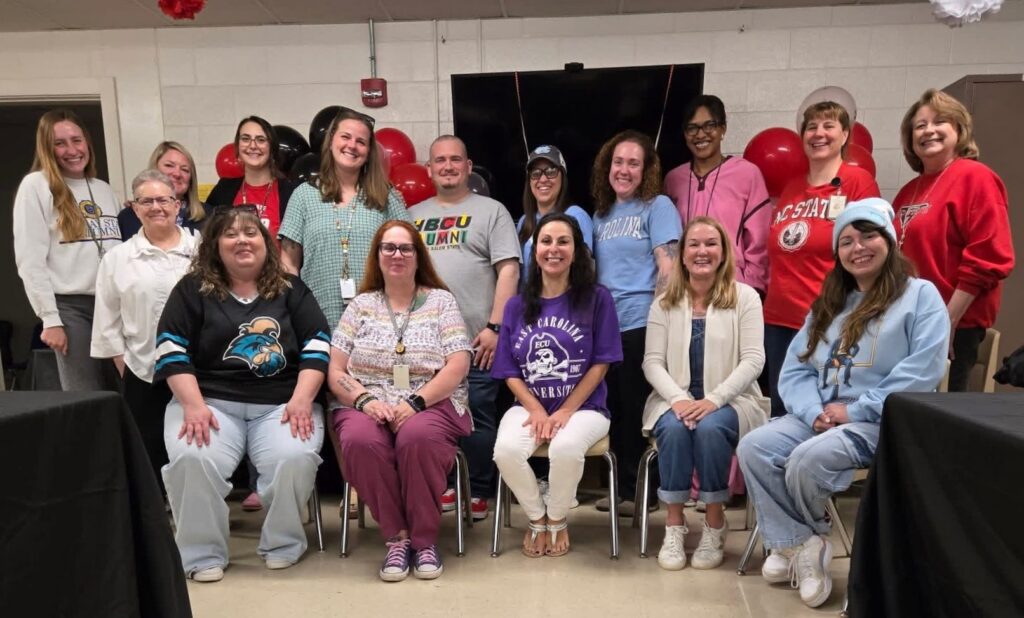
Today, the district’s school psychologist department wrote encouraging messages to send to their colleagues. Tomorrow, school psychologist interns and their supervisors will test their knowledge in a game show-style format. On Thursday, the school psychologists’ meeting room is turning into an arcade, and on Friday, the district will announce their school psychologist of the year.
David Jones is a school psychologist in the district and co-chair of the psychological services program’s Triple C (culture, community, and connection) Committee. He helped plan the festivities.
Jones said the week isn’t just a break from daily routines — it’s an opportunity for the district’s school psychologists to acknowledge and celebrate each other’s work.
 Sign up for the EdWeekly, a Friday roundup of the most important education news of the week.
For the roughly 776 school psychologists serving 1.5 million K-12 students in North Carolina, the profession’s workforce and funding shortages are not new.
But in Cumberland County Schools this week, the district’s psychological services team will celebrate their accomplishments despite the challenges.
“I know how frustrated they’ve been, I know how challenged they’ve been, and it’s hard,” said the district’s Psychological Services Coordinator Lisa Craver of the team. “This is the best group of psychologists you’ll ever work with. But we don’t have the capacity to celebrate them as much as we should.”
School psychologists are more than ‘testing machines’
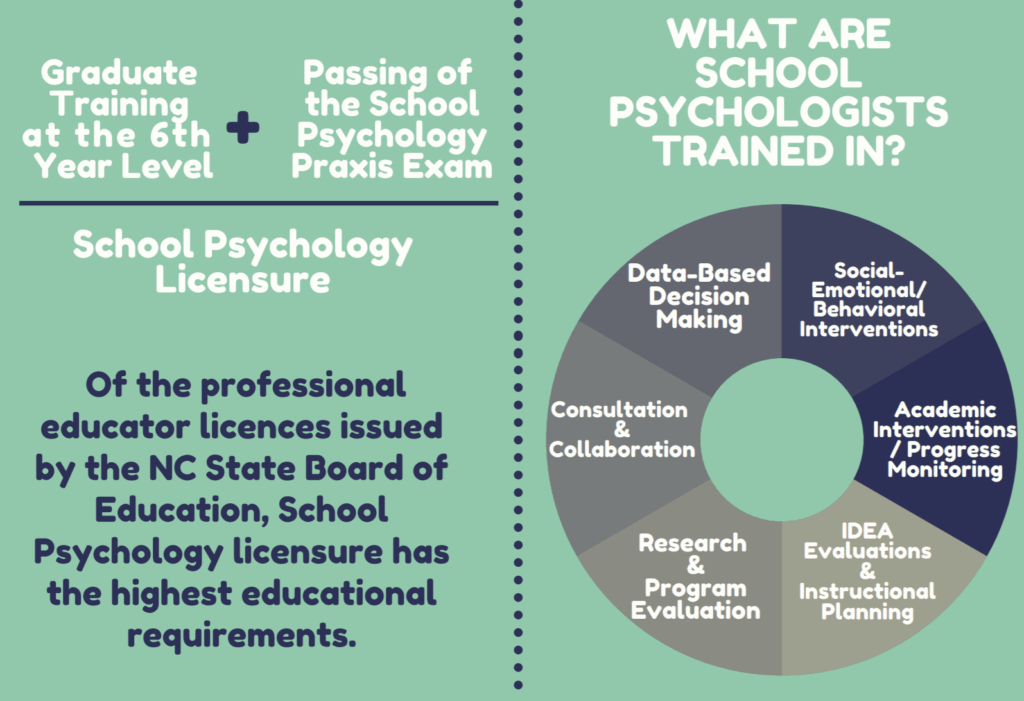
Becoming a school psychologist in North Carolina takes time. You must complete an advanced degree, which includes at least two years of course work, a 1,500 hour supervised internship program, and receive a passing score on the school psychology Praxis exam.
It’s during these studies and practical experiences that school psychologists become proficient in a range of psychological and analytical skills.
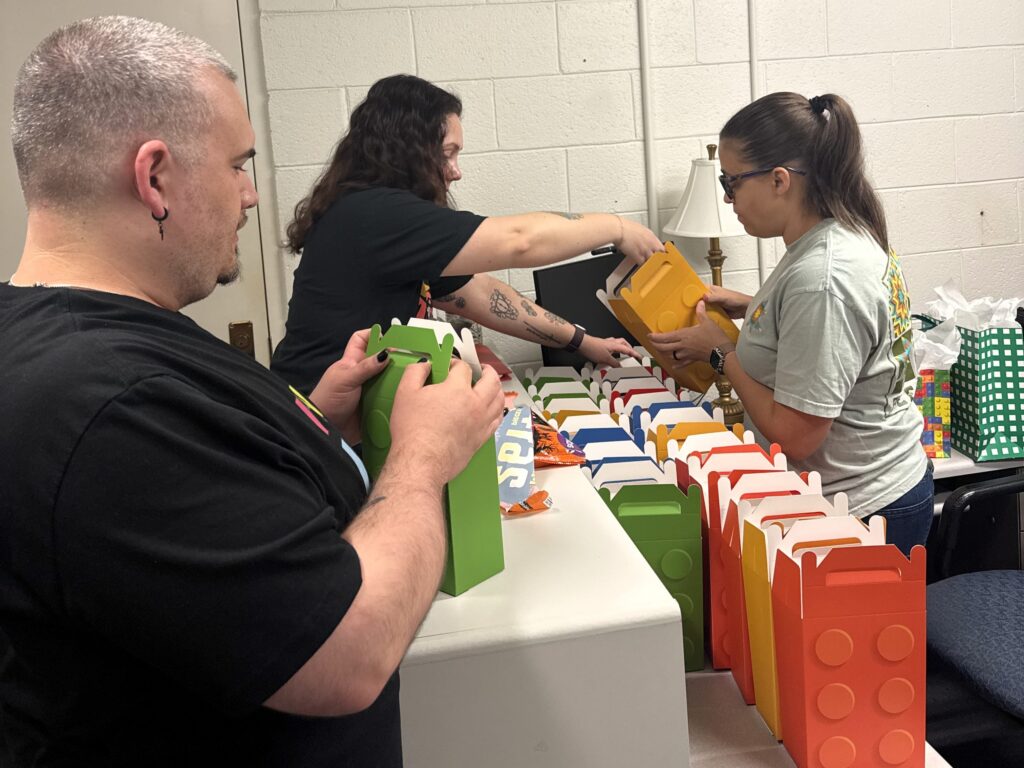
They consult and support schools’ student services and Multi-Tiered System of Support (MTSS) teams. They’re trained to provide group and individual counseling to students, work with administrators to analyze school data, and consult with teachers on behavioral interventions.
In Cumberland County Schools, Jones is going to lead SPARCS, or Structured Psychotherapy for Adolescents Responding to Chronic Stress. Once fully trained to deliver the program, he’ll lead middle and high school students through 16 trauma-informed psychotherapy sessions. One of Jones’ school psychologist colleagues is training to provide Bounce Back, a similar counseling program designed for elementary students.
At the same time, North Carolina’s school psychologists are often the only school health professional in the building licensed to conduct evaluations required by the Individuals with Disabilities Education Act, or IDEA. This federal law affirms that every eligible child has the right to a free appropriate public education.
As is the case in many other school districts, the 27 full and part-time school psychologists working in Cumberland County this year are spread thin across the district’s 86 schools, with an average ratio of one school psychologist per 1,800 students.
In North Carolina, the average ratio of students to school psychologists is 1,928 to 1 — nearly four times the nationally recommended ratio of one psychologist per 500 students. As of 2025, there were 23 school districts in the state with zero full-time school psychologists.
Amid these shortages, Craver and her colleagues said the need to prioritize legally required evaluations, such as those under IDEA, makes it difficult for them to flex the full array of behavioral health service “muscles” they’re trained to provide.
“Last year, we were so short-handed that we barely had half of our allotted staff, and so we weren’t able to assign psychologists directly to schools,” said Craver.
Without enough hands on deck, she said that keeping up with mandated testing and reporting consumes the work day.
“We’re often seen as testing machines. We write reports. We go to meetings. That’s what we’re known for,” said Jones. “I think sometimes, when people think about mental health, they don’t actually think of a school psychologist, because they have that limited view of what we actually do.”
Read more about school psychology
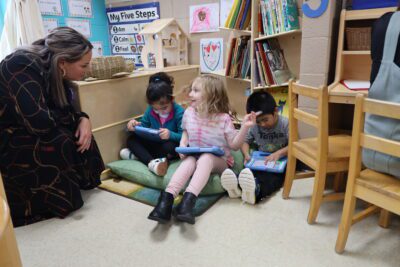
Mary Katherine Stiles, a school psychologist in Cumberland County Schools, explained that when school psychologists’ capacity is maxed out by testing, they aren’t able to do preventative work that would keep additional students from being referred to testing.
“(We could) help teachers identify some good intervention strategies to use for their students, or to take a look at the collective data that’s available for that student and come up with a plan, or at least be able to explain what the students’ needs are right now,” said Stiles.
When school psychologists aren’t available to facilitate these conversations, she said, case numbers rise. It’s for that reason that Stiles said Jones’ effort to provide students with trauma-informed therapy is worth celebrating.
“(Jones) has really highlighted what we’re capable of and what we still intend to do, even when we feel overwhelmed with all of the other things going on. He’s still making it a point, and so is our other psychologist, to be able to be another resource for students in need in terms of mental health and well-being,” she said.
How Cumberland County Schools grew their school psychologist workforce this year
This school year, Craver said Cumberland County Schools added seven school psychologist interns to the team. That meant that the district was able to assign psychologists directly to schools.
According to Craver, that number of new interns is rare.
“The most we’ve had in any previous year has been five,” she said.
In North Carolina, five universities offer school psychologist programs and produce between 25 and 30 graduates a year. While a $1 million nonrecurring appropriation in the state budget aims to bolster in-state training options by establishing a virtual school psychology training program at East Carolina University, advocates say that right now the in-state pipeline isn’t enough to fully address North Carolina’s school psychologist workforce shortage.
In response, some districts recruit school psychology interns from out-of-state programs. That was the case in Cumberland County, where Craver said six of the seven new interns are students in out-of-state programs.
A combination of pay incentives and recruitment strategies made the hires possible.
Jones said he’s cultivated relationships with out-of-state professors and program leaders by tabling at national conferences. Another help has been the North Carolina Department of Public Instruction’s (DPI) school psychology consultant position, currently filled by Megan Cardin. Craver said that Cardin’s work in other states to raise awareness of North Carolina’s school psychologist needs has been helpful.
Pay incentives also brought interns to the district. Currently, school psychologist interns and their supervisors are not guaranteed to be paid by the state for their work or mentorship.
Craver said school psychologist interns in her district are compensated based on the master’s degree teacher salary schedule. All of Cumberland County Schools’ school psychologist positions are state funded, and Craver said that the pay structure was put in place by the district since before she took over the job more than 13 years ago.
Cumberland County Schools is one of a few districts that offered this pay structure to their school psychologist interns for the 2026-27 school year. Craver explained the interns also fill an otherwise vacant district school psychologist position.
“There are other paid internships in the state,” she said. “Some using the same model that we do, but there’s still a lot of places that either don’t provide any salary or stipend, or they just provide a stipend.”
Earlier this year, DPI announced $6.4 million in federal grant funding to implement the NC School Psychologists Supporting our Students project, also known as Project SoS.
Cumberland County is one of the high-need districts participating in the grant program. According to Craver, through the program, the district was able to give a $10,000 retention bonus to each of its psychologist staff members who returned to work this year. The grant also funded $5,000 sign-on bonuses to two of the district’s new school psychologists.
According to DPI, the grant program will run for four years.
Even with expanded staffing, school psychologists in Cumberland County Schools face high caseloads and have limited capacity to offer the full range of services they are trained and licensed to provide. Even so, Craver considers the new staff “a win.”
There’s a lot you can do on the bench. You can cheer for the team while you’re sitting there. You can get water for people. You’re still useful, but you’re not utilizing your skills to the fullest extent of their potential.
And when you’re stuck on the bench, because that’s where the greatest need for you to be is right now, based on just simple logistics — in this case, caseload — then you’re not able to really get out there and show what you could do fully. You’re exercising one muscle, and not any of the others to really be able to get there and actually affect the score.
— Mary Katherine Stiles, school psychologist in Cumberland County Schools and CCS 2024-25 school psychologist of the year
During this Friday’s celebration, Jones will give a presentation on the many non-testing-related mental health services he and his colleagues have been able to provide over the past year. For example, training in the SPARC and Bounce Back therapy programs.
He also plans to share school psychologists’ work to run student groups, provide school-based information and outside resources to families, and lead social-emotional learning lessons.
“I just want it to be common knowledge — I dream of the day, even — where it’s common knowledge that we are actually mental health professionals. We’re behavior specialists,” he said.
Stiles said the Triple C Committee that Jones co-chairs is unique to Cumberland County. She encourages other districts to consider something similar, as it helps the team to share, collaborate, laugh, lament, and “just have a chance to work in community,” she said.
The theme of this year’s National School Psychologist Week is “Inspire Connection.” Stiles says the Triple C Committee’s existence and festivities reflect that sentiment.
“Because essentially, that’s what school psychologists do: We connect. And when we can connect to one another, we do a better job for kids,” she said.