
Perspective | The value of hyperpresent principals
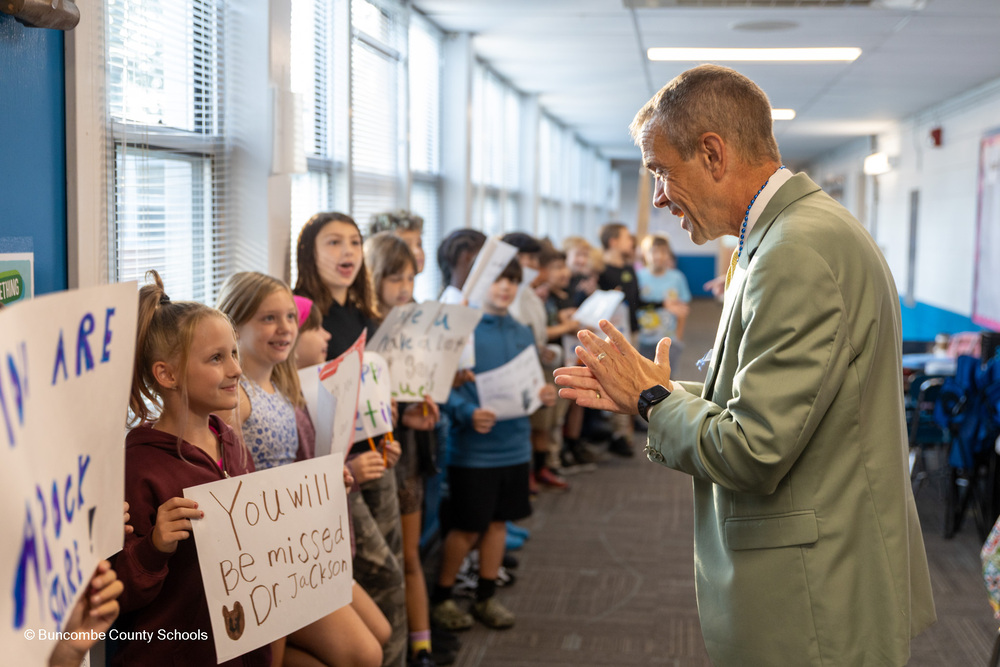
The classroom door quietly opens.
The students barely notice.
A few glance toward the visitor before quickly returning their attention to the work in front of them. There is no sudden straightening of desks. No nervous glance from the teacher. No interruption to announce the arrival of the person who has just entered the room.
That is because this visitor is here all the time.
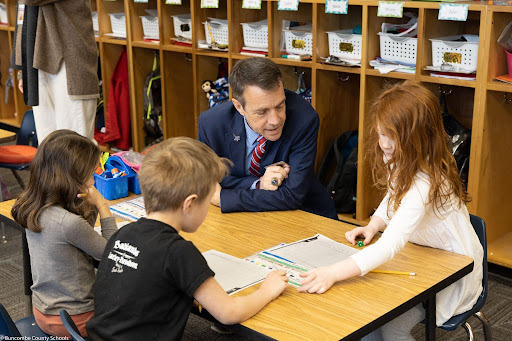
The principal slips into an empty chair beside a student who is staring intently at a page covered with numbers.
“What are you learning today?”
The student looks up and begins explaining the math problem.
The principal listens.
Not simply to the answer but to the student’s thinking.
The principal asks another question.
“How did you figure that out?”
The student points to the paper and begins again — this time explaining the process that led to the answer. A smile slowly stretches across the principal’s face.
“That is some impressive thinking.”
The student smiles, too.
Across the room, the teacher continues the lesson without missing a beat.
There is nothing particularly remarkable about the scene.
And that is precisely what makes it remarkable.
The principal is not conducting a formal observation. There is no clipboard filled with evaluation criteria. The teacher did not receive advance notice of the visit.
The principal is simply doing what the principal does every day.
Showing up, again and again, in classrooms.
 Sign up for the EdWeekly, a Friday roundup of the most important education news of the week.
Principals have always understood the importance of being visible.
They greet students as they arrive in the morning. They stand in hallways during class changes. They visit the cafeteria. They attend concerts, athletic events, parent nights, and school celebrations.
Presence matters.
Relationships are built through presence. Trust grows through presence. Culture is strengthened through presence.
But the most effective school leaders understand that there is a difference between being present and being hyperpresent.
The hyperpresent principal intentionally spends significant time in the place where the most important work of the school occurs — the classroom.
And there is a good reason.
More than 20 years ago, researchers Kenneth Leithwood, Karen Seashore Louis, Stephen Anderson, and Kyla Wahlstrom examined decades of research into how educational leadership influences student learning in a Wallace Foundation study titled, “How School Leadership Influences Student Learning.” Their conclusion was powerful and points to the absolute need for hyperpresent principals in every school. Among school-related factors influencing what students learn, leadership was second only to classroom instruction. They estimated that the direct and indirect effects of leadership accounted for approximately one-quarter of total school effects.
Their work also helped clarify what it means for a principal to be an “instructional leader.” The phrase has been used in education for decades, but the idea behind it is actually quite simple. Effective principals keep teaching and learning at the center of their work.
To do that well, principals need to know what teaching and learning actually look like in their school. This is not simply found through test scores, spreadsheets, lesson plans, or reports, but through firsthand experience.
A spreadsheet can tell a principal that third grade mathematics scores have improved. Being in a classroom helps the principal understand why.
A report might indicate that sixth grade reading growth is not where it once was. Being hyperpresent in a classroom might help uncover what teachers need to accelerate it.
Data tells an important story. But so do students. So do teachers. So does the work lying on a child’s desk.
And so the principal keeps walking.
More from Dr. Jackson



The principal steps quietly into another room.
This time, students are gathered in small groups. The noise level is considerably higher, but it is the productive noise of children wrestling with ideas together.
The principal pauses near one group. One student is doing most of the talking, and another is saying very little.
The teacher moves closer. “What do you think?” the teacher asks the quieter student.
There is a pause. Then an answer.
The teacher waits. “Tell us more.”
And the student does. The principal makes a mental note. Not about the student — about the teacher.
The principal has just witnessed a subtle but powerful instructional move. Rather than accepting the answer of the most eager student and moving forward, the teacher intentionally created space for another child’s voice.
Later, the principal will mention it. Perhaps in the hallway. Perhaps in an email. Perhaps during a planning meeting.
“I noticed what you did today …”
Five words. But five words that tell a teacher something important: I see you. I see your work. And your work matters.
This is where presence begins to become instructional leadership.
But something else has happened, too. The principal has learned something: Perhaps we have defined instructional leadership too narrowly.
The principal enters the classroom as the instructional leader. The principal is the person typically expected to observe, provide feedback, coach, and support the teacher.
But the best principals also enter classrooms as learners.
That brings us back to the principal standing quietly in the classroom.
The principal isn’t there simply to see what the teacher is doing. The principal is there to learn, too.
To learn which instructional strategies are engaging students deeply. To learn where students are struggling.
To learn which questions cause students to think rather than simply respond. To learn which teachers have developed practices that colleagues might benefit from seeing.
To learn whether yesterday’s professional development is becoming today’s classroom practice. And to learn what teachers need from their principal to become even better tomorrow.
More from NC principals
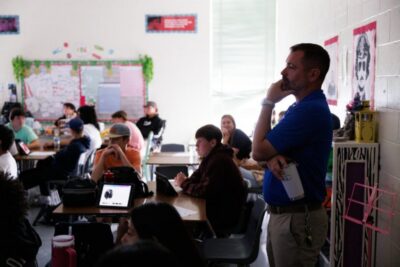
The hyperpresent principal is more than an instructional leader. The hyperpresent principal is a lead learner.
Nearly two decades after the first major Wallace Foundation research on school leadership, researchers returned to the question with much more evidence at their disposal. Their conclusion was even stronger. They found that the importance of principals may previously have been understated.
A 2021 synthesis by researchers Jason Grissom, Anna Egalite, and Constance Lindsay found that replacing a below-average principal with an above-average one could result in approximately 2.9 additional months of mathematics learning and 2.7 additional months of reading learning each year for students in that school.
The magnitude is impressive. The scope may be even more so.
A great teacher can profoundly affect the students assigned to that classroom. A great principal influences the conditions experienced by children throughout an entire school.
Principals hire, develop, encourage, and support incredible teachers and work to maintain working conditions in the school that lead to excellent teaching and learning.
But the research also provides an important caution: Simply walking into classrooms is not enough.
Research examining how principals spend their time found that informal classroom walkthroughs conducted primarily for monitoring or visibility did not produce the positive results we might expect. Coaching teachers, on the other hand, showed much more promise.
That distinction gets to the heart of the hyperpresent principal.
Being hyperpresent is not about being seen, it is about seeing.
Seeing students learn. Seeing teachers teach. Seeing where support is needed. Seeing excellence that deserves to be celebrated and shared. And then doing something meaningful with what has been seen.
If every classroom visit feels evaluative, teachers will understandably become anxious when the principal walks through the door. That defeats the purpose.
Being hyperpresent depends on trust.
When classroom visits are frequent enough, they cease to become events. Students stop wondering why the principal is there. Teachers stop feeling as though they need to perform. The principal becomes part of the normal rhythm of teaching and learning.
That normalcy creates opportunities for something much more valuable than monitoring. It makes sharing feedback, coaching, giving encouragement, and facilitating growth simply the way we do things here.
The research also points toward something remarkably practical. Effective principals don’t simply observe teachers. They talk with them about teaching. They provide meaningful feedback. They coach. They use what they see in classrooms, along with student data, to help teachers continually improve.
Read more

The hyperpresent principal isn’t counting visits towards or simply checking boxes.
The goal is improving learning.
Another classroom. Another student. This one spots the principal before the principal can make it through the doorway.
“Come here!” The student waves the principal forward excitedly. “You have to see this.”
The principal walks over.
A paper is pushed forward. Perhaps it is a paragraph finally written independently. Maybe it is a math problem that seemed impossible yesterday. Perhaps it is a science experiment, a piece of artwork, a musical passage, or a book that only weeks earlier seemed too difficult to read.
The accomplishment itself almost doesn’t matter, what matters is what the child does next.
The child looks toward the principal, waiting. The principal studies the work, then smiles at the student. “Wow. Tell me how you did this.”
And suddenly, another lesson begins. This one is not written in any curriculum.
The lesson is: Your learning matters. Your effort matters. You matter.
That may be one of the least measurable but most important outcomes of a principal’s classroom presence.
Students see that the person responsible for leading their school is interested not merely in whether they follow the rules, arrive on time, or behave in the hallway.
Their principal cares about what they are learning.
The next classroom visit is different. The teacher is working hard. So are the students.
But something isn’t quite connecting. The principal recognizes it because this isn’t the first classroom visited this week.
A similar struggle appeared in another classroom yesterday, and another last week.
Now the principal has information that no single classroom observation could provide.
Perhaps teachers need additional professional learning. Perhaps the curriculum needs another resource. Perhaps teachers need time to observe a colleague who has found a particularly effective approach. Perhaps the next teacher team meeting needs to focus on this very issue.
This is how a classroom visit can eventually influence an entire school. The hyperpresent principal becomes a connector.
One teacher’s success becomes another teacher’s strategy. One student’s struggle reveals a larger need. A pattern noticed across classrooms becomes the focus of professional learning. A conversation becomes coaching. An observation becomes action.
Across nearly two decades of research, a pattern emerges.
Leadership matters. Instructional leadership matters greatly.
And the principal’s influence grows when the principal stays close to the work of teachers and students.
Of course, getting into classrooms is easier to write about than it is to accomplish.
The principal’s radio crackles. Someone needs assistance in the office. An email marked urgent appears. A parent arrives unexpectedly. A substitute teacher is needed. A bus is running late.
There will always be something. That is precisely why classroom presence must be intentional.
A principal who waits until everything else is finished before visiting classrooms will rarely make it to classrooms.
The inbox will never be empty. The to-do list will never be complete. There will always be another meeting that could be scheduled. The principal’s calendar, therefore, becomes a statement of priorities.
If teaching and learning are truly the most important work of the school, they deserve protected space on the principal’s calendar.
Not because classroom walkthroughs are another item to check off a list, but because principals cannot coach what they have not observed.
They cannot meaningfully celebrate instructional excellence they have not witnessed. They cannot recognize patterns across classrooms they rarely enter. They cannot connect teachers with effective practices they have never seen. And they cannot remain close to the work of teaching sitting behind a desk in the office.
The final bell is approaching.
There are emails waiting. A meeting begins shortly after dismissal. Tonight there is a school event. The to-do list remains unfinished.
Still, the principal turns away from the office. There is time for one more classroom.
The door opens. Again, few students look up.
The principal walks toward a desk and kneels beside a student. “What are you learning?”
The student begins to explain, and the principal listens.
Tomorrow, something learned during today’s classroom visits may find its way into a conversation with a teacher.
Next week, it may become part of a teacher team discussion.
Next month, it may influence professional development, the purchase of instructional resources, or a change in the school improvement plan.
And eventually, in ways the student sitting at that desk may never know, the principal’s presence may help make teaching and learning better.
That is how leadership works. Its influence is often indirect, but its impact is real.
Great instructional leadership does not happen only in conference rooms, faculty meetings, or professional development sessions.
It begins by staying close to teachers. Close to students. Close to the work.
Perhaps that is what it truly means to be a hyperpresent principal.
The hyperpresent principal isn’t measured by how many classroom doors they walk through, but by what they learn while they are there and what they do with that learning afterward.
Being in the classroom is not the destination. It is the beginning.
So the principal shows up. Not to inspect. Not merely to be visible. But to listen. To learn. To encourage. To support. To connect. To lead.
Again.
And again.
And again.
In classrooms.
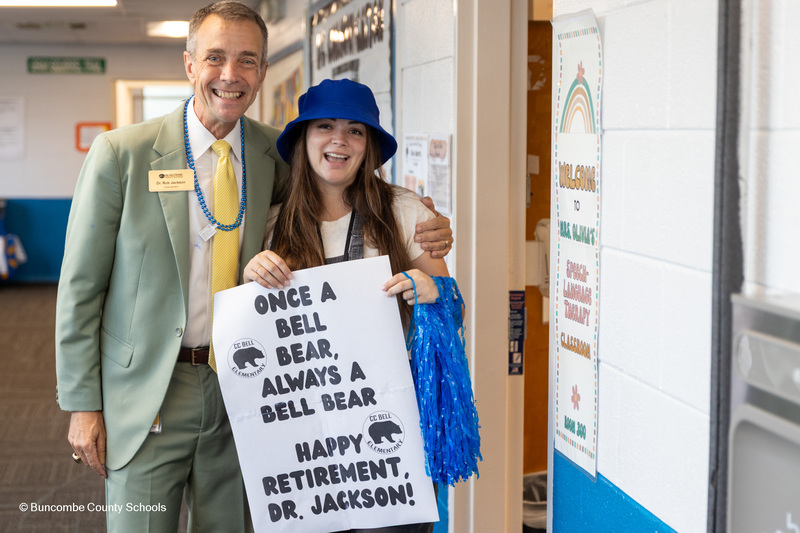
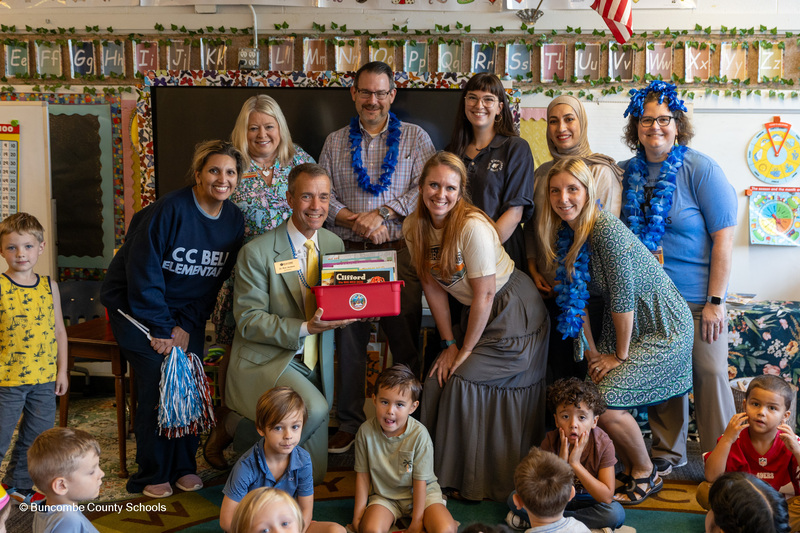
Editor’s note: Dr. Rob Jackson retired as the Buncombe County Schools Superintendent on Monday after 34 years in education. With regard to his retirement, Jackson said, “The climb has been meaningful, the journey has been extraordinary, and the people have made all the difference!”