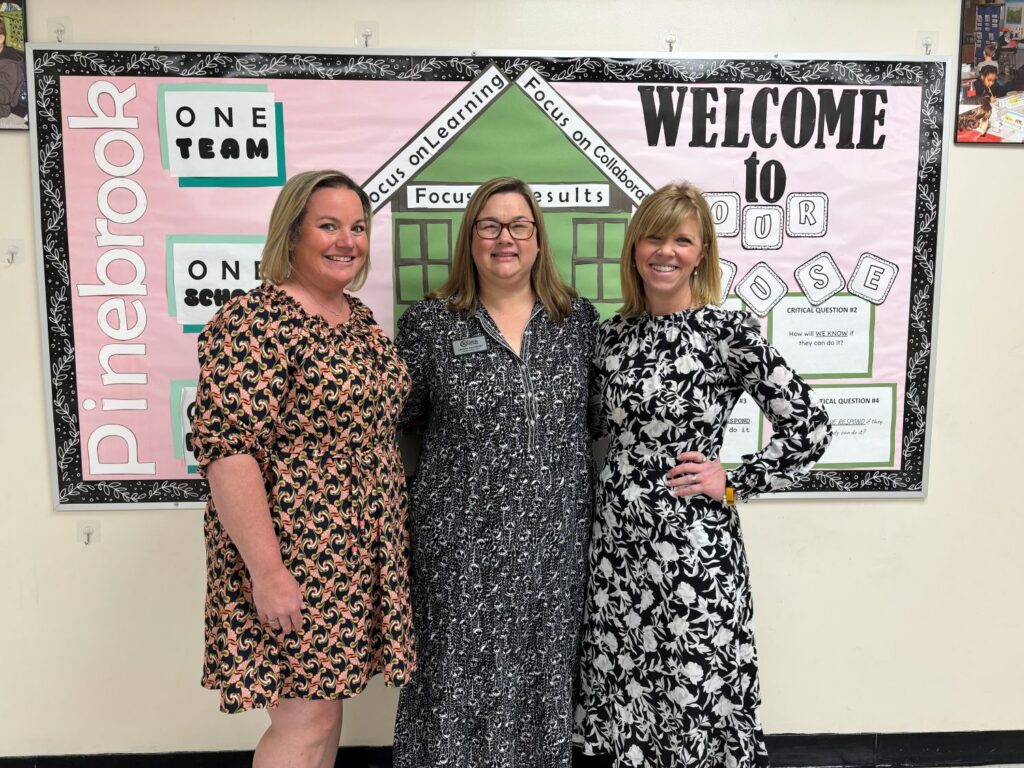
More than a label: How Pinebrook Elementary redefined literacy and math growth

For the past two years, Pinebrook Elementary School carried labels no school wants: “D” and “low performing.” Inside the building, though, the story was more complicated.
Teachers were working hard. Students were growing. But something wasn’t adding up. According to Principal Elisabeth Bolick-Spillman, also the 2025-26 Davie County School District Principal of the Year, “It wasn’t due to a lack of effort, rather an unintentional lack of focus.”
That realization became the turning point that took Pinebrook off of the low-performing list. Within one year, reading scores have increased by 9%, and math by 13%, based on the state’s 24-25 end of grade assessments.
Even so, leaders at Pinebrook are quick to share that the real story isn’t about the numbers — it’s about what changed to make the impact possible.
 Sign up for the EdWeekly, a Friday roundup of the most important education news of the week.
Looking beyond the averages
Like many schools, Pinebrook had been looking at data, just not deeply enough. “We were looking at composite scores, not the subtests,” said Bolick-Spillman.
That distinction mattered. Instruction had gradually narrowed. In reading, teachers were focusing heavily on isolated standards, sometimes at the expense of the full picture. “We were so focused on one thing that we unintentionally dropped the other pieces,” Bolick-Spillman said.
Students were practicing skills. They were reading passages. But they weren’t consistently building the interconnected foundation needed to move forward that included phonics, fluency, comprehension, and knowledge working together. Leaders realized that if they wanted different outcomes, they needed a different approach.
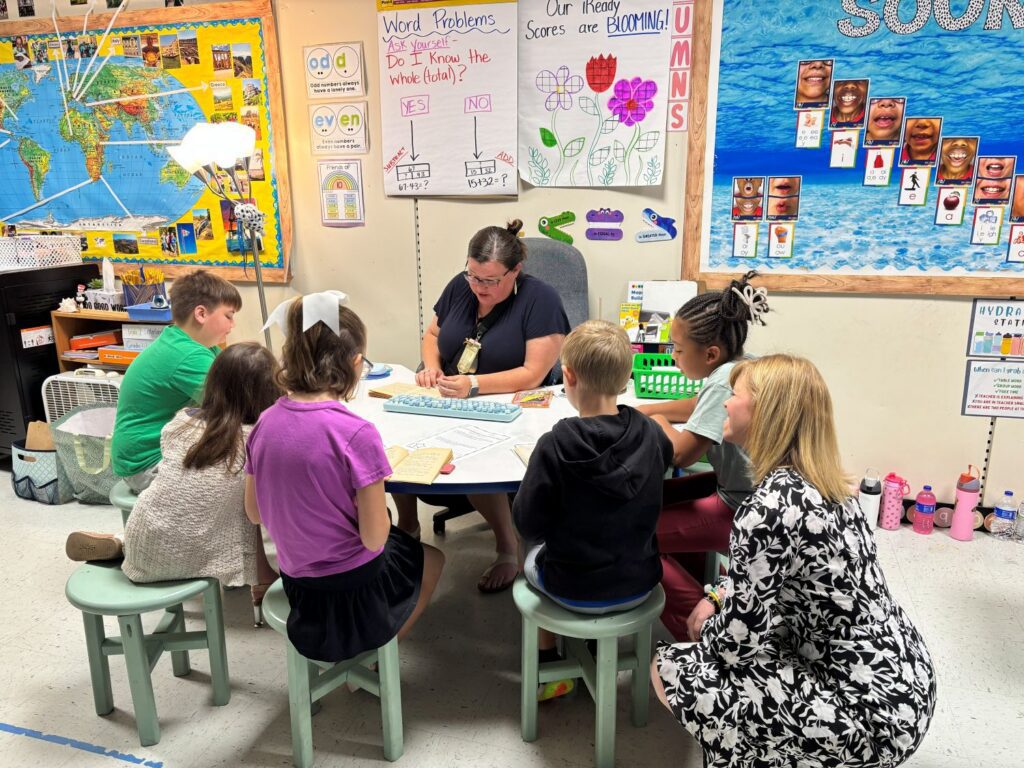
Reading is like a ladder
The shift began with a metaphor. “I told teachers to imagine reading as a ladder,” Bolick-Spillman said. “Standards are the rungs, but we have to connect all the pieces to help students climb.”
That idea reframed everything. Teams began deconstructing their instruction:
- Analyzing specific skill gaps instead of relying on averages,
- Strengthening foundational skills in early grades,
- Building knowledge and comprehension alongside decoding, and
- Ensuring instruction connected across standards rather than operating in silos.
The work coincided with Language Essentials for Teachers of Reading and Spelling (LETRS) professional learning and the adoption of a knowledge-building curriculum in upper grades, helping align instruction K-5.
However, what followed wasn’t a quick fix, it was a mindset shift.
“Deconstructing what we thought we knew resulted in aligned conversations,” Bolick-Spillman shared. “That was the spark.”
Systems, not silos
The spark alone wasn’t enough. What made the difference, leaders said, was what came next: intentional systems and consistent follow-through.
Each week, Pinebrook’s principal, assistant principal, and coaches meet in what they call “PAC meetings” to monitor progress and plan support. Those meetings anchor the work by:
- Reviewing PLC instruction and outcomes,
- Planning staff and team learning, and
- Monitoring intervention systems and student progress .
“We’re constantly asking: Where are we? Who needs support? What are we seeing?” said Christy Cornatzer, Davie County Schools elementary literacy coach.
Support is carefully calibrated. Leaders determine which teachers need support, what kind of support is needed, and who will provide the support. At the same time, they work on how to avoid overwhelming staff while still moving forward,
“I’ve seen other schools create a plan, but there’s not necessarily consistent follow-through,” Cornatzer said. “Systems of support have made a huge difference here.”
A culture where growth and instruction matter
The transformation required more than teacher growth. It required leadership growth, too.
As a first-time elementary principal coming from a secondary school background, Bolick-Spillman had to build her own expertise in early literacy.
“I could see what the problem was,” she said, “but I didn’t know how to help teachers yet.” So, she learned alongside them.
She participated fully in LETRS training, engaged in Literacy for Leaders, and sought out additional resources to strengthen her instructional leadership.
“She was alongside her teachers,” said Cameron Ammann, DPI Office of Early Learning Piedmont Triad Regional Literacy Consultant. “It wasn’t something being done to them, it became the culture of the school because that approach built trust.”
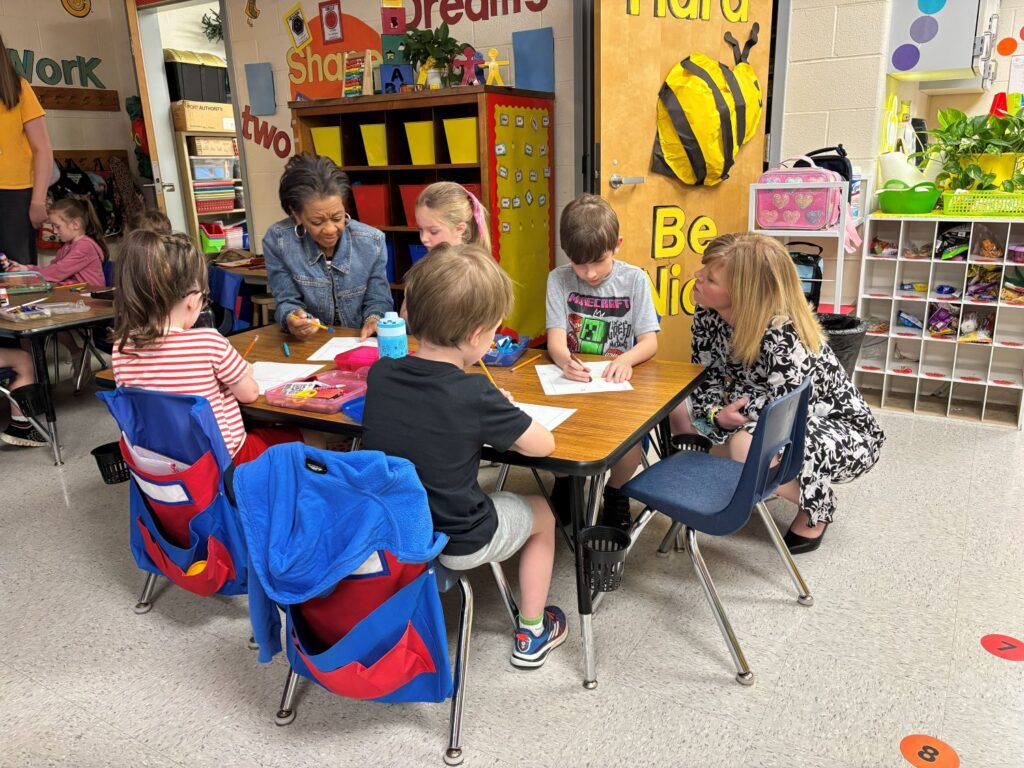
Ask anyone at Pinebrook what stands out now, and they’ll tell you: the culture.
“Pinebrook is a warm, welcoming school where staff and students enjoy coming every day,” Cornatzer said. That sense of belonging is part of what makes the work stick.
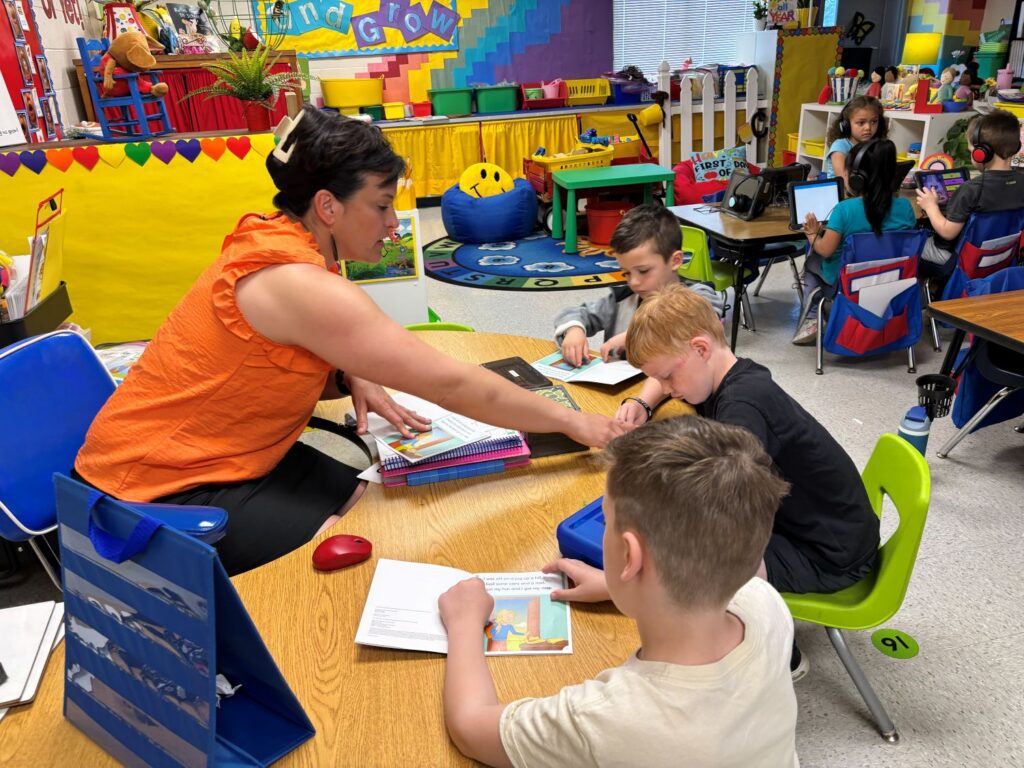
Inside classrooms, instructional time is protected and valued. Even during challenging times of year, teaching and learning continue with urgency and purpose. That culture extends beyond the school walls.
Leaders reimagined family engagement, shifting from low-attendance evening events to more accessible opportunities during the school day. Participation has since climbed to nearly 90% in some grades.
Additionally, the principal shares weekly video messages with families, breaking down skills and strategies in clear, accessible ways. “We realized parents want to help, they just don’t always know how,” Bolick-Spillman said.
Progress that builds momentum
The results didn’t happen overnight. Two years ago, just 33% of third graders were proficient. The following year, that number rose above 50%. But leaders emphasize that growth came first. “The growth had to precede the proficiency,” Bolick-Spillman said.
Now, each year builds on the last. Students arrive with stronger foundations. Teachers are ready to extend learning further. And momentum continues to grow.
Pinebrook’s turnaround didn’t come from a single program or initiative. In the early stages, nearly the entire leadership team was new. Systems had to be built. Trust had to be earned.
“We knew where we needed to go,” Bolick-Spillman said, “but we had to go slow to get there.”
That meant focusing on sustainable change by building teacher capacity over time, monitoring fidelity of implementation, adjusting based on data, and maintaining a long-term vision.
“Slow and steady wins the race,” Bolick-Spillman said.
What comes next
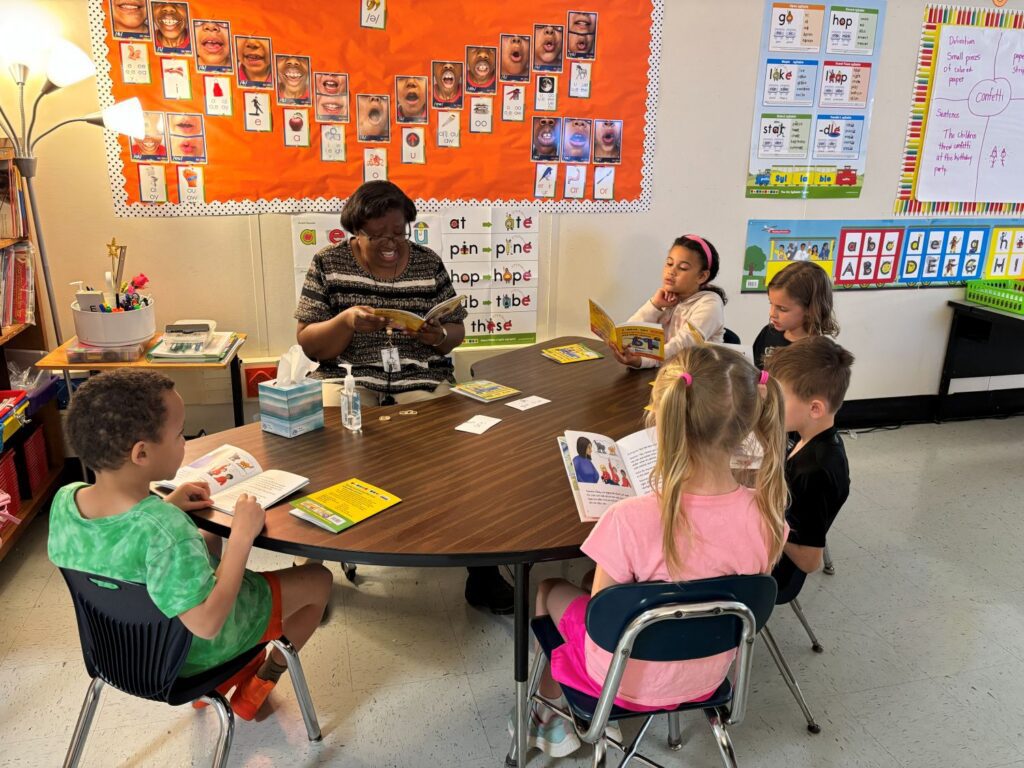
Even with strong gains, Pinebrook’s work is far from finished. Leaders are now focusing on:
- Fluency and automaticity,
- Writing across content areas, including early work with The Writing Revolution,
- Alignment with new state standards, and
- Strengthening connections between core instruction and intervention systems.
Through it all, one principle remains constant: Strong core instruction comes first.
“If your core isn’t strong,” Cornatzer said, “you’ll be chasing intervention data that never stabilizes.”
Pinebrook is no longer labeled low-performing. But for the educators inside the building, that was never the primary goal. The goal was, and still is, ensuring every student grows. Not just the average.
“It’s not about where we were,” Bolick-Spillman said. “It’s about where we’re going.”