Perspective | Summer matters to North Carolina’s children — a lot. Here’s what we can do

North Carolina has a rare opportunity — right now — to support and advocate for its students during the most vulnerable time of their year: summer.
While next summer may feel like a long way off, a proposal has emerged that would keep children happy, supported, and engaged in learning over the long break from school — and it is a game-changer. Here in our home state, where struggles to recover learning gains caused by COVID continue, and the disruptions to learning in Western North Carolina loom large, this proposal deserves our immediate attention.
In July, U.S. Senator Chris Murphy, D-CT, introduced federal legislation designed to help provide high-quality summer enrichment opportunities to children and their families, especially those for whom opportunities may be out of reach financially. The Summer for All Act aims to invest $4.2 billion in direct grants to states and community-based organizations, ensuring that every child in America has the opportunity to attend a high-quality program and enjoy a fun, fulfilling summer.
The Summer for All Act, summarized here, builds on the previous success of federal support for summer programming provided by the American Rescue Plan. With this investment, the capacity for summer programs to reach more children increased considerably in the past couple years. Unfortunately, like other relief funding, it has run out in most states.
Here’s why this matters: millions of kids and their families get left behind every summer. I know; I was one of them. Growing up, I didn’t have the opportunity to attend fun summer camps or learning activities when school let out like many of my peers. I wanted to, but my family just didn’t have the resources. So I stayed at home and made my own fun as the long days of summer passed. I didn’t know what I and other kids were missing out on.
This challenge of inequitable learning opportunities in summer is still with us; it is real, and it is massive. A nationally representative Gallup survey found that in 2023, 33% of children from high income families and 62% from low income families did not participate in summer programs. This is often due to programs’ limited availability and high costs.
Right here in our home state, too many of our students are deprived of essential summer programming:
- 401,000 of North Carolina’s school-aged children (33%) are not engaged in any summer program, but would be enrolled if a program were available to them.
- Rates of unmet need are even higher for North Carolina children living in rural communities (54%).
- The vast majority of North Carolina parents (91%) support public funding for summer learning opportunities.
We at Book Harvest, a nonprofit organization based in Durham, are committed to transforming children’s literacy across our state and nation. We believe that summer is a special and highly consequential time for children and their ability to flourish. Students’ engagement during the summer months is critical if they are to retain the meaningful reading and literacy gains they’ve made in their classrooms. Long-recognized summer learning loss has a profound impact on students, particularly and especially those from low-income households.
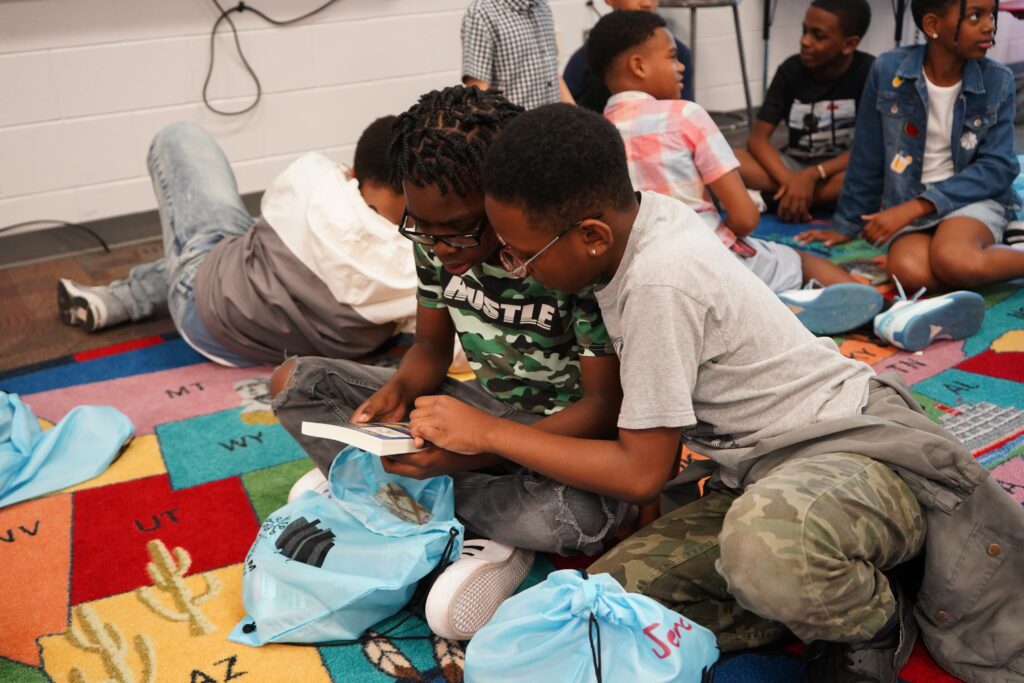
For the past 12 years, Book Harvest has actively worked to address this need by partnering with school districts to implement Books on Break in elementary schools. At the end of every school year, students choose 10 brand-new books to take home over the summer and keep forever. Students have selected more than 550,000 books over the years — books they want to read and that give them a chance to practice their hard-won reading skills over the summer break. This is especially important given significant investments made to bolster reading instruction in classrooms across the state.
Books on Break is borne out of recently-conducted research that finds that book provision programs in the summer enhance reading achievement for children — especially those from low-income families. Children growing up in lower-income homes have less access to books compared to children from higher-income families. The negative effects of these differences come into play during the summer months when all children are out of school — away from the books in their classrooms and school libraries, exacerbating the summer reading achievement gap.
The Summer for All Act would provide long-term, direct funding to help all children and families access high-quality summer programs and activities. Books on Break is just one example; there are others offered by schools and community organizations. These summer programs are a lifeline for children, offering academic support as well as a chance to reset mentally, socially, and emotionally before school begins.
Together, we can ensure that every child in our beloved state — and every child across America — has equal access to enriching summer programs that supercharge their growth and learning — and that anchor their summers in a whole lot of fun.