
Perspective | The journey toward the science of reading in Nash County Public Schools

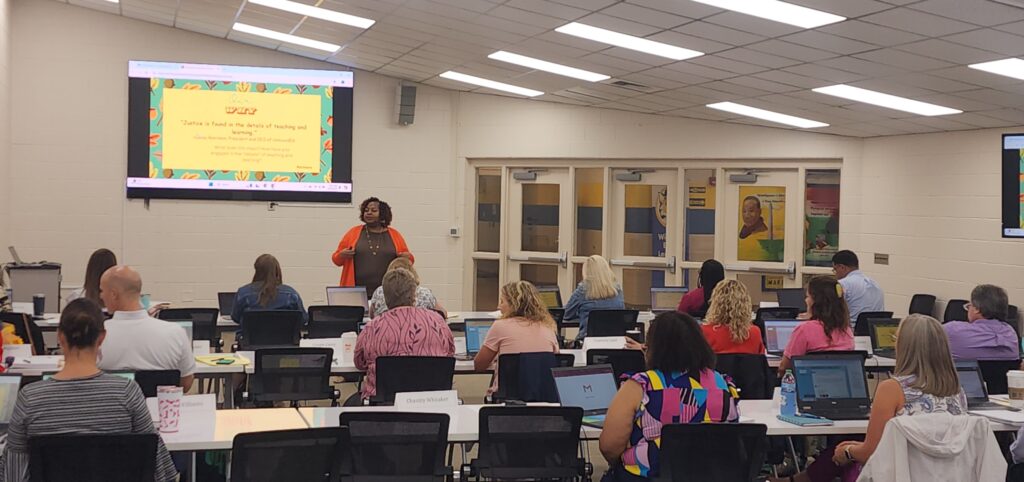
Before North Carolina embraced the science of reading and launched LETRS training for elementary school teachers, Nash County Public Schools recognized a critical gap in reading instruction for our youngest learners.
In my newly appointed position as executive director of elementary education, I found our core literacy practices to lack focus on foundational reading skills, and daily classroom instruction leaned heavily on the use of leveled reading instruction and small group center rotations.
While most student data pointed to needs in decoding, teachers focused on comprehension skills with leveled readers in small groups as the remaining students worked in stations with minimal guidance.
Teachers struggled to meet the demands of planning and managing the cycle of independent reading activities that often were loosely aligned with the differentiated needs of each student. Whole group reading lessons were often centered around a text that lacked challenge or meaning, and writing was often completely disconnected from the text or reading standards.
The transition
The challenge of meaningful implementation presented itself as I quickly recognized LETRS professional learning as an opportunity to validate the decisions behind making curriculum and instructional changes.
This meant integrating the science of reading into the processes of our district. We took advantage of our monthly “roundtable” meetings where both principals and instructional coaches met to focus on the new curriculum and its connection to the science of reading.
As the district cohort completed sections of LETRS, we explicitly stated expectations of application with adjusted walkthrough look-fors. In an effort to build administrators’ capacity to monitor, the elementary team visited schools and gathered evidence of implementation to share at our roundtables. Grade-level district LETRS professional learning communities (PLCs) were held after each assessment window to guide teachers in immediately connecting classroom data to scientifically-researched methods included in their units of study.
School leaders began monitoring classrooms for resource integrity and providing feedback based on the science of how our students learn to read. As a result, our end-of-year mCLASS assessment showed the number of students at and above benchmark in foundational reading skills jumped by an average of 22 percentage points in grades K-3, laying the groundwork for sustained literacy growth. End-of-grade reading assessments in grades 4 and 5 showed an average increase of seven percentage points.
Where we are now
As we closed the 2023-24 school year with our final district PLC, we shared and analyzed our data with our teachers. I wondered if the teachers and principals would return in August with renewed willingness to apply all we had learned.
When the elementary team started our official learning walks cycle the first week of September (yes, the day after Labor Day!), we were encouraged to see teachers beginning to fill gaps found in the previous year’s data.
K-3 teachers opened their reading blocks with phonemic awareness lessons with integrity to the resources, while fourth and fifth grade teachers explicitly taught syllable types before moving into comprehension. First grade writing hung in the hallways displaying student responses to text far above their grade level.
Next steps
As we celebrate the amazing growth in school performance, we recognize the opportunities for growth with every data point our students generate. While we see an increase in the number of students reaching benchmarks in word recognition skills, we must ensure this results in the creation of successful readers in grades 3-5.
It is my goal to continue the application of research-based practices to accelerate the growth required to increase proficiency in our schools. There are still mindsets to shift and unprecedented challenges facing our educators, but I have always considered LETRS professional learning to be a powerful tool in transforming the performance of teachers and, ultimately, our students.