
Perspective | Harriet, Pippi, Dolly, and me: What a childhood spent hiding behind books taught me about raising readers in the age of AI
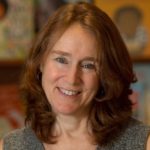
I wanted to be like Dolly Parton when I was a girl growing up in Georgia in the 1970s. The problem was that I was almost nothing like her.
My earliest memories of Dolly are of hearing her voice on the crackly AM radio station as my mom drove me to school each morning — a pit in my stomach about the day ahead. I found solace on the radio waves: Dolly’s voice was both comforting and arresting, impossible to ignore. And then I would arrive at school — where everything felt loud and brash — and face the daily fears of an introvert.
I was a bookish nerd. I was shy and awkward. I had buck teeth and too many freckles. I dressed to blend in rather than stand out, although my bright red hair made that particular strategy somewhat less successful than I might have wished.
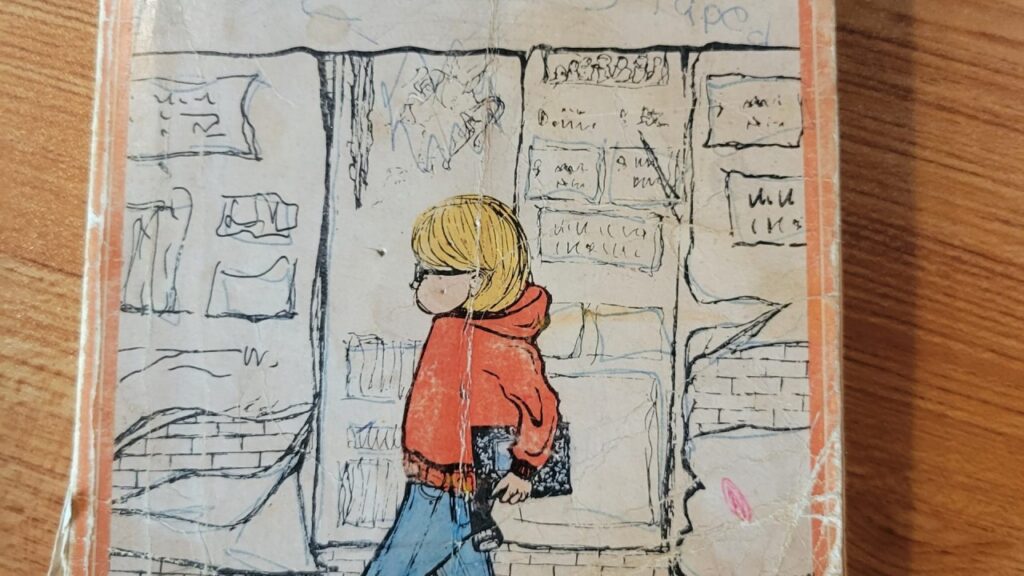
I powered through quietly, accompanied by my beloved books. Books were my companions, my refuge, and my force field against the world. During dreaded daily recess, I would retreat into the pages of Harriet the Spy. Harriet taught me that being an outsider could have its advantages: While everyone else was busy being seen, she was watching.
Before Harriet there was Pippi Longstocking, the badass girl with the red braids who was, unlike me, entirely unbothered by what anyone thought of her. Every Halloween, I dressed as Pippi, with coat hangers hidden under my hair to force my own red braids to stick straight out. She was everything I wasn’t and everything I wanted to be.
And then there was Dolly.
Dolly was doing the opposite of blending in. She made an art form of being impossible not to notice. There she was in her towering heels and gravity-defying hair, her decolletage and rhinestones announcing her before she even opened her mouth, singing in a voice that could be both brassy and tender. I knew and liked her songs well enough — though, truthfully, I would take Elton John’s “Crocodile Rock” over “Jolene” any day.
But it wasn’t her music that fascinated me. It was her persona. I found her confidence and authenticity irresistible at a time when Southern girls were often overlooked and undervalued. She seemed oblivious to the slights all around her — or perhaps, in the larger-than-life posture she cultivated, she was thumbing her nose at the sexism that surrounded her, with a hearty though kind — always kind — laugh.
Dolly was not conventionally cool. Neither, for that matter, was Pippi Longstocking. But both seemed to possess something I desperately wanted: an unshakable and joyful sense of self.
I did not want to be a country singer. I wanted, I think, to be whatever Dolly seemed to be: A woman who had figured out how to take up space in the world without apologizing for it.
As it turned out, I became more like Dolly than I ever dreamed possible as a girl.
Dolly’s passion was making sure babies and young children grew up with stacks of books at home. Mine is too. I was proud when I heard her speak of being called “the book lady” when she first started Dolly Parton’s Imagination Library back home in Sevier County, Tennessee, because that is a name I answer to as well.
In 2011, I founded Book Harvest, a nonprofit organization based in North Carolina whose mission is to realize a world in which every child grows up with an abundant home library of books that they own, beginning at birth. Three million books shared to date and counting, my work has me embracing Dolly as a kindred spirit, even if we never met.
 Sign up for Early Bird, our newsletter on all things early childhood.
The shy girl sheltering behind books and the woman in the rhinestones had somehow arrived at the same place. Two Southern women, years apart, chasing the same improbable dream: putting books, and lots of them, into the hands of children.
And now she is gone.
Dolly knew, as I do, that books can change the trajectory of a child’s life. And now that she is gone, it is up to you and me and us all to continue to pursue the world she imagined, in which every child has stacks of books at home in their first five years.
Dolly founded Imagination Library to honor her father, whom she described as both illiterate and the smartest man she ever knew. His inability to read was not a measure of his intelligence; it was the consequence of brutal poverty and a lack of educational opportunity. Dolly understood that literacy was not simply a school skill. It was a gateway — to information, opportunity, independence, and — yes, true to the name of her cause — imagination.
Today, the threat to children’s literacy looks different than what her father endured, but I believe it is every bit as daunting.
Children are growing up in a world in which artificial intelligence can write an essay before they have learned to formulate an argument, summarize a book before they have wrestled with its meaning, and produce an answer before they have learned how to sit with a question. The danger is not simply that children will read fewer books. It is that we may allow technology to short-circuit the exquisitely difficult, formative work through which children learn to think, imagine, grapple, express themselves, and make meaning of the world.
This is the paradox of our moment. We have more information and more technology than any generation before us, yet we may be in danger of depriving children of the very experiences that allow them to become independent thinkers.
Read more
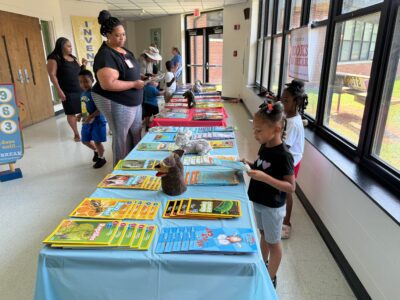
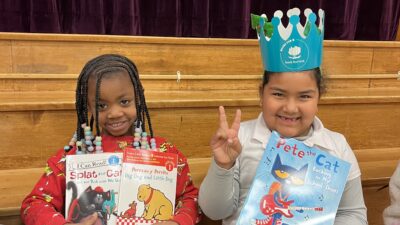

Dolly understood something that our technology-saturated culture can make easy to forget: Children need to possess books, not simply have access to information. They need the abundance of stories waiting for them at home — the physicality of a sturdy board book that they can chew on, the bright colors of a picture book that they can recite at bedtime with a beloved adult, and the dog-eared pages of a chapter book that they can’t put down.
They need to feel the pride of book ownership and the exhilaration of having a favorite book. They need to struggle through words, wonder at them, return to them, argue with them, fall in love with them. They need to stumble upon characters who become friends and to feel so gripped by those characters’ travails that they hide under the covers with a book and flashlight way past bedtime. They need the chance to develop an interior world before a machine offers to construct one for them.
I know this because books gave me that world.
When school felt scary, books gave me somewhere else to go. They gave me characters to accompany me, questions to wrestle with, worlds to enter, and versions of myself to imagine. Harriet the Spy taught me the pleasures of observation. Pippi showed me that a girl could be gloriously eccentric and still be powerful. And Dolly showed me what it might look like to move through the world without making yourself smaller for other people’s comfort.
Perhaps that is why her confidence captivated me so completely. I could not be her, but I could imagine her.
I have spent the last 15 years trying to build that kind of abundance for children through Book Harvest. What I have learned is that a home library is about much more than books. It is a declaration to a child: These ideas belong to you. These stories are yours. You have a place in the world of readers and thinkers. Your opinions matter. You are someone whose mind is worth developing.
Dolly did that for millions of children.
Now she is gone, and the work is ours to carry on.
The question before us is not whether we can stop technology from changing childhood. We cannot. The question is whether, in a world in which machines can increasingly do the work of language for us, we will still insist on giving children the time, space, books, and freedom they need to develop their own stories, and a mind of their own.
I know where I learned that lesson.
From the book lady.
This piece was originally published on LinkedIn, and is republished here with permission.