‘Work for a brighter day’: Lessons from Dolly Parton’s legacy of literacy and love

“Literacy legend,” “You were my first babysitter,” and “Miss you already!”
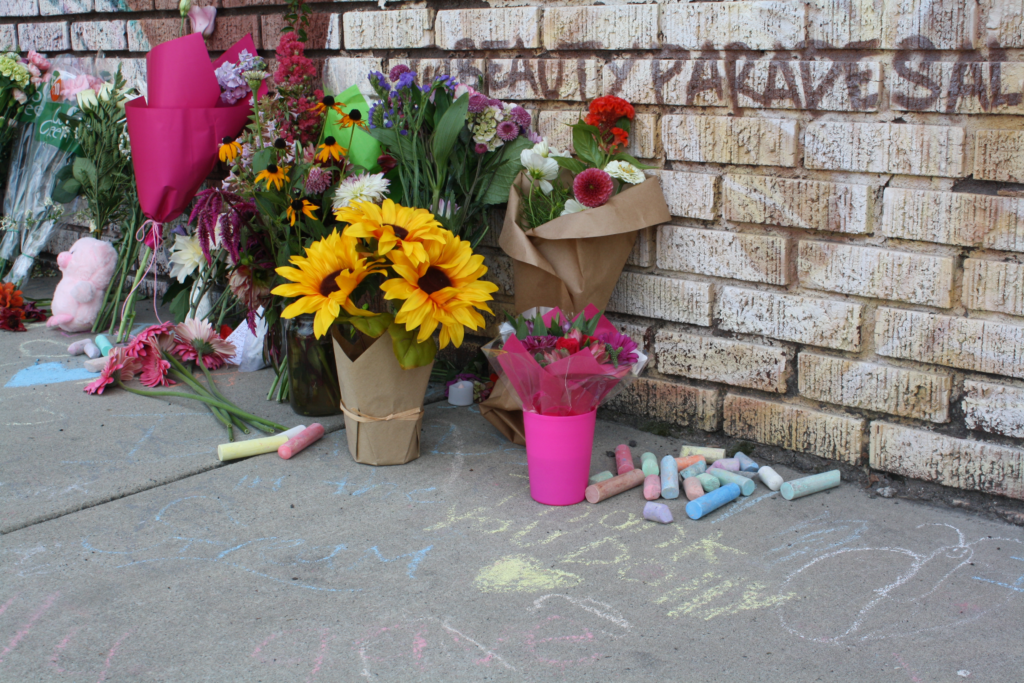
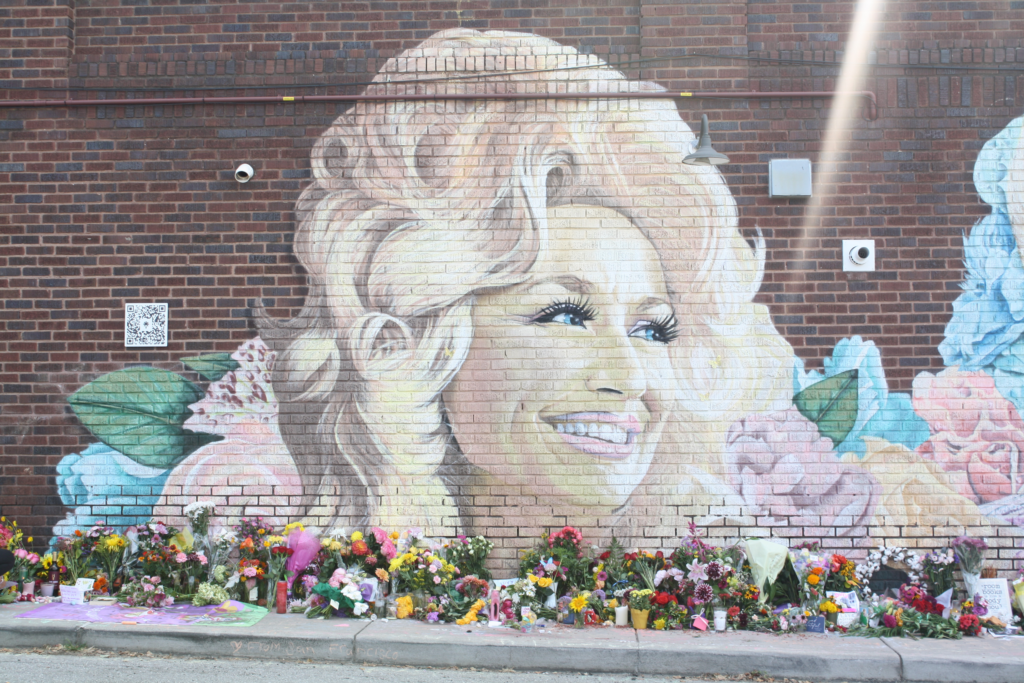
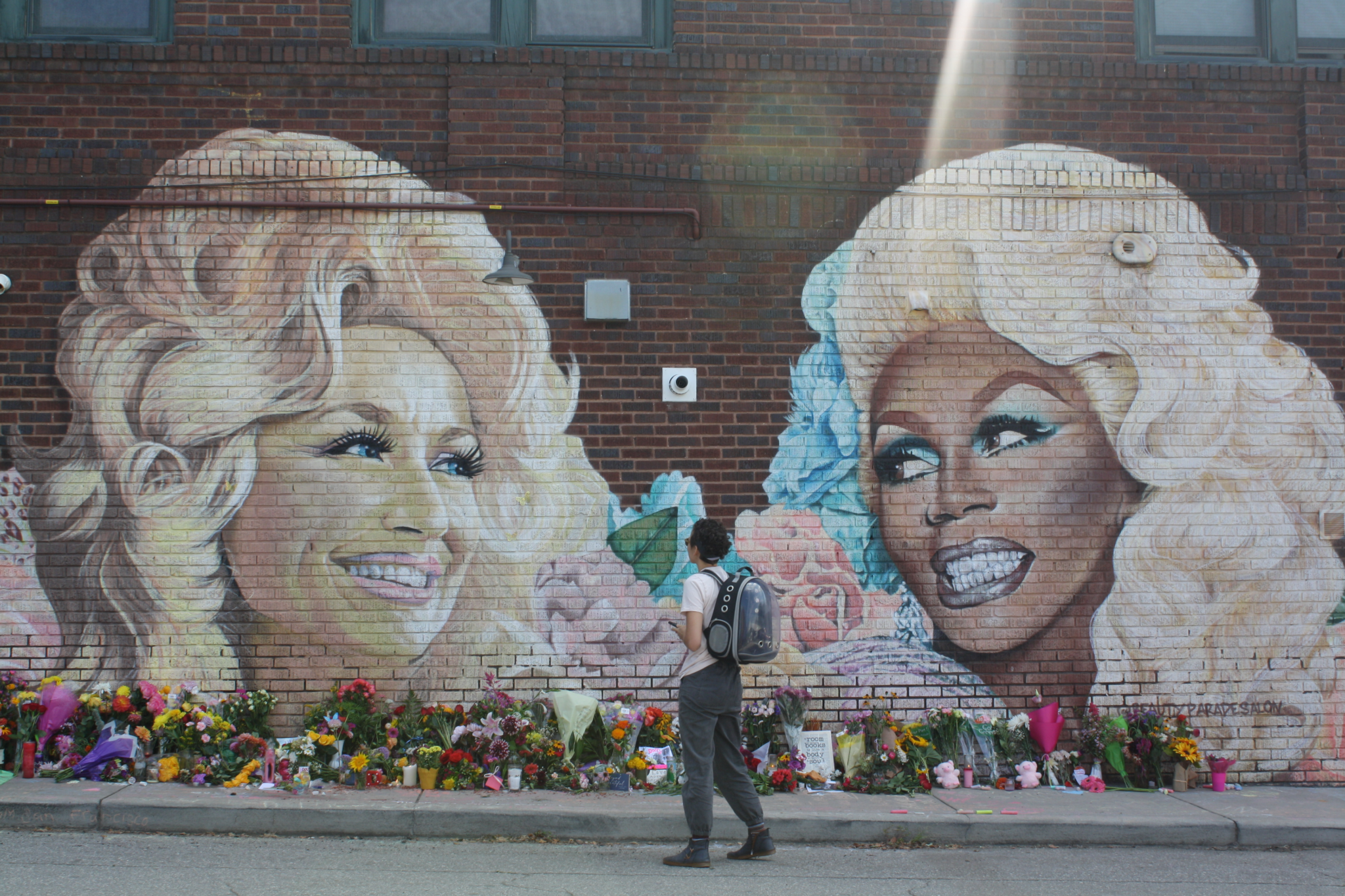
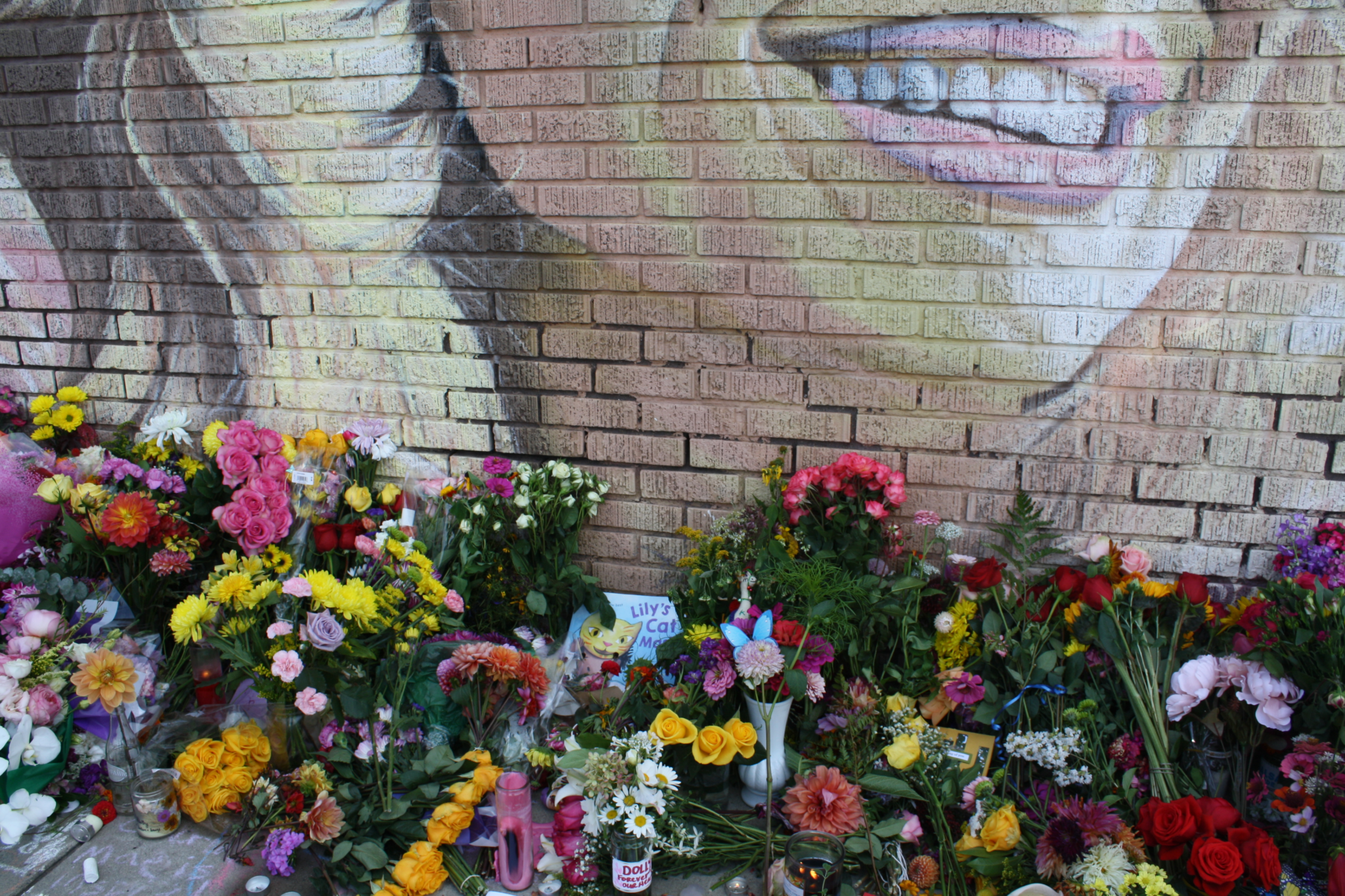
Those were among the many chalk messages left in tribute to Dolly Parton outside her West Asheville mural when I visited on Wednesday, along with flowers, candles, stuffed animals, and children’s books.
Parton, the legendary and record-breaking country singer and songwriter, died on Tuesday at age 80 after a brief battle with cancer. Immediately after her death was announced by her family, tributes from far and wide came pouring in, highlighting not only Parton’s incredible impact as an artist and writer, but also as a philanthropist, a mentor, and a human.
She was “a rags-to-rhinestones daughter of Appalachia,” the New York Times wrote in its obituary, born on Jan. 19, 1946 as the fourth of 12 children of Robert Lee and Avie Lee (Owens) Parton. She grew up in a small cabin in Sevier County, Tennessee, where her father was a tenant farmer, “and her mother was a homemaker who sang old Anglo-Celtic ballads and hymns while doing housework.”
Though her family lived in poverty, as a star, Parton would often talk about the happiness of her childhood, which was filled with music. Growing up, my own family frequently listened to her 1971 hit “Coat of Many Colors,” in which she recalls her mother lovingly sewing her a coat “of rags of many colors.” She sang, “Although we had no money, I was rich as I could be, in my coat of many colors my momma made for me.” As a child, I remember wanting to feel that rich one day.
 Sign up for the EdWeekly, a Friday roundup of the most important education news of the week.
Much can be said — and has already been written — about the superstar, actor, and astute businesswoman and entrepreneur Parton was, and the beautiful catalog of work she leaves behind. But as we reflect on Parton’s legacy, there are many lessons we can learn from the woman whose heart was the biggest thing about her.
First, she showed us the power of living authentically. Parton was unapologetic about her big blonde wigs and rhinestoned style, her faith as a Christian woman, and her love of all people. In 2020, she spoke out in support of efforts for racial justice, and she frequently expressed her support for LGBTQ+ people. While she was committed to staying out of partisan politics, she often reminded us of the need for tolerance and love. She was witty, funny, compassionate, and so smart. Parton wasn’t afraid to be herself, and she tried to create a world where the same was true for everyone else.
She wrote and performed many Christian songs and hymns throughout her career, including the Academy Award nominated “Travelin’ Thru” for “Transamerica,” a 2005 film about a trans woman who travels across the U.S. after discovering she has a teen son.
“God made me for a reason and nothing is in vain,” she sang. “Oh, sweet Jesus, if you’re listening, keep me ever close to you, as I’m stumbling, tumbling, wandering, as I’m traveling through.” Her faith was always inclusive, genuine, and never took itself too seriously.
Over the course of her career, Parton’s love for the South, Appalachia, and her people also never wavered. She wrote about what she knew — poverty and heartbreak, but also female empowerment and love for her home — and across the world, fans connected with her songs in part because of their vulnerability and specificity.
As Tressie McMillan Cottom wrote this week:
Dolly’s songs will live on. They document American history through the eyes of Americans who don’t often get to tell their own story. She also left a legacy for little ambitious girls. All races. All walks of life. The way she lived and worked, the way she sparkled and demurred, the way she took up space and took the hits for being larger than life is proof that a good story can change the way we see the world.
— Tressie McMillan Cottom
In North Carolina, where flags at state facilities are flying at half-staff through sunset Sept. 1, Gov. Josh Stein said that “Dolly Parton was so special, so universally loved,” and “always herself.” Notably, following her death, politicians and leaders across the political spectrum have posted tributes to Parton, including President Donald Trump, House Republicans, former President Joe Biden, and Sen. Bernie Sanders, among many others.
“Her music was powerful and moving — Anna and I have a special fondness for Islands in the Stream with Kenny Rogers. But her impact on the world was much greater — from providing kids free books to funding vaccine research and promoting tolerance. America lost one of our best today,” Stein wrote.
Second, Parton showed us that caring for our children is the job of all of us. Though she had no children of her own, she was a godmother, aunt, mentor, friend to many, and champion for children. “God didn’t let me have children so everybody’s children could be mine,” she once said.
In 1988, she created The Dollywood Foundation to “inspire the children in her home county to achieve educational success.” Initially, the foundation focused on decreasing the drop-out rate in the county’s high school, and in the early 90’s Parton promised every seventh and eighth grader she would give them $500 for graduating.
“This effort, called the Buddy Program, reduced the drop out rate for these two classes from 35% to 6%,” the foundation’s website says. “More importantly, the program catalyzed the community to provide additional resources to sustain this improvement in the drop out rate.”
In 1995, the foundation launched Dolly Parton’s Imagination Library in Sevier County, Tennessee, to give free books for children under 5 in the county, and to honor her father, who didn’t know how to read or write. “My daddy was the smartest man I have ever known, but I knew his inability to read probably kept him from seeing all of his dreams come true. Inspiring kids to love to read became my mission,” she said at the time.
Today, the program spans five countries, partnering with local program partners to mail 2 million free books to children from birth until age 5 each month. The Imagination Library provides the infrastructure for the program, including paying administrative expenses and coordinating book selections and wholesale purchasing, which is paid for by local partners. So far, the program has provided more than 330 million books to children around the world.
“If I’m remembered 100 years from now, I hope it will be not for looks but for books,” Parton once said, according to Imagination Library. Famously, kids often refer to her as “the book lady.”
In North Carolina, the Smart Start Network has worked with the Imagination Library to send over 21 million books to children since 2017, with the help of state funding.
“The Smart Start Network is deeply saddened by the passing of Dolly Parton. Her belief that every child deserves access to books and the opportunity to develop a love of reading transformed the lives of countless children and families,” Smart Start posted on Facebook. “We will continue carrying forward her vision and remain committed to helping children build strong foundations for lifelong success. Her legacy will live on every time a child opens a book and discovers the joy of reading.”
In 2019, Parton visited North Carolina to attend Smart Start’s 25th Anniversary Gala. Here’s a picture of Parton at the event with former Gov. Jim Hunt, along with his wife and granddaughter.
While much of Parton’s philanthropy was dedicated to children, she also cared deeply about education overall. In 2022, Parton’s Dollywood announced it would pay all tuition costs for employees pursuing higher education. Her foundation also continues to offer college scholarships for high school students in her home county.
But maybe most importantly, Parton showed us the power of active hope and faith. Parton didn’t just talk about problems in the world, she worked to be a part of addressing them.
In 1977, Parton released “Light of a Clear Blue Morning,” a song written after her professional split with her musical mentor, Porter Wagoner, to pursue a solo career. In early 2026, she released a new version of the song, to support pediatric cancer research, featuring her goddaughter Miley Cyrus, Lainey Wilson, Queen Latifah, and Reba.
“We’re living in troubled and uncertain times,” Parton says at the beginning of the song. “But we can’t let the darkness win. Cause I can see the light of a clear blue morning. Can you?”
Throughout her career, Parton donated to causes following natural disaster across her home state of Tennessee and Appalachia. After Great Smoky Mountains fires in 2016 killed 14 and displaced thousands, Parton offered $1,000 per month to families who had lost their home in her home county, ultimately sending $12.5 million.
In the months initially following Hurricane Helene, Parton donated $1 million to the Mountain Ways Foundation, and her businesses and the Dollywood Foundation pledged $1 million more.
And during the beginning of the COVID-19 pandemic, Parton pledged $1 million to support early trials of the Moderna vaccine at Vanderbilt University in Nashville, followed by another $1 million to study infectious diseases in children.
“She became so effective at distributing her own money that the ultrawealthy asked her to distribute theirs,” the New York Times reported.
Parton often credited her faith in God for her work as an artist and philanthropist.
“Every day I pray for God to lead me and to take out all the wrong things, wrong people in my life, and bring all the right things, right people, and to let me glorify Him and uplift mankind — to do something in this world to make it a little better than it was. And let me be a light and a vessel to be used,” Parton told the Christian Post in 2019 regarding her charitable efforts.
“I just wanted to do what I can in this world to make things better if I can, and I’m in a position to do it,” she said. “If you get in a position to help, you should help.”
Throughout her life, Parton never weaponized her faith to judge or condemn others. Instead, she gave us the example of what living out one’s faith should look like. Her faith fueled her to love others as she believed Jesus loved us, and importantly, for Parton, that love included action.
Five years ago, on her 75th birthday, Parton thanked her fans and friends for their birthday wishes, adding that her wish for the year was “a call for kindness.”
“We can’t just hope for a brighter day, we have to work for a brighter day,” she said in an Instagram post. “Love too often gets buried in a world of hurt and fear. We have to work to dig it out so we can share it with our family, our friends and our neighbors.”
So today, as I continue singing along to “Coat of Many Colors,” along with my other favorite Dolly Parton songs, I’m reflecting on what it would mean to live life richly like Dolly. Though she died a multimillionaire, she was richest in what mattered most: kindness, love, and the belief that we can make the world a better place.