
Partnership in practice: GTCC shares promising strategies for apprenticeship programs through several successful collaborations

This article is part of EdNC’s coverage for National Apprenticeship Week. In 2026, we held a “mini-blitz” to visit community colleges and document strategies being used to increase apprenticeships. You can read all our coverage of apprenticeships here.
As apprenticeship programs expand across North Carolina, Guilford Technical Community College (GTCC) is contributing to that growth through several programs. Located in the Piedmont Triad region, GTCC serves more than 30,000 students annually, making it the third largest community college in the N.C. Community College System.
Apprenticeships are designed to help students gain both paid, on-the-job experience and academic knowledge through structured training and mentorship with the goal of setting them up for long-term career success. GTCC serves more than 150 apprentices a year through the college’s Federation of Advanced Manufacturing Education (FAME) chapter and the Guilford Apprenticeship Partners (GAP).
“It’s a great tool that companies can use to build their workforce,” said Anthony Clarke, president of GTCC, of apprenticeships. “It’s not inexpensive, but at the same time, if you do it right, you know you’re hiring good people, you’re developing them, and then hopefully you’re retaining them. I think it’s a great way to build that pipeline.”
GTCC draws on over a decade of experience in recruiting, educating, and graduating apprentices. Their programs demonstrate promising practices, yet Clarke believes there is still room for improvement.
“What kind of support can the state provide small businesses to do apprenticeships? I think that’s a great area for growth,” said Clarke.
Read more on apprenticeships


A decade of GAP
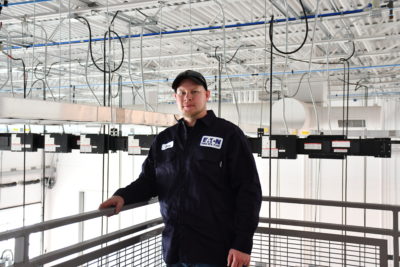
While there are many apprenticeship programs available through community colleges across the state, not every community has a program like GAP. A public-private partnership, GAP offers an alternative path to attaining a college education for free while also engaging in paid, on-the-job training.
Launched in 2016, GAP started with 14 apprentices and six employer partners. A decade later, it now serves 140 active apprentices and more than 30 employer partners, according to ApprenticeshipNC. The partnership is structured as a consortium that brings together Guilford County Schools (GCS), GTCC, and a network of local employers from multiple industries.
 Sign up for Awake58, our newsletter on all things community college.
“When GAP got started, the manufacturers sat down and worked with GTCC to get a program that would work for all of them, because they were all in different areas of manufacturing,” said Laurie Bargebuhr, apprenticeship and work-based learning coordinator at GTCC.
The manufacturing technology degree offered at GTCC, which is only available to GAP apprentices, was originally designed to fit the needs of several companies. Those employers were able to provide enough training positions for students, creating a mutually beneficial and sustainable foundation for the company and for the college. While manufacturing opportunities are still popular amongst students, GAP has grown to offer apprenticeship opportunities in more than 40 occupations.
“We’re trying to connect the dots with what’s going on in the school system, what the employers need, and what GTCC has to offer,” said Ann Flynt, director of GAP.
One of the reasons GAP has been so successful over the past 10 years, according to Flynt, is the grant funding it has received from the state to use for marketing. Even with all of the growth GAP has experienced since its start, spreading awareness of apprenticeship opportunities is still a challenge.
GAP is also responsible for the marketing, recruitment, and vetting of apprenticeship candidates, which reduces some of the up-front work for participating employers.
“Even people who have apprenticeships set up don’t understand necessarily what GAP has to offer. We recruit high school juniors and seniors and we really can set up an apprenticeship with whatever they want within reason, said Flynt. “Laurie makes it really possible for them to connect the related instruction with the occupation. But a lot of times, companies don’t really realize that we’re recruiting, we’re marketing, we’re bringing these wonderful candidates, and we have a whole vetting process to do so to be successful.”
Recently, GAP set up a new occupation offering for apprentices in response to local employer needs. The accounting pathway was created in response to a request from an existing employer partner who reached out to Flynt to see if setting up an accounting pathway was possible. Bargebuhr did some research and solidified the related instruction at the college in accordance with Department of Labor (DOL) requirements. This year, GAP had four employers interested in accounting apprentices.
First In Flight and FAME
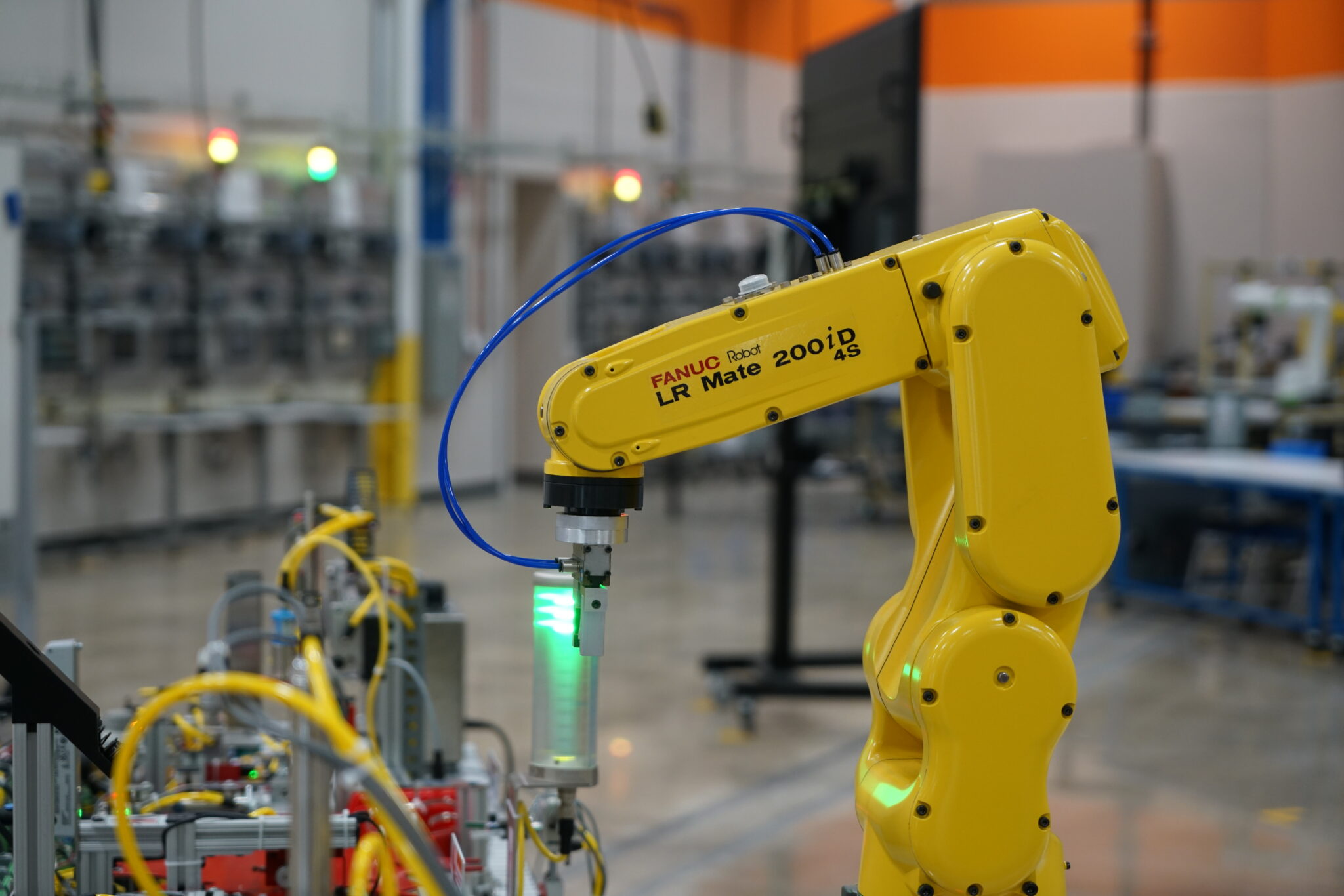
In addition to GAP, GTCC is the host school for the First in Flight chapter of the North Carolina federation’s FAME program. The FAME network is made up of employer-led chapters that sponsor students through a work-and-learn model over five semesters in conjunction with a college partner.
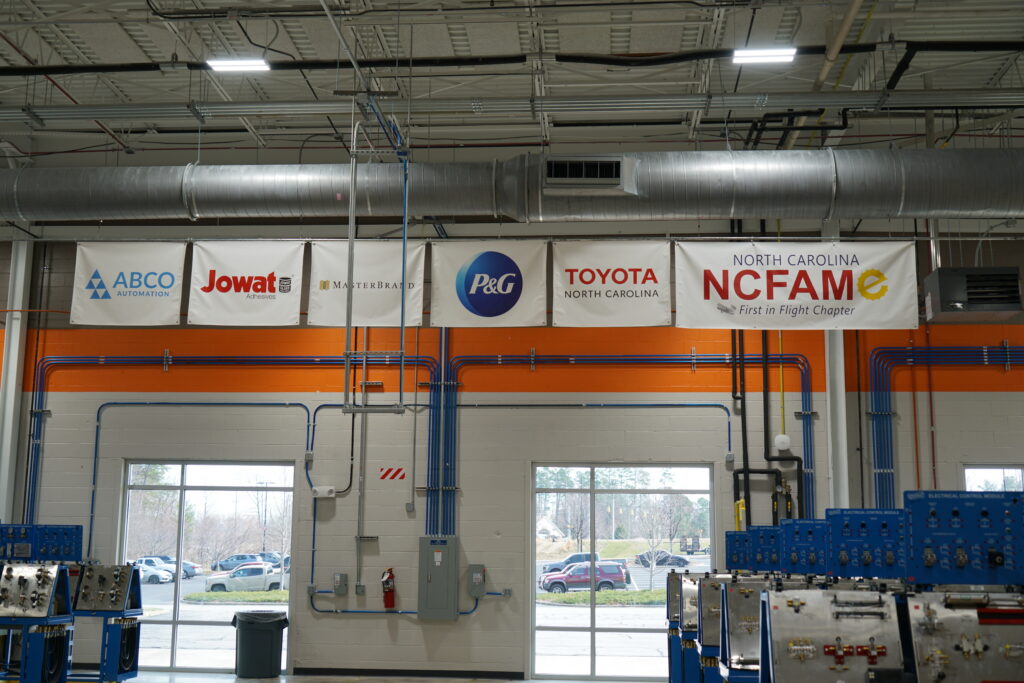
FAME was created by Toyota in 2019, but today there are many more employer members. These companies include: ABCO Automation, Cascade Die Casting Group, Jowat, Ontex, Procter & Gamble, Smurfit Westrock, Thomas Built Buses, Toyota Battery Manufacturing, and ZIEHL-ABEGG.
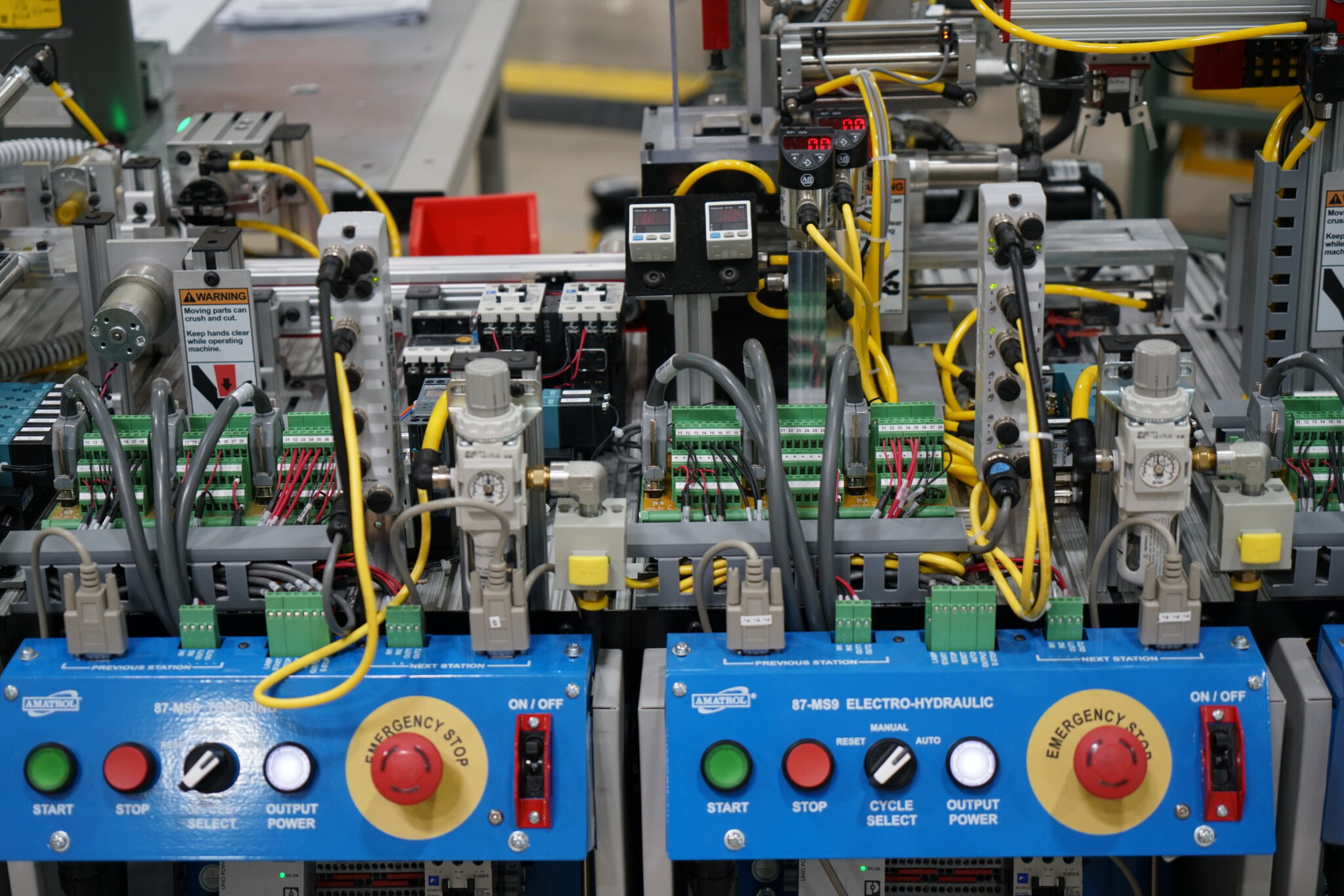
The FAME program is designed for students interested in pursuing a STEM-related career in manufacturing and combines college coursework with paid on-the-job training. It is a registered apprenticeship program — GTCC serves as the program sponsor and the participating companies serve as employer partners.
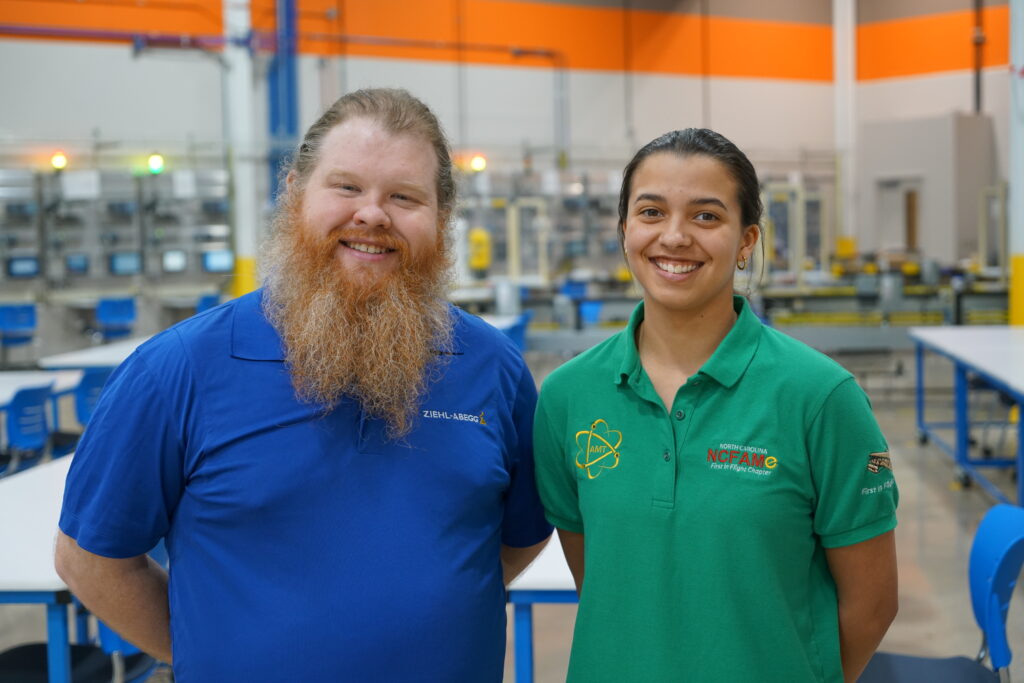
“The primary focus of FAME itself and mechatronics goes into what we consider to be an industrial maintenance technician. And so the idea behind that is, this is essentially kind of like your car mechanic, but for machine equipment,” said Layel Burton, apprenticeship coordinator at ZIEHL-ABEGG.
At GTCC, students take classes for two days a week and work at their paid position with a sponsoring company for three days a week. Through FAME, students are provided with the opportunity to earn a two-year free associate degree and attain an advanced manufacturing technician certification.
Natalie Ballie is a first-year FAME student and working in the engineering department at ZIEHL-ABEGG. Ballie learned about the FAME program from her guidance counselor at Cornerstone Charter Academy, a public charter school in Greensboro. Ballie is hoping to complete the FAME program and go on to earn a bachelor’s in engineering.
“I get this hands-on experience, and it helps that I’m getting paid too. It’s like a win-win for both. It was just really appealing to me, because it gives me a head start on my future,” said Ballie.
You can learn more about GTCC’s FAME chapter here and GAP here.