
How Alabama is expanding apprenticeships across the state and into new fields


Editor’s note: This article is part of a series on apprenticeships for National Apprenticeship Week. See all of EdNC’s coverage of apprenticeships here. Note that all references to apprenticeship in this series refer to Registered Apprenticeships formally recognized by the U.S. Department of Labor.
The first time Kathryn Williamson attended college, she dropped out after “life happened,” Williamson said on a recent Wednesday sitting on a miniature chair inside a pre-K classroom at Banks School in Banks, Alabama.
Williamson, an early childhood apprentice at the school, found out she was pregnant at 19 as a Troy University student. She had severe morning sickness every day. She quit attending class, failed multiple courses, and decided to unenroll.
Until recently, Williamson said she never thought she would be able to return to school. With two children and one income, college tuition was not in her family’s budget. Plus, her transcript from that single semester haunted her.
 Sign up for Awake58, our newsletter on all things community college.
Williamson described the early childhood apprenticeship program as “a new start.” As one of the first participants of the program in the state, she is back at Troy University working toward her bachelor’s degree in early childhood education while working at Banks School as a pre-K teacher. She is set to graduate in 2027 free of debt thanks to state funds that cover participants’ tuition.
“Now I can tell my daughter, it’s taken 15 years, with a big gap in the middle, but yes, I’m going to graduate with the help of the apprenticeship program,” Williamson said.
The early childhood apprenticeship program is part of the state’s expansion of the apprenticeship model in recent years to fill labor gaps in several industries and increase economic mobility.
In the last 10 years, the state’s number of apprentices has nearly doubled, increasing from 2,467 in 2016 to 4,410 as of April 2026. Apprentices work while going to school — getting paid while learning through both on-the-job experience and coursework. In Alabama, employers are required to cover apprentices’ tuition through last dollar scholarships and provide wage increases as apprentices master new skills. The state also provides incentive funding to help employers get started, offering up to $5,400 for each of the first 10 apprentices.

The state has emerged as a national leader in degree apprenticeships, with the second highest number of apprenticeships that confer degrees (52), behind Illinois at 65 and ahead of North Carolina at 40, according to an April analysis from national nonprofit New America. In September 2025, Alabama and Colorado were chosen to each receive $12.5 million from the U.S. Department of Labor (DOL) to develop resources that help expand apprenticeships across the country.
The state’s expansion has required taking a model traditionally associated with trades occupations and introducing it to new employers, new educational partners, and new students.
Apprenticeship expansion fits into a larger statewide workforce development effort, said Jim Purcell, executive director of the Alabama Commission on Higher Education (ACHE), in a recent EdNC interview. The commission is the grantee of the DOL funding.
“What we’re trying to do in Alabama is sort of build opportunity through many pathways, and I think it starts with apprenticeships,” Purcell said.
New office, new incentives
Like in North Carolina, a postsecondary attainment goal has motivated Alabama leaders to prioritize aligning its education systems with industry needs. In 2018, Gov. Kay Ivey, who remains in office, launched her Success Plus initiative with a goal of adding 500,000 new credentials to the state’s workforce by 2025. (Between 2018 and 2025, Alabamians earned 487,937 new credentials.)
This vision created partnerships across sectors and state agencies, aligned under a singular goal, state leaders told EdNC. In 2019, Ivey brought the apprenticeship authority from the federal to state level by launching the Office of Apprenticeship under the state’s Department of Commerce.
Related reads


The creation of a state apprenticeship agency and the decision to house the office under the commerce department were both important factors that facilitated apprenticeship expansion, said Josh Laney, former director of the office and now vice president of apprenticeship and work-embedded learning at national nonprofit Competency-Based Education Network (C-BEN). C-BEN is working with the ACHE on the DOL project.
These two moves gave the office the autonomy and the employer connections it needed to hit the ground running, Laney said. He described the office’s work, which Laney led from 2019 to 2025, as employer-driven.
“Maybe not exclusively, and maybe not permanently, but our first and foremost effort needs to be on adding employers into the apprenticeship system,” Laney said.
The office, which Ivey recently moved to the newly formed Department of Workforce, approaches employers by listening to their needs. Apprenticeship might be a good fit, state leaders said, if employers are having trouble training, recruiting, or retaining workers. Once the team figures out the employer’s pain points, it can ask employers what competencies the employer wants their workers to have and help build both components of the program: on-the-job learning and related technical instruction.
Since 2022, the state has given incentive funding to employers creating new apprenticeship programs or adding new occupations to programs. For an employer’s first 10 apprentices, the state reimburses 50% of the apprentice’s wages for 480 hours or work, or a maximum of $5,400 per apprentice.
“View it as a half-price coupon for your first apprentices to give them a try,” Laney said. “And we’re confident that once you do that, and then you sit down and look at the benefits and do the return-on-investment calculation or value proposition, you’re going to keep doing it. We’ve been proven right every time.”
The office receives $1 million annually in the state budget for the employer incentives, which must be approved each year. In 2025, the funding supported 136 new apprentices in 19 different occupations for 38 employers, according to Meredith Smith, the current director of the state’s Office of Apprenticeship.
The reimbursements have been more effective, Laney said, than the tax incentives the state offered employers with apprentices from 2017 to 2024. Since the state already has such a low tax burden, he said the tax break was not as tangible as a direct check in the mail.
New industries
Employer incentives, plus high-quality customer service and high-quality programming, led to expansion in industries where apprenticeships were not previously popular, from education to health care, state leaders told EdNC.
The state’s nursing apprenticeship program, for example, launched in 2022 while the state had more than 4,500 annual vacancies for RNs and LPNs, according to a press release from the state’s community college system. In the fall of 2025, the program had grown to 1,000 apprentices, with 87 employers and 28 colleges and universities participating.
“Taking the model that has worked in the trades for so many years and continuing to build on that — but then modernizing into new industries with that same model — has created new opportunities for people to get connected to apprenticeship who otherwise might not have been, and then that removes barriers and gets more people into the workforce,” Smith said.
Smith said manufacturing and transportation and logistics are other industries with large skill gaps that the office is looking to expand the model within. She also pointed to a recent $30 million investment from the U.S. Navy to the state’s community college system to build a workforce to produce submarines as an opportunity for apprenticeship expansion.
States should look at the regional nuance of communities’ needs to decide how to prioritize resources, said Purcell, the director of ACHE. The commission has studied educational need by geographic regions and researched the mix of attainment needed for healthy economies. In some areas, people need pathways and resources to earn credentials or two-year degrees. In others, people need help finishing bachelor’s degrees.
“Apprenticeships can’t be in a silo,” he said. “It needs to be part of a statewide plan to build human capital.”
The DOL project will focus on “exporting” some of the principles that made Alabama’s model successful, Laney said. The project will not lead to prescriptive requirements, he said, but to optional templates and tools to help other states decide what industries and occupations to focus on and to build programs that meet employer needs.
Growing your own
Both Williamson, the pre-K teacher at Banks School, and Fran Spann, another early childhood apprentice at Troy Elementary School down the road, are graduates of the elementary schools where they are now leading classrooms.
Their stories are part of a regional effort to build a local teacher pipeline through investing in people from the area — from high schoolers to adults.
Spann, like Williamson, was a stay-at-home mom with some college credit and no degree. When a friend of hers connected her to an open auxiliary teaching position, she entered with no prior teaching experience.
“Literally, the first week, I was like, I’m meant to do this,” Spann said.
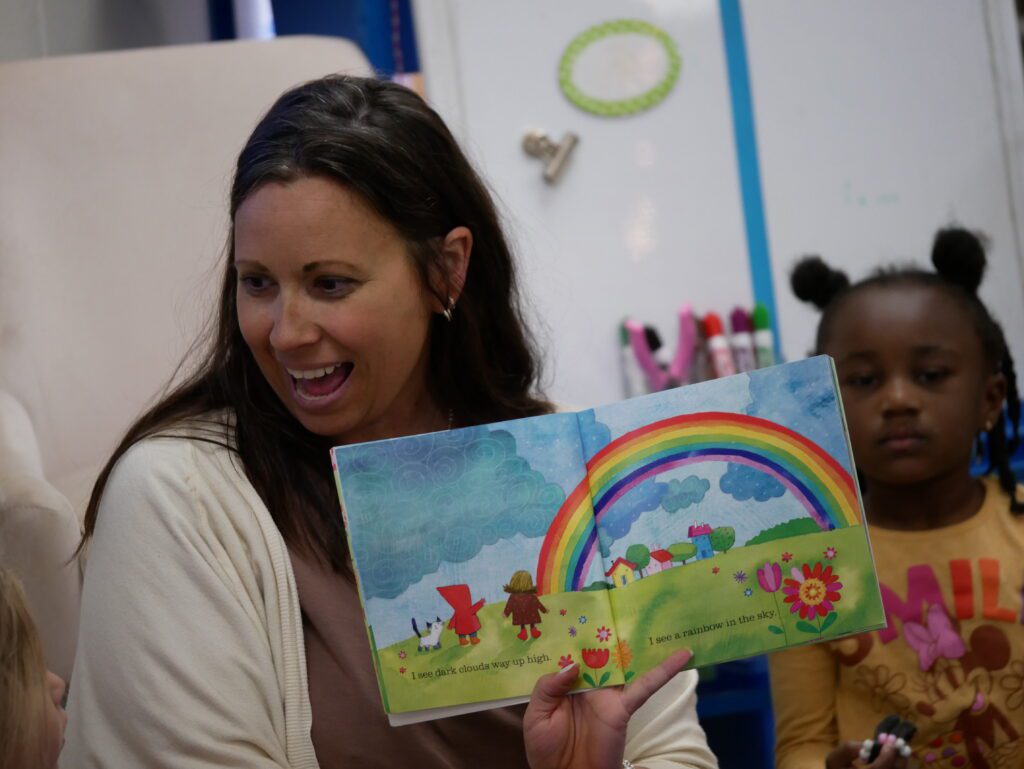
During Spann’s first year as an auxiliary teacher, her school covered the cost of the nine credits she needed to work as an assistant teacher. Spann wanted to continue with her education, but said her family could not afford it at the time.
Then she was approached by Jeremy Knox, an administrative assistant at Pike County Schools who leads the district’s grants, special projects, and workforce development. Knox had been working behind the scenes with state leaders to bring an early childhood apprenticeship program to the area.
Every part of the apprenticeship pathway was outlined, Spann said. She is set to finish her bachelor’s coursework in May and her internship this fall. After she completes the appropriate tests, she will have her early childhood teaching license and be able to teach from pre-K to third grade public school classrooms.
“For me and for my family, it’s been life-changing, because I would not have had the opportunity to go to school if it weren’t for this,” Spann said.
The program contains three levels, or “stacks:” during level one, the apprentice works as an auxiliary teacher and earns the nine required credits; during level two, the apprentice continues as an auxiliary teacher and earns an associate degree; and during level three, the apprentice may become a lead teacher while they work toward a bachelor’s degree. Each level has a set of competencies that a mentor must help the apprentice master. Wage increases are required as apprentices work through the competencies.
All of Alabama’s apprenticeships include mentors, also called “journey workers,” that guide apprentices’ on-the-job learning and assess their progress.
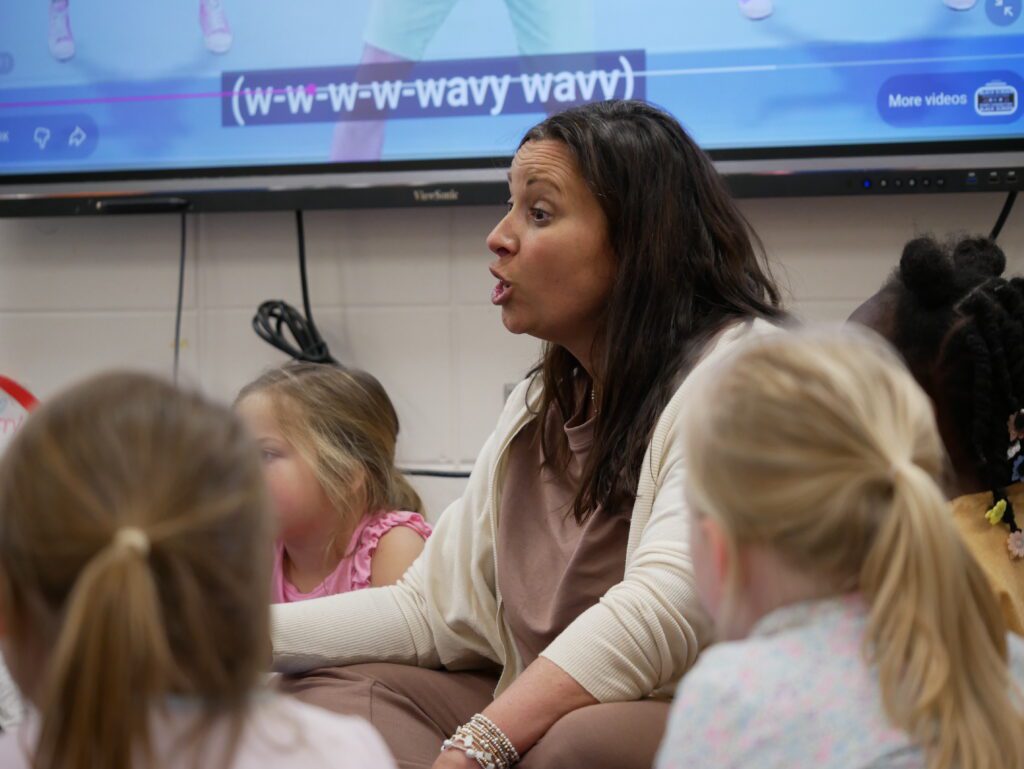
Creating the early childhood apprenticeship program required creativity, partnerships, and extra resources, Knox and state leaders told EdNC.
Though the demand was there, most apprenticeship offices prioritize high-wage fields. Early childhood education, especially in private child care, has some of the lowest wages of any industry. Wages improve in public pre-K and early elementary settings.
The state designed the program to lead towards bachelor’s degrees in order to increase the earning potential of the apprentices. This required ensuring that the community college credits apprentices earned transferred to four-year institutions.
The state Office of Apprenticeship also partnered with the state Department of Early Childhood Education to provide extra resources to make the program work. The department, as the sponsor of the apprenticeship program, reimburses districts and child care centers for apprentices’ tuition, provides stipends to mentors, and provides extra wage reimbursement on top of the state’s incentive.
“Their budgets are already tight,” said Milanda Dean, director of workforce development at the department.
Knox said it took more than a year to get everyone on the same page. He worked with the state apprenticeship office, the state early childhood department, Enterprise State Community College, and Troy University to create course alignment and work out the details of the apprenticeship program.
Related reads


Knox has also led the district’s early childhood dual enrollment program for high school students to begin earning college credit and being exposed to the field.
Across the hall from Spann’s classroom at Troy Elementary, Jennifer Giles teaches 25 high school students about early childhood education. On Monday and Friday, they focus on coursework. The rest of the week, they gain hands-on experience as aides in early childhood classrooms. They leave high school with the credential needed to work as an assistant teacher — as well as a level two apprentice.
“When I first started, 13 or 14 years ago, you had to take your first job that was offered to you; you might not get another one,” Knox said. “Now, teacher jobs are open all the time, and we’ve got to grow our own.”