
Taking on the heavy lifting: How Davidson-Davie is scaling apprenticeships to meet local workforce needs

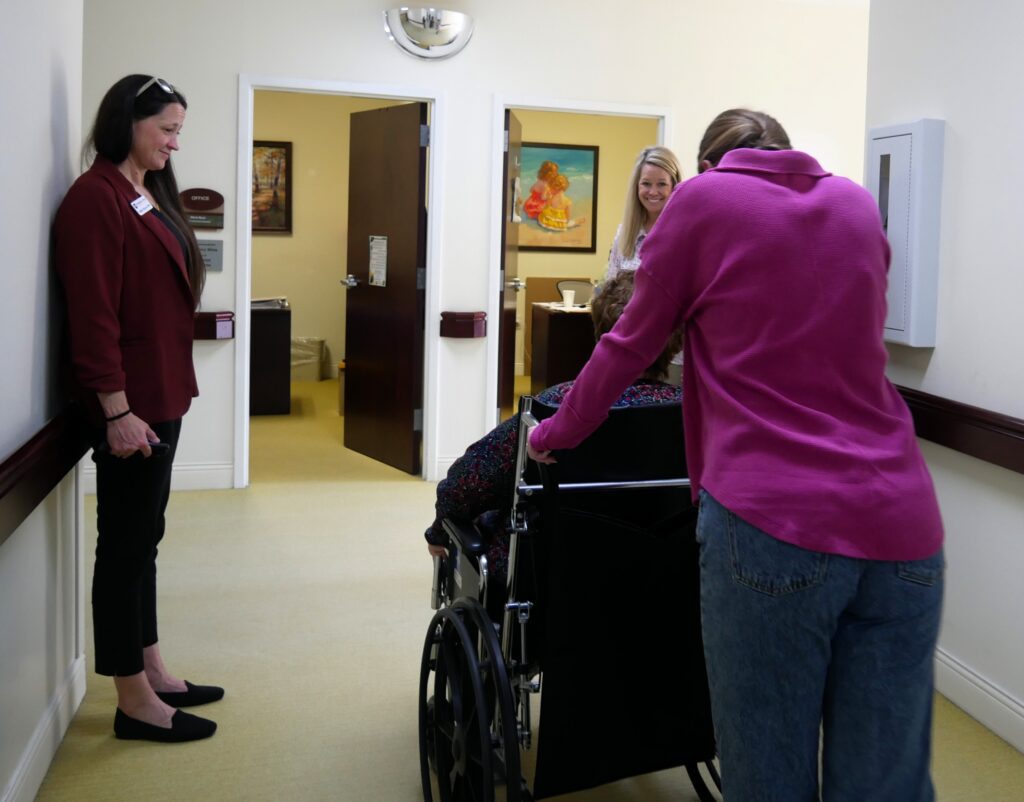
This article is part of EdNC’s coverage for National Apprenticeship Week. In 2026, we held a “mini-blitz” to visit community colleges and document strategies being used to increase apprenticeships. You can read all our coverage of apprenticeships here.
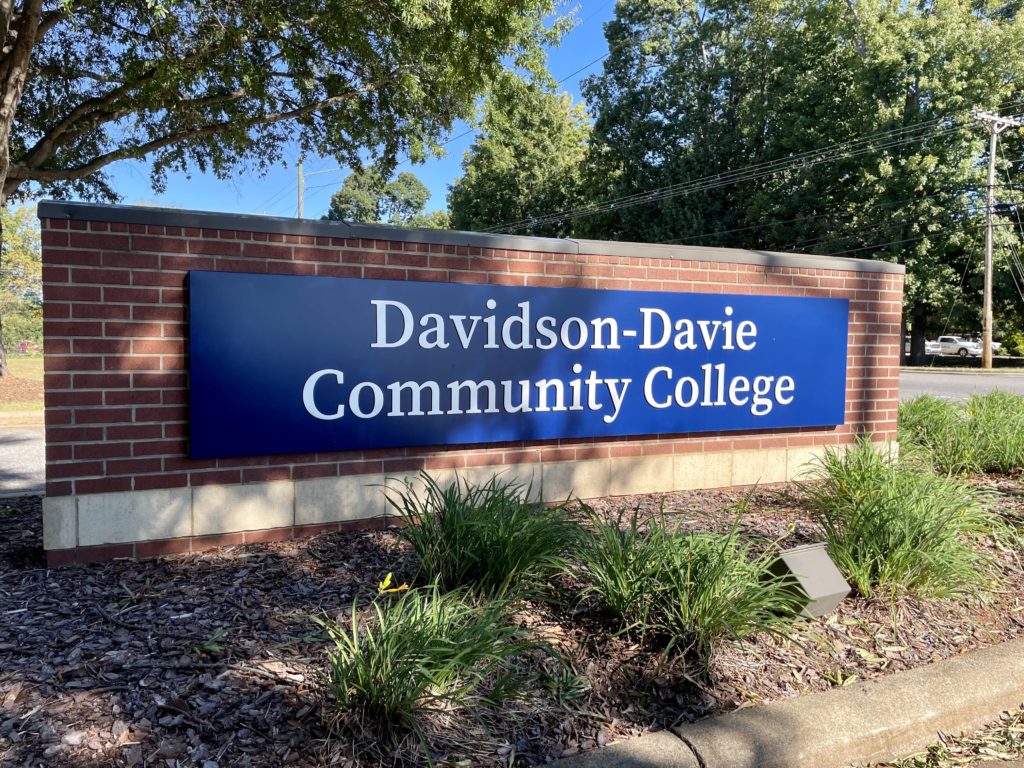
Davidson-Davie Community College (Davidson-Davie) is the only postsecondary institution in its two service counties. That status, President Jenny Varner says, means the college feels a “deep obligation” to meet the community’s needs.
“Like I’ve said before, it’s a community college. It’s not just the education. It’s about how the education fits into our communities,” said Varner.
That commitment is reflected in the college’s proactive approach to increasing the number of registered apprenticeship programs available to students.
These programs, which place students in paid, on-the-job positions with local employers while they take classes, have gained national and state attention. Last year, President Donald Trump set a goal of adding 1 million new registered apprentices, and Gov. Josh Stein’s council on Workforce and Apprenticeships set a goal to double the number of registered apprentices in the state.
Long before those goals were set, Davidson-Davie was investing in increasing apprenticeship opportunities. In 2020, the college launched the state’s first registered nurse apprenticeship program in response to the health care worker shortage in both the region and the state.
Highlighted in a 2024 EdNC case study, the program’s first cohort helped five apprentices working and learning at Davie and Lexington Medical Centers transition into registered nurse (RN) positions after they completed the program.
Since then, both health care and traditional manufacturing apprenticeship programs have continued to grow thanks to the college’s industry-first approach to apprenticeships.
A key to Davidson-Davie’s success in expanding apprenticeships is the fact that the college often serves as the apprenticeship program sponsor, taking on all administrative and compliance tasks associated with registering and running apprenticeship programs.
“We feel like we’ve got the foundation down of how to do it, and now it’s about really getting out there and expanding out,” said Jonathan Brown, Davidson-Davie’s vice president of workforce development.
Davidson-Davie’s approach to creating industry-first apprenticeships
A registered apprenticeship program requires three roles:
- A sponsor, whose responsibility it is to oversee the full administration and operation of the program, which includes registering the program with the U.S. Department of Labor and ensuring all regulatory requirements are met,
- An employer to pay apprentice wages and provide on-the-job training, and
- A related instruction provider to deliver classroom or technical training.
While many types of organizations can serve as a sponsor, it is the role with the most administrative responsibility. The sponsor does the “heavy lifting” of submitting required paperwork, determining employer expectations, and setting up appropriate related classroom instruction. In North Carolina, sponsors register programs through ApprenticeshipNC — the state apprenticeship agency designated by the U.S. Department of Labor (DOL) to register and oversee apprenticeship programs.
In response, an increasing number of community colleges have taken on the role of apprenticeship sponsor, in addition to often serving as the related instruction provider. One reason for this is because community college staff are often more familiar with the administrative requirements and processes of the Department of Labor rather than, for example, a business owner learning about apprenticeship programs for the first time.
 Sign up for Awake58, our newsletter on all things community college.
As both a group sponsor and a frequent related instruction provider, Davidson-Davie lowers the barrier to entry for employers. Employers participating in the college’s apprenticeship programs still hire apprentices, but with a lower administrative burden than they would if they sponsored their own program. As of January, North Carolina had 102 group sponsors, 41 of which were community colleges.
For example, Brown said that while most businesses he pitches apprenticeships to are on board with the idea at first, follow-up questions about logistics can make them hesitant to continue.
“I think a lot of them are like, ‘What is this going to do? What’s the direct effect to our company? Who is going to manage this? Who’s going to do the paperwork?,’” said Brown.
At Davidson-Davie, the answer to at least half of those questions is Jenny Ferguson, the college’s work-based learning coordinator. Five years ago, Brown said, college leadership saw the potential of apprenticeships as a workforce development tool and knew that businesses would need their logistical and administrative questions addressed if the college wanted to fully take advantage of the model’s promise.
With that in mind, Brown said, the college created a full-time staff position dedicated to handling those very tasks.
In September 2021, Ferguson stepped into the work-based learning coordinator role. Today, she is a driving factor in the success of the college’s manufacturing apprenticeships. Ferguson said that regardless of whether the college is the sponsor of an apprenticeship, her role is to liaise between apprentices and their host companies.
Brown explained the college takes two approaches to supporting the 19 local manufacturing companies that are hosting 43 apprentices this year. For nine companies, the college is both the related instruction provider and the sponsor.
The remaining 10 companies are part of the Davidson-Davie Apprenticeship Consortium (DDAC), a network of manufacturing companies, the community college, and a variety of other partners that act as an “unofficial workforce development board,” Brown said.
According to Ferguson, regardless of whether a business wants to sponsor their own program or have the college serve as the sponsor, getting an apprenticeship program up and running for the business is “really just signing a couple of papers.”
“We try to take away any of those barriers for them, because we want it to be easy,” she said.
Read more about apprenticeships


An update on the state’s first nursing apprenticeship
Decreasing the administrative burden for employers is also a key concept behind the college’s registered nursing apprenticeship program. Launched in 2020 with Atrium Health Wake Forest Baptist, the program was the first nursing apprenticeship program in the state.
Similar to Ferguson’s role within the college’s manufacturing apprenticeships, Holly Myers takes on a similar role in leading the college’s health care apprenticeships.
As the dean of health sciences at Davidson-Davie, Myers’ personal relationship with health care employer partners and her understanding of regulations that apply to different health care fields have been key to the program’s success.
“You can’t do the exact same thing” in health care apprenticeships as in traditional manufacturing apprenticeships, Myers said. “You have to tweak it and modify it some.”
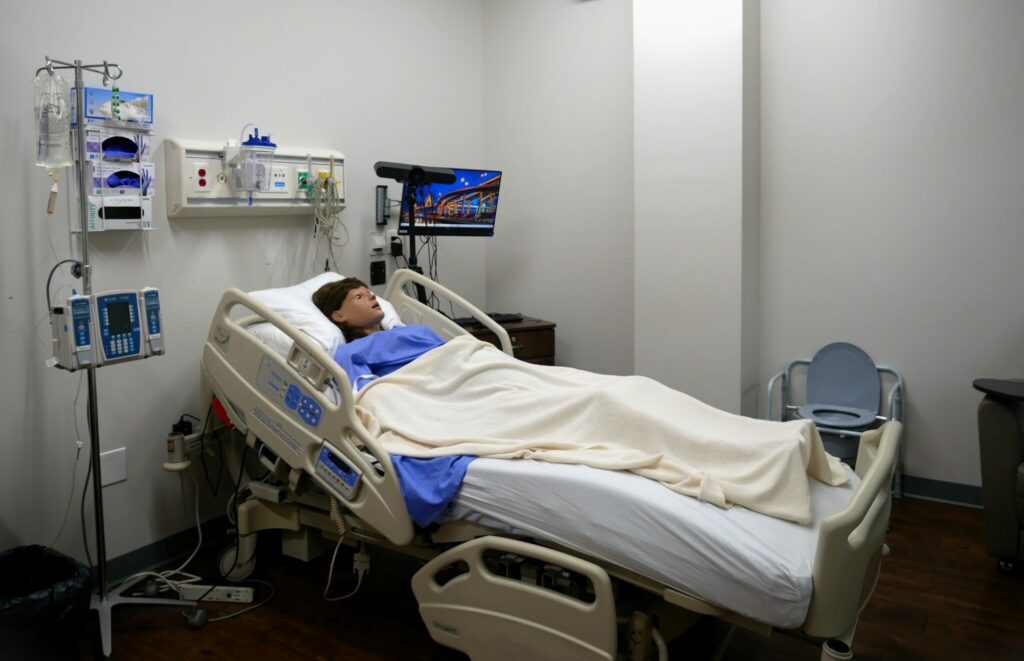
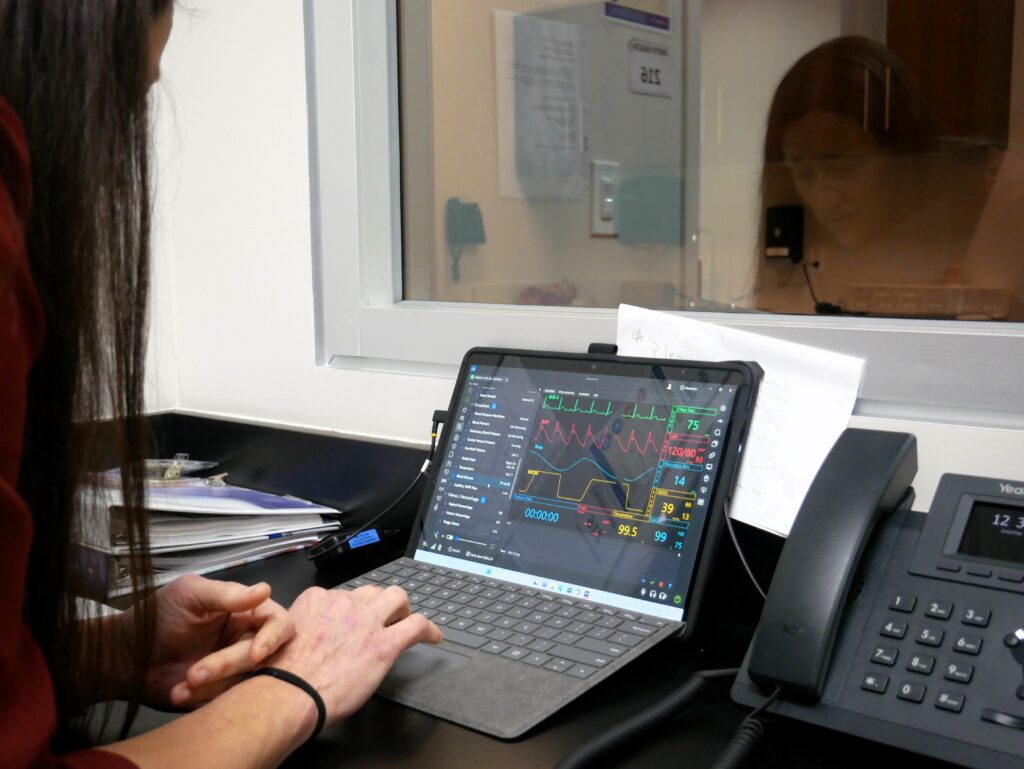
One of the main reasons, she said, is because the type of skills health care apprentices learn are generally more regulated than manufacturing skills, making it difficult, at times, for students to gain the hands-on experience they need.
Since apprenticeships have traditionally operated within a manufacturing model, the college and health care systems had to get strategic due to the many compliance requirements involving health care professionals as regulated by the North Carolina Board of Nursing.
— 2024 EdNC case study
In 2024, EdNC documented key learnings and recommendations from the first four years of the program. In fall 2023, five apprentices had graduated as RNs so far.
As of spring 2026, Myers said the program has produced 20 total nursing apprentices, with 14 RN graduates — all but one of which are practicing in the medical centers they completed their apprenticeship in — and six apprentices currently enrolled in the program.
Since EdNC’s case study, Myers said the main change to the program has been an increase in its capacity. Both Davie and Lexington Medical Centers, she said, increased the maximum number of apprentices they accept from two to six. These positions are based on the number of open positions at each of the medical centers.
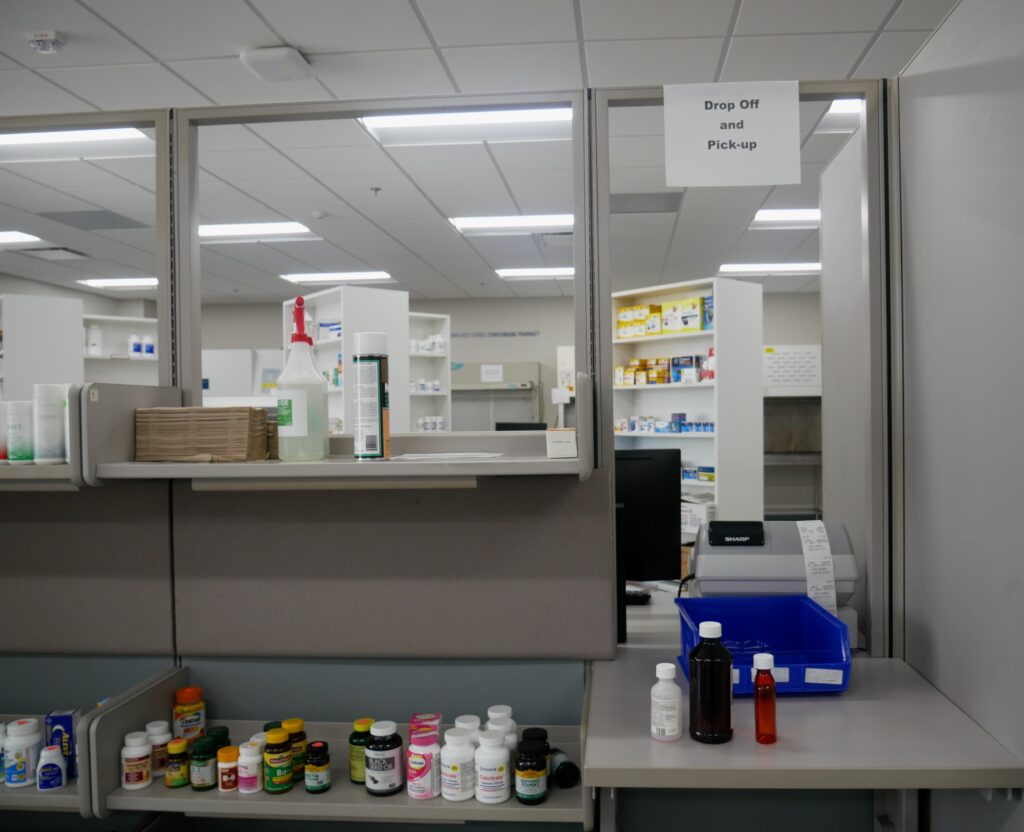
According to Myers, the college has also added several additional apprenticeship programs in a variety of health care careers over the last two years. Today, Davidson-Davie’s 13 health care apprenticeships — the largest number of health care apprenticeship programs in the state — include nursing, medical assisting, medical laboratory technology, pharmacy technology, and central sterile processing.
In 2024, the Department of Labor named Davidson-Davie a national “Apprenticeship Ambassador” in recognition of the college’s efforts to grow apprenticeships.

Moving toward a statewide nursing apprenticeship model
Myers’ vision for nursing apprenticeship programs is that they become a standard pathway into the nursing profession.
“Instead of it being the new, novel thing, it’s just what we do in the workforce,” Myers said.
As a member of the newly established statewide Nursing Apprenticeship Council, Myers is now helping to scale Davidson-Davie’s nursing apprenticeship model statewide.
An initiative that includes myFutureNC, the North Carolina Business Committee for Education (NCBCE), NC Area Health Education Centers (NC AHEC), and ApprenticeshipNC, and funded by the Blue Cross and Blue Shield of North Carolina Foundation, Myers said the main goal of the council is to create a statewide apprenticeship model with one sponsor so that, in theory, any community college could join as an educational provider and local employers can more easily host apprentices.
As for what entity would take on the sponsorship role, Myers’ thought is that “it should be someone at that larger state level.”
“I think the apprenticeship council is perfect for it. But if we really want to focus on nursing apprenticeships, someone’s going to have to jump on as that sponsor,” she said.
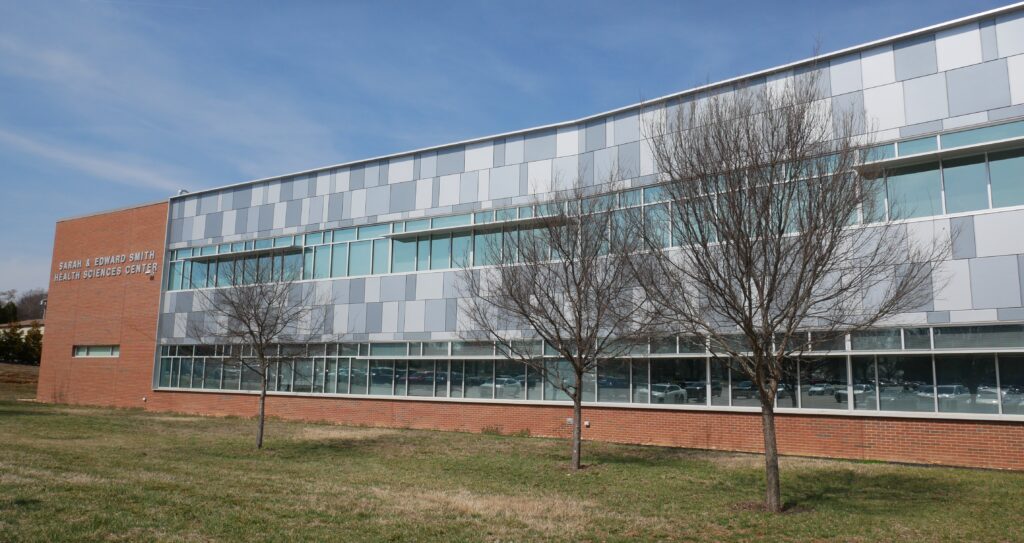
Myers said the potential benefits of a statewide model are threefold.
First, as Davidson-Davie’s experience as an apprenticeship sponsor has proven, establishing a state-level sponsor would absorb reporting and administrative responsibilities that can otherwise create barriers for employers.
Second, a statewide model would regulate how nursing apprentices are offered across the state by setting a baseline standard for operation. This would be helpful, Myers said, because the practices would make clear how health care apprenticeships must operate differently from workforce apprenticeships.
Myers pointed to Alabama’s nursing apprenticeship license as a model to work toward. In it, students register with Alabama’s state board of nursing as a nurse apprentice, learn a list of standard competencies at their college, and demonstrate their ability to perform key skills on the job at the employer hospital.
And third, a statewide model with one sponsor and clear regulations would standardize outcome data for apprentices. This uniformity would make it easier for colleges to tell “the true effect” of apprenticeships — not just on employer retention, college degree attainment, and industry-exam pass rates, but also on students’ self efficacy, Myers said.
Some students, Myers said, grasp concepts more easily when performing tasks on the job rather than just learning about them in the classroom, underscoring the ability of apprenticeships to meet workforce needs and contribute to student success.
“We’re seeing that direct application of classroom concepts to workforce concepts, and that ‘aha’ moment for those students is coming quicker,” Myers said.
Strengthening the apprenticeship pipeline with pre-apprenticeships
As a tool for building young people’s skills and confidence in the workforce, one way Davidson-Davie is working to broaden the apprenticeship pipeline is through increasing pre-apprenticeships.
Pre-apprenticeships, also called youth apprenticeships, usually begin during a student’s junior or senior year of high school. Students who complete pre-apprenticeships can then directly enter a registered apprenticeship program and receive a tuition waiver, making their community college attendance free and filling “an important funding gap in the state’s college and career readiness pipeline,” per New America.
On the manufacturing side, Brown said his team has been working closely with K-12 partners to increase the visibility of Davidson-Davie’s apprenticeship opportunities. This has led to establishing a pre-apprenticeship program with Davie County Schools and Lexington City Schools, he said, that lead to apprenticeships in early childhood education and diesel mechanics.

In health care, part of scaling a statewide nursing apprenticeship model includes expanding apprenticeships into facilities beyond hospitals, such as assisted living homes and hospice care, said Sullivan Schenck, nursing apprenticeship health care liaison at the NCBCE.
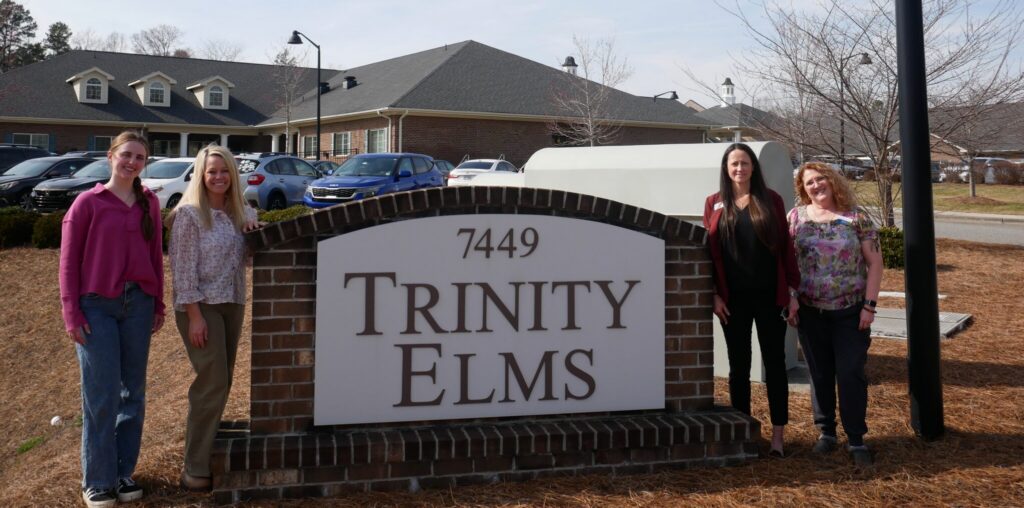
Olivia Williams is a student at Davie High, and a nursing pre-apprentice at Trinity Elms, an assisted living facility in nearby Clemmons. Williams said her goal after she graduates is to transfer to a four-year university to complete her bachelor’s degree in nursing after spending two years at Davidson-Davie.
Williams completed her certified nursing assistant (CNA) credential in October 2025 through her school’s Career and College Promise program. Now, she completes two shifts a week at Trinity Elms where, under the supervision of a CNA she trains with, Williams checks vital signs, helps residents prepare for dinner and bed, and completes charts after residents go to sleep.
“I thought this would be a really good opportunity to experience the health care environment and just see what it’s like,” she said.
Davidson-Davie’s effort to grow pre-apprenticeship programs reflects a statewide push toward youth apprenticeship programs. In February, Stein announced that he will be directing the discretionary funds allotted through the Workforce Innovation and Opportunity Act (WIOA) to NC Career Launch, the state’s youth apprenticeship system that is led by the governor’s office and NCBCE.
While most states direct this discretional federal funding toward a variety of gubernatorial priorities, analysis from New America writes that Stein’s “big bet” on youth apprenticeships suggests that “state leaders in North Carolina recognize the move as a strategic investment aligned with a broader workforce development agenda.”
Bringing it all together: Davidson-Davie leaders share advice from the field
— Jonathan Brown, vice president of workforce development, Davidson-Davie Community College
Myers added that, with the right support in place, all community members can benefit from health care apprenticeships.
“I’ve not found a health care situation which (apprenticeships) won’t work for,” she said.
Editor’s note: The Blue Cross and Blue Shield Foundation of North Carolina supports the work of EdNC.