
Inside one rural community college’s effort to build a $22 million automotive facility: ‘This is definitely a dream’

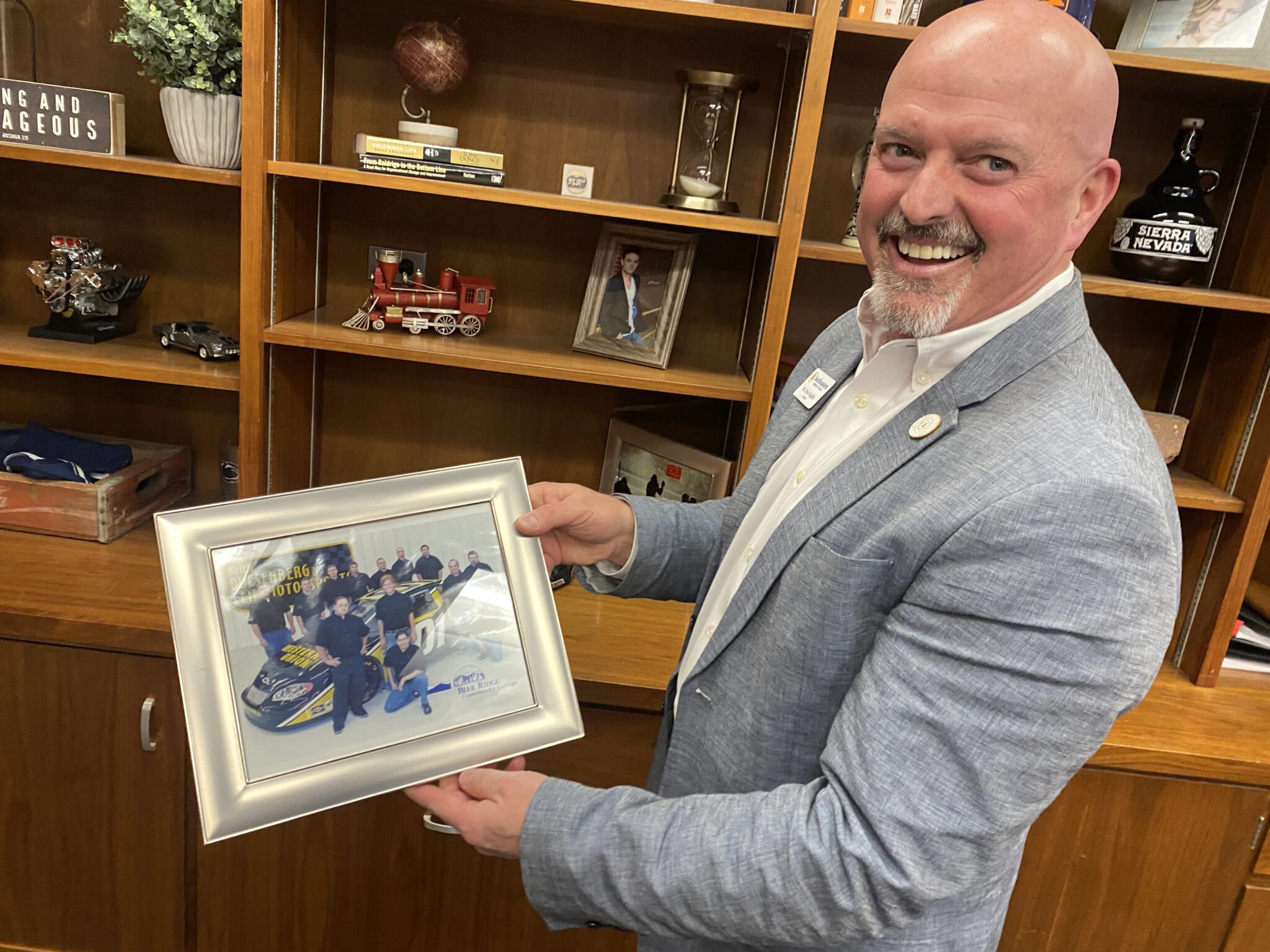
Growing up in Hendersonville, Chris English’s dad owned an Exxon gas station. English spent time around cars and mechanics from a young age and envisioned a future for himself as a mechanic.
“I didn’t grow up hunting. I grew up going to the racetracks,” English said. “My world has always been about cars.”
After attending Greenville Technical College in South Carolina and working at General Motors, English went to work for his dad, who by that point owned his own car shop. Ten years later, in 2000, he joined Blue Ridge Community College as an automotive systems instructor.
English later became dean for advanced technologies and then vice president for economic and workforce development. While at Blue Ridge, he also worked as a member of a NASCAR pit crew, training college students to participate in pit crews alongside him.
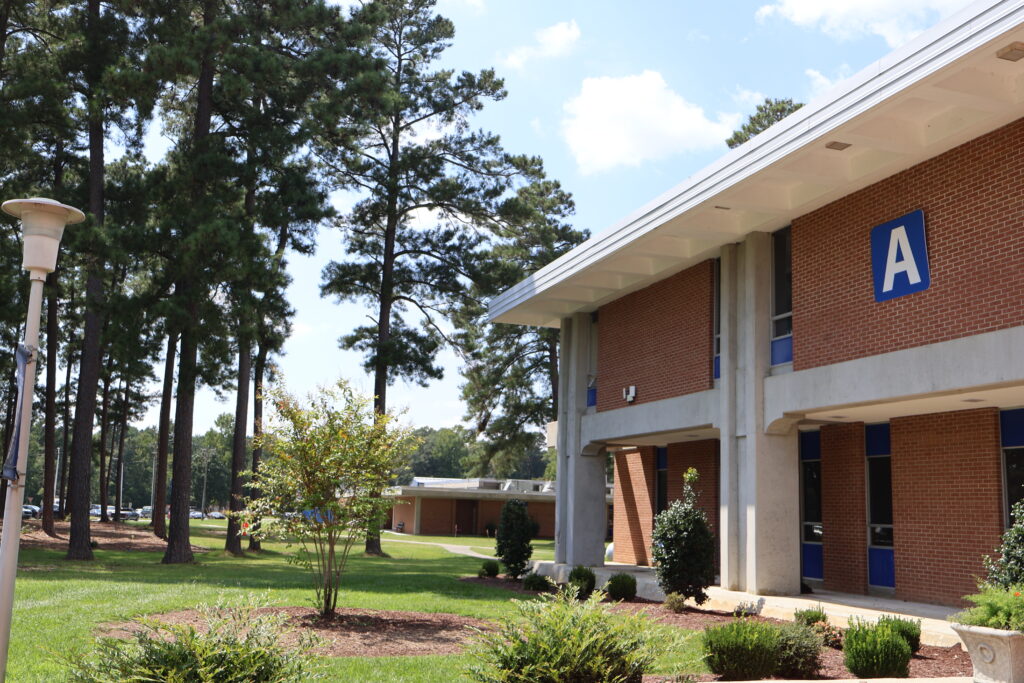
When he started as president of Southeastern Community College in 2020, the college didn’t offer any automotive programs. But as English started to learn more about local workforce needs, he quickly identified a gap — local employers needed more automotive technicians, and the closest community colleges offering automotive programs were Cape Fear or Fayetteville Tech, a long drive for many students in Columbus County and the surrounding region.
After Southeastern began offering automotive courses in fall 2022, space quickly became a limiting factor, as it is for many colleges looking to scale workforce programs. A new facility was needed to grow the college’s automotive offerings and better meet the needs of students and employers.
Understanding local workforce needs
One of the first things English did as president was work to build relationships with members of local and state government. He quickly hit it off with North Carolina House Majority Leader Rep. Brenden Jones, R-Columbus, who shared a common background in the automotive industry.
One day, English asked Jones how to get support from the General Assembly for an automotive facility. Jones said the college would need a good plan in place, showing where jobs could be obtained and how the workforce would be impacted.
From his background in the industry, English knew that automotive mechanics were a rapidly aging workforce. The U.S. Bureau of Labor Statistics projects more than 66,000 national openings for automotive service technicians and mechanics each year, largely to replace workers who transfer to different occupations or retire.
“There’s nobody that has been following those footsteps to fill that gap, fill that need,” English said of retiring mechanics.
 Sign up for Awake58, our newsletter on all things community college.
To validate national data locally, English spent time pulling into local garages when he was on the road. He’d walk inside, introduce himself, and ask if the shop owner was having a hard time finding employees.
Around the same time, a grant from the John M. Belk Endowment allowed the college to access a real-time labor market data system to understand regional workforce needs — transportation and logistics fell in the top 10.
This process mirrors how the college works to understand workforce needs and develop programs across all industries: listening to business partners, reviewing data, and often, having a “gut feeling.”
“When I see a program that’s got only one school in the region that’s offering that, I look at that and say there’s an opportunity there to make a difference. Maybe not necessarily for Columbus County exclusively, but for the region,” said Dr. Brandon Jenkins, executive vice president and chief academic officer at Southeastern.
Braiding state, federal, and private funds to support new facilities
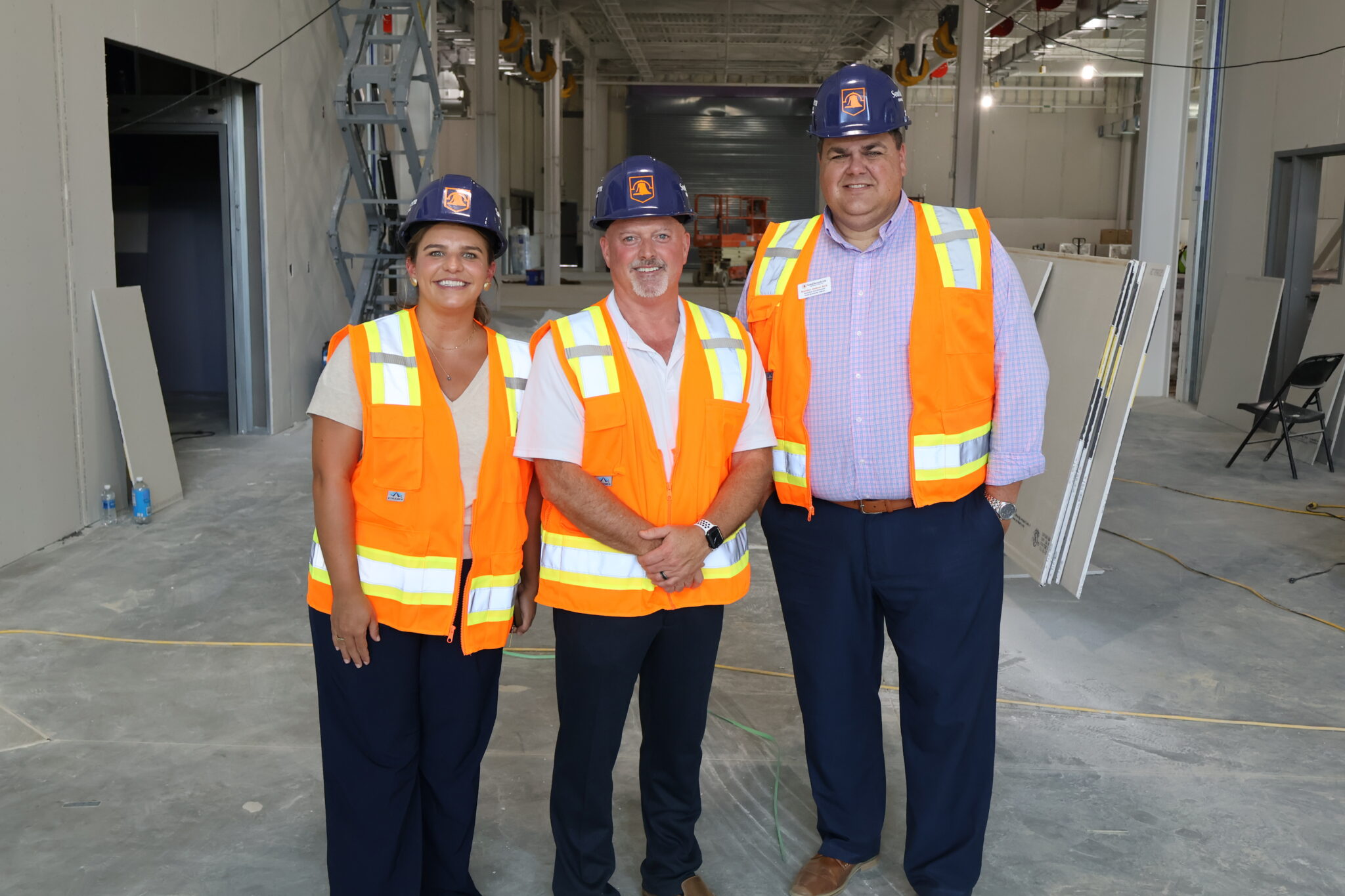
Once the college demonstrated clear workforce demand and the need for additional facility space, Jones helped secure a total of $22 million in state dollars for a new automotive training facility. That funding is a combination of $14 million from the State Capital and Infrastructure Fund and $8 million from the state’s Office of State Budget and Management Regional Economic Development Reserve.
“Working with Brenden and understanding what our needs were and where we wanted to go allowed him to see the vision and say ‘Yes. This is worthy.’ and get the funding for the project,” English said in a press release.
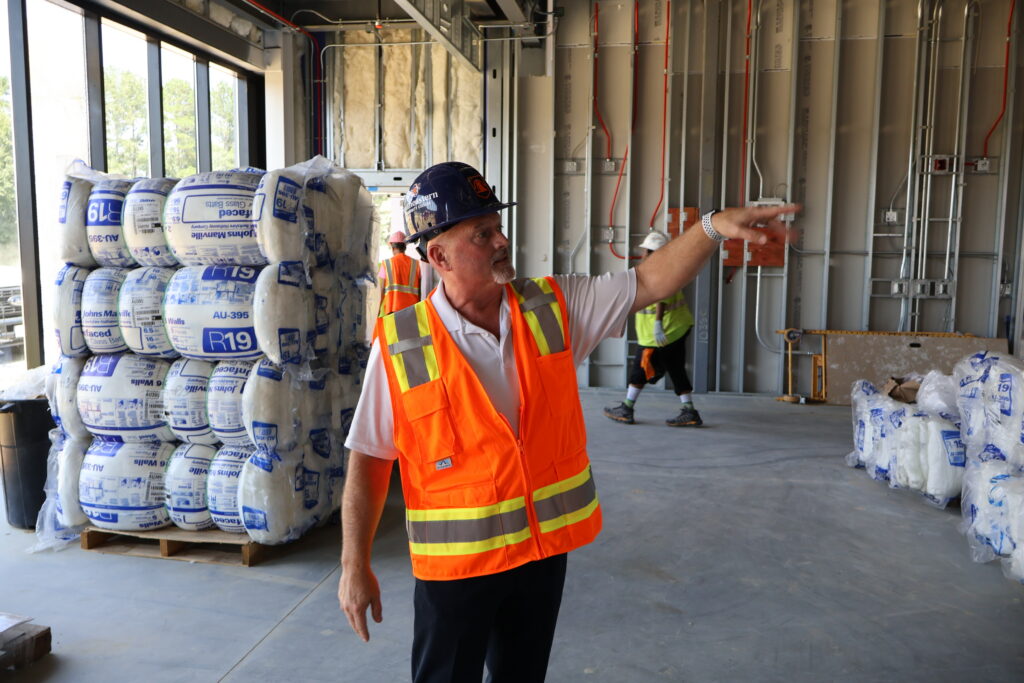
When it opens next year, the 22,000-square-foot facility will house the college’s automotive systems technology, diesel training, and truck driver training programs, a nearly 10-fold increase in space for those programs compared to what the college has now.
The facility will include two classrooms, a Commercial Driver’s License (CDL) lab, an automotive lab, and the only Dyno lab — a simulator that can replicate road conditions on a stationary platform — at a community college in the state.
Next to the facility, a new five-acre driving pad for the college’s truck driver training program is also being constructed, supported by a $4.9 million federal appropriation. That funding was supported by U.S. Sen. Thom Tillis, a Republican representing North Carolina, and included in a continuing appropriations bill signed into law in November 2025.
Historically, Southeastern had to send truck driver training students to sister colleges to complete required tests, including all the way to Caldwell Community College & Technical Institute, a roughly four hour drive.
When Grayson Overholt, a regional representative for Tillis’ office, visited the college, English drove him around campus and discussed the truck driver training program’s needs — particularly the fact that the college did not have its own driving pad.
“It was just a typical conversation that a lot of times I have — ‘Hey, do you think there’s ever any funds that could help support a driving pad?’” recalled English. “And he’s like, ‘Maybe. What do you need?’”
Overholt asked English to put together a grant proposal for what it would cost to build a driving pad onsite. That proposal stalled amid federal budget delays, but ultimately was awarded.
English’s advice to other colleges looking to leverage state or federal dollars is short: “Get out of the office.”
“Go meet with people. Don’t be afraid to ask and just have those conversations. The worst thing they can say is no,” he said.
The facility is also supported by a $1 million donation from Black’s Tire and Auto Service, which is helping the college purchase additional equipment and cover costs related to the new technologies in the facility. Black’s Tire also serves as an employer partner in the college’s apprenticeship efforts and is donating a NASCAR vehicle to be displayed in the new facility.
A huge milestone for the college’s automotive offerings, the facility also reflects the priority that the college places on building strong relationships — with policymakers like Jones and Tillis, industry partners like Black’s Tire, the local school systems, and within and across the college.
Looking ahead
The state-of-the-art facility will significantly expand the college’s capacity for students in automotive programs, particularly in continuing education. Expanded offerings may take place at nights or on the weekends, and the college will consider new offerings that are now made possible by the new space, including electric vehicle training, natural gas training, and more.
Inside of the facility, the college will also launch a new diesel program. To support that effort, the college applied for high-cost workforce program start-up funds from the N.C. Community College System to support hiring a full-time instructor and purchasing new equipment.
At the same time, the N.C. Community College System’s new funding model — Propel NC — is providing more funding for trades and transportation programs, including automotive technology, and is incentivizing short-term workforce programs in high-wage, high-demand sectors.
Still, English acknowledged that staffing these new offerings will be a challenge; many trades instructors can make more in the field than by teaching at community colleges, where salaries for faculty and staff fall below national and southern state averages. Recruiting trades instructors often comes down to selling them on better working conditions, English said. For example, the new facility will be air-conditioned, a stark difference from most garages.
“Trying to find people is very difficult. This diesel position that we’re going to post, we need to post that now, because it might take six to eight months to finally land somebody,” he said.
Reflecting on his own path to the automotive industry, English still remembers walking into the garage at Greenville Tech: the floors were pristine, the equipment was new. That first impression made “all the difference in the world,” and convinced him to enroll in the program.
English hopes the same is true for instructors and students at Southeastern Community College.
“This is definitely a dream,” English said. “As an instructor, I would’ve dreamed of having something like this.”
Editor’s note: The John M. Belk Endowment supports the work of EdNC.