
Blue Ribbon Commission | Leading to a better future for North Carolina’s students

The new state budget signed into law earlier this month made meaningful investments in public education, marking continued progress while recognizing there is still more work to do. It also signaled what is possible when state leaders find common ground around improving outcomes for students.
That same spirit of collaboration and commitment is embodied by North Carolina’s Blue Ribbon Commission on Public Education.
Established in March 2026 by Gov. Josh Stein, Senate President Pro Tempore Phil Berger, R-Rockingham, and Speaker of the House Destin Hall, R-Caldwell, the commission is a historic, bipartisan effort to examine the future of public education in North Carolina. It was charged with taking a comprehensive look at four critical areas that shape the state’s education system: student advancement and teacher training, administrative operations, school leadership, and accountability.
At the Friday Institute for Educational Innovation, supporting the commission is a natural extension of the legacy of our namesake, Bill Friday, who believed deeply in bringing people together to address the state’s most pressing educational challenges. As the administrative lead and strategic research partner for the commission, our role is to create the conditions for informed, collaborative decision making by providing research, structure, and opportunities for thoughtful deliberation.
 Sign up for the EdWeekly, a Friday roundup of the most important education news of the week.
We employ a collaborative codesign approach that ensures members’ collective experiences, expertise, and perspectives share the commission’s work. With structured discussions, ongoing feedback, and synthesis, each commission meeting progressively builds upon the ideas, questions, and inputs that emerged. Throughout the process, we see the commissioners are listening, learning, and asking questions that push against the status quo and bring new insights forward.
Over the past four months, I’ve been struck by every commission member’s willingness to engage deeply with the issues. While they have different perspectives, they are united by a genuine commitment to improving public education for students. Throughout their discussions, commissioners are pushing beyond surface-level solutions, asking difficult questions, and challenging one another to identify recommendations that will create change.
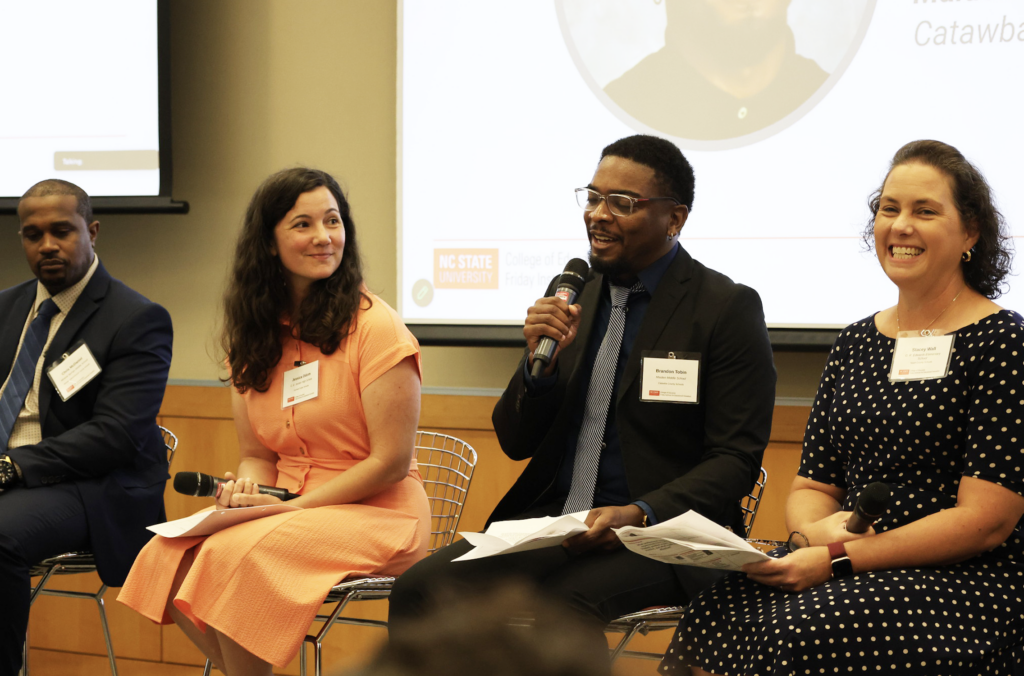
In the commission’s June meeting on teacher training, members examined educator preparation, licensure, and workforce data before hearing directly from teachers, allowing research and policy discussions to be grounded in the experiences of educators working in schools every day. Repeatedly, we heard members emphasize their desire to “move the needle” for students and educators.
Read more about the Blue Ribbon Commission

North Carolina benefits from extraordinary educational assets and resources across the state, but we cannot assume future success without a continued commitment to improvement. If we want students to be prepared for an increasingly complex economy and society, we all have to be willing to honestly examine what is working, what is not and what needs to change. That mindset also shapes how the commission is developing its recommendations.
Some recommendations will reinscribe by strengthening and expanding effective programs that are having a positive impact in schools and districts. Others will reform by improving existing policies or programs to strengthen outcomes. Still others will reimagine by identifying fundamentally different approaches for public education in North Carolina.
Through this iterative process, the Blue Ribbon Commission on Public Education is moving from broad conversations to actionable recommendations, beginning with student advancement and teacher training. The work is far from complete, but the process itself demonstrates what is possible when leaders commit to listening, learning, and solving problems together. If North Carolina is serious about preparing today’s students for tomorrow’s opportunities, this kind of thoughtful, evidence-informed collaboration will continue to be essential.