
Bladen Community College is expanding to meet the needs of its community

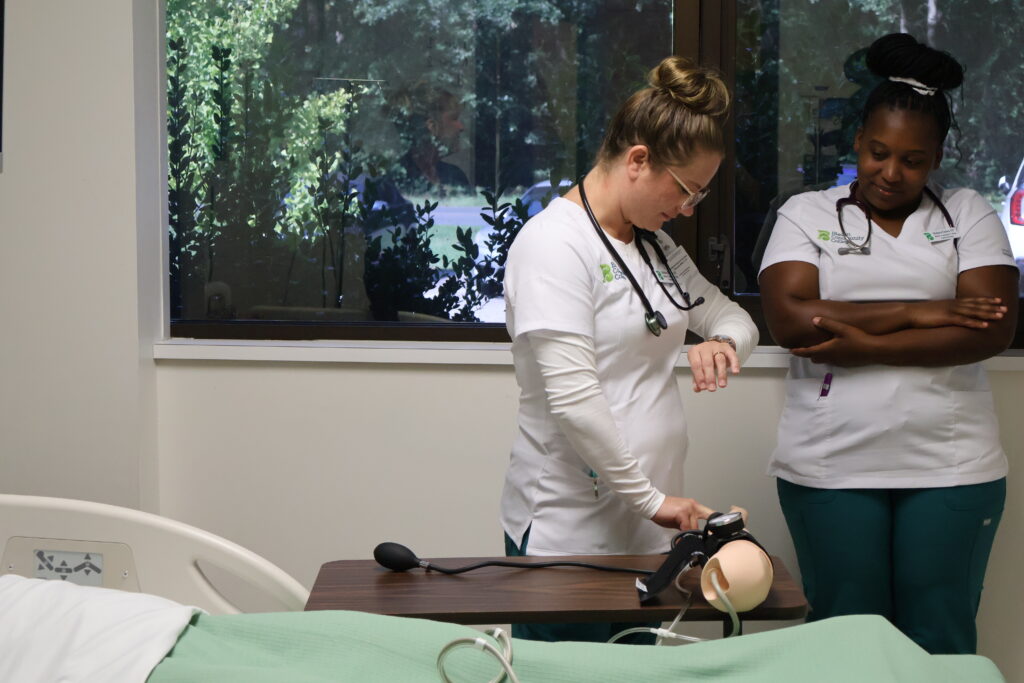
Bladen Community College (BCC), located in the southeast corner of the state, has offered a program for Licensed Practical Nurses (LPNs) to advance their education and become a Registered Nurse (RN) for nearly a decade, said Dr. Michelle Norris, director of nursing and allied health programs.
A Bladen County native, Norris said the college realized that this transition program may not be meeting the community’s needs.
“We don’t always serve enough LPNs,” Norris said. “We were getting about 60 applications for 10 spots every year consistently, and so we have a lot of very talented LPNs in our community that need to come back to school.”
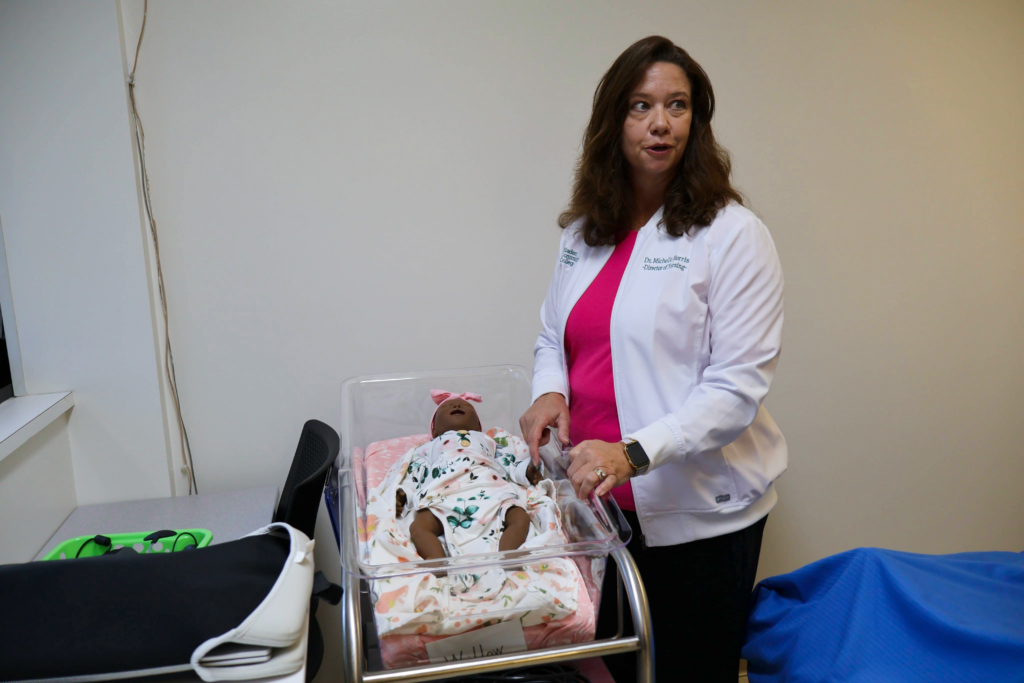
In response, BCC created a LPN to RN hybrid option where students meet in person once a week and do the rest of their coursework online aside from clinicals and tests.
“We’re trying to maintain the integrity and the rigor of the program but still make it doable,” Norris said.
The first cohort of the hybrid track will graduate in May 2027. So far, the cohort has retained 90% of its students, and Norris said clinics and hospitals in the surrounding area are ready to hire them.
 Sign up for Awake58, our newsletter on all things community college.
The hybrid LPN to RN program is one example of the college adapting their programming to meet the needs of their community.
“We’re not only offering more programs and bigger programs, but what our community needs,” Norris said. “Because in rural areas, it’s not always easy for students to first go to school, right? And they may not want to go outside their county to school. And then also, when they get employment, they want to do that close to home as well.”
In addition to the LPN to RN program, the college is expanding its healthcare offerings by adding a medical sonography program. At the State Board of Community College’s September meeting, the Board approved the medical sonography program, and Norris said they hope to start students in the fall of 2027.
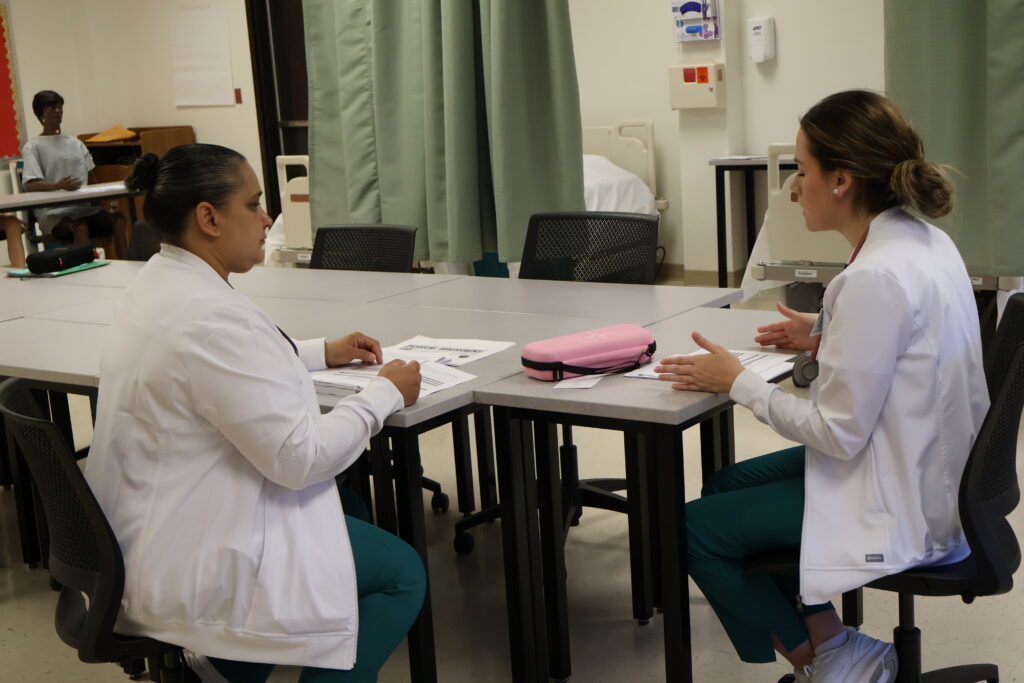
BCC President Dr. Amanda Lee said much of what the college is doing this semester is a direct result of meetings they have had with county commissioners and local employers.
Lee said this is part of the college’s role in producing a skilled workforce as quickly as possible.
Responding to workforce needs, however, is not a simple process.
Take the medical sonography program, for example. Now that the program is approved, the college still needs a year to purchase equipment, hire staff, go through accreditation, and process student applications.
Lee said they receive a very “hard reaction” from stakeholders when they explain how long it takes to actually obtain more skilled labor through their programs.
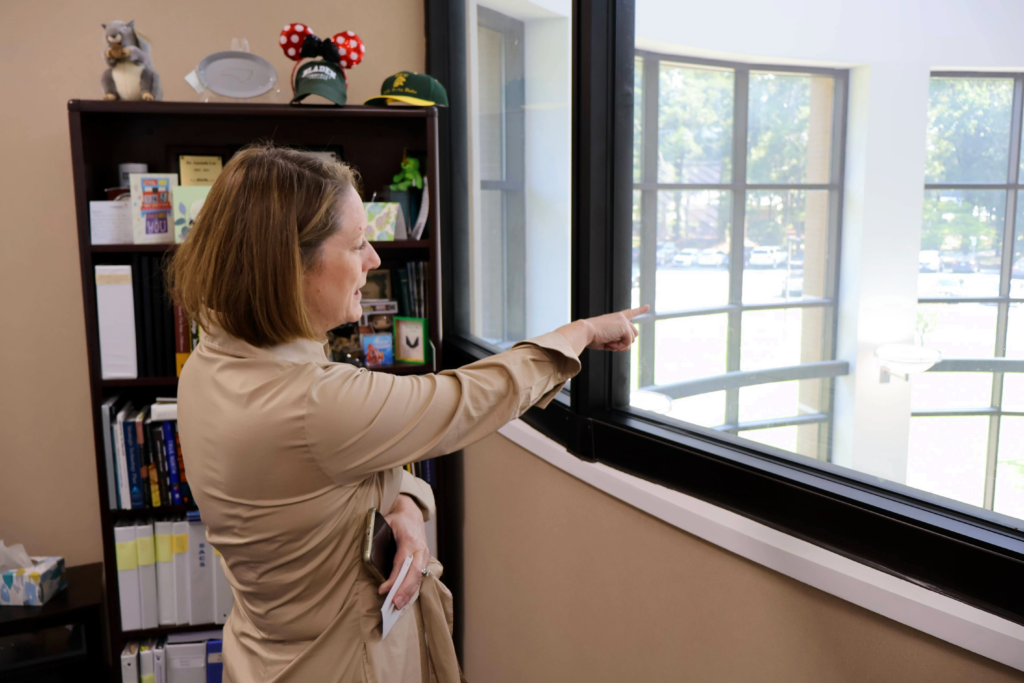
Another challenge to meeting workforce needs is space.
Norris said adding the hybrid LPN to RN program had minimal footprint on the college, but adding programs like the medical sonography program requires retrofitting classrooms to set up equipment and bays.
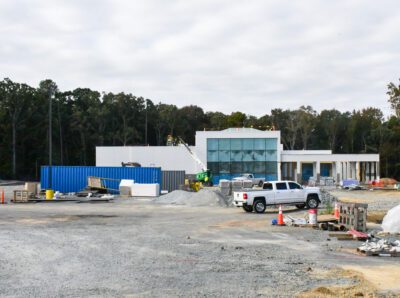
The college has recently received grants to create more lab space and enhance clinical simulation opportunities, but space remains an issue at BCC as it does at many community colleges across the state.
In a recent EdNC article on community college enrollment growth, several community college presidents highlighted the need for investment in expanding physical space and classroom labs.
“Most of our capacity constraints are around our specialized lab spaces that we need to train for those high-tech fields,” said South Piedmont Community College President Dr. Stacy Waters-Bailey. “Our (capacity constraint) is really about space and equipment — not having enough pieces of equipment, or not having a big enough space to add equipment so we can increase our training.”
“Growth is a positive challenge, but sustainable growth means making sure that students have access to the faculty, courses, technology, equipment, and physical spaces they need to be successful,” said Dr. David Townsend, vice president of academic affairs at Brunswick Community College.
Read more


Impact of Propel NC
Healthcare is one of the high demand sectors identified by Propel NC. Propel NC is a redesign of the community college system’s funding model that prioritizes funding for high-wage, high-demand sectors.
Propel NC accounted for the bulk of the system’s legislative request for three years in a row, with the Board asking for $93 million in recurring funding to fully fund the new model.
In July, North Carolina’s General Assembly funded Propel NC through a $57.5 million allocation in the 2026 state budget, making it the largest allocation included in any state budget proposal for Propel NC. In a recent meeting, the Board said they will continue requesting full funding for Propel NC in future budgets.
“This budget is a historic investment in North Carolina’s future and a powerful statement that workforce development is an economic priority,” said Tom Looney, chair of the State Board of Community Colleges, in a press release. “By modernizing workforce funding through Propel NC, supporting record enrollment growth, expanding apprenticeships, and investing in technology, the General Assembly is giving our community colleges the tools to move at the speed of business and innovation.”
Board members said in a recent meeting that the implementation of Propel NC would be a transitional process. Lee expanded on this and said that it would also be transformative.
“We are going to have to change the way we think. We’re going to have to change the way we do everything, and so we’ve started talking about that as a college-wide conversation,” Lee said.
With the implementation of Propel NC, curriculum and continuing education funding, which were previously two distinct categories of funding, are being combined into “instructional funding.”
Because of this, Lee said that the way continuing education programs and curriculum programs get approved by the Board needs to change as well. An easier process would help colleges address community needs more quickly.

BCC said they will continue listening to what the community needs, including by creating a new aviation management program, and a construction skills dual enrollment program in partnership with Bladen County Schools.
“We’re trying to fill a niche — what the community needs, what our partners need, and how we can be different,” Norris said.
Editor’s note: Dr. Amanda Lee serves on EdNC’s strategic council.
Behind the Story
EdNC’s Analisa Archer contributed to this story.