
Angel’s Watch, a voluntary short-term respite care program in western NC, alleviates pressure on the foster care system

In February 2026, there were over 11,000 children in foster care in North Carolina. In 2025, there were 5,820 foster families licensed and 332 congregate care providers (also known as group homes) in the state.
One of the goals of the North Carolina Division of Social Services (DSS) is to prevent children from coming into foster care, according to their 2020-24 Final Annual Services and Progress Report, through several targeted statewide efforts. DSS research shows there is an enormous need for foster care in the state, but there is also enormous pressure on the system because of capacity constraints.
Angel’s Watch is a free program that hopes to alleviate some of the pressure on the foster care system in western North Carolina, expanding the capacity of the state to care for its children through the use of voluntary short-term placements and community-building.
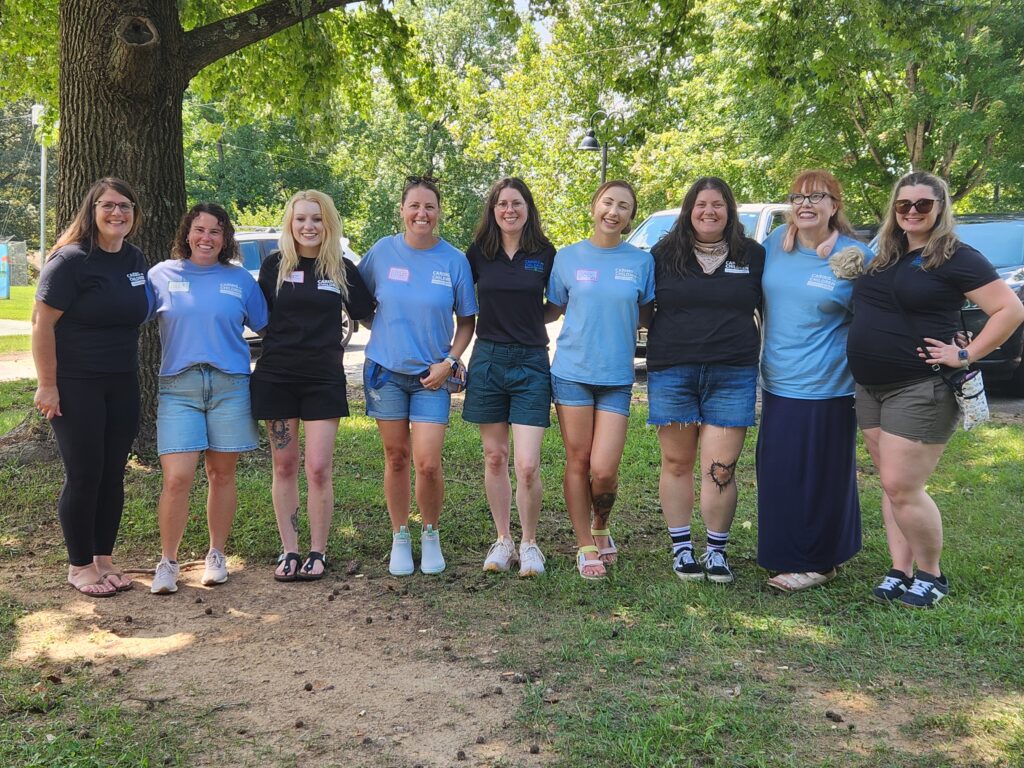
Angel’s Watch is run through CARING for Children NC — a program that “provides traditional and therapeutic foster care services” and free foster parent training in western N.C. — as a part of the larger group, Eckerd Connects, which is a national nonprofit that supports workforce development, child and family services, and Job Corps education and training.
Natural Barrows, a single mother of five who has used Angel’s Watch services, told EdNC that the program “gives her a break” so that she can better take care of her children.
“We’re trying to keep kiddos out of the system, or if kiddos need to be in the system temporarily, we want the families to have those relationships, the extended community to keep (their) children out of the system,” Executive Director of CARING for Children for Eckerd Connects Amy Hobson told EdNC.
 Sign up for the EdWeekly, a Friday roundup of the most important education news of the week.
What is Angel’s Watch?
The main purpose of Angel’s Watch is to keep children out of the foster care system. It is a voluntary respite care program in western North Carolina, which is “designed to provide temporary, nurturing support for children ages 0-10 whose families are facing difficult life challenges.”
According to Angel Watch’s website, here are the key features of the program:
- Children are not in the custody of county child welfare services
- Children are placed in licensed Angel’s Watch host homes for their well-being
- Families facing crises (housing insecurity, incarceration, medical/mental health) can temporarily place their children
- Program managers offer mentoring and connect families with community resources
Hobson also said part of their mission is to remove the stigma of asking for support.
The investments in Angel’s Watch were found to save the state money within the foster care system. In fact, a study the program did found that “every $1 that North Carolina invested in Angels Watch” saved “approximately $11 in foster care costs,” according to Hobson.
The program existed previously, but lost funding in 2018. They relaunched in 2024 and are currently supported by state and philanthropic funding. Dogwood Health Trust awarded a $300,000 grant to Angel’s Watch in July, to be distributed over the next two years, and the program also received $100,000 as one of the special appropriates from the Regional Economic Development Reserve included in the new state budget.
“Children have always held a special place in my heart, and I believe supporting foster children and the families who open their homes to them is one of the most meaningful investments we can make,” said Rep. Jennifer Balkcom, R-Henderson, in July. “I was proud to work alongside Senator Moffitt to help secure this funding for Angel’s Watch, and I look forward to seeing the positive impact it will have on children and families in our community.”
That funding supports the operations of Angel’s Watch and the $45/night stipend given to host families, as well as providing additional assistance for both hosts and families — for example, paying for diapers or clothing for children, and even workforce development for parents.
Furthermore, the vetting and training process for an Angel’s Watch host home is more thorough than a traditional foster training program because, as Hobson explained, “these families are not going to have DSS as a buffer.”
“We do yearly background checks statewide, countywide, nationally. We’re doing trainings with them every single month. We’re in their homes quarterly: fire inspections, home safety, just engaging one-on-one,” said Hobson.
Host families also go through mental health background checks. The program helps people understand “how they were parented when they were children, how it’s affected them, how they see it’s affected them.”
“Because, really, having a child in your home is a mirror for you,” said Hobson. “Maybe unresolved issues of your own come up when when a kiddo is in the home, and so we have those discussions.”
When finding a host family for a child, the program takes several factors into consideration.
For instance, siblings are always kept together to the best of a host family’s capability, school-aged children are placed within their district or close to it so they can be easily driven to their school, a child’s routine appointments might have an affect on the location, and more. If a child has certain medical or psychological needs, Angel’s Watch also ensures that host families have training that meet those needs.
Jim and Aline Carillon, host parents for Angel’s Watch, said the program works to ensure that a placement is a good fit for everyone before making a final decision.
“They’re just so supportive about making sure it’s a good fit for us as well as for the child. We have ultimate confidence in their decisions,” said Mr. Carillon.
Building relationships in the host home
When a family first indicates that they might benefit from short-term help, Angel’s Watch ensures that the parent or parents meet the potential host family and feel completely comfortable with the arrangement. They exchange phone numbers, watch their children interact with the host family, and discuss their child’s needs and routines.
When a child is at a host home, they’re able to have more interaction with their parents or guardians than they typically would in a foster care situation. They are able to text, call, and FaceTime whenever they want, allowing the parent to have the peace of mind of their child’s well-being.
“With the biological family, we make sure that they feel so comfortable — and that’s from when they first meet us to when we do a meet and greet to introduce the host home and the family and that kiddo,” said Hobson. “We want the parents to see that child interacting with the host home.”
The program also ensures that parents have a clear understanding of the length of time they need support for. Often, Hobson said, that care just starts with a weekend, allowing families to test out what respite support might feel like for them. This builds trust between the parent and the program.
“And we also let families know that if you don’t feel comfortable, or if you’re missing your kiddo, and it’s the first time your child has been away, and you change your mind, you can pick your kid up early,” said Hobson.
Barrows said she felt that both the program and the host families that she has worked with “really care” about supporting her and her children. She said that the program assures her that she is a “good mother for reaching out” because raising children takes a community.
Explore more about youth well-being
The relationships built through Angel’s Watch are often not one and done. Many families stay in contact with the families they help, integrating themselves into their network of care. For example, the Carillons said they usually offer “ongoing, honorary grandparenting” to families that stayed with them.
“We try to establish a relationship so that an Angel’s Watch parent will turn to us again, and we welcome that opportunity because it fits our model of caring for these children indefinitely,” said Mr. Carillon.
Each host home is also assigned an Angel’s Watch case manager, even when they don’t have a placement. Hobson explained that the program checks in with the homes usually once a week. When there is a child in the home, though, there are check-ins every single day.
“We’re checking in either in person or via FaceTime every day. So we have a lot of hands-on support,” said Hobson. “Sometimes the host homes will say, ‘Listen, you know, we’re good. You’ve given us everything. You’ve given us food. You’ve given us diapers. We have everything. We’re all good.’ But we we are big over-communicators around the support.”
Before a child arrives at a home, the host family receives information on the child’s medical needs, sleep schedules, history, and more. The Carillons said this report gives them 99% of what they need, but when they meet with the parents, they’re able to get even more, allowing them to feel completely comfortable with their ability to care for a child.
When asked why she wanted to share her story about Angel’s Watch, Mrs. Carillon said she wanted to raise awareness about its existence.
“I think Angels Watch is a really, really important program,” she said. “It helps keep children out of the foster system, (and) provides support to people who are doing the best they can and have very limited resources and need help.”
Stabilizing funding
Because of Eckerd Connects, the program is already ingrained in western North Carolina. Hobson said that people know about the program, but they don’t always know if they’ll have funding. Currently, Angel’s Watch is funded for the next two years.
During their brief pause in operations, Hobson said she received many calls asking for Angel Watch’s services because of the ongoing need for the respite care the program offers for families in western North Carolina.
“I feel like Mission Hospital kept calling me saying we know the program’s on the shelf right now, Amy, but we need you,” said Hobson.
Barrows said she wanted to share her story because she wants Angel’s Watch “to have funding so they can help other moms” like they helped her.
As the General Assembly’s long session approaches, beginning in January 2027, Angel’s Watch says they will continue advocating for the importance of their program. They hopes to become a recurring line item in future budgets so they can guarantee support to the families who need them.
Editor’s Note: Dogwood Health Trust supports the work of EducationNC.