
North Carolina invests in childcare while testing how to sustain family childcare homes


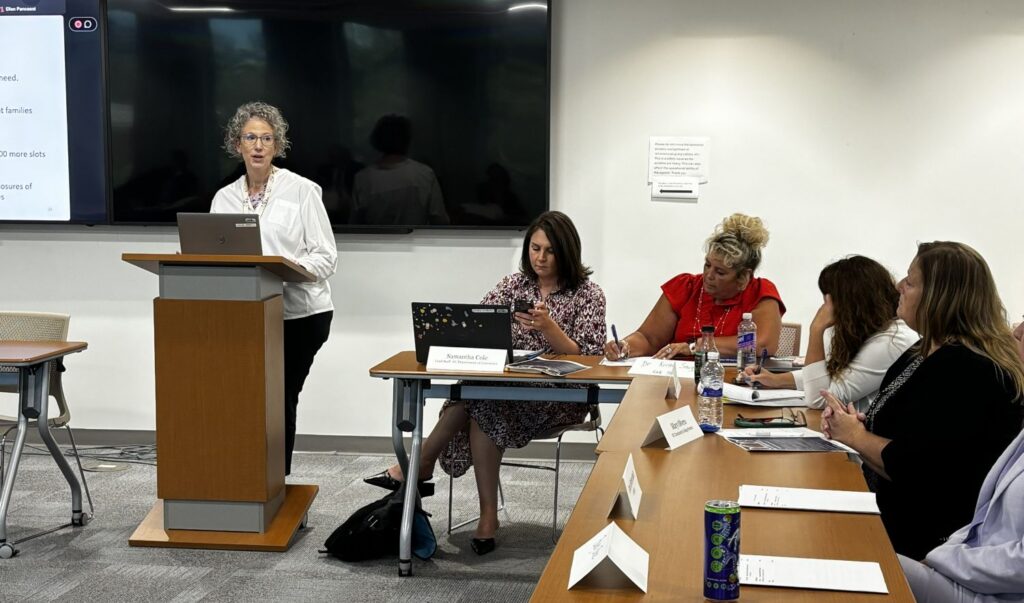
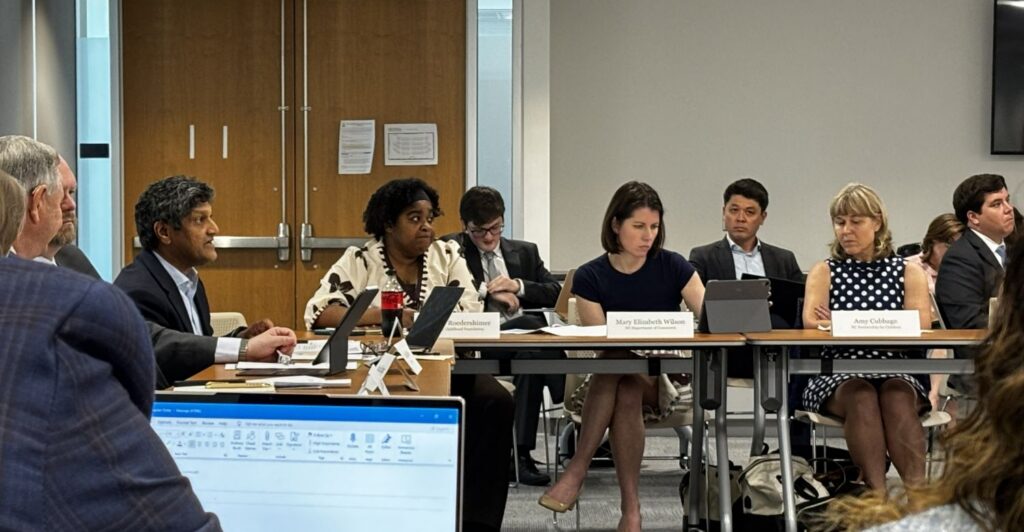
North Carolina has made significant new investments in childcare and early education. But as members of the North Carolina Task Force on Child Care and Early Education gathered on Monday, much of the conversation centered on a different question: How does the state keep some of its smallest childcare programs from disappearing?
Licensed family childcare homes — small programs operated at a provider’s residence — have long filled gaps that traditional childcare centers often cannot. They care for infants and toddlers. They serve families working second and third shifts. They operate in rural communities where there may not be enough children to sustain a large center. They can offer smaller settings that reflect families’ cultural, religious, language, or individual needs.
During the pandemic, 75-80% of family childcare homes remained open while taking on additional children, according to Dr. Kristi Snuggs, president of Early Years. Yet their numbers have been declining for years.
“North Carolina had about 4,500 family childcare homes in 2005. Today, there are just over 1,000,” Snuggs said. The decline began well before the pandemic and has accelerated since federal relief funding ended in March 2025.
Providers are retiring, while too few new operators are opening homes to replace them. The average age of a family childcare provider was 57 in the state’s 2023 childcare workforce study.
The data points to a challenge that goes beyond childcare capacity: North Carolina also needs a sustainable pipeline of people willing and able to provide that care.
 Sign up for Early Bird, our newsletter on all things early childhood.
New investment, longstanding challenges
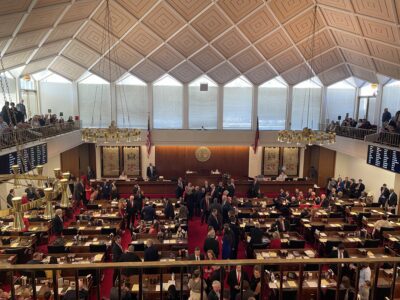
The discussion came as task force members celebrated childcare investments included in the new state budget. The childcare subsidy program received about $160 million in additional funding, bringing annual spending on subsidies to more than $650 million, according to the meeting discussion. The investment establishes the state’s first reimbursement floor and moves subsidy reimbursement to 2023 market rates.
“It is literally going to change lives,” said Candace Witherspoon, director of the Division of Child Development and Early Education (DCDEE). “Ninety-six percent of providers are going to see an increase in their reimbursement.”
There are additional investments aimed at the workforce and the childcare system, including funding for rural home-based childcare pilots, workforce academies through Smart Start and community colleges, expansion of mental and behavioral health services, and a study of liability insurance options for childcare providers.
Read more on the budget


Family childcare providers operate at the intersection of educator, caregiver, and small-business owner. In many cases, they are also the program’s administrator, cook, substitute coordinator, and bookkeeper — all while caring for children in their own homes. And unlike an employee of a larger organization, many providers must secure their own health insurance and retirement benefits.
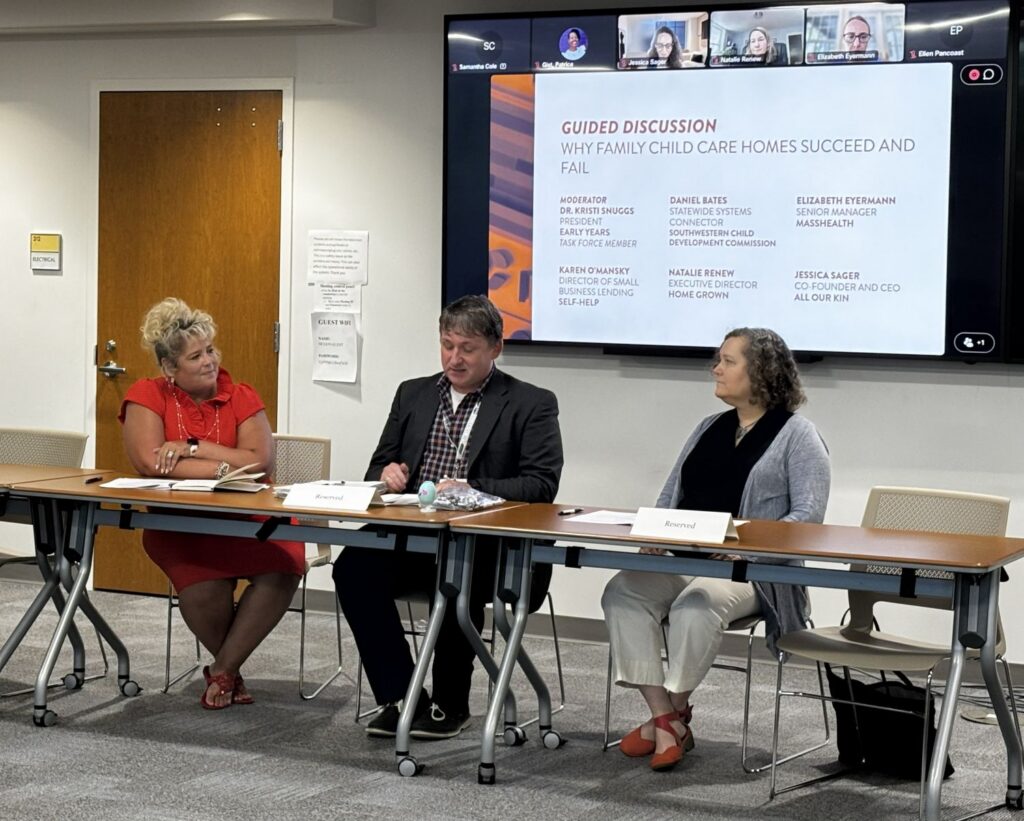
During a panel discussion, Elizabeth Eyermann, senior manager at MassHealth, shared stories from speaking with providers who struggled to afford health coverage and who routinely put additional resources back into their childcare programs rather than increasing their own pay.
In one example, a provider’s health insurance cost through the marketplace reportedly increased from $80 to $400. Another provider described caring for other families’ children while her own children relied on Medicaid and free- or reduced-price school meals.
“When these providers talked about getting additional compensation, it really is always getting reinvested back into their children,” Eyermann said.
What happens when the numbers don’t work?
The stakes may be especially high in rural North Carolina, where childcare options are already limited.
“Even if every licensed slot was fully activated, we would still need 220,000 additional slots for our young children,” said Jenna Nelson, child care and early education fellow at the Office of the Governor.
At the same time, Nelson said North Carolina has lost more than 6,000 slots, with much of that loss coming from small centers and family childcare homes, the same types of programs most likely to operate in rural communities.
Nelson illustrated the economic challenge with an example from a childcare owner who told her his center needed about 130 children enrolled to make a profit. What happens in a rural community where there simply aren’t 130 children close enough to support that business model? Families cannot drive indefinitely around mountains, across counties, or between communities to make the math work for a childcare center.
In some places, the solution may not be a larger center. It may be helping smaller programs survive.
Related reading

When barriers stand in the way of new providers
Financial sustainability is only part of the challenge. Task force members also heard scenarios about prospective family childcare providers navigating zoning requirements, septic systems, homeowners’ associations, landlord restrictions, licensing rules, and other local requirements before they can open their doors.
Natalie Renew, executive director of Home Grown, shared steps other states have taken to address similar family childcare barriers. One solution focused on treating licensed family childcare homes as residential uses by right, while limiting additional zoning requirements imposed by local governments. Some states have addressed landlord or homeowners’ association restrictions as well.
Sen. Jay Chaudhuri, D-Wake, said, “Afton Partners estimates that removing zoning barriers for childcare providers could yield 1,500 new childcare slots at zero cost to the state.”
Chaudhuri referenced Senate Bill 1051, titled “Don’t Zone Out Child Care,” which he and Sen. Jim Burgin, R-Harnett, introduced last session. The bill seeks to address local zoning practices affecting home-based providers.
The broader policy question is one the task force will likely continue to face: If a provider can meet state requirements for safely caring for children, how many additional barriers should stand between that provider and opening a small business in a community that needs childcare?
Testing what works in rural North Carolina
North Carolina will soon have an opportunity to learn more. Nelson shared two complementary rural childcare pilots that are designed not only to increase access, but also to help the state better understand what makes childcare sustainable.
The General Assembly’s special provision pilot will use $3.25 million in existing federal Child Care and Development Fund dollars to support the creation of family childcare homes in three rural communities — one in the mountains, one in the Triad, and one in the coastal plain. The supports are expected to include something that may sound small until you consider what it means to operate a childcare program alone: substitute pools. A substitute could allow a family childcare provider to go to the doctor, take a sick day, or attend an event at their own child’s school without closing the program for the families who depend on them.
A second, two-year pilot led by the governor’s office will focus on strengthening existing rural providers, including family childcare homes and small and midsize centers. Participating providers will receive childcare management software and business coaching aimed at reducing administrative burdens and helping owners better understand enrollment, capacity, and finances.
Perhaps just as important, the state intends to study what happens. Officials said they want to know what worked, what didn’t, how much it cost to open a program, and how much it cost to keep one from closing. That information matters because North Carolina’s childcare challenge isn’t simply about creating more slots. It is about creating slots where families need them, when they need them, and creating a system in which providers can afford to keep those slots open.
Taking the next step: talking to families
There is another piece of the childcare puzzle state leaders hope to better understand: families. Officials know there are vacant licensed childcare slots in North Carolina. They also know the state needs far more capacity overall. What they do not yet fully understand is why some families aren’t using the openings that exist. Are the available slots too far away? Are they available at the wrong hours? Are they simply unaffordable?
“We could take guesses all day long, but we really need to talk to families,” Nelson told the task force.
The state is planning a large family survey, including additional sampling in counties participating in the rural pilots, to better understand the gap between available supply and what families actually need.
North Carolina’s latest investments represent significant movement on an issue that families, providers, advocates, lawmakers, and early childhood leaders have worked on for years. Now comes implementation and perhaps the harder part. Can North Carolina create a childcare system that works not only on paper, but for a nurse working the night shift, a family with an infant, a rural employer trying to hire workers, and the provider opening her own front door every morning to care for someone else’s children?
The pilots underway may begin to answer that question. And for the more than 1,000 family childcare homes still operating across North Carolina, the answer could help determine whether they are the last of a disappearing model or part of how the state builds what comes next.