
A Swansboro church builds its first summer reading camp
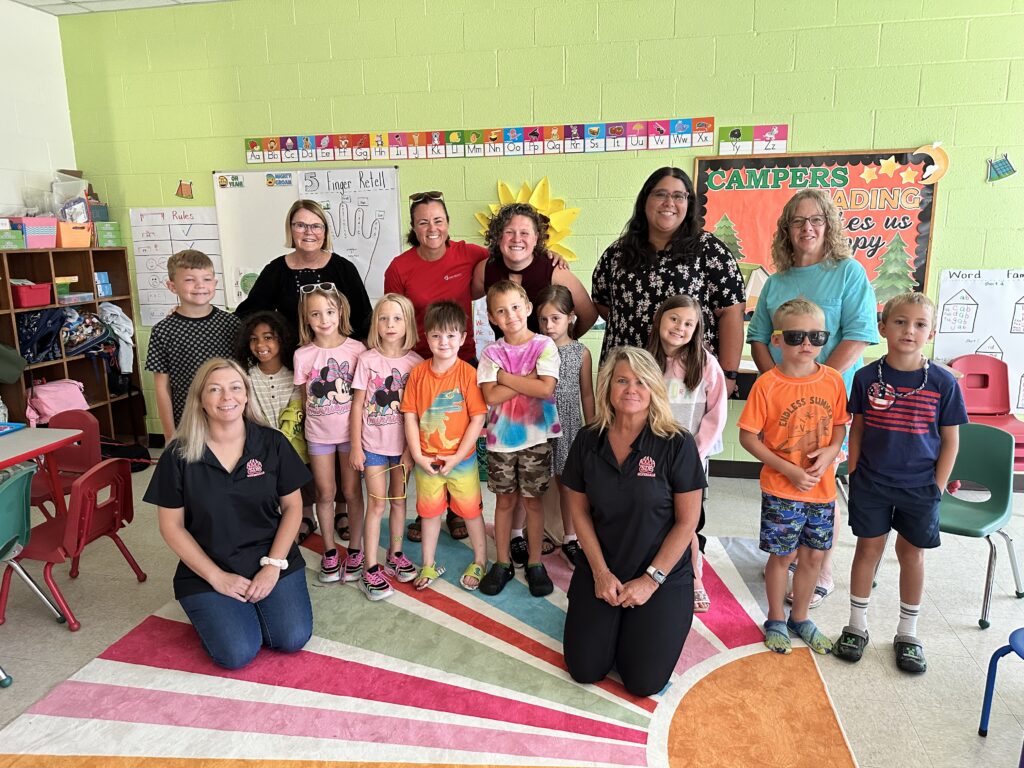
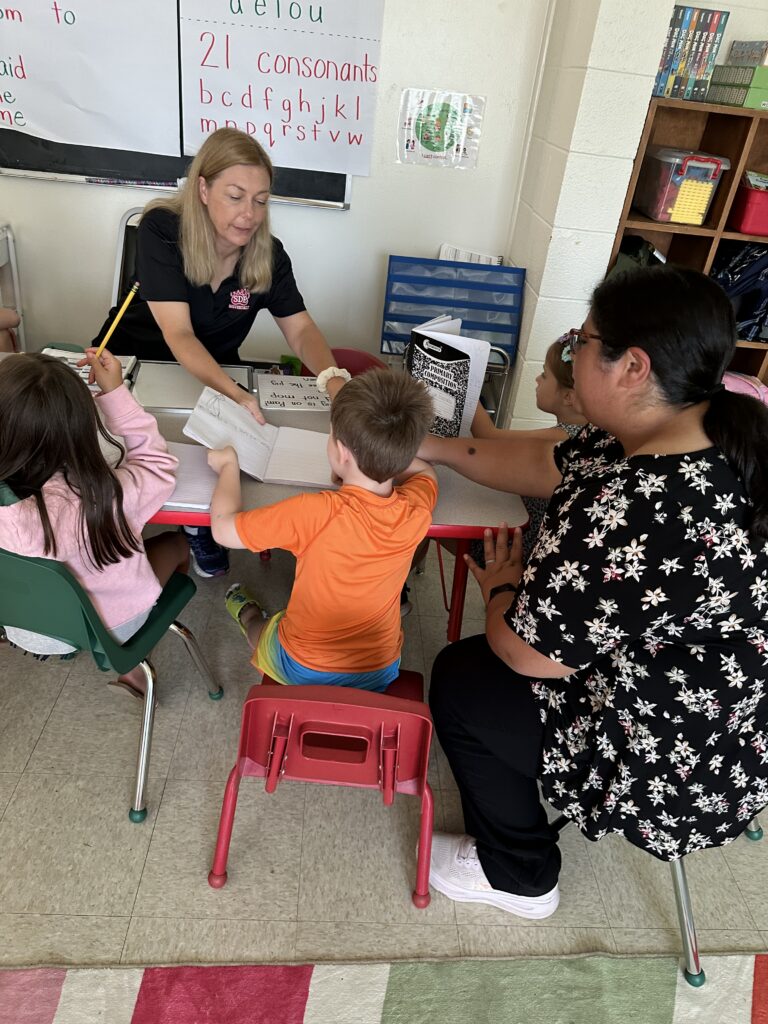
The youngest child at camp is 5. When it started, he couldn’t reliably pick out the letters in his own name. Three weeks in, he was sitting at a table inside Swansboro United Methodist Church, sounding out words and telling anyone who would listen that he wants to do something someday with dinosaurs.
A roomful of retired teachers, a children’s ministry director, and a pastor spent most of a year making that moment possible, and none had done anything like it before. They didn’t start with a plan so much as a willingness to take the next right step and see where it went.
Where it went was a summer reading camp with 11 rising first and second graders, two teachers from nearby Silverdale Elementary, and a volunteer list 40 or 50 names long. It’s the church’s first year running this camp. On the “Crystal Coast” that fills with visitors every summer, the camp is the church betting its energy on the kids who live there year-round.
 Sign up for the EdWeekly, a Friday roundup of the most important education news of the week.
Pastor Laura Thompson, the church’s senior pastor, wasn’t starting from scratch. She’d seen a camp like this up close at her last church, near Durham, so the idea was already familiar when a Duke Endowment email landed in her inbox last fall. The way she saw it, Swansboro was set up for it.
“We have space, we have resources, we have a partnership with an elementary school,” she remembers thinking. “All the pieces are in place.”
She called an interest meeting, and 15 people came. By the end, she’d named the one thing still missing, somebody to run the site day to day, and Jennifer Faasii-Smith, a teacher and a member of the church, volunteered before she really knew what she was in for.
The Duke Endowment started its Summer Literacy Initiative in 2013 at a single rural United Methodist Church on a simple idea: run the kind of program that fights the “summer slide” inside a church, not a school. This summer, it is hosting 35 camps across the state and has served over 4,000 children since 2013.
Mornings are for reading instruction, taught by certified teachers who get paid for the summer and are trained in the science of reading. Afternoons are for enrichment, and once a week the church hosts families for parents and siblings to come in and connect with the teacher and fellowship over a meal.
The tie to Silverdale wasn’t new; the church had history partnering with the school for years. When Thompson wanted a meeting with the principal, she called a friend who happens to be the assistant principal. From there, the connections continued to hit even closer to home.
Silverdale’s reading interventionist has taught there 25 years, belongs to the church, and used to live next door to Faasii-Smith. She knew most of the families the camp wanted, since their kids were already in her intervention groups, and she made the introductions. Faasii-Smith took the list from there, one call at a time to interested families, explaining the program, the required commitment, and the best part — it costs the family nothing.
The afternoons belonged to Sally Sanino and Gwen Macias, two retired teachers who sat on the implementation team and signed on to coordinate enrichment activities. They built the schedule out of their own address books and a refusal to be shy about asking for support.
A yoga instructor, the Master Gardeners, and Friends of the Swansboro Library all participated in enrichment activities. A soccer coach came one day a week, and the camp had farm animals on Fridays. A wildlife rescue promised an owl alongside a craft project. Church members turned the kids loose on a birdhouse project, with real hammers and safety goggles. Jersey Mike’s and a burrito place down the road sent food.
“Even the church youth helped and got involved in the plans,” Sanino said.
Swansboro is a Marine Corps town with Camp Lejeune close by and more installations over in Jacksonville, and more than half the 11 kids come from military families. Military kids move a lot, often at the worst moment for someone still learning to read.
“A lot of our military kids have gaps because they move so often,” Faasii-Smith said. “If we’re filling those gaps at the beginning and they have the foundational skills, when they do eventually get placed somewhere else, they have that foundation.”
The reading camp can’t stop a reassignment. What it can do is send a kid to the next base already reading.
Macias wants people to see past the postcard.
“This community is more than just a vacation spot,” she said. “There are other things that are needed.”
A free camp with lunch and books answers a little of that.
The reading scores will come, and early ones look good, but that isn’t where the people who built this keep score. Ashley Hopkins, who runs the church’s children and family ministries, had been praying for something like it.
“This is an answer to a prayer,” she said.
Faasii-Smith carries it differently. Her parents were teenagers when she was born, her mother an immigrant, and reading is what opened up her world.
“Literacy is not just reading,” she said. “Literacy is living.”
That 5-year-old and his dinosaurs are the reason she does it.
The camp isn’t a religious program, but it is an opportunity for connection, community, and support. Families keep finding the rest of the church on the way through, asking about the kids’ ministry, or, more quietly, about the recovery groups down the hall. That’s close to what Thompson means by a church that looks after body, mind, and spirit at once.
“The good news, if you’re hungry, is bread,” she said. “Good news, if you’re lonely, is friendship and community. And good news, if you’re in poverty, it might be a book to expand your world.”
For now it comes to this: 11 kids, four weeks, and a building full of people who keep taking the next step and are already eager for next summer.
Editor’s note: The Duke Endowment supports the work of EdNC.